Chocolate Mousse Brownies
Introduction
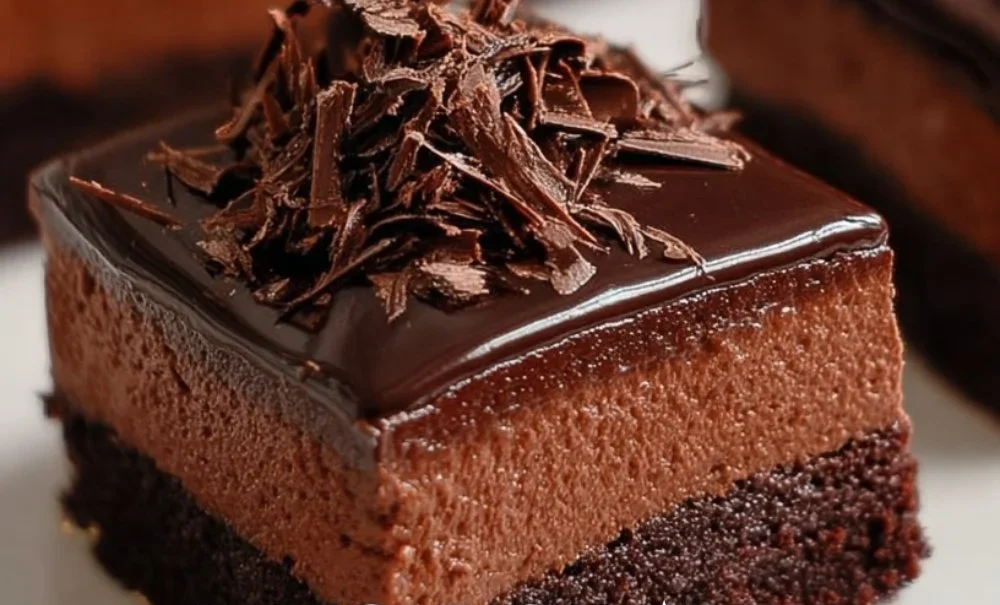
Chocolate Mousse Brownies are a study in contrasts: dense, fudgy base meeting an airy, satin-smooth mousse layer, finished with a glossy ganache. As a professional chef I approach this composition as a tension between structure and lift, between the Maillard-rich notes developed in the brownie and the pure cocoa intensity preserved in the mousse. In this introduction I will outline the technical priorities for executing the recipe precisely: fat-solubility in the batter, controlled incorporation of air into the mousse, and temperature sequencing so each component sets correctly without compromising the other. For reference on related approaches to brownie structure and acid-sugar balance, consult this resource on a citrus-inflected brownie variation that illuminates how minor formula shifts alter texture and flavor: lemon brownie technique and balance.
The culinary logic behind this dish
Every element in Chocolate Mousse Brownies serves a clear purpose. The butter provides both flavor and a fluid medium to dissolve sugar and distribute cocoa; its melting point governs mouthfeel. Granulated sugar contributes bulk and sweetness while brown sugar introduces molasses notes and a softer crumb due to its hygroscopic quality. Eggs are the structural network: in the batter they coagulate with heat to give body, but overbeating or overbaking will shift the brownie from fudgy to cakey. The flour and cocoa provide the dry matrix — measured to maintain a low gluten network for fudginess. The mousse layer relies on stabilized aeration: heavy cream whipped to soft peaks creates the volume, and tempered melted chocolate delivers cocoa intensity and sets the mousse through crystallization of cocoa butter as it cools. Final ganache delivers sheen, mouth-coating fat and a clean finish. This is culinary engineering: ingredients are selected and sequenced to yield contrast—dense base, light topping, bright surface gloss—without textural collapse.
How to make Chocolate Mousse Brownies
Execution follows two parallel tracks: bake the brownie base to the correct doneness, then assemble and set the mousse. Timing between these tracks is critical. Do not rush the transition from warm brownie to cold mousse; residual heat will destabilize the mousse and can cause the chocolate to seize. The strategy is: finish the base, cool completely at room temperature (not just warm), then whip cream and temper melted chocolate so the chocolate-laced cream folds gently at similar temperatures. Each action in the directions has a rationale: melting butter concentrates flavor and makes sugar integration efficient; mixing eggs with warm butter-sugar paste promotes emulsification; folding rather than beating prevents gluten development and air incorporation in the base; whipping cream to soft peaks preserves structure while remaining pliable for folding; and chilling consolidates the mousse and improves sliceability. For practical cross-reference on batter handling, consider the technique notes on brownies with different acid profiles and how those affect final lift: comparison of batter handling techniques.
Ingredients :
1 cup unsalted butter, 1 cup granulated sugar, 1 cup brown sugar, 4 large eggs, 1 teaspoon vanilla extract, 1 cup all-purpose flour, 1 cup unsweetened cocoa powder, 1/2 teaspoon salt, 1 cup heavy cream, 8 ounces semi-sweet chocolate, chopped, 1/2 cup chocolate ganache
The ingredient list is concise and classical. Note the parity between butter and total sugars (1 cup each), which yields a moist, sugar-forward matrix that browns without becoming dry. The ratio of cocoa to flour is 1:1, producing intense cocoa without overwhelming the batter with starch. Heavy cream is used both as an aeration medium and as the liquid phase to marry with melted chocolate. The final ganache (half cup) is a finishing quantity — its purpose is visual and textural, not structural.
Directions :
- Preheat oven to 350°F (175°C). Grease a 9×13 inch baking pan.
- Melt the butter in a saucepan over medium heat.
- Remove from heat and stir in sugars, eggs, and vanilla.
- Mix in flour, cocoa powder, and salt until just combined.
- Pour batter into prepared pan and spread evenly.
- Bake for 25-30 minutes. Let cool completely.
- For the mousse, whip the heavy cream in a bowl until soft peaks form.
- Melt the chocolate in a double boiler, cool slightly, then fold into whipped cream.
- Spread the mousse over the cooled brownies and chill until set.
- Drizzle with chocolate ganache before serving.
Each numbered step must be followed in sequence. The phrase “just combined” in step 4 is critical: once dry and wet ingredients meet, gluten formation begins; minimal mixing ensures a dense, fudgy crumb rather than a structured cake.
Ingredient analysis through a chef’s lens
Unsalted butter: provides a neutral fat baseline that enables precise seasoning control. Melting the butter changes the texture — melted butter favors fudginess due to an oilier crumb and reduced aeration compared with creamed butter.
Granulated and brown sugars: the combination balances sweetness and depth. Brown sugar retains moisture post-bake, extending shelf life and delivering caramel undertones through Maillard reactions.
Eggs: in this formula eggs perform as emulsifiers and structure agents. Beating them briefly into the warm butter-sugar matrix promotes emulsion, ensuring even distribution of fat and preventing pockets of melted butter that could separate during baking.
Flour and cocoa: using unsweetened cocoa powder intensifies chocolate flavor without adding moisture. When integrating the dry mix, sifted or not, aim to avoid over-mixing to keep gluten development minimal.
Heavy cream and chocolate: for the mousse, the quality of both dictates mouthfeel. Heavy cream with 36% fat or greater whips to stable peaks; the chocolate should be chopped uniformly to melt smoothly in the bain-marie and temper to a workable viscosity for folding.
Ganache: its role is finishing. A half-cup is sufficient to create clean lines or a thin sheen; its temperature at application influences the visual result — slightly warm ganache will glide and form an even film; fully cooled ganache will sit in decorative pools.
Kitchen workflow & technique breakdown
Organize mise en place. Begin by preheating the oven and preparing the baking pan; that ensures the first heat event is immediate and consistent. While butter melts, measure and combine sugars and dry ingredients separately. Melting butter in a saucepan over medium heat gives you direct control and allows you to watch for color change; do not brown unless the recipe calls for it — a uniform amber is acceptable, but browned butter would alter flavor intensity and melting behavior.
After removing from heat, incorporate sugars and eggs while the butter is warm but not hot to avoid scrambling. Whisk gently and monitor temperature: if the mixture is too hot, eggs will curdle; if too cool, emulsification may be less effective. When folding in the dry mix, use a rubber spatula and fold with a single-handed technique to minimize shear. Bake on the middle rack for even heat exposure and avoid opening the oven during the critical middle of the bake. After 25–30 minutes test the center: a toothpick should come out with moist crumbs but not wet batter; residual heat will continue to set the brownies as they cool.
While the brownies bake and cool you can begin mousse preparations. Chill the mixing bowl and whisk to facilitate clean whip peaks. Melt chocolate in a double boiler: maintain a simmer, not a rolling boil, and remove the chocolate from heat as small lumps remain so residual heat finishes melting. Allow the chocolate to reach approximately room temperature but remain fluid; folding warm chocolate into hot cream will deflate peaks and risk graininess. Fold chocolate into whipped cream with deliberate strokes to maintain volume.
Allocate cooling and chilling time into your schedule: the brownies must be completely cool before mousse application; the mousse must be chilled until set — typically at least 2 hours — to allow cocoa butter crystallization and a clean slice.
For a detailed perspective on alternative brownie workflows that emphasize different textural outcomes, the following resource offers comparisons that can inform small adjustments: workflow variations and their effects.
Texture control, heat management & timing
Control of texture hinges on precise heat management and timing. Overbaking is the most common error — a few extra minutes can convert fudgy brownies to dry, cakey slabs. Use visual and tactile cues: the edges will pull slightly from the pan and the center surface will exhibit a matte sheen with a slight jiggle. Remove at the lower end of the time range for a more fudgy center.
Mousse texture depends on peak control: soft peaks give a silkier mouthfeel and fold more easily with melted chocolate; overwhipped cream will become grainy and collapse on folding. Monitor cream temperature: chill bowl and whisk, and stop whipping at the first grip of resistance where peaks hold but are still glossy.
Timing between components is also essential. Apply mousse only when the brownie is at room temperature. If the brownie retains warmth, heat will melt the mousse, forcing separation. After assembly, chilling through the fridge’s steady temperature (~36–40°F / 2–4°C) for several hours ensures the mousse sets uniformly; avoid rapid freezes which create ice crystals and alter texture.
Professional variations
Small technical adjustments yield different outcomes without altering ingredient quantities. For a denser, more ganache-like top, reduce whipped cream proportion slightly and increase melted chocolate by 1–2 ounces; the mousse will be richer and slice cleaner. For lighter, airier mousse, incorporate a small amount of stabilized egg white meringue folded into the whipped cream before adding chocolate — this increases lift but requires precision to avoid curdling when combining with chocolate.
Alternatively, introduce a crumble layer between brownie and mousse: a thin textural buffer (e.g., toasted hazelnut praline) prevents moisture migration and adds contrast. For a professional finish, temper the chocolate before folding to ensure the cocoa butter crystallizes in stable form, improving sheen and mouthfeel of the mousse. These variations adjust technique, not proportions, aligning with the requirement to maintain the recipe’s ingredient list.
Finishing touches & plating philosophy
Finish simply and precisely. Ganache drizzle should be at a temperature that allows fluidity without running off the edge; aim for 88–92°F (31–33°C) for semi-sweet ganache to achieve an even film. Use a squeeze bottle or a small offset spatula for controlled application. For plating, cut with a hot, dry knife, wiping between cuts to maintain clean edges; warm the knife under hot water and dry immediately for each slice. Consider portion size: the mousse layer will make slices lighter on the palate, so slightly smaller portions allow the flavors to remain balanced.
Garnishes should respect the composition: a single toasted hazelnut, a thin cocoa dusting, or a micro-scorch of granulated sugar can add visual and textural cues but are unnecessary if the ganache is executed with precision.
Maintaining quality after cooking
Storage is integral to preserving texture. Refrigerate in an airtight container to prevent the mousse from absorbing ambient odors. For optimal texture, consume within 48–72 hours; beyond that the mousse will slowly lose aeration and brownies will firm as moisture redistributes. If storing longer, wrap tightly and freeze: flash-freeze individual slices on a tray before transferring to sealed containers to reduce freezer burn. Thaw slowly in the refrigerator to maintain mousse integrity; avoid room temperature thawing which can cause condensation and soggy surfaces.
Questions from home cooks (chef answers)
Q: Can I make the mousse ahead of time?
A: Yes, but store the mousse-topped brownies chilled and consume within 48 hours to preserve aeration. If making mousse separately, assemble no more than 24 hours ahead to prevent moisture migration.
Q: What if my melted chocolate seizes when folded into cream?
A: Seizing indicates temperature mismatch or moisture. Allow the chocolate to cool slightly so it is warm but not hot, and gently fold into chilled but not overwhipped cream. If seized, gently warm the mixture over a bain-marie, whisking to reincorporate, or add a small quantity of warm cream to re-emulsify.
Q: How do I get the brownie layer fudgier?
A: Shorten bake time slightly and remove when a toothpick shows moist crumbs. Use a heavier ratio of butter to flour or add an extra egg yolk for richness, but note these are adjustments to the formula and will change texture.
Final chef notes
Precision in temperature, timing, and handling defines success with Chocolate Mousse Brownies. Respect the ingredient functions: fat for mouthfeel, eggs for structure, sugar for moisture and color, and whipped cream for aeration. Emulsification and gentle folding are recurring technical motifs here; keep movements deliberate and conserve heat differentials so each component behaves as intended. Maintain clean lines at plating through temperature-controlled tools and patient slicing.
Conclusion
This recipe is a refined yet achievable composition when approached with methodical technique and attention to temperature and texture. For an external reference that presents a similar assembly and plating of chocolate mousse on a brownie base, review this careful recipe demonstration: Chocolate Mousse Brownies | The Domestic Rebel.
Chocolate Mousse Brownies
Ingredients
Method
- Preheat oven to 350°F (175°C). Grease a 9x13 inch baking pan.
- Melt the butter in a saucepan over medium heat.
- Remove from heat and stir in granulated sugar, brown sugar, eggs, and vanilla.
- Mix in flour, cocoa powder, and salt until just combined.
- Pour batter into prepared pan and spread evenly.
- Bake for 25-30 minutes. Let cool completely.
- Whip the heavy cream in a bowl until soft peaks form.
- Melt the chocolate in a double boiler, cool slightly, then fold into whipped cream.
- Spread the mousse over the cooled brownies and chill until set.
- Drizzle with chocolate ganache before serving.