Easy Homemade Chocolate Fudge
Introduction
When I think of fudge, my mind drifts to a small kitchen window fogged with steam, the sunlight slanting through European plane trees, and the slow, patient stirring of a grandmother whose recipe traveled with her across oceans. Fudge, especially a forgiving, homely recipe like Easy Homemade Chocolate Fudge, is less a single thing than a mosaic of places and people — afternoons in coastal towns, winter nights on mountain trains, and midday markets where sugar and cocoa scents mingle into something almost sacred. In a world where food often announces itself with flash and novelty, fudge is a quiet ceremony: a confection that insists you pause. If you are curious about how a simple combination of sweetened condensed milk, chocolate, butter, and vanilla can conjure whole landscapes of memory, then stay with me as we wander through its history, its variations, and the small rituals that make it beloved across regions.
On my first trip to a small New England town, I stumbled upon a candy shop whose window display showcased squares of fudge like polished stones. Each bite tasted like the sea-salted air outside and the low, comforting murmur of the shopkeeper telling tales. That afternoon I scribbled notes and later found echoes of the same texture and warmth in kitchens from Buenos Aires to Beirut. Food travels in suitcases and in stories; this recipe travels light, requiring little more than an open heart and a pot of time.
In this article you will find not only the practical way to create Easy Homemade Chocolate Fudge at home but also the cultural threads that weave around it. If you are looking for other nostalgic sweets that pair well on a dessert table, you might be reminded of modern takes like chocolate-covered cherry magic bars, which share the same spirit of indulgence and the joy of bite-sized memories.
The origin story & regional influence behind this dish
Fudge, as we commonly know it today, is a relatively modern confection born in the United States during the late 19th century. Romanticized accounts tell of a college student’s botched batch of caramel mistaken for “fudge,” and the name stuck. But like many foods, fudge’s simplicity quickly made it adaptable. In industrial towns where condensed milk arrived in tins and cocoa was traded in byways of empire, home cooks found that a quick marriage of chocolate and condensed milk could produce a silky, dependable sweet without the cautionary, high-stakes dance of boiled sugar.
Across regions, fudge absorbed local accents. In coastal New England, bakers often added molasses or a pinch of sea salt, echoing maritime trade. In the American Midwest, fudge found a place in church bake sales and county fairs, a communal treat that families boxed up and brought home in layers of waxed paper. Further afield, the Caribbean’s rum-soaked confections and South Asian sweets that used condensed milk as a base show how the idea of a rich, milk-based sweet is almost universal — each culture layering flavors and rituals onto a shared concept.
This particular iteration — Easy Homemade Chocolate Fudge — is the kind of recipe that thrives in modern kitchens because it honors that history of adaptation. It uses condensed milk, a product that democratized candy-making by circumventing long stirs and the precise chemistry of boiled sugar. The recipe is portable in spirit; it invites improvisation while remaining faithful to a lineage of comfort.
How to make Easy Homemade Chocolate Fudge
Making this fudge is like listening to an old story told in a new accent: familiar, quick, and immediately gratifying. The technique is minimal, and yet each motion—combining, melting, stirring, pressing—remains an intimate act, a choreography of small attentions that transforms pantry staples into a marvel of texture and aroma.
Ingredients :
1 can (14 oz) sweetened condensed milk, 2 cups chocolate chips, 1/4 cup unsalted butter, 1 teaspoon vanilla extract
Directions :
- In a microwave-safe bowl, combine the sweetened condensed milk, chocolate chips, and butter., 2. Microwave on high for 1 minute, then stir., 3. Continue microwaving in 30-second increments, stirring after each, until completely melted and smooth., 4. Stir in the vanilla extract., 5. Pour the mixture into a lined square dish and refrigerate until set, about 2 hours., 6. Cut into squares and enjoy.
Read plainly, the steps are concise and practical; read slowly, they become a ritual in miniature. The microwave method favors kitchens where time and simplicity matter, yet the sensory rewards—the glossy sheen of melted chocolate, the buoyant aroma that lifts like steam—remain unchanged whether coaxed over a double boiler by a seaside cook or melted in a city apartment as evening arrives.
Ingredients through a cultural & historical lens
Each ingredient in this recipe carries a story. Sweetened condensed milk, invented in the 19th century as a means to preserve dairy for longer journeys and to be less perishable than fresh milk, became a staple in colonies and industrial cities alike. It enabled desserts in places where refrigeration was scarce and continues to link generations who remember the clink of a can opening like a small herald of celebration.
Chocolate chips, invented for ease and snackability in the early 20th century, are the democratisation of chocolate — no tempering, no melting temper. Their presence in a fudge recipe signals modern convenience meeting old-fashioned indulgence. Butter, often unsalted in this recipe to control the final balance, ties the confection to the pastoral: dairy farms, humid cellars, and hands that churned cream into butter long before the word “artisan” became fashionable. Vanilla extract, a whisper of floral warmth, speaks to the global trade routes and the ways colonial histories shaped flavor palettes. In many parts of the world, local substitutes like cardamom, coffee, or citrus zest appear in fudge-like sweets, underscoring how a base recipe serves as canvas for cultural expression.
Cooking the dish: sensory notes & traditional techniques
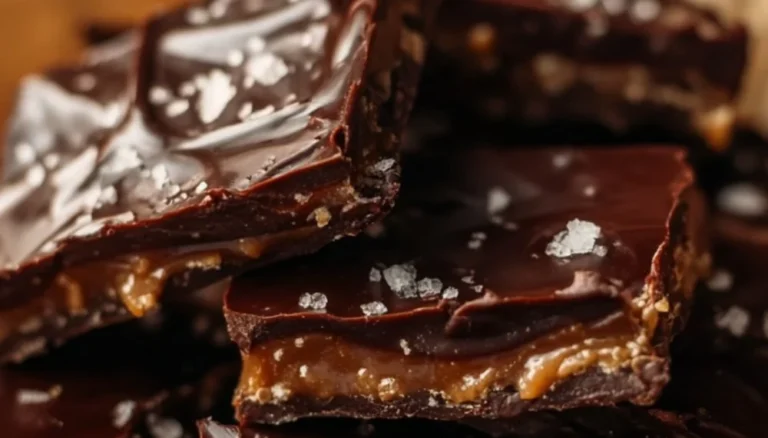
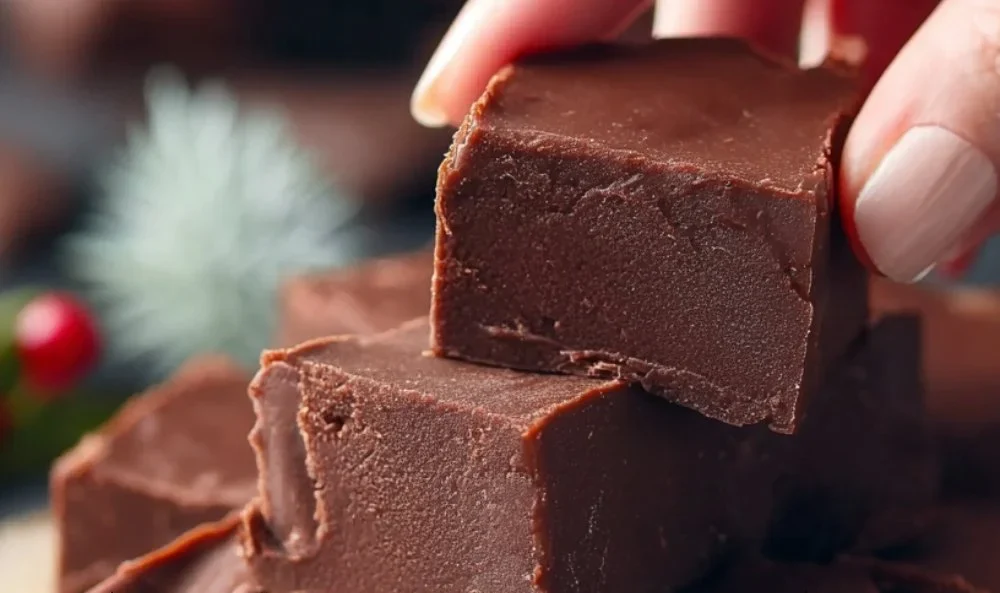
Even in its simplest form, making fudge is sensory work. The first moment the bowl warms and chocolate begins to soften, you’ll notice the rich, bittersweet perfume rising like the first lines of a familiar melody. Stirring transforms textures; a glossy mixture tells you that the sugars and fats have married properly. Refrigeration cools the mixture into a tender, yielding slab; the first cut is a ceremonial gesture that releases a soft chocolate perfume and the thinnest sheen of condensation like tiny pearls.
In some traditions, the act of sharing the stirring is important. In Newfoundland kitchens, for example, making sweets can be a cooperative task performed at holiday gatherings, with children or neighbors taking turns, negotiating the pace, passing the wooden spoon like an heirloom. In many Latin American homes, condensed milk sits at the center of family recipes—dulce de leche, flans, and fudgy confections—so the technique of gentle melting and careful setting is part of a broader culinary literacy. Even when this recipe uses modern microwave convenience, the tactile memories—of whisking, pouring, pressing—remain close to older methods.
How different regions prepare their version
Around the world, the simplicity at the heart of this fudge invites local reinterpretation. In the American South, cooks might fold in chopped pecans or a drizzle of molasses to call up the scent of maple and wood smoke. In parts of the UK, fudge is often denser and more buttery, sometimes flavored with salted caramel notes or pieces of shortbread. In Mexico and parts of South America, sweets may incorporate cinnamon or espresso notes, leaning into pairing the chocolate with spices that sing in local palates.
I have watched vendors in market lanes fold in coarse sea salt and toasted coconut, transforming a modest slab into something suntouched and tropical. In more austere settings, a simple flicker of vanilla keeps the chocolate’s profile honest and immediate. Regional variation is not merely about ingredients; it is about context. A fudge square offered during a winter festival tastes different than the same square wrapped and tucked into a child’s lunchbox for school — the memory of place colors the experience more deeply than any spice.
If you enjoy experimenting with similar confections, you might notice parallels between this fudge and the textures found in recipes for chocolate-covered strawberry brownies, where chocolate’s role is both binding and expressive.
Traditional ways this dish is shared or served
Fudge is most often a communal food. It appears in gift tins at Christmas, wrapped in waxed paper and tied with ribbon; at weddings, it can make an appearance as part of a candy table where guests scoop memories into paper bags. In many small towns, it’s the standard for bake sales and fundraisers because each batch can be easily portioned and carries the warmth of home.
Serving rituals vary. In some families, it is cut into perfectly uniform squares, placed in a ceramic dish alongside tea or strong coffee. In others, it is roughly hewn and offered on a wooden board, the irregular shapes a testament to haste, hospitality, or abundance. Sharing is an act of both sustenance and storytelling: “This is how my grandmother made it,” someone might say, and the recipe becomes a living archive.
I recall a market in Marrakech where a vendor offered tiny cubes of chocolate fudge to passersby; the exchange was less about the taste and more about the invitation to sit, to exchange names, to become briefly human companions in a transient city. Food creates those small islands of belonging.
Storing the dish without losing its cultural essence
Storage is practical but also cultural. Wrapped in wax paper and stacked in tins, fudge keeps for several weeks, its texture mellowing like a remembered song. Refrigeration extends shelf life but can mute the aroma; for many, the choice to refrigerate or not becomes a family preference — a marker of how someone’s ancestors handled the humid summers or icy winters of their home region.
When traveling with fudge as a gift, I learned to stabilize it with parchment layers and a cool, insulated carrier. The important thing is to preserve the tactile experience: the tender, slightly crumbly bite that gives way to creamy chocolate without becoming greasy. Even as climate and storage change across geographies, people find a way to keep the essence of the dish — the warmth of care, the intention behind the gift — intact.
If you’re interested in another easy sweet that travels well and holds its texture, consider recipes for easy baked donut bars, which share the virtue of being portable, forgiving, and deeply comforting.
Cultural questions people often ask
Why is fudge so nostalgic? Often because it signals care. It is a recipe that requires minimal equipment but maximum attention. For many families, it is associated with festivals, church socials, or a parent who made it during long winters. People also ask whether fudge is candy or dessert; culturally, it occupies both categories — a treat and a token, consumed in small pieces but carried in memories.
Is this fudge “authentic”? Authenticity is a slippery concept. Recipes are itinerant; their “authentic” form is often the one lived in your home. This easy version honors the essence of fudge—sweet, chocolatey, firm yet yielding—while acknowledging that convenience and migration shape food. Questions about ingredients—why condensed milk, why not cream?—open up histories of preservation, trade, and adaptation rather than absolutes.
How should one present fudge for guests? The answer depends on occasion and place. In formal settings, precise squares on a white platter speak of elegance. In a beach picnic, a rustic stack wrapped in paper and tied with twine says something warmer: that food is for passing around, for sharing sun and sand and laughter.
A closing note on food, memory & travel
Travel teaches that recipes are maps. They chart routes of migration, trade, and affection. Easy Homemade Chocolate Fudge is a small parcel from this map — compact, rich, and expressive. It reminds us that culinary history is not a monolith but a patchwork of adaptations, and that comfort foods often carry the heaviest histories: of migration, of convenience transformed into tradition, of gatherings both daily and celebratory.
When you make a batch, notice the way the chocolate glosses in the bowl, how vanilla lifts the scent like a tide. Offer a square to a neighbor or a stranger, and listen to the stories that arrive with it. You might discover recipes you never expected to meet, laughs that bridge languages, and the warm certainty that some foods, above all, are meant to be shared.
Conclusion
For a simple, dependable method to make this timeless treat, the Easy Fudge Recipe – Simple Joy offers a comforting perspective on classic technique. If you enjoy quick and accessible sweets, the Easy Fudge Recipe | Life, Love, and Sugar provides another inviting variation that celebrates convenience and flavor. For inspiration on texture and presentation, the Easy Chocolate Fudge Recipe | Belly Full is a useful resource that aligns with the spirit of sharing and tradition explored here.