No-Bake Snickers Bars
Introduction
There are certain sweets that do not merely satisfy a craving; they become little passports to childhood, to late-summer basements, to the soft hum of family gatherings. For me, No-Bake Snickers Bars live in that luminous territory. They are an immediate recall of warm hands pressing a chocolate-and-peanut tapestry into a pan while the radio buzzed with a song that would later become a landmark in memory. In the way a city smells like rain on hot asphalt, these bars smell like caramel and anise-free peanut butter, like the invitation of a kitchen that wants you to stay.
I think of them on trains, looking out at landscapes that slide by like layered candy: the dark river like melted chocolate, a strip of golden field like a caramel ribbon. In other posts I have written about their cousins and cousins-in-spirit, and the tapestry of no-bake treats around the world keeps showing me how simple ingredients accumulate meaning; see my piece on similar traybakes such as the no-bake rocky road bars for a close kinship in texture and memory. These bars arrive at parties with the quiet confidence of a traveler who understands both home and the road.
The origin story & regional influence behind this dish
No-Bake Snickers Bars are a mash-up that tells the story of modern confectionery migration. Each component—the chocolate, the nougat, the caramel, the peanuts—carries a different provenance, and when they meet in a single no-bake tray, they trace the trade winds of sweetness through history. Nougat itself is a confection with Mediterranean roots, shaped by almonds, honey and the barb of conflict and celebration; caramel has a long kinship with European sugarcraft; and the peanut traveled from the Americas to the world, becoming the beloved legume of both roadside vendors and grand pâtissiers.
Regionally, these bars are most at home in places where convenience and celebratory generosity intersect. In North America they echo the invention of the store-bought Snickers bar in the 20th century, but the no-bake variant is quintessentially postwar, born of kitchens where refrigeration and packaged sweet ingredients allowed fast, abundant treats to be made for potlucks, bake sales, and church bazaars. In a way, this recipe is a soft manifesto of the era: efficient, shareable, and built for social tables.
In countries where home baking is less about precision and more about ritual, similar layered no-bake bars appear at festivals and family reunions, each one adopting the local touch—condensed milk in South Asia, dulce de leche in parts of Latin America, or the particular crunch of sesame in the eastern Mediterranean. The No-Bake Snickers Bar is therefore not only American convenience but also a global conversation about texture, sweetness, and the communal act of sharing food.
How to make No-Bake Snickers Bars
Making No-Bake Snickers Bars feels like composing a short, resonant poem. There is a rhythm to it: melt, fold, press, dress, wait. The work is tactile more than technical—the heat of the pot, the cool resistance of the pan, the tactile pleasure of spreading gooey caramel over a dark, glossy base. The recipe asks for no oven, and that absence is significant: a no-bake dessert often becomes the dessert of summer picnics, late-night conversations on balconies, and kitchens too hot to allow traditional baking rituals. It is hand-held, immediate, and intimate.
Ingredients :
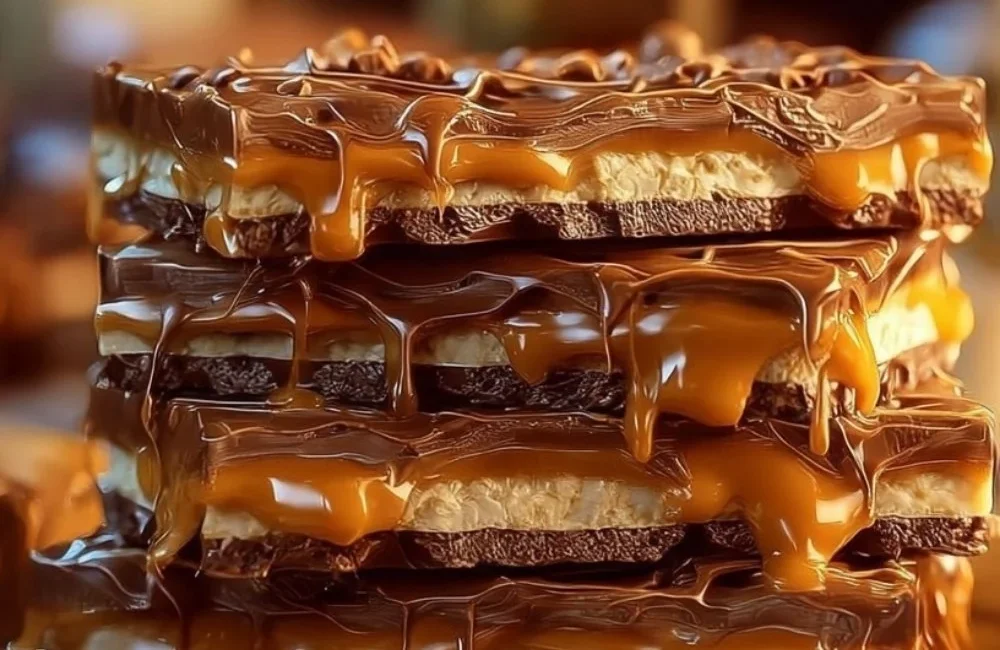
1 cup chocolate chips, 1 cup creamy peanut butter, 1 cup crushed graham crackers, 1 cup mini marshmallows, 1 cup diced nougat candy, 1 cup caramel sauce, 1 cup chopped peanuts
Directions :
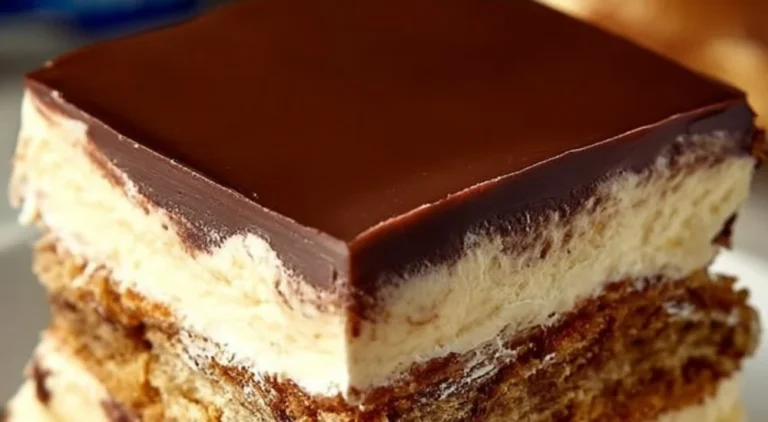
- In a medium saucepan, melt the chocolate chips and peanut butter together over low heat, stirring until smooth., 2. Remove from heat and stir in the crushed graham crackers, mini marshmallows, and diced nougat candy until well combined., 3. Press the mixture into a greased 9×13 inch pan evenly., 4. Drizzle caramel sauce over the top and spread it gently., 5. Sprinkle chopped peanuts on top of the caramel layer., 6. Refrigerate for at least 1-2 hours until firm., 7. Cut into bars and serve.
Ingredients through a cultural & historical lens
Reading the ingredient list is like reading a map. Chocolate chips speak to industrialized chocolate culture—small, standardized smiles of confectionery. Creamy peanut butter is a distinctly modern pantry item, a refinement of forage and preservation into a smooth, spreadable form. Graham crackers carry a peculiar American story: invented in the early 19th century by a health reformer, yet transformed into a vehicle for desserts and communal rituals like s’mores. Mini marshmallows are the product of mechanized confectionery processes that proliferated in the 20th century. Nougat diced into cubes, whether homemade or store-bought, brings Old World textures into a New World format.
Together, these ingredients are less a family tree than a marketplace chronicle. Each item signals a different industrial and cultural history—colonial sugar, transatlantic cacao trades, peanut domestication in the Americas, and the mid-century explosion of convenience foods. Yet when combined, these histories soften into something intimate: the hush of a kitchen where grandparents tell stories while fingers press mixture into a pan; the way tastes travel across generations, absorbing new ingredients and leaving footprints on festival tables.
Cooking the dish: sensory notes & traditional techniques
Though the recipe is straightforward, the sensory experience is layered. Melting chocolate and peanut butter releases a rich, bittersweet aroma that feels like the beginning of a good story. The first stir is velvet—thick, glossy—inviting the crushed graham crackers and marshmallows to become islands sticking to a molten sea. Nougat adds a chew that is both nostalgic and textural, its sugar crystals or soft pistachio flecks interrupting the smoothness. Pressing the mixture into the pan is a domestic percussion: the satisfying give when the base sets under the palm, like tamping the clay of a small sculpture.
Traditional techniques are less about specific temperatures and more about timing and feeling. The low, patient heat of the melt is a quiet ritual; the gentle spread of caramel is an act of care, a slow brushstroke that speaks to hospitality. Refrigeration is the waiting room of anticipation—an interlude where aromas settle and textures consolidate. Serving is a matter of presentation and temperament: cut clean and symmetrical for a celebratory table, or rustic and generous for a picnic blanket.
How different regions prepare their version
Across regions, the No-Bake Snickers Bar adopts local voices. In parts of Latin America, cooks might substitute caramel sauce with dulce de leche, lending a deeper, milkier sweetness that echoes regional preferences. In the UK and Ireland, a crumbly biscuit base might replace graham crackers, and the addition of roasted peanuts could turn the bar toward a more toasted profile. In vegan or allergen-conscious communities, the nougat might be replaced with date-based chews while chocolate becomes plant-based, creating a cruelty-free lift without sacrificing chew and sweetness—an approach akin to the creativity found in many plant-based recipes such as the cake mix cookie bars that reinterpret classic textures without losing their heart.
In East Asian contexts, where the sweetness scale differs, cooks may reduce the caramel or employ sesame seeds for a savory counterpoint. Meanwhile, in households where store-bought caramel is replaced by a quick, boiled-down syrup, the bar takes on a more homemade, caramelized edge. The common thread remains: regions adapt the bar to the continuity of their palate, and in doing so, create a delightful variety that keeps the recipe alive.
Traditional ways this dish is shared or served
No-Bake Snickers Bars have a sociable temperament. They are dispensed by hand at school fundraisers, sliced square at summer reunions, and unwrapped from waxed paper during long road trips. They travel well—firm enough to survive a picnic basket but tender enough to be bitten into on a bench beneath a plane tree. In many families, this recipe is a crate of comfort: children learn to press the mixture into pans; elders supervise the drizzle of caramel; a cousin brings the bowl of chopped peanuts. These acts transform the bars from mere food into a rite, small but sincere.
Ceremonially, they appear at holidays and potlucks, a democratic dessert that does not demand formality. In community kitchens, they become a teaching tool for basic confectionery confidence—no oven, just a saucepan and timing. At times, they are offered as a consolation, a quick, empathetic tray of something sweet after news that needs sweetness. The tradition is not strict but intimate: a recipe that invites participation and thus strengthens the social bonds around it.
Storing the dish without losing its cultural essence
Storage is an act of preservation, not merely of texture. Refrigeration keeps the bars firm and portable, but the way they are wrapped and returned to the fridge says a great deal about the household. A glass container with a cloth lid speaks of care; a foil wrap tucked into a cooler speaks of travel. To preserve both texture and meaning, store them in a cool place layered with parchment to avoid stickiness; for longer keeping, an airtight container in the fridge is best. Yet one must be careful: refrigeration can mute the immediate fragrance of caramel and chocolate. When retrieving bars for service, allow them a few minutes at room temperature so their aromas regain voice.
In many cultures, preserving sweets is also preserving memory. A Tupperware of bars in the back of a fridge is a repository of birthdays and late-night conversations; retrieving one is a small ceremony. The way families label the day they were made, or who made them, is as much a preservation of narrative as it is of food.
Cultural questions people often ask
People often ask whether a no-bake recipe like this can be considered “real baking.” My answer is always to look at the social ritual rather than the appliance. The act of making, of layering textures and sharing them, is the same essential thing. Other questions touch on substitutions: can nougat be omitted? Yes, but each omission changes the story—the nougat is the historic echo in the bar. Will the bars travel well in humid climates? Generally yes, though humidity will soften textures; a cooler or airtight packaging helps. Gluten-free requests lead cooks to swap the graham crackers for alternatives, a small regional adaptation that still honors the dish’s spirit. People also want to know how long to refrigerate; beyond the technical answer lies the cultural one: set it long enough that anticipation grows, because these desserts taste of patience and company.
A closing note on food, memory & travel
Food is the slowest kind of map. A No-Bake Snickers Bar carries geography and memory in equal measure: the peanut from one shore, the nougat with Mediterranean ghosts, the graham cracker an unlikely American reformer’s legacy. Eat one and you taste not just sugar and fat but the sediment of places and hands. To travel with these bars—whether physically in a picnic basket or through the stories that accompany a recipe—is to understand that sweets are small archives of belonging. They connect the practicalities of pantry life to the rituals of welcome. In kitchens across continents, people are pressing similar mixtures into tins, singing the same unspoken refrain: stay, talk, feed one another.
Conclusion
For variations that emphasize crunch and a more cereal-like body, see the creative take on No Bake Crispy Snickers Bars | Mom On Timeout, which adapts the idea for crisp textures. If you are exploring plant-based alternatives that keep the spirit of the bar intact, consider the thoughtful approach found in Vegan Snickers Bars (Homemade, No-Bake), which reimagines nougat and caramel for a vegan pantry. For another gluten-free and date-sweetened interpretation, the richly inventive Vegan Snickers Bars (No-bake, GF) – Addicted to Dates offers a perspective on how tradition and necessity can produce delicious reinventions.