No-Bake Chocolate Eclair Cake Recipe
Introduction
This preparation is a study in controlled simplicity: a laminated no-bake assembly that converts elements with minimal heat into a layered dessert that recalls the classic éclair. The technique relies on osmotic softening, structural layering, and temperature-controlled stabilization rather than traditional baking. Expect a contrast between a gelatinous vanilla custard and a pliant, chocolate-frosted top; both components develop texture through time and cold, not through heat. For professionals constructing menus where mise and timing matter, consult resources for complementary dishes such as easy dinner recipes to coordinate service flow.
The culinary logic behind this dish
At its core, this No-Bake Chocolate Eclair Cake executes two foundational pastry principles: hydration-controlled textural transformation and emulsified foil-like topping. The instant vanilla pudding mix, when hydrated with milk, sets due to the instant starches and proteins engineered for rapid gelation. Folding in whipped topping introduces fat and air, reducing density and creating a mousse-like mouthfeel while tempering sweetness. The graham crackers act as a disposable shortcrust: their dry matrix initially provides structural integrity, then absorbs moisture from the pudding over refrigeration time to achieve a soft, eclair-like crumb. The chocolate frosting, warmed briefly, becomes spreadable and creates a glossy, semi-fluid barrier that arrests further evaporation and contributes a concentrated cocoa note. For further explorations of tightly scheduled preparations, see quick easy recipes.
How to make No-Bake Chocolate Eclair Cake Recipe
This section presents the recipe verbatim and then explains the rationale behind each step and how to execute it precisely for consistent results.
Ingredients :
14.4 oz box of graham crackers, 2 3.4 oz. Packages of instant vanilla pudding, 3 cups of milk, 1 8oz tub of whipped topping, 1 16oz can of chocolate frosting
Directions :
In a mixing bowl, mix together the instant pudding and the milk. Let sit until it firms up. Roughly 3 – 5 minutes., Then fold in the whipped cream., Lightly spray a 9 x 13 inch glass pan with nonstick cooking spray. Place a layer of whole graham crackers on the bottom of the pan. You may need to break some graham crackers apart to cover the entire bottom of the pan., Spread half of the pudding mixture on top of the crackers. Layer another layer of graham crackers over the pudding mixture. Then layer the other half of the pudding mixture on top of crackers. Top with a last layer of graham crackers., When using the store-bought frosting, remove the lid and foil liner. Place in the microwave for about 10-12 seconds. Give it a good stir and it will be a lot easier to spread over your eclair cake., Spread chocolate frosting across the entire cake and place in refrigerator for 4 to 6 hours. The graham crackers will soften up the longer it sets, which gives it the soft eclair taste., Slice into 12 pieces and serve cold. Store any leftovers in the refrigerator!
Ingredient analysis through a chef’s lens
Each component is selected for functional behavior. The instant pudding mix contains pre-gelatinized starches and powdered milk solids; these provide rapid gelation and body without extended cooking. Using 3 cups of milk balances hydration to produce a firm, sliceable set that remains tender after folding in the whipped topping. The whipped topping (a stabilized, aerated cream substitute) introduces fat and entrained air that lightens texture while contributing to mouth-coating richness. Graham crackers serve as a low-moisture matrix; their bran-sugar profile and fine crumb rapidly accept moisture, enabling a reproducible softening profile when refrigerated. The chocolate frosting provides a concentrated fat-sugar-glaze that both seals and flavors the surface; brief warming lowers viscosity for even coverage without destabilizing the internal set.
Kitchen workflow & technique breakdown
Organize mise to minimize interruptions: chill the mixing bowl and utensils if ambient kitchen temperature is warm to maintain the integrity of the whipped topping once folded in. Hydrate the pudding first, then allow the 3–5 minute gelation period before folding. This pause is critical: premature folding when the pudding is overly fluid will cause excessive absorption into the crackers, yielding a soggy product. Conversely, over-set pudding will resist integration and produce streaks in texture. Prepare the pan and crackers in parallel so the assembly proceeds without delay — the crackers can stale if exposed too long, affecting hydration rate. If producing multiple trays, standardize the time between assembly and refrigeration to maintain uniform softening across batches. For menu planning that pairs well with chilled desserts, review complementary options at viral trending recipes.
Texture control, heat management & timing
Texture is governed by two variables: hydration time and refrigeration duration. The pudding’s initial viscosity determines how aggressively it migrates into the graham crackers. Aim for a pudding that is set but malleable — this is why the recipe specifies 3–5 minutes. Once assembled, the refrigeration window of 4–6 hours is the control knob for final mouthfeel: at four hours the crackers will be softened but may retain a slight bite; at six hours they approximate the tender interior of an éclair. Heat management concerns only the frosting: 10–12 seconds in a microwave reduces viscosity without raising temperature enough to break emulsion. Use short bursts and stir; overheating will separate fat and sugar, leading to a greasy sheen rather than a glossy coat. Always cool the frosting slightly after microwaving to avoid melting the pudding layers.
Professional variations
Maintain the structure while adjusting flavor or technique to suit service demands:
- For a more refined mouthfeel, substitute one cup of milk with half-and-half to increase fat and silkiness, but be mindful this alters gelation speed.
- To reduce sweetness and increase depth, incorporate a thin layer of unsweetened ganache (chilled to spreadable) instead of store frosting; this requires tempering and slightly longer holding times.
- For individual portions, build in small 8×8 pans or ramekins; smaller volumes set faster, so reduce refrigeration time by 30–45 minutes and monitor texture.
Any modification to dairy proportion will change hydration kinetics; when adapting recipes, maintain the total liquid mass to avoid over- or under-hydration.
Finishing touches & plating philosophy
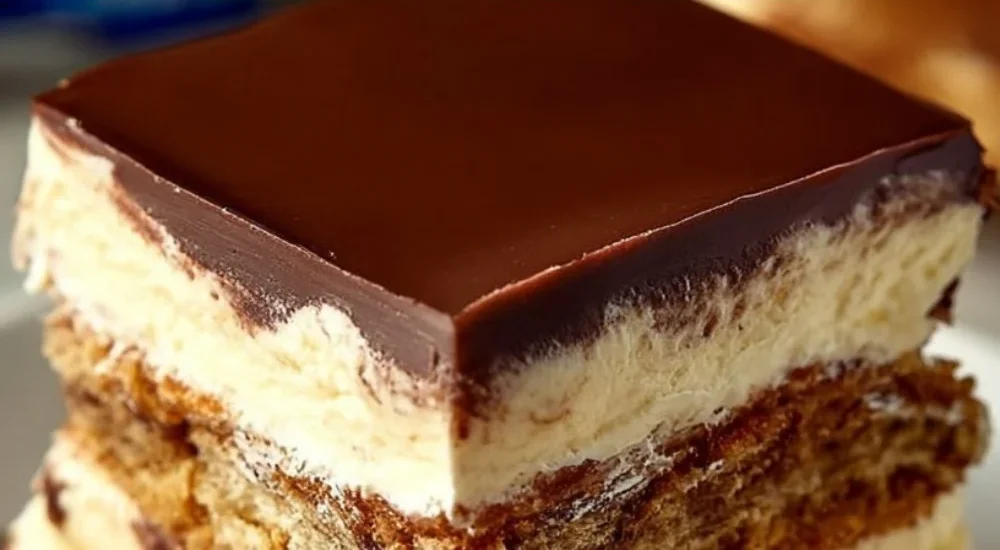
Finish with restraint: the chocolate top should be smooth and uninterrupted to provide a clean contrast to the pale interior. A hot spatula can be used for a mirror finish—briefly dip, wipe, and level. When slicing into 12 pieces, use a sharp knife warmed under hot water and wiped between cuts to ensure clean edges and minimal smearing. Serve chilled; temperature affects flavor perception — colder slices mute sweetness and emphasize texture, while slightly warmer slices intensify chocolate aroma. For presentation, plate each slice on a chilled surface to slow melting and maintain vertical structure during service. For parallel plating strategies and quicker side elements consider consulting easy dinner recipes for balanced menus.
Maintaining quality after cooking
Storage is refrigeration-only. The structure is fragile at ambient temperatures because the filling relies on cold-set starches and aeration. Store in an airtight container to prevent surface dehydration and flavor exchange. Consume within 3–4 days; beyond that, enzymatic action and moisture migration will collapse layers and produce a gummy texture. If freezer storage is necessary, freeze whole assembled cake tightly wrapped; thaw in refrigeration for 12–18 hours to allow gradual equilibration and prevent water migration that results in graininess.
Questions from home cooks (chef answers)
Q: Will different brands of instant pudding change the result?
A: Yes. Brands vary in starch type and sweetener balance. Always replicate the brand used during testing or adjust milk ratio by 10% if a substitute produces a thinner set.
Q: Can I substitute fresh whipped cream for the whipped topping?
A: Lightly whipped, stabilized cream can be used, but it is less resilient to long holding times and may deflate. Add a small stabilizer (gelatin bloom or cream of tartar) if using fresh cream for prolonged refrigeration.
Q: Why not let the pudding set fully before folding in the whipped topping?
A: Over-set pudding resists homogenization, creating textural pockets. Folding while the pudding is semi-set allows integration without deflating the whipped topping.
Q: What is the purpose of briefly microwaving the frosting?
A: To reduce viscosity for even spreading. The brief heat loosens the sugar-fat matrix without breaking emulsion or altering flavor.
Final chef notes
This recipe is an exercise in controlled hydration and temperature staging. The method is efficient, forgiving, and scalable when procedural timing is standardized. The sensory outcome — a cool, tender interior with a concentrated chocolate cap — depends on respecting the set times and managing the brief heat applied to the frosting. Clean slicing and cold service preserve the intended contrasts. Resist the impulse to accelerate refrigeration or overheat the frosting; both shortcuts compromise the texture profile. For menu integration, pair this dessert with lighter, acidic courses that reset the palate.
Conclusion
For a standard reference to this classic format, consult the original No-Bake Chocolate Eclair Cake Recipe on Allrecipes (No-Bake Chocolate Eclair Cake Recipe). For an alternative technique and additional variations, see Culinary Hill’s overview (Easy Chocolate Eclair Cake – Culinary Hill). For a stepwise home-baker’s approach and troubleshooting tips, review Mom Loves Baking’s guide (Easy No-Bake Chocolate Eclair Cake Recipe – Mom Loves Baking).
No-Bake Chocolate Eclair Cake
Ingredients
Method
- In a mixing bowl, mix together the instant pudding and the milk. Let sit until it firms up, roughly 3–5 minutes.
- Fold in the whipped topping gently.
- Lightly spray a 9 x 13 inch glass pan with nonstick cooking spray.
- Place a layer of whole graham crackers on the bottom of the pan, breaking them apart as needed to cover the entire base.
- Spread half of the pudding mixture over the graham crackers.
- Layer another layer of graham crackers on top of the pudding mixture.
- Spread the other half of the pudding mixture over this layer of graham crackers.
- Top with a final layer of graham crackers.
- Remove the lid and foil liner from the can of chocolate frosting and microwave for about 10-12 seconds to make it easier to spread.
- Spread the chocolate frosting over the entire cake.
- Refrigerate for 4 to 6 hours. The graham crackers will soften over time.
- Slice into 12 pieces and serve cold. Store leftovers in the refrigerator.