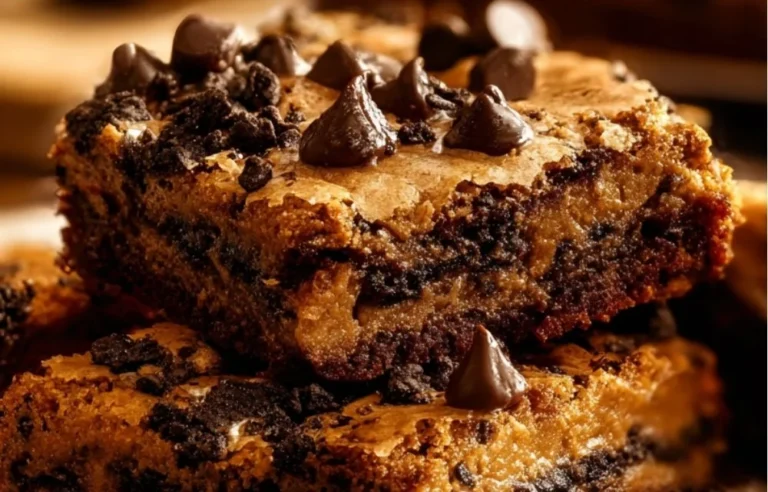
No-Bake Chocolate Topped Peanut Butter Bars
Introduction
There is a particular kind of comfort that comes from a recipe without an oven: the quiet ritual of assembly, the labor of hands rather than heat, the small triumph of a chilled slice that holds together because of care and memory. I first tasted No-Bake Chocolate Topped Peanut Butter Bars on a humid evening in a seaside guesthouse where the owner, Sofia, pressed the oat-and-peanut mixture into a tin with practiced fingers and told me stories of her childhood kitchens — of school picnic blankets, of neighbors who swapped jars of honey like secrets. In that dim kitchen, the bars were less a dessert than a social currency, passed around as proof of hospitality and of the slow, sweet steadiness of home. Years later, I would find echoes of those bars in disparate places: in a Melbourne laneway cafe that served a gluten-free version beside espresso, in an Appalachian church bake sale where the peanut-butter aroma conjured summer church picnics, and on a college dorm room counter where the recipe was a staple survival food.
The simplicity of the ingredients — peanut butter, honey or maple syrup, oats, and a glossy chocolate crown — belies a cultural richness. This is a dessert that travels well, that adapts to local pantry shelves and to the stories of the people who make it. If you want a quick companion piece to this recipe, try pairing it with memories of other no-bake delights, such as the nostalgic fruit-and-chocolate combinations found in chocolate-covered cherry magic bars, which share a kinship in ease and indulgence.
The origin story & regional influence behind this dish
No-bake bars occupy an oddly modern space in culinary history: rooted in thrift, popularized by wartime rationing and mid-century convenience, yet also ancient in the sense that people have always pressed together nuts, sweeteners, and grains to make portable nourishment. The particular pairing of peanut butter and chocolate has a distinctly American resonance — from the peanut’s rise as a staple crop in the American South to the romantic, almost reverent modern cult of the peanut-butter-and-chocolate sandwich. Yet the idea of combining nut pastes with grains and sweeteners is global. In West Africa and parts of Southeast Asia, groundnut or sesame pastes meet millet, rice, or coconut in bars or balls meant for travel and sustenance. What travels with the No-Bake Chocolate Topped Peanut Butter Bars is less a recipe than a pattern: salt, fat, sweetness, and grain, compacted into a slice of comfort.
Regional influence often shows itself in the sweeteners chosen: honey in Mediterranean-influenced homes, maple syrup where northern winters make sap a local ritual, and brown sugar or molasses in places where cane or beet sugars dominate. The chocolate topping, too, can become a cultural signifier — darker, cut with sea salt in coastal regions that prize bitter-sweet contrasts, or milk chocolate in areas where the palate leans toward softer, creamier textures. In a small town I passed through in Vermont, a grandmother told me that her version used maple syrup because it tasted like childhood; in a Brooklyn co-op, a young father favored honey to keep a gentle, floral sweetness for his toddler. Food carries home with it, and this bar carries the fingerprints of every place it passes through.
How to make No-Bake Chocolate Topped Peanut Butter Bars
Below is the recipe as it was handed to me, unchanged and as honest as the first time Sofia taught me to press the mixture into the pan.
Ingredients :
1 cup peanut butter, 1/2 cup honey or maple syrup, 2 cups rolled oats, 1/2 cup chocolate chips, 1 tablespoon coconut oil
Directions :
- In a medium bowl, mix together peanut butter and honey until well combined., 2. Stir in the rolled oats until fully incorporated., 3. Press the mixture into an 8×8 inch baking dish evenly., 4. In a small saucepan, melt the chocolate chips and coconut oil over low heat, stirring frequently., 5. Once melted, pour the chocolate over the peanut butter mixture in the baking dish and spread evenly., 6. Refrigerate for 20-30 minutes until set., 7. Cut into bars and serve.
Those seven lines are deceptively straightforward. In practice, making these bars is an act of attention: listening for the soft sigh when honey yields to peanut butter, feeling the oats change their temperament as they absorb the oils and bind into a dough-like mass, and waiting — sometimes impatiently — for the chocolate to settle into a mirror sheen before you cut through it. The ritual is short but complete, a small ceremony of transformation from disparate pantry items into a convivial slab.
Ingredients through a cultural & historical lens
Each ingredient tells a story. Peanut butter, once a luxury for some and a protein staple for others, carries the history of industrialization and agricultural policy, of New World crops integrated into global diets. Honey and maple syrup are both ancient sweeteners with terroir — the floral notes of a particular grove or the woody hum of a certain maple stand can define the sweetness of the bar. Rolled oats bring with them northern European and American grain traditions; they are humble, chewy, dependable. Chocolate, once a ceremonial paste in Mesoamerica and now a global commodity, crowns the bar with a lineage of exchange, colonization, and transformation.
When you fold these components together you also fold history. In certain Southern towns the peanut is both crop and cultural emblem; in northern woods the maple’s late winter drip is a community event; in urban kitchens the choice between honey and syrup might be shaped by a farmer’s market stall. The bar becomes a canvas on which local histories and economic realities paint their textures. In my journeys, the most moving versions were those that felt anchored to a place — a honey from a rooftop apiary in Athens with citrus undertones; an oat milled at a cooperative in Scotland; a chocolate shaved from a local chocolatier’s truffle scraps. These choices make the bars more than the sum of their parts.
Cooking the dish: sensory notes & traditional techniques
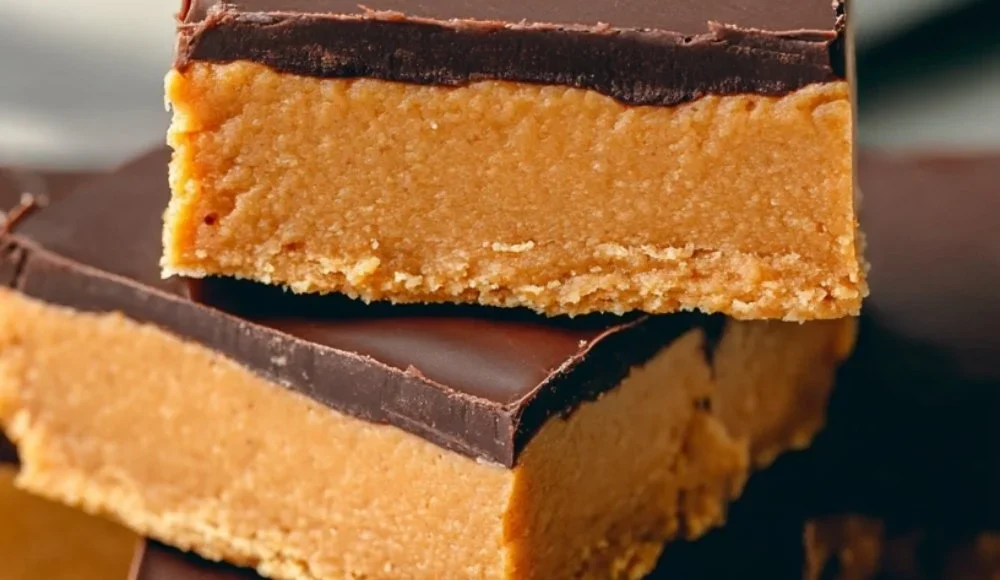
Making these bars is as tactile as it is aromatic. The first motion — mixing peanut butter with honey — releases warm, nutty perfume that can settle into the room like a memory. Oats confer a rolling, grainy whisper when folded in; their texture is the counterpoint to the silk of the peanut butter. Pressing the mixture into the pan is a ritual that compresses sound and time: the soft thud of palm against tin, the scrape of a spoon smoothing the surface, the small satisfaction of an even edge. The melted chocolate, when poured, creates a glossy surface that catches light like a calm lake.
Traditional techniques are less about thermometers and more about touch. Older cooks will tell you to use a flat-bottomed glass to press the mixture evenly, to warm the peanut butter slightly if it feels stubborn, to cool the chocolate until it is still warm but not runny to preserve that satisfying thin crack when you bite into the bar. These small instructions are transmitted orally, gestures learned at a counter or over a kettle, and they carry the intimacy of a kitchen apprenticeship. It’s not about the exact temperature but the feel — the give of the pressed oats, the sheen on the chocolate, the coolness under your fingertips when you lift the pan.
I learned one small mnemonic in a family-run inn in Lisbon, where the innkeeper insisted that desserts should “smell like the coast” — a phrase that, to her, meant a hint of salt at the edge. She would dust the chocolate with a tiny pinch of sea salt to wake the flavors; a gesture that turned sweetness into a memory of place. These are the techniques that link a simple no-bake bar to landscape and lineage.
How different regions prepare their version
Wherever this bar travels, it acquires local flourishes. In Mediterranean homes, a drizzle of orange blossom honey or a scattering of crushed almonds transforms the bars into something that tastes of sun and orchard. In Australia, tahini might replace half of the peanut butter in a variation that leans into sesame’s roast; in parts of Latin America, crushed toasted peanuts and a touch of cinnamon might be folded in, nodded to the mole-like marriage of chocolate and spice. In vegan urban communities, coconut oil and maple syrup appear not only as ingredients but as statements of ethical sourcing and seasonality.
The chocolate topping is a local calling card. In west coast bakeries that favor darker flavors, the chocolate might be 70 percent cocoa, cut with a spare sweep of olive oil to gloss it; inland, a milk chocolate might be chosen for the childhood comfort it evokes. In colder climes, the bars are sometimes chilled longer and wrapped in wax paper for sturdier transport, making them a favorite on winter hikes. Each regional variant makes a claim on the bar’s identity, and yet the core — peanuts, oats, a sweet binder, and chocolate — remains a reassuring constant.
Traditional ways this dish is shared or served
These bars are ceremony in miniature. They appear at potlucks, wrapped in wax paper and badged with sticky notes; at church fundraisers, cut into small squares because generosity is measured in portion; at school bake sales where the parental promise that a treat is “homemade” is as much a social contract as a transaction. They become tokens at gatherings: a plate at a housewarming, a tin on the porch for a neighbor after surgery, a component of a picnic spread beneath a plane tree. In many places they are the dessert of choice when transportability and shelf life matter.
In some households, the bars are a rite of hospitality, offered to unexpected guests alongside a cup of tea. In others, they are medicinal: the energy of peanut butter and oats prescribed to a harried new parent or a student pulling an all-nighter. The sharing rituals imbue the bars with social purpose — they are rarely eaten in isolation in a cultural sense; they are given and received, wrapped in goodwill and memory.
Storing the dish without losing its cultural essence
Storage is practical but also preserved ritual. Refrigeration is the simplest safeguard: it keeps the chocolate glossy and the bars firm. But in places where refrigeration was once scarce, vendors relied on cool cellars or thick, shaded pots to keep bars from softening — a practice that becomes part of the lore. To maintain cultural essence, consider how the bars were shared in their home context: wrapped in wax paper for portability, cut into small communal bites for a large gathering, or stacked in a tin for neighbors. Preservation is not only physical but social; the way you store and present them echoes the traditions that made them beloved.
An old woman in Oaxaca told me she stored her bars in a clay jar that absorbed excess moisture and lent a faint earthy scent to the sweets. A college friend stashed them in a freezer bag in their mini-fridge, pulling them out one bar at a time like a ritual of survival. Both methods respected the bar’s role: sustenance, sweetness, and connection.
Cultural questions people often ask
People often ask whether the bars are “authentic,” which is a curious question for a recipe that is, by nature, hybrid and migratory. Authenticity here is less about origin and more about intent: are the bars made with care, shared freely, and embedded in memory? Others ask about substitutions and dietary tweaks, which speaks to the recipe’s adaptability; still, these technical queries are often a doorway into deeper cultural curiosities: who grows the peanuts, who harvests the honey, what festivals mark the seasons in which this bar is eaten? Those questions reveal that food is a social and ecological conversation as much as a culinary one.
Questions about sweetness and health frequently come up, too, and they sit at the intersection of modern dietary thinking and tradition. The answer often lies in how communities have balanced indulgence and sustenance over time — using the bar as a treat in some contexts and as portable nourishment in others.
A closing note on food, memory & travel
There is an intimacy to no-bake bars that feels like a hand on the small of the back: supportive, warm, unpretentious. Traveling with recipes — learning them in kitchens where language and hearth meet — has taught me that food is less about replicating exact measures and more about preserving small human gestures: pressing an oat mixture into a pan, stirring chocolate until it glows, offering a plate to someone who asks nothing in return. These bars, in their simplicity, invite us to remember that connection is often made in small, everyday acts.
Conclusion
If you want to explore close variations and techniques that echo this recipe, a well-loved instruction for a similar classic can be found at No-Bake Chocolate Peanut Butter Bars – Sally’s Baking, which offers a perspective on textures and proportions. For another approachable take with tips on assembly and chilling, consider the guidance in No-Bake Peanut Butter Chocolate Bars – Live Well Bake Often. And for a concise, five-ingredient celebration of chocolate and peanut butter that shares the same spirit of ease, see Chocolate Peanut Butter Bars – RecipeTin Eats.
No-Bake Chocolate Topped Peanut Butter Bars
Ingredients
Method
- In a medium bowl, mix together peanut butter and honey until well combined.
- Stir in the rolled oats until fully incorporated.
- Press the mixture into an 8×8 inch baking dish evenly.
- In a small saucepan, melt the chocolate chips and coconut oil over low heat, stirring frequently.
- Once melted, pour the chocolate over the peanut butter mixture in the baking dish and spread evenly.
- Refrigerate for 20-30 minutes until set.
- Cut into bars and serve.