Viral Chocolate Date Bark
Introduction
There is a moment in every city when a scent walks ahead of you—an aromatic herald that announces where people gather, what season it is, and which stories are worth listening to. In the little neighborhood café where I first tasted a version of what the internet now calls Viral Chocolate Date Bark, that moment arrived as a caramel-dark sweetness rolling out from a small to-go counter. The dates were warm and supple, the chocolate snapped with a gentle insistence, and between those two there was the familiar echo of hands that had folded fruit and sweet into one another for generations.
My name is Sofia, and I travel to understand how simple things—fruits, nuts, childhood confections—become vessels of memory. This bark feels like that sort of thing: a compact, portable pastry without the fuss of pastry. It is a modern confection with an ancient heart. If you want to wander beyond this recipe into other recipes riding the same wave, you might enjoy this curated list of viral trending recipes that have traveled kitchens and feeds around the world.
The origin story & regional influence behind this dish
Dates and chocolate did not grow up together. Dates belonged to the palm-swept oases of the Middle East and North Africa, where they were dried in the shade and wrapped in linen for the caravan. Chocolate arrived from the tropical Americas, bitter and ceremonial, and later softened with sugar and milk in European workshops. The collision that produced this bark is a late, joyful meeting: preserved fruit from ancient trade routes sitting side-by-side with a global love of chocolate.
In the Levant, dates are not merely food; they are a social language. Families break fast with them, grandmothers tuck them into schoolchildren’s lunchboxes, and whole villages will set down platters of dates to anchor holiday tables. The bark takes that social gravity—date as nucleus—and gives it a quick, modern shell: nuts for crunch, chocolate for cocoa nostalgia, and a whisper of salt to remind us of the sea salt that once preserved and traded spices and sweets across coasts.
It is worth noting that this recipe’s viral ascent reflects another kind of cultural story: the way social media accelerates culinary cross-pollination. What once might have been a home-preserved candy passed among neighbors has become a global phenomenon, inviting reinterpretations from home bakers in São Paulo, Beirut, and Copenhagen alike. For more recipes riding these currents, see this reflective guide to viral trending recipes and their journeys.
How to make Viral Chocolate Date Bark
Making this bark is less about technique and more about composition: arranging texture and memory on a small canvas. Below, the recipe and method remain intact, as they were given—unchanged and unembellished, because the charm of this snack lies in its simplicity.
Ingredients :
20-24 Medjool dates , 2/3 cup creamy peanut butter, 1/2 cup dry roasted peanuts, 9 ounces chocolate chips or chocolate bar, 1 teaspoon coconut oil – optional, Coarse sea salt – optional for topping
Directions :
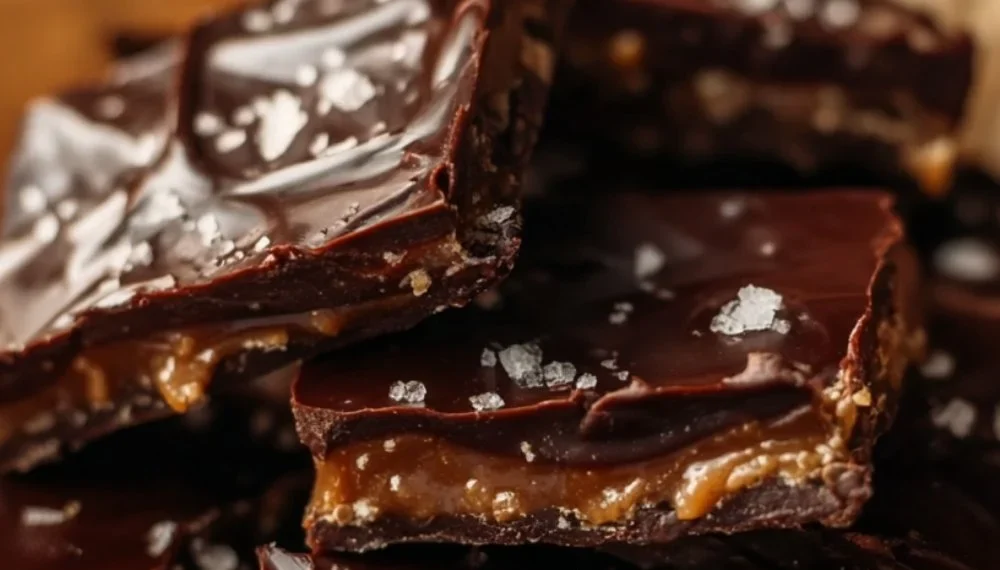
Line a medium size baking sheet with parchment paper. Slit each date (remove the pits if needed), then use your hands to spread the dates onto the lined pan, arranging them in a rectangular shape. I spread mine in a 4×6 pattern. , Pour and spread the peanut butter over the dates to cover them, then sprinkle the peanuts in an even layer over the peanut butter. , Place the chocolate chips and coconut oil (if using) in a microwave-safe bowl and microwave the chocolate in 30-second intervals until it is mostly melted. Then stir the chocolate to fully melt it until it is nice and smooth. , Pour the melted chocolate evenly over the peanut butter layer and spread it out so that it covers everything. Top with coarse sea salt if desired. Then place the date bark in the freezer for 60-90 minutes or until it is set. , Remove the bark from the freezer once it is ready and peel the parchment paper off of the bottom of the bark. Place the bark onto a cutting board and cut it into pieces using a large kitchen knife. , Serve and enjoy!
Ingredients through a cultural & historical lens
Open a date and you are holding a compressed history. The Medjool variety, recommended here, carries a sugar-sun taste that speaks of desert afternoons; it is the cultivar travelers would have prized on long treks. The peanut butter and roasted peanuts are New World gifts that have been folded into global cuisine wherever trade and migration have taken them—Peanut vendors in street markets of West Africa and peanut butter jars in American pantries both tell parallel stories of legume adaptation.
Chocolate, listed as chips or a bar, is the thread that stitches continents together. It was once a rare, expensive import; now it is a pantry staple. In this bark it plays a role both functional and symbolic: a sealing, a gloss that holds the other layers and a familiar sweetness that invites anyone—child or elder—to take a piece and smile. The optional coconut oil nods quietly to tropical kitchens where coconut is more than flavor: it is texture, memory, and a little tropical perfume.
Cooking the dish: sensory notes & traditional techniques
This is a recipe that privileges touch. Slitting dates is an intimate act; your fingers recognize which fruit is dense and which one gives in like a remembered bite. Laying them in a grid—the suggested 4×6—has the satisfaction of order, of an old pastry chef’s need for symmetry translated into a home cook’s calm. The peanut butter is warm and forgiving; it spreads like a promise.
Microwaving chocolate may seem modern and mechanical, but in many kitchens of the world the spirit is the same as the old stovetop bain-marie: slow coaxing, patient stirring. When the chocolate glistens, there is a fragrant, almost floral hint—cocoa and toasted sugar—that can defy description yet insist you pause. The salted topping is ceremonial: a small grain of sea salt on a chocolate edge is a punctuation mark, a reminder that even sweets can mimic the sea and the land.
If you treat this as a ritual, each stage becomes a memory-maker: the tactile slit of dates, the audible sprinkle of peanuts, the glossy sweep of chocolate. These are the gestures that linger, asked for again at family tables.
How different regions prepare their version
Regional variations are how recipes travel and root. In the Gulf states, a version of a date-chocolate union might incorporate tahini rather than peanut butter, nodding to sesame pastes that have long enriched local sweets. In North Africa, almonds might replace peanuts, giving a firmer crunch and a toasted sweetness that aligns with local nougat traditions. In parts of South Asia, a dusting of cardamom on the chocolate could transform the bark into something that tastes like Diwali nights; the little green pods would fold their fragrant, citrusy perfume into every bite.
In Western kitchens, bakers often play with texture—crushed pretzels for a salty-sour crunch, coconut flakes for chew. In Mediterranean households, coarse sea salt is not optional; it is a household insistence that salt elevates chocolate into something more honest. Each variation tells a story: migration, adaptation, the availability of local ingredients, and the household’s memory of comfort.
If you are curious about how viral dishes mutate across cultures, this set of viral trending recipes highlights similar patterns—how a snack becomes a travel companion across kitchens.
Traditional ways this dish is shared or served
Date bark is not formal. It is a friend’s offering at a doorstep, a parcel in a picnic basket, a small plate set beside coffee or tea. In households that hold to ritual, pieces are rarely eaten alone—they are offered to guests with the same language used to offer a story. In Ramadan, for instance, dates break the fast; a chocolate-coated date can be a festive, modern companion on the table, set beside bowls of nuts and halva.
In colder climates the bark is sometimes wrapped in waxed paper and set into lunchboxes, a winter comfort that arrives at school like a note from home. In seaside towns it may be served with a cup of mint tea so the freshness of the tea offsets the richness of the chocolate and peanut butter. When families gather, a single rectangular sheet can be ceremonially broken—no cutting, just breaking with hands—to distribute pieces, and the shared cracking sound becomes part of the meal’s rhythm.
There is an intimacy in carrying this bark to another person: you give sweetness, a little energy, and a small piece of your kitchen’s taste. For those who love the social map of sweets, this is where bark transcends snack.
For more reflections on how trending recipes get reinterpreted in kitchens worldwide, consult this collection of viral trending recipes that shows similar evolutions.
Storing the dish without losing its cultural essence
Where you store food is often how you store memory. Wrapped loosely in parchment and kept chilled, this bark remembers the cool of a coastal pantry; kept in small tin boxes, it echoes a grandmother’s nibble at a kitchen table. Freezing is practical and recommended here to set the chocolate quickly, but the act of carrying chilled bark to a neighbor still feels like the same old practice of preserving sweets for travel and sharing.
If you want to hold on to texture and aroma, think small: single layers in airtight containers prevent crushing and preserve the glossy surface of the chocolate. Leaving a small scrap of parchment between layers keeps the ritual of peeling intact—a small ceremonial unwrapping. The cultural essence is not lost when stored; it is preserved, like a postcard, for later conversation.
Cultural questions people often ask
People ask why this recipe feels both new and familiar. It is new because its social media ascent and modular friendliness are modern phenomena; it is familiar because its components—dates, nuts, sweet coating—have been a part of dessert-making for centuries. They ask whether meatier or seed-based spreads can substitute for peanut butter: yes, the substitutions are personal and regional, but each choice nudges the bark into a different archive of taste.
Another frequent question is about the microwave step. Many cultures would use gentle heat over water; microwaves are merely an acceleration. The more important question is intention: whether you are making sweets to impress or to soothe. This bark, in all its viral simplicity, is better at the latter.
A closing note on food, memory & travel
Food is a map. Dates map desert routes, chocolate maps trade winds, and nuts mark local soils. Together in a simple bar they make a tiny atlas that fits in your palm. Wherever I go, small treats like this one are my pocket passports: they open kitchens to me, bring strangers to the table, and tell stories that no photograph fully captures. If you take this recipe with you, know you are carrying a little piece of many places—the Middle East’s preserved sweetness, the Americas’ cocoa history, and the modern home cook’s desire to combine comfort with convenience.
Conclusion
If you want to see one popular origin of this modern snack and its recipe notes, the original Date Bark (Viral Recipe) write-up by Eating Bird Food provides a clear, homey treatment of the idea: Date Bark (Viral Recipe) – Eating Bird Food. For another practical variant that inspired many home bakers online, the Viral Date Bark page on PlantBaes collects tips and photographs that reflect the recipe’s global spread: Viral Date Bark | plantbaes.
Viral Chocolate Date Bark
Ingredients
Method
- Line a medium size baking sheet with parchment paper.
- Slit each date and remove the pits if needed.
- Spread the dates onto the lined pan, arranging them in a rectangular shape (4x6 pattern).
- Pour and spread the peanut butter over the dates to cover them.
- Sprinkle the peanuts in an even layer over the peanut butter.
- Place the chocolate chips and coconut oil (if using) in a microwave-safe bowl.
- Microwave chocolate in 30-second intervals until mostly melted, then stir until smooth.
- Pour the melted chocolate evenly over the peanut butter layer and spread it out.
- Top with coarse sea salt if desired.
- Place the date bark in the freezer for 60-90 minutes or until set.
- Once set, remove the bark from the freezer and peel off the parchment.
- Place the bark onto a cutting board and cut it into pieces with a large kitchen knife.
- Serve and enjoy!