No-Bake Cherry Cheesecake Dessert
Introduction
When I think of simple pleasures that travel with me like a soft, familiar shawl, a no-bake cherry cheesecake becomes that shawl: effortless, comforting, and unexpectedly rich. My name is Sofia, and I have been following food across borders for years — from morning markets in Thessaloniki to late-night diners on the outskirts of New England — and this dessert has shown up in the most surprising places. It arrives at family potlucks in Midwest towns, at summer barbecues along coastal lanes, and in the tiny kitchens of expatriates who long for a taste of home. Each time, the dessert is the same in ingredients but different in the way it is held, spoken about, and plated. If you want a gentle tour of how a single dish can hold so many hands, start with a simple slice of no-bake cherry cheesecake. For other ideas to pair with this kind of nostalgia, my notes have often pointed me to seasonal collections and roundups like this desserts and sweet treats collection, which gather the context for these homely conversations.
The origin story & regional influence behind this dish
Cheesecake has a history as layered as its own filling. The modern American iteration — light, whipped, and often no-bake — bears both the mark of European cheesemaking and the improvisational practicality of post-war American kitchens. The graham cracker crust, an American invention of the 19th century, is itself rooted in a reform movement that sought simpler, more wholesome breads; over decades it became the crunchy base beneath countless American pies. Cherry pie filling, canned and preserved, speaks to the industrial age of convenience foods, the kind that allowed mid-century homemakers to offer a festive dessert without late-night canning or complicated pastry.
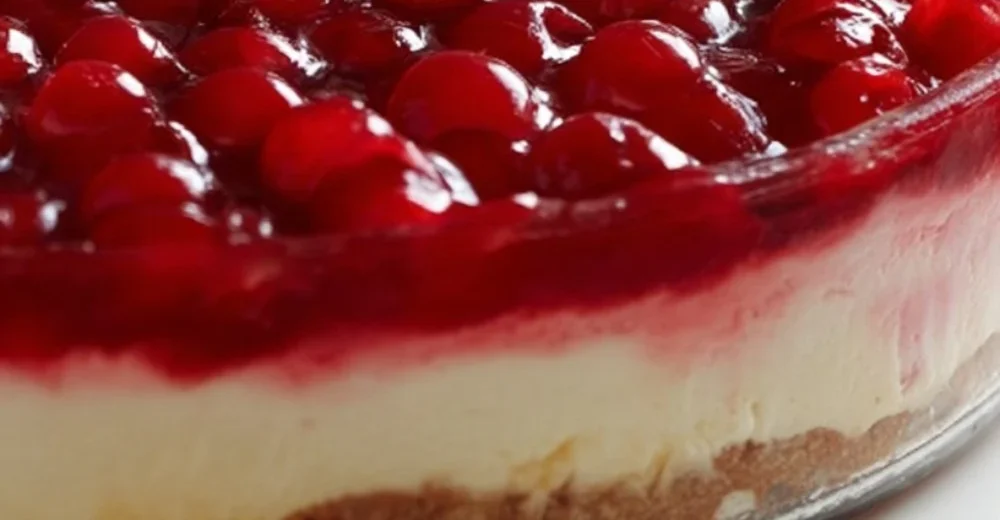
But this recipe’s charm is that it is not purely American. Across the Mediterranean, where I have watched cocottes cooled on windowsills, cooks layer sweetened cheese with cookies or rusks. In Eastern Europe, similar chilled pastries use quark or soft cheeses folded with whipped creams and fruit preserves. The no-bake approach — a cold, set dessert rather than an oven-browned one — is a cousin of those traditions. It marries the practicality of refrigeration with the theatricality of color: the lacquered, jewel-red cherry topping is as proudly celebratory at a summer picnic as a church fete in a small town. For a broader sense of desserts that accompany such gatherings, I often revisit curated lists such as desserts and sweet treats collection that map how sweets travel and transform.
How to make No-Bake Cherry Cheesecake Dessert
There is a ritual to assembling this dessert that feels more like setting a table than cooking. It is forgiving, so the act becomes communal: children can crush the crackers in a plastic bag with a rolling pin, a grandmother smooths the cream cheese layer while swapping stories, and someone else spreads the cherry topping like a final, jubilant act. The making is about touch — the way melted butter darkens the crumbs, how the cream cheese loosens and sighs when beaten into powdered sugar, and the way the whipped topping lightens the mixture into an almost cloudlike spread. It can be made hours or even a day ahead, which transforms it into a social dessert — one that waits patiently for conversation to catch up.
For those who love step-by-step inspiration, there are recipe pages and community-driven examples that mirror this simplicity; I have bookmarked many times into broader recipe collections like desserts and sweet treats collection to understand how cooks adapt the proportions, plates, and stories around treats like this.
Ingredients :
2 packages graham crackers (Use 2 plastic sleeves=18 rectangles of graham crackers (from a 14.4 oz. box)), 1 1/2 sticks melted butter, 4 Tbsp. granulated white sugar, 2 8 oz. packages of cream cheese, softened, 1 1/2 cups powdered sugar, 2 tsp vanilla, 4 cups whipped topping, 2 15-oz cans cherry pie filling
Directions :
Grease a 9″x 13″ pan (I use butter or coconut oil). Make the crust. Crush graham crackers in a plastic zipper bag with a rolling pin. Melt butter. Combine butter, sugar, and graham crackers. Press into 9″ x 13″ pan., Beat together cream cheese, powdered sugar, and vanilla. Fold in whipped topping. Spread over crust. Spread pie filling over all. Refrigerate at least one hour. Can be made ahead of time and stored in the refrigerator.
Ingredients through a cultural & historical lens
Every ingredient in this recipe is a passport stamp. The graham cracker, for example, was created by Sylvester Graham in the 19th century as part of a movement toward plain, whole-grain foods — its later adoption into a sweet crust is a delicious irony. Butter, once a luxury, became a household staple; melted here it binds crumbs into a firm foundation. Cream cheese, an American reinvention of soft European cheeses, gives the filling its tangy cream that Western palates now associate with celebration. Powdered sugar and vanilla are the small luxuries that whisper of festivity — the same pantry items that appear across cultures as ways to sweeten or scent.
Whipped topping, often a shorthand for whipped cream in the post-war period, has its own story: the convenience culture that embraced ready-to-use products and altered how desserts were assembled. Cherry pie filling, canned and glossy, is a product of fruit harvests preserved in syrup — a way for farmers and canners to offer cherries year-round. In many parts of Europe and Asia, cooks would use preserved cherries in jars, brandied cherries, or fresh macerated fruit; the canned version is an American convenience that has been warmly accepted in potlucks and playground bake sales, where the melody of childhood memory prefers convenience to craft.
Cooking the dish: sensory notes & traditional techniques
The making of a no-bake cheesecake is sensory theatre. The crust smells faintly of toasted wheat and butter as the crumbs are pressed into the pan; it provides a dry, grainy contrast to the filling’s velvet. When you beat the cream cheese with powdered sugar and vanilla, there is a soft, lemony tang balanced by rounded sweetness, and the mixture loosens and glows under the beaters. Folding in the whipped topping is a gentle choreography — lift, fold, turn — meant to preserve airy pockets that will translate into a lightness on the tongue.
This is not a dessert that requires heroic, technical feats; its tradition is in the gentle, domestic gestures. Many families have their preferred order of assembly, or a ritual spoon used only for holiday desserts. In some regions, the cherries are spooned in as a glossy crown; in others, they are scattered so the red punctuations appear like a constellation. The coldness matters almost as much as the taste: a chilled slice melts slowly on the tongue, and its coolness brings out the cream cheese’s subtle acidity. The whole experience is tactile and intimate — a conversation in flavors and textures.
How different regions prepare their version
A recipe travels by what people change and what they insist on keeping. In the American South, you may find versions that fold in a smear of lemon curd or a hint of almond extract with the vanilla — small nods to orchard orchards and plantation kitchens where citrus and nuts were prized. In parts of the Midwest, graham cracker crumbs give way to crushed vanilla wafers or gingersnaps, shifting the aroma toward spice. Along the Eastern seaboard and in immigrant kitchens, you might encounter mascarpone or ricotta mixed into the filling, reflecting Italian influence and a preference for denser, more rustic textures.
Across the Atlantic, chilled cheesecakes often lean into quark or fromage blanc, and fruit toppings are less often canned and more often poached or macerated, celebrating seasonality. In Japan, a lighter, mousse-like cheesecake reigns, where the texture is featherweight and the sweetness is discreet, illustrating how the same idea—cheese and fruit—can adopt a nation’s taste for restraint or exuberance. Wherever it lands, the no-bake cherry version tends to keep its essentials: a crumbly base, a sweet-tangy filling, and that jubilant crown of cherries. For inspiration and variations that keep the soul of sweet dishes intact, cooks sometimes consult collections such as desserts and sweet treats collection to see how others balance tradition and novelty.
Traditional ways this dish is shared or served
This is a dessert of gatherings. In my travels, I have watched it carried in wide aluminum pans to backyard reunions, brought to church socials on a Tuesday because the maker knows someone who needs comfort, or sliced into delicate wedges for afternoon tea in a sunlit conservatory. It is often served straight from the pan — communal and democratic — though in finer settings a slice may be plated with a sprig of mint, a drizzle of dark chocolate, or a single fresh cherry placed like an exclamation point.
Families have rituals around who gets the corner piece and who gets the middle. Some insist the cheesecake be made a day ahead so that the flavors fuse; others argue that freshness — the immediate jolt of tang and cold — is the point. In many households the dessert is tied to celebrations: birthdays, graduations, even funerals, because its quiet sweetness is both celebratory and consoling. In potlucks and small-town festivals, it functions almost ceremonially: you know without asking that someone will bring a pan, that plates will be paper, and that conversation will pause for the moment of sweet reprieve. You will hear stories told between bites — about first jobs, first loves, and first homes.
Myriad small rituals and symbolic acts — a grandmother’s secret to soften cream cheese just so, a child adding the cherries with jubilant impatience — make the simple recipe rich with human history.
Storing the dish without losing its cultural essence
Refrigeration is the safe harbor for this dessert. Stored covered, the cheesecake retains its texture for a couple of days, and many cooks will attest that flavors mature, the powdered sugar and vanilla settling into the cream cheese like memories in a well-loved house. If you must transport it, a cool box and gentle handling preserve both shape and dignity. In cultures where sharing is bound up with generosity, the act of making it ahead becomes part of hospitality — the host gains time to welcome guests, and the dessert arrives as a practiced kindness.
When frozen, the texture shifts; some prefer to keep the pan in the fridge so that the crust stays slightly firm and the cherries glossy. Regardless of timing, the storage practice is less about preservation of a recipe and more about preservation of ritual: who takes a slice first, whether it is served with coffee or a simple glass of milk, whether an elder watches to make sure everyone has enough. These small choices are how the dessert’s cultural essence is maintained.
Cultural questions people often ask
People often ask whether canned cherries are “authentic,” or whether substituting fresh fruit makes the dish more legitimate. The answer is that authenticity is not a fixed point but a conversation. Canned cherries are part of the dish’s history and have their own charm: they are glossy, accessible, and associated with communal feasts. Fresh cherries bring seasonality and a sense of immediacy. Both choices tell a story about time, place, and resource.
Another common question is whether no-bake means less skill. Quite the opposite: the skill is social and intuitive — knowing when to stop folding, how firm to press the crust, when the set is sufficient for slicing. People ask about substitutions (different crusts, different toppings). Each variation becomes a regional footnote — a mark of family preference or local availability. Finally, many wonder whether this dessert can be made ahead and served at scale; the recipe’s very nature answers yes, and that is why it has become a staple of gatherings where time and warmth matter more than technique.
A closing note on food, memory & travel
The no-bake cherry cheesecake is a map of migrations: of ingredients, techniques, and hearts. It is not the most elaborate dessert in the world, but it is intensely social — built to be shared, to be remembered, to anchor conversation. Every spoonful carries traces of the people who prepared it before you: the hands that pressed the crust, the first person who taught a child to fold in whipped topping, the neighbor who brought a pan because she always brings a pan. Travel has taught me that the most portable things are the small comforts of texture and temperature, the way a chilled bite can pause a day and let you breathe.
This dessert reminds me that culinary tradition is not always about grand lineage; sometimes it is about the ordinary acts that accumulate into heritage. Take the simplicity of the ingredients, the cheer of the cherry topping, and the fact that it can be pulled from the fridge when guests arrive — and you have an emblem of hospitality. When I serve it in a foreign kitchen, people say it tastes like home. When I bring it to a new town, someone invariably says it tastes like Sunday. That is the quiet power of recipes: they move with us and become the geography of our memory.
Conclusion
If you want a practical walk-through of a similar tray-style recipe, see this faithful adaptation of the dish at No-Bake Cherry Cheesecake {9×13 size} – Real Life Dinner: No-Bake Cherry Cheesecake {9×13 size} – Real Life Dinner. For a variation and community-tested tips that echo the themes above, explore the Best No Bake Cherry Cheesecake Recipe: Best No Bake Cherry Cheesecake Recipe.
No-Bake Cherry Cheesecake
Ingredients
Method
- Grease a 9’x 13′ pan using butter or coconut oil.
- Crush graham crackers in a plastic zipper bag using a rolling pin.
- Melt butter and combine with sugar and crushed graham crackers.
- Press the mixture firmly into the bottom of the greased pan to form the crust.
- In a bowl, beat together cream cheese, powdered sugar, and vanilla until smooth.
- Gently fold in whipped topping until well combined.
- Spread the filling evenly over the crust.
- Spread the cherry pie filling evenly over the cream cheese layer.
- Refrigerate the cheesecake for at least 1 hour before serving.
- Can be made ahead of time and stored in the refrigerator.