Strawberry Cheesecake Protein Balls
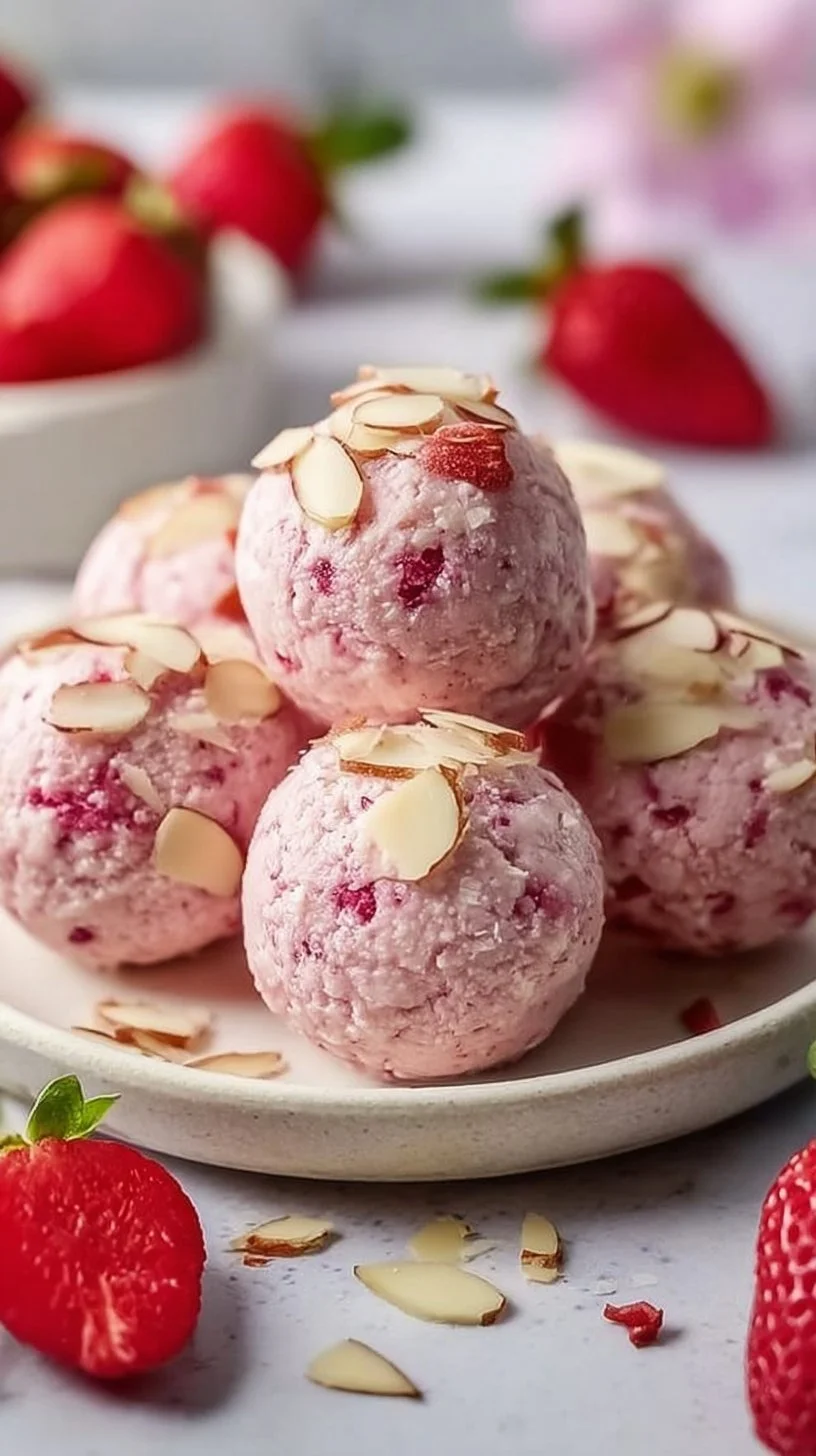
Strawberry Cheesecake Protein Balls refine the concept of an energy bite into a composed, texturally layered treat that balances sweetness, acidity, and umami from dairy. These bites translate cheesecake flavors and the bright, aromatic qualities of fresh strawberries into a compact, no-heat format suitable for snack service, travel, or post-workout recovery. To situate this recipe among similar composed snacks, consider how a chocolate dessert can be transformed into a hand-sized portion in preparations like chocolate-covered strawberry brownies: the principles of proportion, moisture control, and finishing are the same. The following sections explain the culinary logic, precise technique, and finishing protocols that make these protein balls succeed every time.
The culinary logic behind this dish
This recipe is an exercise in balancing structure (rolled oats, protein powder, almond butter) with a creamy, tangy component (cream cheese) and a volatile flavor booster (fresh strawberries). Structurally, rolled oats provide dry bulk and chew; protein powder increases the set and contributes a vanilla note. Almond butter supplies fat and emulsification; honey or maple syrup introduces hygroscopic sugars that both sweeten and regulate moisture migration. Reduced-fat cream cheese adds acidity, mouth-coating richness, and a cheesecake profile without overt heaviness. Fresh strawberries supply bright acidity and volatile aromatics that cut through the sweetness and fat, preventing the balls from becoming cloying.
From a culinary perspective, successful energy bites depend on three concurrent processes: (1) achieving a cohesive dough that binds without becoming greasy, (2) preserving the integrity of delicate inclusions (fresh fruit) so they contribute freshness rather than turning mushy, and (3) finishing for stability and shelf life. Each ingredient performs a specific mechanical or flavor role; understanding those roles allows predictable adjustments without changing the recipe.
How to make Strawberry Cheesecake Protein Balls
The process is deliberately short to avoid overworking fresh fruit and to maintain the cream cheese’s emulsion within the matrix. Begin by combining dry components first to ensure even distribution of protein powder and oats; this prevents pockets of powder that could create chalky texture. When you add almond butter and honey, use gentle but thorough mixing to form a cohesive dough — excessive agitation can heat the fats and make the mixture oily, while insufficient mixing results in crumbling. Folding in chilled, softened cream cheese slowly is the critical moment: you want small, evenly dispersed pockets of cream cheese that provide creamy bursts within each bite, rather than one homogeneous paste. Finally, incorporate the strawberries last and very gently; their juices are water-based and will loosen the dough if macerated. Refrigeration for at least 30 minutes sets the fats and allows sugars and moisture to equilibrate, improving bite and slice resistance. The directions below are the procedural skeleton; the subsequent sections elaborate on technique and troubleshooting.
Ingredients :
1 cup rolled oats, 1 scoop vanilla protein powder (about 30g), 1/2 cup almond butter, 1/4 cup honey or maple syrup, 1 cup fresh strawberries, chopped, 4 oz reduced-fat cream cheese, softened, 1/4 cup unsweetened coconut flakes (optional)
Directions :
- Gather all ingredients in a large bowl.
- Mix rolled oats and protein powder until evenly combined.
- Add almond butter and honey; mix until a thick dough forms.
- Gently fold in chopped strawberries and softened cream cheese until well incorporated.
- Roll mixture into small balls (about 1 inch in diameter).
- Place on a parchment-lined baking sheet and refrigerate for at least 30 minutes before serving.
Ingredient analysis through a chef’s lens
Rolled oats: They contribute chew, absorb free moisture, and create a cohesive fibrous network. The particle size of rolled oats is important; old-fashioned rolled oats will give chew and structure, while instant oats will over-bind and produce a gummy mouthfeel.
Vanilla protein powder (~30 g per scoop): It functions as both flavor enhancer and structural component. The protein content will set slightly as it equilibrates with wet ingredients; depending on the protein base (whey vs. plant), expect different hydration behaviors — whey hydrates and firms more readily.
Almond butter (1/2 cup): Provides lipid content for mouthfeel and acts as an emulsifier with the honey. Almond butter with a higher oil separation will need stirring before measuring to avoid a greasy result. Natural almond butter requires mixing to reincorporate oils.
Honey or maple syrup (1/4 cup): Hygroscopic sugars that both bind and sweeten. Honey has a denser viscosity and more floral notes; maple syrup is thinner and adds caramelized top notes. Either will affect the dough’s tackiness; adjust handling accordingly.
Fresh strawberries (1 cup, chopped): Fresh fruit introduces enzymatic activity and water. Chop uniformly to ensure consistent bursts of acidity without creating localized wet zones that can destabilize the dough.
Reduced-fat cream cheese (4 oz), softened: Adds acidity and the essential cheesecake tang. Softening is necessary to ensure even distribution without overworking; room temperature is preferable but avoid melting.
Unsweetened coconut flakes (1/4 cup, optional): Offer texture contrast and fat for surface adhesion if you choose to roll finished balls. Toasted coconut will add an aromatic toasty note; use sparingly to avoid domination.
Kitchen workflow & technique breakdown
Organize mise en place: measure dry ingredients together, warm the almond butter slightly if overly stiff, and chop strawberries uniformly. Use a large, wide bowl to mix — this allows efficient folding and minimizes juice release from fruit. A rubber spatula and a sturdy spoon are sufficient; avoid a mixer, which can overdevelop the mixture and warm fats.
Sequence matters: combine oats and protein powder first to distribute the powder evenly across particulates. Incorporate almond butter and honey to form a homogeneous dough before adding high-moisture components. Once cream cheese and strawberries are introduced, work quickly and with light folding motions to prevent juice extraction. If the dough becomes too sticky, a brief chill for 10–15 minutes firms fats and improves handling before shaping.
Shaping technique: portioning with a small cookie scoop or rounded tablespoon yields uniform 1-inch balls. To get a smooth exterior, roll between palms in light, consistent pressure — too much force will force juices out of the strawberries. If using coconut flakes, gently roll chilled balls into the flakes to avoid tearing.
Sanitation & temperature control: fresh strawberries will introduce native enzymes and microbes; keep them cold prior to use and consume the finished product within recommended refrigeration windows (see Maintaining quality). Clean cutting surfaces and utensils immediately after handling fruit to prevent cross-contamination.
Texture control, heat management & timing
Texture is a balance between chew (oats), creaminess (cream cheese), and a slight yielding bite (almond butter-honey matrix). Heat management is mostly passive: the key is avoiding frictional heat during mixing and shaping. Overmixing will warm oils, leading to an oily sheen and collapsing structure upon refrigeration. If the kitchen is warm, brief chilling (10–20 minutes) after forming the dough but before rolling can preserve texture.
Timing of refrigeration influences mouthfeel. A 30-minute chill sets fats and allows some retrogradation of oat starches, reducing tackiness and improving firmness. Longer refrigeration (up to 24 hours) will deepen cohesion as the protein powder hydrates fully, but the strawberries will gradually soften and release water, slightly loosening the matrix. Plan consumption within 48–72 hours for best texture and flavor.
Professional variations
From a professional standpoint, minor procedural adjustments can refine functionality without modifying ingredient quantities. For a drier bite, lightly toast the rolled oats prior to mixing — this reduces water-binding and adds warm, nutty aromatics. To amplify strawberry flavor without adding moisture, macerate a small portion of strawberries with a stabilizer such as a sprinkle of instant pectin or a light dusting of protein powder, then fold in the macerate solids only; do not use that technique unless you accept slight recipe deviation.
If presenting these as part of a seasonal tasting menu or retail offering, consider coating options: chia or flax seeds for textural contrast, finely shredded freeze-dried strawberries for concentrated aroma, or a very light tempering of dark chocolate dipped on half the ball for contrast — apply chocolate to chilled balls to prevent melting. For a themed tray, the technique behind small-format desserts like Easter Oreo cookie balls can inform packaging and portion control strategies.
Finishing touches & plating philosophy
Finishing should contrast and clarify. A dusting of finely grated lemon zest brightens the cheesecake note, while a controlled sprinkling of toasted coconut imparts a dry textural counterpoint. When plating, present in small groups of three to five on chilled ceramic plates to maintain integrity; avoid stacked arrangements that trap moisture. Garnish should be precise: a single micro-slice of fresh strawberry or a thin quill of lemon zest placed atop a chilled ball signals freshness and intention.
For service, always maintain a chilled surface under the presentation plate when offering multiple portions. If displaying in a pastry case, separate them from hot items and maintain a relative humidity that prevents either drying or condensation. A minimalistic approach reinforces the clean flavor profile — avoid sugary glazes or syrups that obscure the strawberry-cheesecake interplay.
For inspiration on small-format plated cheesecakes with chocolate accents, review professional mini-dessert compositions similar to mini Easter cheesecakes, which apply parallel finishing principles.
Maintaining quality after cooking
These are not cooked items, so shelf life depends on water activity and cold storage. Refrigerate immediately after setting; consume within 3–4 days for optimal texture and safety. If you wish to freeze, arrange on a tray until fully firm, then transfer to a sealed container with parchment layers to prevent sticking; thaw in the refrigerator to reduce condensation on the surface. Avoid room-temperature storage for extended periods; the cream cheese and fresh strawberries accelerate spoilage.
Monitor sensory cues: off-odors, visible separation, or sliminess indicate microbial activity and warrant disposal. Also observe textural changes: significant softening or excessive liquidity within the dough suggests moisture migration from strawberries and a reduced eating quality.
Questions from home cooks (chef answers)
Q: Can I substitute nut butter?
A: Yes, substitutions are functionally viable but will change mouthfeel and melting point. Peanut butter is denser and more savory; cashew butter is milder and creamier. Measure by volume, and be aware that oil separation behavior differs.
Q: My dough was too wet — how to fix it?
A: Chill the mixture for 10–20 minutes to firm fats, then add a tablespoon of oats at a time if necessary. Avoid adding more sweetener as it increases tackiness.
Q: The cream cheese became streaky and didn’t distribute — why?
A: The cream cheese was either too cold or too warm. If too cold, it will remain as chunks and not integrate; if too warm, it will melt and create a greasy matrix. Aim for soft but still cool — pliable when pressed but not glossy.
Q: Can I use frozen strawberries?
A: Avoid using frozen unless fully thawed and drained; thawing releases water that will upset the dough’s hydration. If using frozen, pat dry and fold in gently, recognizing degradation in texture.
Final chef notes
The integrity of Strawberry Cheesecake Protein Balls rests on measured restraint: control moisture, limit heat-generating agitation, and respect the contrasting roles of each ingredient. Precise chopping, consistent portioning, and disciplined chilling produce repeatable results. This formula is robust enough for small adjustments in presentation or garnish, yet delicate in its requirement for cold-chain management. Approach each step with attention to temperature and texture, and the finished bite will deliver a balanced cross-section of cheesecake richness, strawberry brightness, and structured chew.
Conclusion
For practical variations and closely related formulations, consult a no-bake take on similar energy bites such as the Strawberry Cheesecake No-Bake Energy Bites – Jar Of Lemons, a protein-focused adaptation in the form of Strawberry Cheesecake Protein Balls | From the Roots, and another constructed energy bite option at Strawberry Protein Energy Bites – Eat With Clarity. These references provide complementary techniques and finishing suggestions that can inform scale, packaging, and flavor permutations.
Strawberry Cheesecake Protein Balls
Ingredients
Method
- Gather all ingredients in a large bowl.
- Mix rolled oats and protein powder until evenly combined.
- Add almond butter and honey; mix until a thick dough forms.
- Gently fold in chopped strawberries and softened cream cheese until well incorporated.
- Roll mixture into small balls (about 1 inch in diameter).
- Place on a parchment-lined baking sheet and refrigerate for at least 30 minutes before serving.