Healthy Greek Yogurt Banana Muffins
*** Introduction ***
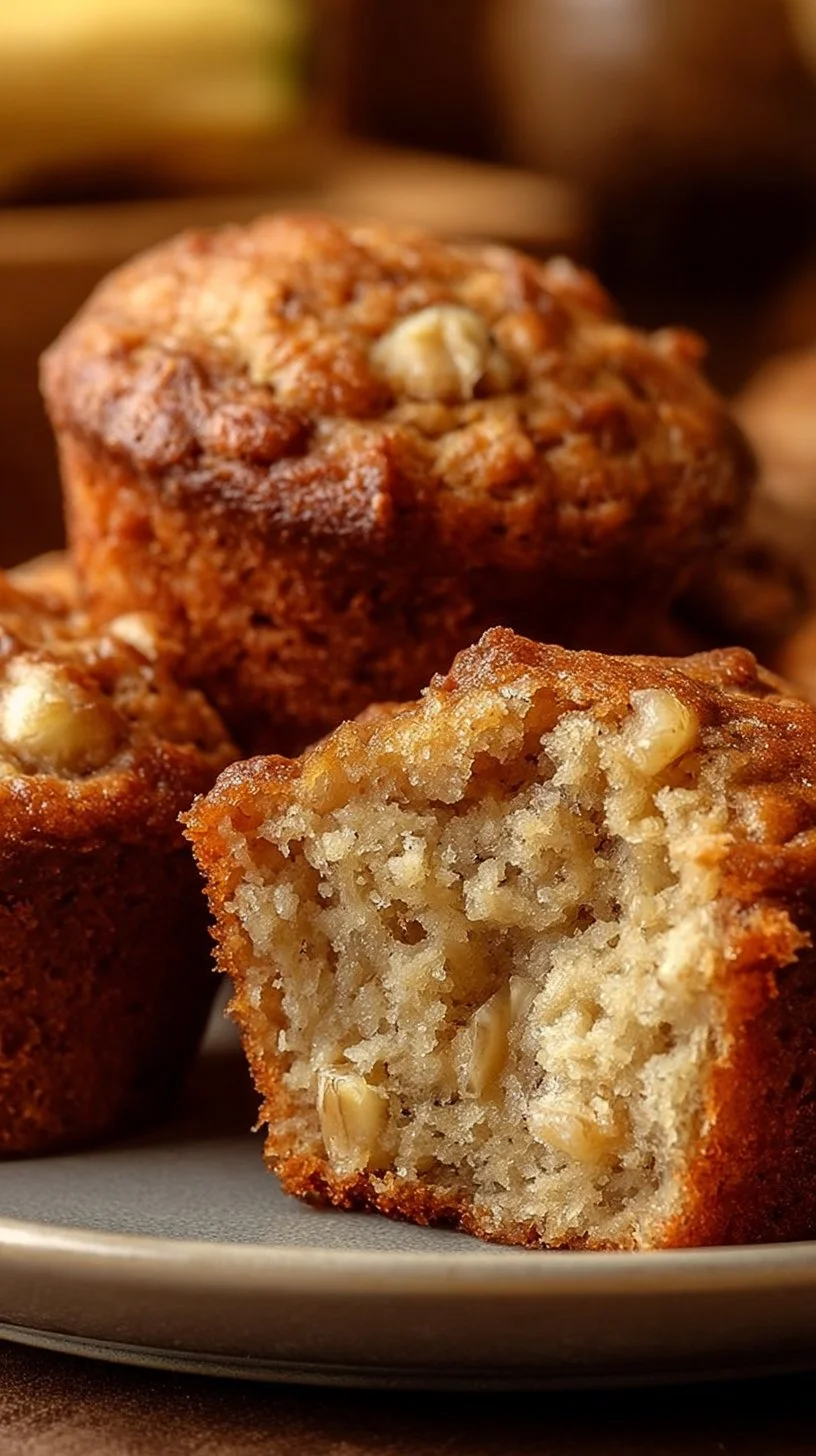
Healthy Greek Yogurt Banana Muffins present a concise study in balancing moisture, structure, and flavor without relying on refined sugars or excess fat. The recipe’s economy — mashed ripe bananas, Greek yogurt, a modest amount of honey, and a single egg — asks the cook to optimize technique to achieve muffins that are tender yet structured, aromatic yet light. Attention to ingredient temperature, mixing order, and oven heat determines whether the crumb will be even or gummy, and whether the muffins will brown sufficiently without drying.
For reference on complementary small-batch banana preparations and textural contrasts that can inform garnish or accompaniment decisions, consult the technique overview in this viral banana bark resource, which demonstrates ingredient pairing and finishing that translate well to muffin service.
*** The culinary logic behind this dish ***
At its core this recipe is a simple quick-bread formula: a balance of wet and dry components, a chemical leavening agent, and flavoring. Mashed bananas contribute both fermentable sugar and pectin-like solids that bind moisture; Greek yogurt supplies fat-free richness, acidity, and additional protein that strengthens starch-protein networks. Baking soda is the leavening agent best-suited for the acidic matrix produced by yogurt and ripe banana; it reacts rapidly to generate carbon dioxide in the batter, producing lift during the initial oven spring.
Honey is both sweetener and humectant — it retains moisture during baking, which affects crumb softness and shelf life. The single egg is the primary source of emulsification and contributes to structure via coagulation of egg proteins during heat application. Flour provides the gluten-forming potential; the relatively restrained flour weight compared with wet ingredients favors a loaf that is tender rather than chewy. Salt is essential for flavor uplift and for modulating gluten development. Optional inclusions like chocolate chips or nuts introduce textural contrast and concentrated flavor pockets and should be treated as modifiers rather than structural components.
Understanding these functional roles explains why the recipe’s order and minimal ingredient list produce a distinct outcome: it relies on controlled mixing and thermal management more than on complex ingredient adjustments.
*** How to make Healthy Greek Yogurt Banana Muffins ***
The procedural clarity of this formula suggests a restrained, technique-driven approach. Begin with mise en place: measure flour accurately by spooning into the cup and leveling with the back of a knife; weigh or measure yogurt and honey precisely. Preheat the oven to 375°F (190°C) so the oven’s thermal mass is stable when the batter goes in — immediate exposure to correct heat is crucial for proper oven spring and surface set.
Mash the bananas until mostly smooth but with small detectable fragments for texture; over-mashing increases free water and can accelerate gluten hydration, leading to gummy crumbs. When you mix banana with yogurt, honey, egg, and vanilla, do so until homogenous — the goal is uniform viscosity without overworking. In the separate bowl, whisk flour, baking soda, and salt thoroughly; aeration through whisking distributes leavening evenly and reduces the likelihood of metallic soda pockets.
Combine wet and dry ingredients with a folding motion — stir only until the streaks of flour disappear. This limits gluten development and preserves lift. If adding chocolate chips or nuts, fold them in at the end to avoid mechanical breakdown of inclusions. Divide the batter evenly into muffin cups to ensure uniform bake times; a displacer or small scoop helps achieve consistent volumes. Bake 18–20 minutes until a toothpick emerges with a few moist crumbs and the surface is lightly golden. Allow cooling to complete before consumption to stabilize crumb structure.
For a practical visual aid on integrating additive textures that complement the banana base, review this focused technique on garnish and textural pairing at viral banana bark technique.
*** Ingredients : ***
2 ripe bananas, 1 cup Greek yogurt, 1/4 cup honey, 1 egg, 1 teaspoon vanilla extract, 1 1/2 cups all-purpose flour, 1 teaspoon baking soda, 1/2 teaspoon salt, Optional: chocolate chips or nuts
*** Directions : ***
Preheat your oven to 375°F (190°C). Mash bananas in a bowl. Mix in yogurt, honey, egg, and vanilla. In a separate bowl, whisk together flour, baking soda, and salt. Combine wet and dry ingredients. Fold in chocolate chips or nuts, if using. Fill muffin cups. Bake for 18-20 minutes. Let cool before eating.
*** Ingredient analysis through a chef’s lens ***
- Bananas: Ripe bananas contain elevated levels of simple sugars and pectin derivatives; they act as both sweetener and tenderizer. Their solids supply bulking agents that reduce the necessary flour ratio for cohesion.
- Greek yogurt: Unlike milk or sour cream, Greek yogurt has a higher protein concentration that contributes to a finer crumb through additional protein coagulation. Its acidity also ensures efficient reaction with baking soda, producing predictable lift.
- Honey: A hygroscopic sweetener that disrupts starch retrogradation, improving perceived freshness. Because honey is sweeter by weight than granulated sugar, the specified 1/4 cup yields sufficient sweetness without creating an overly dense matrix.
- Egg: Provides emulsification via lecithin, protein structure through coagulation, and contributes to color and mouthfeel through Maillard reaction precursors.
- Flour and baking soda: The flour weight is modest relative to the wet ingredients, encouraging a soft crumb protected from toughness by limited gluten formation. Baking soda needs the yogurt’s acid to react; if insufficient acid exists, lift would be compromised.
Understanding these functions informs small technique choices — for example, using very ripe bananas to reduce the need for additional sugar, or ensuring yogurt is not excessively watery to avoid thinning the batter.
*** Kitchen workflow & technique breakdown ***
Efficiency in the kitchen here is about sequence and temperature. Preheat first; oven stability is non-negotiable. Prepare dry and wet components separately to control hydration time: combining them last minimizes the period gluten can form before heat sets the proteins. Use a medium mixing speed if using a stand mixer — slow enough to avoid aerating the batter excessively, fast enough to achieve homogeneity in under a minute.
Portioning is a critical step often overlooked: uneven muffin volumes produce staggered bake times and inconsistent texture. Use a one-and-a-half tablespoon scoop or a scale to portion batter to within a couple of grams. When folding in inclusions, coat them lightly with a dusting of flour if they are especially heavy (like nuts) to prevent sinking, but do this sparingly to avoid disrupting the overall batter hydration.
Cool in the pan briefly — 5 minutes — to allow the muffin’s peripheral crumb to set and release cleanly, then transfer to a wire rack to finish cooling. This prevents residual steam from condensing in the cavity and making the crust soggy.
*** Texture control, heat management & timing ***
Oven temperature of 375°F (190°C) is intentional: it is hot enough to generate a prompt oven spring from the baking soda reaction and to set the exterior, producing subtle caramelization at the surface without overbrowning the sugar-rich banana. If your oven runs hot, reduce to 365°F (185°C) and extend bake time slightly; if it runs cool, the muffins may spread and collapse.
The stated bake window, 18–20 minutes, is a guideline; use visual and tactile cues. Surface color should be lightly golden with a slightly domed top. Insert a thin tester into the center — it should withdraw with moist crumbs, not wet batter. Allowing muffins to overbake will dry the crumb and intensify the honey flavor in an unbalanced way.
Timing during mixing affects texture as well. Minimal mixing preserves air pockets and limits gluten formation, resulting in a tender crumb. Conversely, vigorous or prolonged mixing will develop gluten, producing a tougher, bread-like result. Folding inclusions at the end prevents their mass from deflating the batter and avoids overmixing.
For additional inspiration on integrating contrasting textures and finishes that maintain structural integrity, consider this technique-focused reference on banana-based preparations: banana bark pairing guide.
*** Professional variations ***
Maintain the base ingredient proportions but vary technique to alter outcome:
- For a moister crumb, incorporate an additional two tablespoons of yogurt, noting that baking time may extend by 1–2 minutes.
- For a more structured crumb suitable for slicing and toasting, replace 1/4 cup of all-purpose flour with an equal weight of whole-wheat pastry flour; expect a denser, nuttier character.
- For intensified banana flavor, fold in a tablespoon of banana purée reduced on the stove to concentrate sugars — be mindful that additional liquid may affect bake time.
- To introduce savory-sweet balance, finish with a coarse salt sprinkle immediately on hot muffins to enhance complexity.
These are procedural variations that rely on the existing ingredient list and do not alter measurements or steps materially.
*** Finishing touches & plating philosophy ***
Finishing is about restraint and clarity. A light dusting of finely chopped toasted nuts across the hot muffins provides immediate textural contrast and visual signal of the inclusion. If using chocolate chips, place a few on the tops immediately after portioning to achieve a glossy, melted crown as they bake.
Serve in a manner that preserves texture: on a wire rack for immediate service so air circulates beneath, preventing condensation. If presenting on a plate, separate muffins slightly to prevent steam accumulation. Garnishes should not obscure the muffins’ surface; instead they should highlight the palate — a scattering of chopped toasted walnuts or a thin slice of banana glazed briefly with honey demonstrates intent without excess.
*** Maintaining quality after cooking ***
These muffins retain optimal texture for 24–48 hours at room temperature in a loosely sealed container to avoid maceration. Refrigeration prolongs shelf life but accelerates starch retrogradation, making them firmer; reheat briefly (20–30 seconds in a microwave or 5–7 minutes at 300°F/150°C) to refresh crumb tenderness. For longer storage, freeze individual muffins wrapped tightly; thaw at room temperature and reheat before serving to restore moisture distribution.
Avoid sealing warm muffins in airtight containers, which traps steam and will produce a limp crust. Cooling fully on a rack is essential before storage.
*** Questions from home cooks (chef answers) ***
Q: Can I substitute the Greek yogurt with another dairy?
A: Greek yogurt’s protein and acidity are functional; replacing it with an equal volume of sour cream will produce a similar acid profile but slightly higher fat content. If using regular yogurt, strain briefly to thicken; otherwise expect a looser batter and a slightly denser crumb.
Q: Why does my muffin collapse in the center?
A: Collapsing usually results from underbaking, overmixing, or insufficient leavening reaction. Ensure oven temperature accuracy, mix only until combined, and use fully ripe bananas (too much added moisture from under-ripe bananas can inhibit structure).
Q: How can I prevent inclusions from sinking?
A: Toss chips or chopped nuts in a tablespoon of flour to reduce sinking probability, and fold them in gently at the end to preserve batter aeration.
*** Final chef notes ***
This recipe rewards precision more than modification. Respecting ingredient function, adhering to measuring accuracy, and managing mixing and oven temperatures will produce a muffin that is tender, flavorful, and efficiently produced. Small interventions — consistent portioning, attentive milling of inclusions, and timely cooling — elevate a straightforward recipe into a refined offering that performs consistently in both domestic and professional contexts. For a concise comparative recipe study and additional nutritional framing, consult further resources on Greek yogurt and banana baked goods at banana technique overview.
Conclusion
For a practical, nutrition-focused perspective on similar preparations, review this detailed breakdown of Greek yogurt banana muffins at Greek Yogurt Banana Muffins – Simple, Healthy Recipes & Nutrition. If you are looking for alternative healthy banana muffin formulations and technique variations, see this comparative recipe analysis at Healthy Banana Muffins – WellPlated.com. For inspiration on scaling the banana-yogurt concept into loaves and different finishes, consult the tested formula and notes at Greek Yogurt Banana Bread – running with spoons.
Healthy Greek Yogurt Banana Muffins
Ingredients
Method
- Preheat your oven to 375°F (190°C).
- Mash bananas in a bowl until mostly smooth with some small fragments for texture.
- Mix in Greek yogurt, honey, egg, and vanilla until homogenous.
- In a separate bowl, whisk together flour, baking soda, and salt until well combined.
- Combine the wet and dry ingredients gently, folding until the streaks of flour disappear.
- If using, fold in chocolate chips or nuts.
- Divide the batter evenly into muffin cups.
- Bake for 18-20 minutes or until a toothpick inserted comes out with a few moist crumbs.
- Let cool before serving to stabilize the crumb structure.