Cinnamon Roll Bliss Bars
Introduction
Cinnamon Roll Bliss Bars synthesize two reliable pastry constructs—the laminated comfort of a cinnamon roll and the structured, sliceable format of a bar—into a format optimized for portion control and consistent baking. The recipe delivered here relies on refrigerated, ready-to-bake cinnamon rolls to provide a precise dough composition and sugar-leaven matrix; the professional chef’s role is to manipulate heat, texture, and glaze integration to maximize aroma, mouthfeel, and visual finish. For reference on how bar-format pastries translate from other sheet-pan preparations, compare structural considerations with this cake-mix cookie bars, which use similar logic to convert cookie ingredients into a bar form.
The culinary logic behind this dish
This recipe operates on two simultaneous flavor systems: the pre-formulated cinnamon roll dough that delivers cinnamon-sugar pockets and a soft brioche-like crumb, and the butter-brown-sugar layer that functions as an inversion of a classic caramel or sticky bun filling. The unrolled base layer becomes a sacrificial crust that absorbs the butter-sugar syrup, creating a hybrid of tender crumb and concentrated sweetness. The top layer of intact rolls regulates vertical rise and provides a rounded crown that yields textural contrast once baked. The cream cheese glaze, enriched with powdered sugar, delivers acidity and fat to cut the sweetness and to coat the surface, preserving moisture while contributing mouth-coating silkiness. For a comparison of how roll and bar formats are reconciled in other recipes, note the textural goals achieved in a recipe such as these chewy maple cinnamon cookies, which emphasize chew and singe-sugar flavor development.
How to make Cinnamon Roll Bliss Bars
The procedural objective is to control how each component interacts thermally and physically during bake and cool. Preheating to 350°F establishes predictable starch gelatinization and protein coagulation timing so the butter-sugar layer can caramelize gently without burning. Lining the 9×13 pan with parchment that overhangs ensures clean extraction and minimal shearing when lifting the slab; it also reduces the need to manipulate hot bars that are still setting. Unrolling and slightly flattening half the rolls creates a continuous base that will accept the butter-sugar infusion; leaving the top rolls intact limits surface collapse and preserves the spiral’s aesthetic and interior pockets. Baking until edges are golden and center is set is a visual cue: the bar should yield a slight jiggle but not run, indicating sufficient internal set. Applying the cream cheese glaze while the bars are warm promotes partial melting and desirable adhesion; allowing full cooling before slicing yields clean cuts with reduced smear. This methodology frames the more granular technique notes that follow.
Ingredients :
Two (2) cans (8 counts each) refrigerated cinnamon rolls (with icing packets reserved), 1/2 cup (1 stick) unsalted butter, melted, 1/2 cup packed light brown sugar, 1 teaspoon vanilla extract, 2 ounces cream cheese, softened, 1/2 cup powdered sugar
Directions :
Step 1: Preheat the oven to 350°F (175°C). Line a 9×13 inch baking pan with parchment paper, allowing the paper to overhang on the sides for easy removal later. Separate the cinnamon rolls from the enclosed icing packets and set the icing aside., Step 2: In a medium bowl, combine the melted butter, brown sugar, and vanilla extract; stir until well blended. Unroll and slightly flatten half (8 rolls) of the cinnamon rolls and press them evenly onto the bottom of the prepared pan to form a cohesive crust layer., Step 3: Pour the butter and brown sugar mixture evenly over the cinnamon roll base. Gently arrange the remaining 8 cinnamon rolls on top of the filling, placing them side-by-side across the pan. Bake for 25 to 30 minutes, or until the edges are golden brown and the center is set., Step 4: While the bars are cooling slightly, prepare the “bliss” glaze. In a small bowl, combine the reserved icing packets, the softened cream cheese, and the powdered sugar. Whisk vigorously until the glaze is smooth, thick, and lump-free., Step 5: Drizzle the prepared cream cheese glaze liberally over the warm bars, ensuring even coverage. Allow the Cinnamon Roll Bliss Bars to cool completely before removing them from the pan using the parchment paper edges and cutting into squares for serving.
Ingredient analysis through a chef’s lens
Refrigerated cinnamon rolls present a predictable balance of flour, fat, sugar, and leavening, which simplifies timing but constrains flavor modulation. The unsalted butter provides pure milk-fat and helps create a shiny, cohesive syrup with the light brown sugar—the dairy content modulates mouthfeel and the brown sugar’s molasses contributes depth. Vanilla is a bridge compound, enhancing perceived sweetness and framing the cinnamon notes; the quantity is intentional to avoid overwhelming the roll’s existing spice profile. Cream cheese contributes acidity, tang, and density to the glaze; at 2 ounces, it’s a stabilizer rather than a dominant flavor. Powdered sugar controls texture; its cornstarch content keeps the glaze from running excessively while ensuring that the glaze can be beaten to a glossy, pipeable viscosity. The reserved commercial icing packets are likely sugar-dominant with stabilizers; combining them with cream cheese integrates their intended sweetness with fresh dairy fat to avoid an artificial aftertaste.
Kitchen workflow & technique breakdown
Set mise en place so each component is temperature-controlled: butter fully melted and warm, cream cheese softened to room temperature, rolls chilled but pliable. Start by preheating the oven and lining the pan—this is a low-complexity task that prevents downtime while you unroll and press dough. Unrolling half the rolls requires gentle pressure; flattening should be minimal—enough to create contact between spirals but not enough to expel all the internal sugar. When you pour the butter-brown-sugar mixture, do so in a steady stream to promote even distribution; use an offset spatula to coax any pooled syrup toward edges so all base dough sections receive similar saturation. While the bars bake, whisk the glaze so it is ready immediately; the timing of glazing matters because a warm slab will accept more glaze absorption, creating a thinner crust of glaze that integrates into the top layer rather than sitting wholly on the surface. For assembly and extraction, utilize the parchment overhang to lift the slab and cut with a serrated knife using a gentle back-and-forth motion to preserve edges.
Include benchmarks: butter-sugar should be fully homogenized (no graininess), the base pressed uniformly, and the top rolls arranged to create equal spacing to control doneness. For a workflow comparison in pan-baked goods that require staged assembly, review this approach used in similar sheet-pan recipes such as easy baked donut bars.
Texture control, heat management & timing
The thermal profile is a balance between caramelization of the butter-sugar layer and maintaining a tender crumb. 350°F is high enough to encourage Maillard reactions at the roll surface without burning the sugar; a lower oven increases dwell time and risks over-saturation from the syrup. Monitor edge coloration: golden brown at the perimeter signals the sugar has concentrated and the dough has set. The center should be set but slightly yielding; if the center is too soft when removed, residual heat will continue to set the structure but may lead to a gummy interior—pull toward the firmer end of the recommended bake window for cleaner slicing. Cooling is critical: the glaze should be applied while the bars are warm enough to encourage adhesion but not so hot that the glaze liquefies wholly and runs off. Allowing full cool-down permits the glaze to firm to a stable sheen and the interior starches to retrograde slightly, improving sliceability. For analogous texture objectives in laminated or enriched dough recipes, consider the way other bar formats handle cooling and slicing, for example the techniques used to finish pistachio dream cookie bars.
Professional variations
Without altering the ingredient list, temper technique to modify perception: for a deeper caramel note, brown the butter prior to melting and combine it with the brown sugar (do not change the quantity of butter). For enhanced spice complexity, briefly bloom additional ground cinnamon into the melted butter-sugar mixture on very low heat, then cool slightly before pouring to avoid volatilizing the most delicate aromatics. For firmer slices, bake to the upper limit of the time window and allow a refrigerated chill for 30–60 minutes before cutting; this tightens the crumb. To emphasize tang in the glaze without altering ingredients, whip the cream cheese more vigorously to incorporate air, producing a lighter mouthfeel while maintaining the same weight ratio.
Finishing touches & plating philosophy
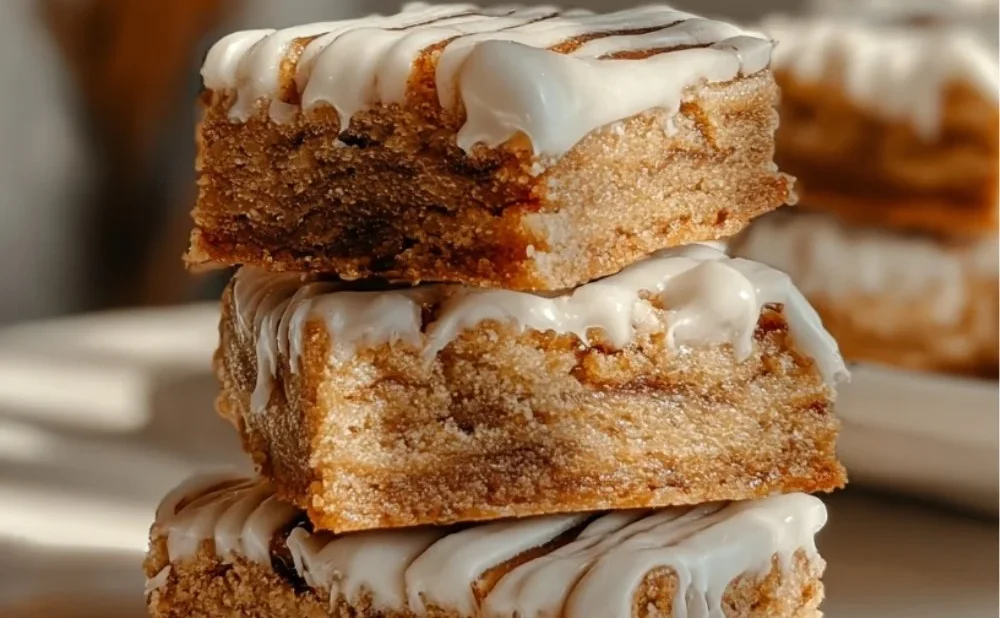
Presentation should be straightforward: uniform squares that reveal a visible spiral and a glossy, even glaze. Use a thin blade or a bench scraper to lift and transfer squares to a tray to avoid compressing the bars. For service, warm slightly (15–20 seconds in a microwave or a low oven) to revive the aroma and soften the icing if a silkier mouthfeel is preferred. Garnish sparingly—if at all—with a light dusting of finely grated lemon zest or toasted flaked pecans to create visual contrast; these are superficial additions meant to complement, not to mask, the bars’ core flavor.
Maintaining quality after cooking
Store cooled bars in a single layer when possible to prevent glazing transfer; if stacking is necessary, use parchment between layers. Room temperature storage preserves the intended tender crumb and glossy glaze for 24–48 hours. For longer storage, tightly wrap and refrigerate—this slows staling but increases firmness. To reintroduce a fresh-baked aroma and soften the crumb, reheat single portions briefly before service; avoid prolonged heat that will melt the glaze to a sugary run. If you need to freeze, slice first, freeze on a tray until solid, then wrap airtight; thaw at room temperature and warm gently.
Questions from home cooks (chef answers)
Q: Why unroll only half the rolls for the base? A: Unrolling half creates a continuous, absorptive substrate that interacts with the butter-sugar layer while preserving the spiral structure on top for textural contrast. The compromise controls rise and provides defined topography when baked.
Q: Can I substitute granulated sugar for the brown sugar in the butter mixture? A: Brown sugar contributes moisture and molasses flavor; substituting white sugar alters both color and depth. It is possible technically, but expect a thinner mouthfeel and reduced caramel notes.
Q: Why use commercial icing packets within the glaze? A: They provide a predictable sweetness and body that, when combined with cream cheese and powdered sugar, stabilize the glaze and ensure consistent flavor intensity across batches.
Q: How to achieve cleaner cuts? A: Fully cool the slab, chill briefly if needed, and use a long serrated knife with minimal downward pressure.
Final chef notes
Precision in timing and temperature yields the greatest improvement for this recipe. Respect the bake window and apply the glaze at the correct thermal moment to control absorption versus surface coverage. Small technique adjustments—uniform pressing of the base, even pouring of the butter-sugar, and controlled cooling—produce measurable differences in crumb structure and mouthfeel. Treat the commercial components as engineered ingredients and use technique to elevate their inherent properties rather than attempting to overhaul them chemically.
Conclusion
For further inspiration on cinnamon roll–based cakes and bars, consult the established method in this Cinnabon Cinnamon Roll Cake Recipe, and review another approach to cinnamon roll bars that focuses on assembly and bake time at Cinnamon Roll Bars – Live to Sweet. For a version of this recipe and presentation notes, see the original formulation at Cinnamon Roll Bliss Bars – Gourmet Martha.
Cinnamon Roll Bliss Bars
Ingredients
Method
- Preheat the oven to 350°F (175°C). Line a 9×13 inch baking pan with parchment paper, allowing the paper to overhang on the sides for easy removal.
- Separate the cinnamon rolls from the enclosed icing packets and set the icing aside.
- In a medium bowl, combine the melted butter, brown sugar, and vanilla extract; stir until well blended.
- Unroll and slightly flatten half (8 rolls) of the cinnamon rolls and press them evenly onto the bottom of the prepared pan to form a cohesive crust layer.
- Pour the butter and brown sugar mixture evenly over the cinnamon roll base.
- Gently arrange the remaining 8 cinnamon rolls on top of the filling, placing them side-by-side across the pan.
- Bake for 25 to 30 minutes, or until the edges are golden brown and the center is set.
- While the bars are cooling slightly, prepare the glaze. In a small bowl, combine the reserved icing packets, the softened cream cheese, and the powdered sugar. Whisk vigorously until the glaze is smooth, thick, and lump-free.
- Drizzle the prepared cream cheese glaze liberally over the warm bars, ensuring even coverage.
- Allow the Cinnamon Roll Bliss Bars to cool completely before removing from the pan using the parchment edges and cutting into squares for serving.