Pink Coconut Snowball Cake Bars
Introduction
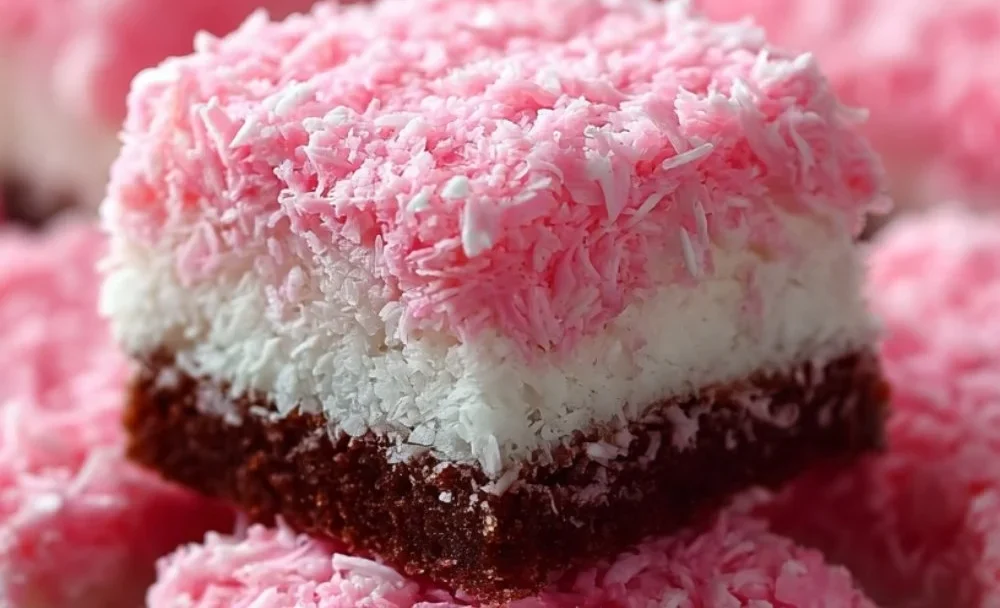
As a professional chef trained in classical technique and modern pastry execution, I approach the Pink Coconut Snowball Cake Bars as an exercise in controlled ingredient interactions: fat crystallization, emulsification, gluten formation and surface presentation. The recipe produces a compact, chocolate-scented cake base finished with a visually striking, pink-stained shredded coconut and a final dusting of powdered sugar to evoke the “snowball” effect. My objective in this analysis is to make explicit the reasons behind each procedural choice, to clarify textural outcomes, and to refine timing and workflow so the finished bars present with an even crumb, reliable moisture balance, and stable topping that maintains its color and texture through service.
The culinary logic behind this dish
This recipe juxtaposes a modestly enriched chocolate cake with a desiccated coconut topping that has been colored to read as a confectionary “snowball.” The cake base uses butter, sugar, eggs and a modest amount of flour—ingredients that together create a tender crumb through a balance of fat and protein. Creaming butter and sugar mechanically traps air and creates a light matrix; eggs provide emulsification and structure; cocoa contributes flavor and a restrained reduction in gluten development due to its fat content. The shredded coconut is a high-fat, low-moisture ingredient that primarily contributes texture and a toasted-coconut aroma if handled thermally, while the pink food coloring is purely decorative, altering perception without affecting structure.
From a culinary standpoint, the success of this bar depends on three linked outcomes: an even, fully baked crumb with no gummy center, a coconut layer that adheres without collapsing the cake, and a powdered sugar finish that both reads as visual snow and adds a subtle lift in perceived sweetness. Each procedural step controls one of these outcomes; the precision of mixing, the sequence of ingredient incorporation, heat application and cooling are all instrumental to predictability.
How to make Pink Coconut Snowball Cake Bars
The procedural arc of this recipe is straightforward: prepare the pan, create a homogenized batter through creaming and staged incorporation of dry ingredients, bake to doneness, and finish with the colored coconut and powdered sugar. The warmth of the cake immediately after baking is a window of vulnerability—premature topping will cause steaming and color bleed. Conversely, overly prolonged cooling can lead to a firmer crumb that inhibits coconut adhesion. The directions provided supply a reliable sequence; the following commentary elucidates why those sequences are chosen and how to manage each phase for optimal results.
Begin with accurate oven temperature and pan preparation; an under-greased pan will cause tearing on release, while over-greasing can alter browning. During creaming, target a visibly lighter texture—this is a tactile and visual cue that the sugar has been integrated and microbubbles formed. When adding eggs one at a time, emulsification is the objective: each egg should be fully incorporated so the mixture does not break, which ensures a uniform crumb and consistent rise. Gradual integration of dry ingredients prevents overdevelopment of gluten and keeps the crumb tender. Finally, the cooldown window is critical: the cake must be fully cooled to room temperature before the coconut is applied to prevent moisture migration that could cause the coconut to clump or the color to run.
Ingredients :
1 cup all-purpose flour, 1/2 cup cocoa powder, 1 cup sugar, 1/2 cup unsalted butter, softened, 2 large eggs, 1 teaspoon vanilla extract, 1/2 teaspoon baking powder, 1/4 teaspoon salt, 2 cups sweetened shredded coconut, Pink food coloring, 1 cup powdered sugar (for dusting)
Directions :
- Preheat the oven to 350°F (175°C). Grease a 9×9 inch baking pan., 2. In a large bowl, cream together the butter and sugar until light and fluffy., 3. Beat in the eggs one at a time, then stir in the vanilla., 4. In a separate bowl, whisk together the flour, cocoa powder, baking powder, and salt. Gradually blend the dry ingredients into the creamed mixture., 5. Spread the batter evenly into the prepared baking pan., 6. Bake for 20-25 minutes or until a toothpick inserted in the center comes out clean., 7. Allow the cake to cool completely., 8. In a separate bowl, combine the shredded coconut with pink food coloring until desired color is achieved., 9. Once the cake is cool, top it with a layer of coconut., 10. Dust with powdered sugar before serving. Enjoy your Pink Coconut Snowball Cake Bars!
Ingredient analysis through a chef’s lens
Flour: Provides the structural network via gluten proteins. With only one cup for a 9×9 pan, the ratio to fat and eggs is modest, yielding a fine crumb rather than a chewy one. Choosing all-purpose flour keeps the balance accessible; a higher-protein flour would tighten the crumb.
Cocoa powder: Adds chocolate aroma and acidity depending on type. Dutch-processed versus natural will subtly alter rise and flavor; the recipe is tolerant but be aware that Dutch-processed cocoa is less acidic and will slightly reduce the lift generated by the baking powder.
Sugar: Granulated sugar in creaming not only sweetens but aids in aeration. The texture of the final crumb correlates to how well the sugar has been integrated into the butter matrix.
Butter: Provides flavor, mouthfeel and contributes to tenderization by shortening gluten. Softened butter is essential for proper creaming. Over-softened (melted) butter will not aerate effectively.
Eggs: Act as emulsifiers and structural agents. Adding them one at a time stabilizes the batter and ensures homogeneous incorporation, minimizing the risk of curdling.
Baking powder and salt: Baking powder provides chemical leavening; it must be evenly distributed to avoid tunnels. Salt amplifies flavor and balances sweetness.
Sweetened shredded coconut: Brings chew, florals and fat. Because it is sweetened, it contributes to the overall sugar level and can influence browning if exposed to heat; hence it’s used as a topping rather than baked into the batter here.
Pink food coloring and powdered sugar: Aesthetic agents. The food coloring converts the visual language of the coconut from neutral to playful, and powdered sugar creates the snowball illusion while adding a delicate surface texture and immediate sweetness.
Kitchen workflow & technique breakdown
Efficient workflow begins with mise en place: weigh or measure flour, sift cocoa and baking powder together to ensure homogeneity, have eggs at room temperature, and soften butter to the proper consistency. Preheat the oven just before creaming to maintain temperature accuracy. Use a stand mixer with the paddle attachment or a hand mixer; the paddle distributes shear more gently than a whisk, which is desirable for this batter.
Creaming: Beat butter and sugar until pale and aerated—approximately 3 to 4 minutes at medium speed on a stand mixer depending on butter temperature. Scrape the bowl regularly to ensure even incorporation. Eggs: Add each egg and allow emulsification—if the batter looks slightly loose or curdled after an addition, continue mixing; a brief rest at low speed will reconcile the emulsion.
Dry integration: Sift or whisk dry ingredients to prevent lumps, then add in two to three increments. Mix until just combined—no streaks of flour—but do not overmix. Overworking develops gluten and tightens the crumb.
Spreading: Use an offset spatula to level the batter in the pan. An even thickness prevents uneven baking and ensures the specified bake time yields the correct doneness.
Baking and testing: Use the toothpick test in the center. When the toothpick emerges with a few moist crumbs but not wet batter, residual heat will finish the carryover cooking during the short cooling period.
Texture control, heat management & timing
Temperature of ingredients determines creamability and final structure. Butter should be softened but still cool to maintain aeration; warmed butter will not trap air. Eggs at room temperature disperse more evenly and reduce the chance of temperature shock to the batter.
Oven temperature control is essential. Use an oven thermometer; domestic ovens can vary by ±25°F. At 350°F, the provided bake time of 20–25 minutes assumes even heat. If your oven runs hot, the edges will rise and set faster, producing an overcooked perimeter and undercooked center. Rotate the pan once if your oven has hot spots.
Cooling completely before applying the coconut prevents condensation and color bleed. Cake released heat will otherwise create steam that mobilizes food coloring and dissolves sugar, causing a wet, matted topping. A room-temperature cooldown on a wire rack is ideal; refrigeration will accelerate cooling but may tighten crumb and change mouthfeel—only refrigerate if you intend to serve chilled and accept a firmer texture.
Professional variations
While the recipe must be followed as written for the core result, consider controlled variations to alter the profile for service:
- For a more intense chocolate presence without changing quantities, use a higher-quality, higher-cocoa-percentage cocoa powder; that will increase cocoa aroma while keeping batter hydration constant.
- If a crisper edge is desirable for presentation, bake in a metal pan rather than glass; metal transfers heat more quickly and promotes a firmer edge.
- For a subtler pink, dilute the food coloring across a portion of the coconut and layer two tones to create depth without increasing sweetness.
When suggesting variations in a professional setting, always trial them in small batches to observe their effects on texture and stability.
Finishing touches & plating philosophy
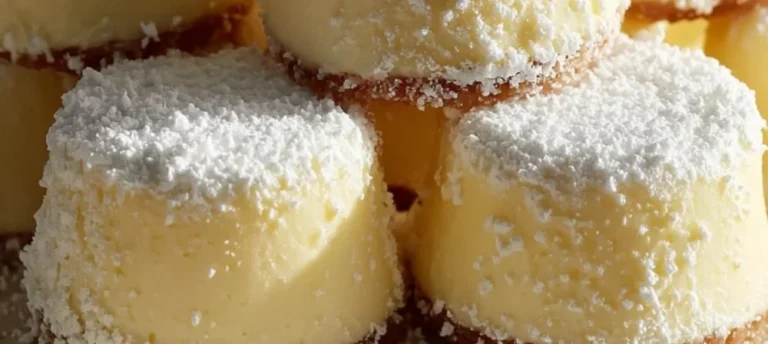
The powdered sugar dusting serves two functions: it provides the “snow” visual motif and balances the coconut’s sweetness with a delicate mouth-coating fine sugar. Apply powdered sugar with a fine-mesh sieve for an even veil that reads as fresh snow rather than clumpy glaze.
Cutting: For clean bars, chill the cake slightly so the crumb firms, then use a sharp knife warmed under hot water and dried before each cut. Wiping the blade between cuts yields precise edges. Serve on understated plates to allow the color contrast—deep brown cake, vivid pink coconut, and white snowing sugar—to dominate the visual composition.
Texture juxtaposition is the principle driving the plating: an intact tender crumb beneath a slightly chewy, visually textured coconut layer, finished with an ephemeral sugar dusting that dissolves immediately on the tongue.
Maintaining quality after cooking
Storage: Keep bars in an airtight container at room temperature for up to 48 hours to preserve the intended crumb tenderness. Beyond that window, refrigeration will slow microbial growth but also firm the butter matrix, leading to a denser mouthfeel. If refrigerating, allow bars to return to near room temperature for service to restore emulsification softness.
Moisture migration: The coconut topping is susceptible to absorbing humidity from the cake if stored covered while still warm. Always ensure the cake is at room temperature before enclosing. To maintain the powdered sugar appearance, add a light refresh of sifted powdered sugar immediately before service if the initial dusting has dissolved.
Questions from home cooks (chef answers)
Q: Why does the batter curdle when I add eggs?
A: Curdling is an emulsion issue. If the butter is much cooler than the eggs, the added liquid can separate the fat matrix. Ensure butter is softened but not melted and add eggs one at a time, mixing until each is fully incorporated before adding the next. A brief return to medium speed usually re-emulsifies the batter.
Q: My cake had an underbaked center but browned edges. What went wrong?
A: This points to uneven heat distribution or an oven that runs hot at the sides. Use a central rack, check oven calibration, and consider reducing temperature by 10–15°F while extending baking time slightly to allow the center to catch up without overbrowning the edges.
Q: The pink color bled into the cake—how can I prevent that?
A: Color bleed results from applying a wet colored coconut to a warm, moist surface. Allow the cake to cool completely to room temperature before topping. If you must speed the process, cool on a rack and avoid refrigeration as it changes texture; chilling briefly in a shallow cool area is preferable to direct refrigeration.
Q: How can I make the coconut stick reliably?
A: Slight tack on the surface helps adhesion. If the cake is fully cooled and the coconut still does not adhere, a thin glaze (for instance, an unlisted step like a simple syrup) would help, but the prescribed method relies on gentle pressing of the coconut onto a slightly tacky surface produced by residual surface sugars. In this recipe, cooling completely is the priority to prevent slippage due to steam.
Final chef notes
Precision in temperature, ingredient readiness and sequence are the defining factors here. The creaming stage establishes aeration and mouthfeel; staged egg incorporation ensures a coherent emulsion; careful dry ingredient integration prevents gluten overdevelopment; and strict cooling discipline preserves topping appearance and texture. Respect these technical touchpoints and the Pink Coconut Snowball Cake Bars will deliver consistent, serviceable bars with an intentional contrast of tender crumb and textured coconut cap.
Conclusion
For inspiration and comparative technique notes on snowball-style cakes and coconut finishes, consult established variations and tested recipes such as the Hostess Snowball Cake Recipe and the visual approach demonstrated in the Pink Snowball Cake – Sprinkle Bakes post. For a pantry-to-platter perspective on this specific bar format, review a home-cook adaptation at Pink Coconut Snowball Cake Bars – Stunning Homemade Sweet … and a saved preparatory reference at Pink Coconut Snowball Cake Bars – Cooked. These resources highlight presentation options and variant techniques that can be studied without altering the core recipe provided above.
Pink Coconut Snowball Cake Bars
Ingredients
Method
- Preheat the oven to 350°F (175°C). Grease a 9x9 inch baking pan.
- In a large bowl, cream together the butter and sugar until light and fluffy.
- Beat in the eggs one at a time, then stir in the vanilla.
- In a separate bowl, whisk together the flour, cocoa powder, baking powder, and salt. Gradually blend the dry ingredients into the creamed mixture.
- Spread the batter evenly into the prepared baking pan.
- Bake for 20-25 minutes or until a toothpick inserted in the center comes out clean.
- Allow the cake to cool completely.
- In a separate bowl, combine the shredded coconut with pink food coloring until desired color is achieved.
- Once the cake is cool, top it with a layer of coconut.
- Dust with powdered sugar before serving.