Salted Caramel Butter Bars: Tasty & Irresistible
Introduction
The Salted Caramel Butter Bars presented here are a study in layered fat, sugar, and controlled heat — a dessert that depends on precise textural contrasts and carefully staged flavor development. The base is a shortbread-like butter dough that must be creamed and handled to produce a tender crumb that will support a viscous caramel layer without collapsing or absorbing excess moisture. The caramel provides sweetness tempered with dairy richness; a final sprinkle of coarse sea salt introduces high-point contrast that sharpens perception of butter and caramel flavors.
As a professional chef, I place emphasis on process sequencing and mise en place. Read the full method deliberately, and assemble your tools and ingredients in advance to maintain consistent temperatures throughout. For comparative technique on pressed-bar construction and baking profiles, consult an applied reference such as cake mix cookie bars, which illustrates how different bases respond to oven heat and moisture.
The culinary logic behind this dish
This recipe is engineered around three functional components: a structural shortbread base, a cohesive caramel layer, and a loose crumb topping that browns without fully melting into the caramel. The shortbread base uses a high proportion of butter to flour, so its role is twofold: to provide a brittle platform and to release flavorful butter notes as it bakes and oxidizes at the surface. Creaming the butter with both granulated and powdered sugars introduces air and yields a finer crumb; the powdered sugar buffers moisture and contributes to a melt-in-the-mouth texture.
The caramel must remain fluid enough to form a continuous layer but viscous enough to avoid complete absorption by the crust. Heating caramels gently with heavy cream controls the emulsification of sugar and milk fats; aggressive heat risks separation or scorching that produces bitter notes. Finally, the crumb topping benefits from being applied loosely—this allows it to brown independently, creating contrasting textures: crisp top fragments, a dense chewy caramel, and a tender shortbread base.
Understanding these functions clarifies why timing and heat management matter at each step and why steps are sequenced as written.
How to make Salted Caramel Butter Bars: Tasty & Irresistible
Ingredients :
1 pound (2 cups) unsalted butter, at room temperature, 1 cup granulated sugar, 1½ cups powdered sugar, 2 tablespoons vanilla extract, 4 cups all-purpose flour, 1 (14 oz) bag of caramel candies, unwrapped (or 2 cups soft caramel bits), ⅓ cup heavy cream, ½ to 1 teaspoon coarse sea salt (adjust to taste)
Directions :
Step 1: Prepare the Pan, Preheat your oven to 325°F (165°C). Line a 9×13-inch baking pan with parchment paper, leaving some overhang on the sides for easy lifting later., Step 2: Make the Dough, In a large mixing bowl, beat the softened butter, granulated sugar, and powdered sugar until light and fluffy. Add the vanilla and mix to combine. Gradually add the flour, mixing until a thick dough forms., Step 3: Press and Bake the Bottom Layer, Press half to two-thirds of the dough evenly into the bottom of your prepared pan. Set the remaining dough aside for the topping. Bake for 20 minutes or until lightly golden., Step 4: Prepare the Caramel, While the crust is baking, melt the caramel candies and heavy cream together in a microwave-safe bowl or over low heat on the stove. Stir frequently until smooth and fully combined., Step 5: Layer the Caramel, Once the bottom layer is done baking, remove it from the oven and pour the warm caramel over the crust. Spread evenly with a spatula. Sprinkle the top with sea salt., Step 6: Add the Topping, Crumble the remaining dough over the top of the caramel layer. Don’t press it down—just sprinkle it to create a rustic, buttery topping., Step 7: Bake Again, Return the pan to the oven and bake for another 25–30 minutes, or until the topping is set and lightly golden., Step 8: Cool and Slice, Let the bars cool completely in the pan before slicing. For cleaner slices, chill in the fridge for 1 hour after cooling. Use the parchment overhang to lift and slice cleanly.
Ingredient analysis through a chef’s lens
Butter: The recipe specifies unsalted butter at room temperature to allow controlled seasoning and predictable fat content. Room temperature butter creams more uniformly with sugar, trapping air that contributes to a lighter shortbread structure. Salted butter would introduce variable sodium; keep it unsalted and finish with coarse sea salt as directed.
Sugars: The combination of granulated and powdered sugar is deliberate. Granulated sugar provides structure and subtle crunch within the dough; powdered sugar has cornstarch that reduces gluten formation and yields a tender, almost meltaway crumb. This balance gives the base both structural integrity and a pleasant mouthfeel.
Flour: All-purpose flour is the correct protein profile for this bar; it creates enough gluten to hold the layers together without becoming chewy. Overworking will create toughness—mix only until the dough comes together.
Caramel candies and heavy cream: Using pre-formed caramels simplifies gelatinization and sugar control. Heating caramels with heavy cream slowly ensures full dissolution and stable emulsion; heavy cream contributes fat that smooths the caramel and reduces graininess. If caramels include added stabilizers, this helps minimize separation.
Coarse sea salt: The final salt addition is a flavor amplifier. The coarse grains deliver textural contrast and localized bursts of salinity that interact with the caramel’s sweetness to emphasize complexity.
Kitchen workflow & technique breakdown
A professional approach segments work into three passes: prepare and bake the base, compose the filling while the base is hot, and finish with the topping and final bake. Temperature control is central to each pass.
- Prepare the pan and preheat the oven first — you want immediate, consistent heat when the crust goes in. A calibrated oven at 325°F (165°C) offers a steady convective environment that browns the shortbread without overbaking the caramel later.
- Cream the butter and sugars until light and fluffy. Overbeating can cause the butter to warm excessively; stop when the mixture shows increased volume and ribboning on the whisk. Add vanilla after initial creaming to preserve its aromatic volatility.
- Press the bottom layer with even pressure. A flat-bottomed measuring cup or bench scraper helps achieve uniform thickness, which is critical so the caramel doesn’t pool in thinner areas. Bake until lightly golden — this denotation signals sufficient moisture loss to support the caramel.
- While the crust bakes, melt caramels with cream using a low, controlled heat source or short bursts in the microwave. Stir frequently; residual heat will continue to blend the mixture. Avoid boiling aggressively.
- Apply the caramel while the crust is warm but not piping hot; a warm base accepts the caramel cleanly, reducing trapped air bubbles and promoting adhesion between layers.
- Crumble topping and scatter loosely to preserve air pockets that will brown differently. The second bake sets the caramel and crisps the topping without rendering it into a uniform layer.
For a comparative view on layering technique and crumb application in bar baking, review professional examples such as chocolate-covered cherry magic bars.
Texture control, heat management & timing
Texture control is achieved by managing moisture and the rate of heat application. Shortbread texture relies on melting of fat and limited gluten formation; therefore, cool hands and minimal handling are essential when working with the dough remaining for the topping. If the dough warms too much, the topping can collapse and smear into the caramel.
Bake times given — 20 minutes for the base, 25–30 minutes for the full assembly — are calibrated for a 9×13 pan in a standard home oven. However, ovens vary: watch for visual cues rather than relying solely on minutes. The base should be lightly golden at the edges; the topping should be set and lightly golden, not deeply browned. Underbaked topping will be doughy, overbaked will be dry and brittle.
Heat management during caramel preparation is critical. Low, steady heat prevents scorching; stir continuously near the end of melting to ensure a smooth, homogenous emulsion. If the caramel separates or grains, a brief whisk with a small knob of butter or additional cream off-heat can sometimes re-emulsify it — but do not introduce extraneous ingredients to this recipe as presented.
For timing: allow the bars to cool fully in the pan to let the caramel reach a more stable viscosity. Chilling after cooling tightens the layers and permits cleaner slicing.
Professional variations
While the recipe must remain intact for the requested preparation, professional kitchens often explore textural micro-variations without altering proportions. Consider finishing manipulations: a quick torching of selected top fragments can introduce caramelized flecks; a light drizzle of tempered chocolate across the top after chilling adds a firm textural crescent. Alternatively, for increased chew in the caramel layer, incorporate a small percentage of glucose syrup into the melted caramel step — only if you deviate consciously, understanding the role of the syrup in retarding crystallization.
Another variation is to use different salt crystals; Maldon flakes deliver a clean burst and distinct flakes, while a smoked sea salt would introduce a background note that complements caramelized butter. Remember that any addition modifies the flavor balance; increase restraint elsewhere if adding new elements.
Finishing touches & plating philosophy
Finishing is functional and visual. After chilling and slicing, brush any residual flour dust from the edges with a pastry brush to reveal color contrast. For service, cut bars into uniform portions; a warm, wet knife passed under hot water and wiped between passes yields cleaner edges than a cold, dry blade.
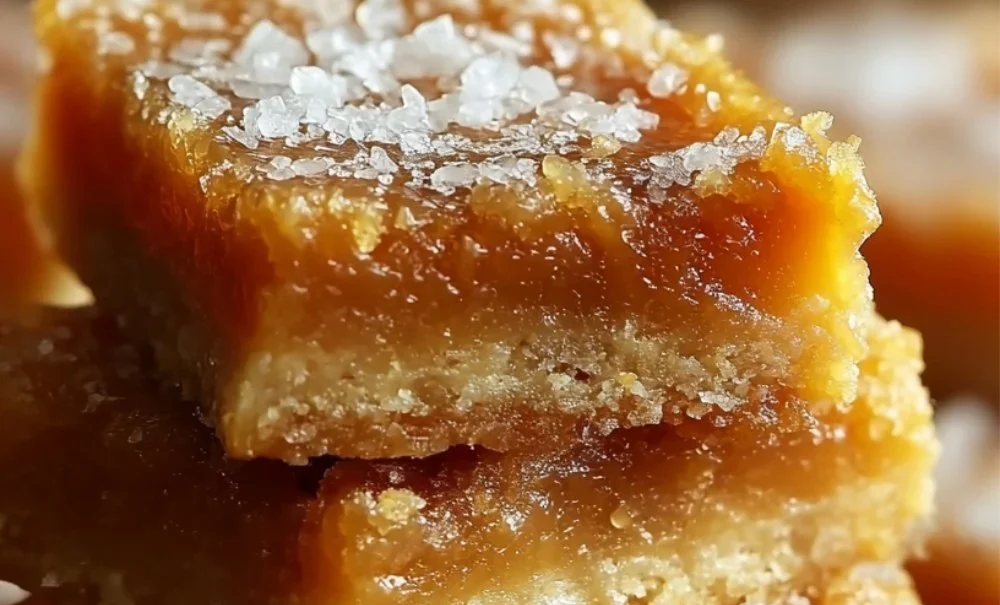
Plating is minimal: present bars on a neutral surface to highlight the color gradation — pale golden base, amber caramel mid-layer, and bronzed topping flecks — and avoid garnishes that obscure the primary elements. If serving on a tray, space pieces to avoid steam condensation and softening of the crust.
Maintaining quality after cooking
Storage governs texture retention. At room temperature in an airtight container, the shortbread base will remain tender for 2–3 days; the caramel can slowly recrystallize if exposed to air. Refrigeration after initial cooling and slicing prolongs shelf life and stabilizes the caramel for neat presentation; chill for up to 7 days. For longer storage, individually wrap slices and freeze. Thaw in the refrigerator to avoid moisture condensation that would make the crust soggy.
If bars become overly firm from refrigeration, allow them to sit at room temperature for 20–30 minutes before serving to return to a more pleasant chew without losing shape.
Questions from home cooks (chef answers)
Q: Why must I use both granulated and powdered sugar?
A: Each sugar has a functional role. Granulated sugar aids structure and mouthfeel; powdered sugar contains cornstarch which tenderizes the dough. Together they balance tenderness and integrity.
Q: My caramel split or grainy — how can I fix it?
A: Split caramels are typically a result of overheating or inadequate emulsification. Off-heat, whisk in a teaspoon of warm cream gradually to re-emulsify. If irreparable, discard and reheat at a lower temperature, stirring constantly.
Q: Can I press all the dough into the bottom and not reserve any for the top?
A: If you press all the dough down, you will lose the intended textural contrast. The recipe relies on a loose topping that browns and fragments; pressing the entire amount down will produce a single dense layer that will interact differently with the caramel.
Q: How do I achieve clean slices?
A: Chill the pan, use the parchment overhang to lift the slab, and cut with a warm, thin-bladed knife, wiping between cuts. Refrigeration for an hour before slicing dramatically improves neatness.
Final chef notes
Precision in temperature, restrained handling, and staged timing are the determinants of success for these salted caramel butter bars. Respect the roles of each ingredient and the logic of the workflow: build a structurally sound base, prepare a stable caramel, and apply a loose topping that browns on its own. The result should be distinct layers that deliver a spectrum of textures — brittle shortbread, viscous caramel, and crisp topping — and a nuanced balance of sweetness and salt. For further inspiration on related bar confections and styling, review my technical references and comparable recipes that illuminate layer behavior and finishing techniques, such as cinnamon roll bliss bars.
Conclusion
For an alternate presentation and a comparative method to salted caramel implementations, consult the detailed write-up at Salted Caramel Butter Bars | The Domestic Rebel, which complements the technique-focused perspective provided here. If you are exploring fruit-accented caramel bars that require similar layering and timing, see the adaptation found at Salted Caramel Apple Pie Bars – Sally’s Baking.
Salted Caramel Butter Bars
Ingredients
Method
- Preheat your oven to 325°F (165°C) and line a 9×13-inch baking pan with parchment paper, ensuring overhang on the sides.
- In a large mixing bowl, beat the softened butter, granulated sugar, and powdered sugar until light and fluffy. Add the vanilla and mix to combine.
- Gradually add the flour, mixing until a thick dough forms.
- Press half to two-thirds of the dough evenly into the bottom of your prepared pan. Set the remaining dough aside for topping.
- Bake for 20 minutes or until lightly golden.
- While the crust is baking, melt the caramel candies and heavy cream together in a microwave-safe bowl or over low heat on the stove, stirring frequently until smooth.
- Once the bottom layer is done baking, remove it from the oven and pour the warm caramel over the crust. Spread evenly with a spatula and sprinkle the top with sea salt.
- Crumble the remaining dough over the top of the caramel layer, ensuring it is not pressed down but simply scattered.
- Return the pan to the oven and bake for another 25–30 minutes, or until the topping is set and lightly golden.
- Let the bars cool completely in the pan before slicing. For cleaner slices, chill in the fridge for 1 hour after cooling.