Knock You Naked Bars
Introduction
As a professional pastry chef, I approach Knock You Naked Bars as a study in layered textures and controlled sweetness. The composition is straightforward: a sturdy cookie-bar base, a pliant caramel-peanut butter middle, and a scattered top of dough that browns and crisps. Success depends on understanding how each component responds to heat, fat distribution, and sugar dynamics. If you are accustomed to working with bar formats and want a comparison of structure and shortcuts, review this alternate approach to compact bar baking at cake mix cookie bars. That reference highlights how base density and oven time influence final chew and is useful when calibrating equipment or scaling the recipe.
The culinary logic behind this dish
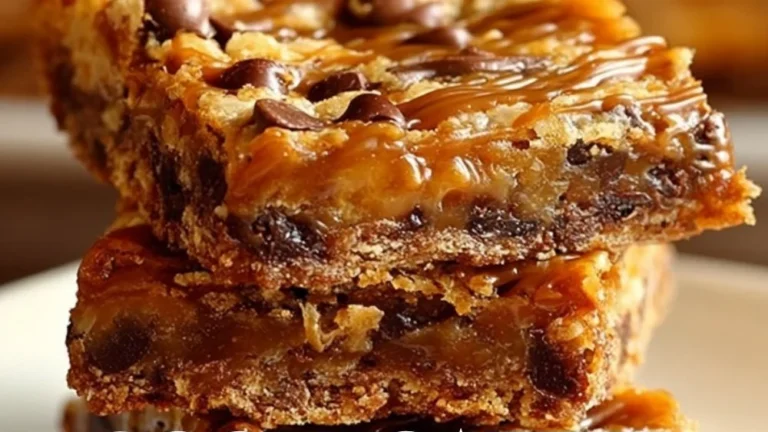
Knock You Naked Bars operate on three culinary principles: contrast, stability, and controlled caramelization. The cookie dough provides a high-butter matrix with sugar that promotes Maillard reaction and a tender crumb. The caramel layer acts both as a flavor bridge — carrying milk-fat and brown-sugar notes — and as a moisture barrier that modifies how the top dough bakes. Peanut butter introduces emulsified oil and protein that stabilize the caramel and tether it to the dough. Respecting these roles ensures the bars hold together when cut and deliver distinct textural experiences: a crisp edge, a tender, slightly chewy crumb, and a soft, sticky center.
Ingredient ratios are deliberate. The flour-to-fat ratio yields a dough firm enough to press and partially pre-bake without collapsing, while sugar levels (equal parts granulated and brown sugar) calibrate tenderness and moisture. Semi-sweet chocolate chips provide discrete bursts of bitterness and fat that contrast the saccharine caramel. Evaporated milk in the caramel increases the dairy solids and raises the boiling point slightly, creating a thicker, more stable caramel than plain cream or sweetened condensed milk would.
How to make Knock You Naked Bars
Ingredients :
2 1/4 cups all-purpose flour, 1 tsp baking soda, 1 tsp salt, 1 cup butter, softened, 3/4 cup sugar, 3/4 cup packed brown sugar, 1 tsp vanilla extract, 2 eggs, 2 cups semi-sweet chocolate chips, 5 oz evaporated milk, 14 oz caramels, 1/2 cup peanut butter
Directions :
Preheat the oven to 375 degrees. Grease a 9×13 inch pan., In a small bowl, combine flour, baking soda, and salt., In a large bowl, beat together the butter, sugar, brown sugar, and vanilla until creamy. Add eggs one at a time, mixing well after each addition., Gradually blend in the flour mixture. Stir in chocolate chips., Spread half of the cookie dough in the prepared pan. Bake for 8-10 minutes., While the base is baking, melt caramels with evaporated milk in a double boiler. Once smooth, stir in peanut butter., Pour the caramel mixture over the baked layer., Drop spoonfuls of the remaining cookie dough over the caramel., Return to the oven and bake for an additional 15-20 minutes, until light golden brown.
The directions encapsulate the thermal sequencing needed for layered bars: par-bake the base to form a set platform, prepare a cohesive, pourable caramel layer, and finish with the remaining dough to create a mosaic top that browns without overbaking the caramel.
Ingredient analysis through a chef’s lens
Each ingredient has a functional role beyond flavor. All-purpose flour supplies gluten for structural integrity; the modest flour quantity keeps the base tender. Baking soda provides lift and accelerates Maillard browning; because there is limited leavening, the dough remains dense and bar-like rather than cake-like. Salt amplifies perceived sweetness and rounds the chocolate and caramel flavors.
Butter is the flavor vehicle; softened butter aerated with sugars creates small pockets that expand in the oven, giving a delicate crumb. The equal split of granulated and brown sugar balances immediate sweetness and long-term moisture retention from molasses in brown sugar, which also deepens color. Eggs bind and contribute to lift and richness; adding them one at a time ensures a stable emulsion. Semi-sweet chocolate chips add localized melting points and textural contrast.
The caramel mixture — caramels melted with evaporated milk and a portion of peanut butter — is deliberately viscous. Evaporated milk has reduced water content and more milk solids than regular milk, which aids caramel stability. Peanut butter adds emulsified oils and a nuttier, savory counterpoint that reduces cloying sweetness and helps the caramel adhere to the base and the top dough.
For comparative layering and textural tradeoffs, consider how other layered bars manage moisture and bake sequencing; the chocolate-covered cherry magic bars demonstrate alternate placements of sticky fillings and their effect on browning and structural stability at chocolate-covered cherry magic bars.
Kitchen workflow & technique breakdown
Efficient execution hinges on parallel tasks and temperature control. Start by preheating the oven and prepping the 9×13 pan; grease ensures release but also controls browning at contact points. While the oven comes up to temperature, whisk together dry ingredients to evenly distribute baking soda and salt — this prevents uneven rising and metallic pockets.
Creaming butter and sugars should be done until the mixture is homogenous and slightly aerated but not overly whipped; excessive aeration can cause the base to puff too much and crack when the caramel is added. Incorporate eggs one at a time to maintain a stable emulsion; when eggs are added too quickly, the fat can break and produce a greasy, unstable dough.
When the base is spread and partially baked for 8–10 minutes, monitor color closely: the goal is to set the dough and begin browning, not to reach final color. While the base is in the oven, melt caramels with evaporated milk using a double boiler. The double boiler prevents scorching and affords gentle, even heat; direct heat risks caramel seizing or burning. Once smooth, incorporate peanut butter off heat to maintain emulsion and prevent separation.
Dropping spoonfuls of remaining dough over the caramel creates an uneven top that lets steam escape and permits some caramel to peek through, creating both textural interest and controlled leak points. Return to the oven and bake until light golden brown; the additional 15–20 minutes allows the top dough to set and the caramel to reheat and integrate without becoming runny.
For organization and timing, staging tasks in this order — dry mix, cream, bake base, prepare caramel, assemble, finish bake — yields consistent results. If you want to study alternate approaches to layering and dough distribution, the process used in cinnamon roll bliss bars offers useful parallels.
Texture control, heat management & timing
Texture control is primarily a function of bake time, temperature uniformity, and ingredient temperature. Oven temperatures vary; calibrate your oven with an oven thermometer. If your oven runs hot, reduce temperature by 10–15°F and extend final bake time slightly to allow interior set without surface overbrowning.
The par-bake period (8–10 minutes) is critical: bake long enough to create a cohesive surface that will support the caramel but short enough to leave the base tender. A base underbaked will slump under the caramel and lead to sogginess; overbaked will be dry and brittle. Visual cues matter: look for the edges to begin setting and a pale golden color developing.
When melting caramels, keep heat low and stir constantly. The caramel must be fluid but not thinned excessively; too much thinning reduces adhesion and increases seepage. The peanut butter addition should be stirred in until homogenous; its oils help stabilize the caramel’s texture. After the final bake, allow the pan to cool on a wire rack until the caramel is tacky but not molten — this makes slicing cleaner and preserves defined layers.
Edge vs. center bake variance is common in 9×13 pans. Rotate the pan halfway through the final bake if your oven has hot spots. For the cleanest slices, chill the completed sheet briefly to firm the caramel, then use a large, sharp knife warmed under hot water and dried between cuts.
Professional variations
Within the constraint of not altering the given recipe, professional variations focus on technique rather than ingredient substitution. You can modify the dough distribution pattern: press the top dough a touch more to create a continuous top layer that will produce a more uniform crust, or drop it sparingly for a more rustic, mosaic appearance. For a glossier caramel, finish it with a small knob of butter added off heat — this will increase sheen but also slightly alter mouthfeel.
For textural contrast, you may press a thin layer of chopped toasted nuts on the caramel before dropping the remaining dough; the nuts provide crunch and a flavor bridge to the peanut butter. If you prefer more pronounced chocolate presence, scoring the cooled bars and briefly passing them under a broiler with chocolate shavings can create a tempered gloss and accent chocolate flavor without changing the listed ingredients or measurements.
Finishing touches & plating philosophy
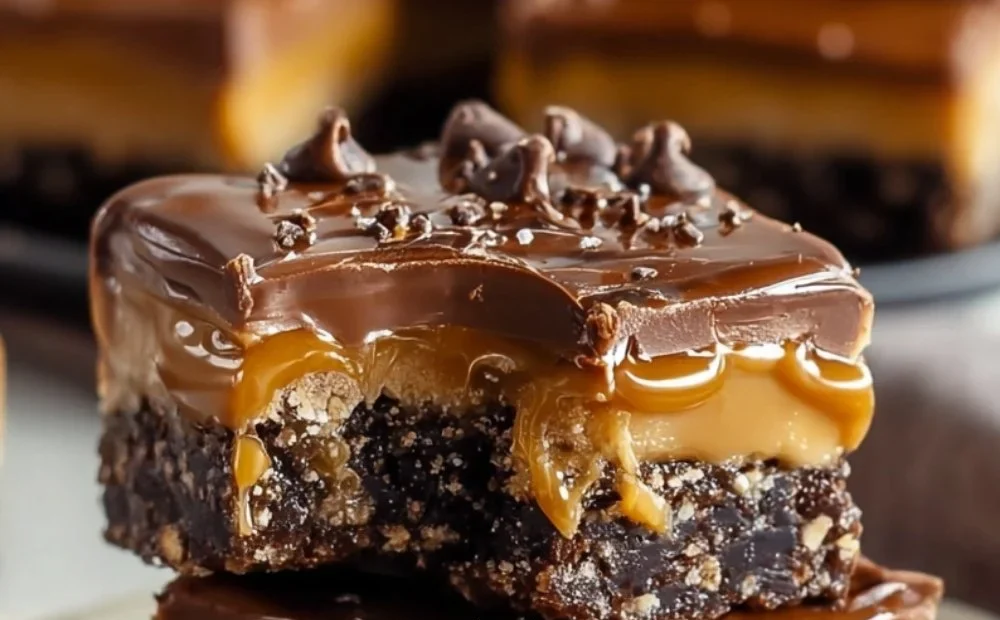
Presentation is functional and precise. After cooling, trim the edges for uniformity and slice into rectangles with clean lines. The goal is to showcase layers: the golden base, the glossy caramel seam, and the browned dough islands on top. Consider serving at slightly below room temperature — around 65–68°F — where the caramel is pliant but not sticky, and the dough offers a yielding chew.
Plating should be minimal to emphasize texture. A single bar on a neutral plate allows the eye to read the layers; accompany with a small spoon of lightly whipped unsweetened cream if a counterpoint to sweetness is desired, but do not introduce competing flavors that mask the caramel and peanut butter interplay.
Maintaining quality after cooking
Storage affects both texture and flavor. Room temperature in an airtight container will keep bars tender for 2–3 days; refrigeration extends life but firms caramel and can harden the fats, altering mouthfeel. If refrigerated, bring bars to the slightly sub-room temperature recommended above before serving to restore pliancy.
For transporting, separate layers with parchment to prevent adhesion. Reheat briefly if a warmer presentation is desired: 10–15 seconds in a microwave on low power or a 5–7 minute hold in a 300°F oven will soften the caramel without overcooking the dough.
Avoid prolonged exposure to humidity — moisture will embrittle edges and convert the top texture to a chew rather than a crisp-tender finish.
Questions from home cooks (chef answers)
Q: What if my caramel seizes or grainy during melting?
A: Seizing typically indicates overheating or inadvertent water contact. Use a double boiler and low heat; stir continuously. If graininess develops, a splash of evaporated milk or a small amount of corn syrup, warmed in and emulsified, can sometimes smooth it, but prevention through gentle heat is preferable.
Q: My top dough sank into the caramel. Why?
A: This usually means the base was not sufficiently set during par-bake, or the caramel was too thin and hot when applied. Ensure the base shows a pale golden color and that the caramel has cooled slightly to a thick, pourable consistency before assembly.
Q: How do I get clean slices?
A: Chill briefly to firm the caramel, then use a warm, sharp knife. Wipe the blade between cuts. For perfect edges, trim the pan margins before portioning.
Final chef notes
Precision in temperature, timing, and sequencing is what differentiates a good batch from a professional one. The interplay between the partially baked base and the viscous caramel is the critical axis of quality control. Respect the par-bake, keep caramel warm but not thinned, and allow adequate cooling before slicing. The result should be a balanced bar where the chocolate chips punctuate the richness, the caramel layers are coherent and stable, and the dough provides both tender yield and gentle surface crunch.
Conclusion
For reference and variations documented by home bakers, review the original Knock You Naked Bars recipe at Knock You Naked Bars – The Country Cook and a popular alternative take at Knock You Naked Bars – Julie’s Eats & Treats ®.
Knock You Naked Bars
Ingredients
Method
- Preheat the oven to 375 degrees F (190 degrees C). Grease a 9x13 inch pan.
- In a small bowl, combine flour, baking soda, and salt.
- In a large bowl, beat together the softened butter, granulated sugar, brown sugar, and vanilla until creamy.
- Add eggs one at a time, mixing well after each addition.
- Gradually blend in the flour mixture. Stir in chocolate chips.
- Spread half of the cookie dough in the prepared pan. Bake for 8-10 minutes.
- While the base is baking, melt caramels with evaporated milk in a double boiler. Once smooth, stir in peanut butter.
- Pour the caramel mixture over the baked layer.
- Drop spoonfuls of the remaining cookie dough over the caramel.
- Return to the oven and bake for an additional 15-20 minutes, until light golden brown.