Tiramisu Chia Pudding With Greek Yogurt
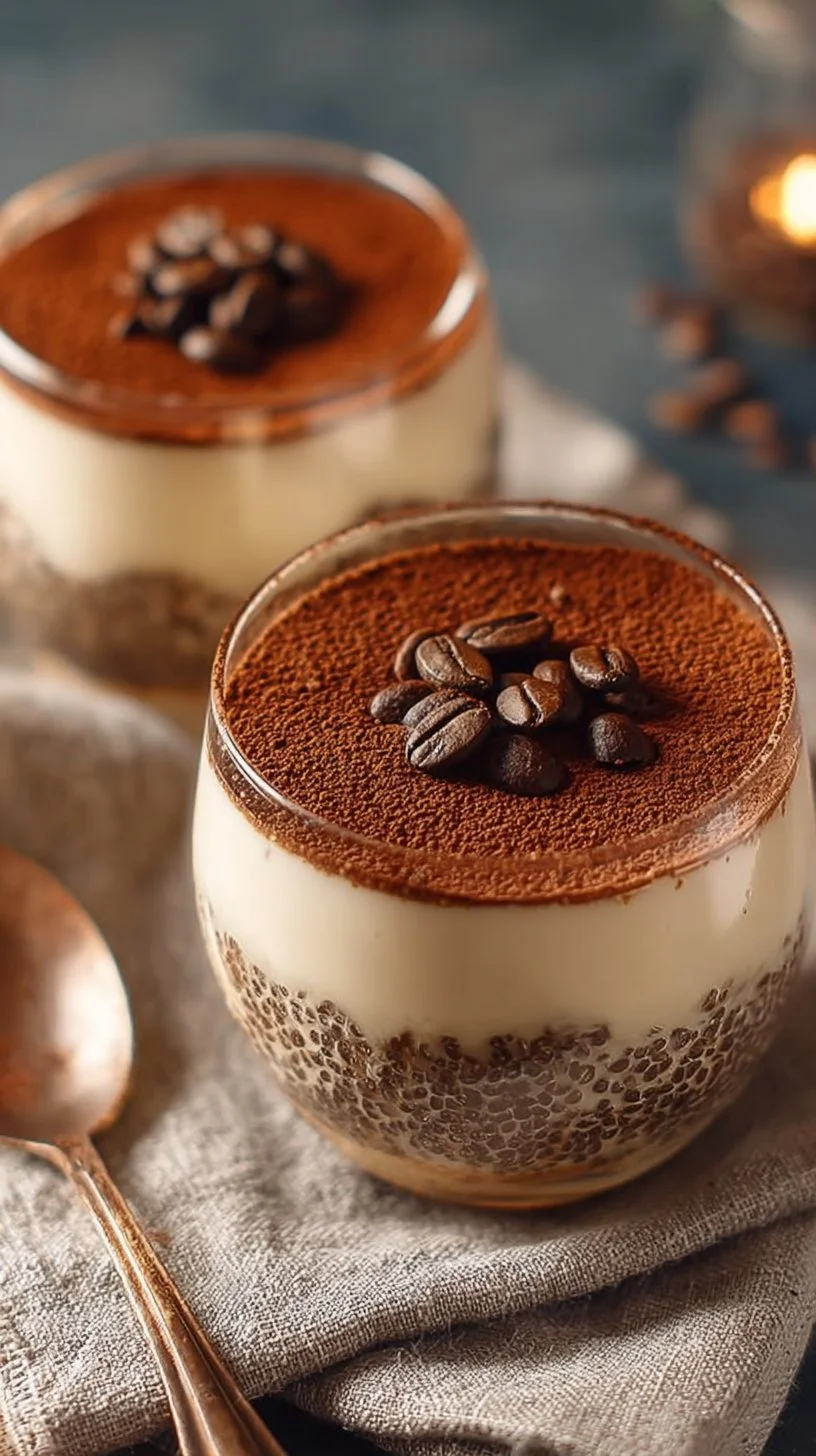
I first encountered a spoonful of tiramisu transformed into a glass jar on a rain-softened afternoon in a small trattoria-cafe tucked between a bakery and a floristry on a narrow street in Rome. The way the coffee perfume caught in the throat, the delicate dusting of cocoa powder like late-afternoon shadow — it was memory itself, condensed. Years later, that sensation resurfaced in a different guise: a braid of creamy Greek yogurt and chia seeds, threaded through with espresso and maple, a lighter, more portable homage to the classic. This Tiramisu Chia Pudding With Greek Yogurt is less an insistence on authenticity than an act of translation, bringing together islands of taste and traveling kitchens. Like how a home-cooked dinner might sit beside a showier roast, this pudding understands pairing; it sits contentedly next to a savory dish such as parmesan-crusted chicken with creamy garlic sauce, bridging the acid and the sweet in the way good companions do.
In this piece I will travel with this recipe: through its origin story and influence, the tactile intimacy of making it, and the ways people from different regions make space for comfort and ritual in a jar of coffee-scented chia. Along the way I’ll listen for the quiet histories lodged in ingredients—coffee, chia, yogurt—and how immigration, trade, and domestic practice have reimagined what “tiramisu” can be.
The origin story & regional influence behind this dish
Tiramisu is a word that unfolds like a sigh: "lift me up." Its immediate home is northern Italy, with Veneto and Treviso often claiming kinship to the layered mascarpone, sponge, and espresso of the classic. But culinary stories are seldom single-threaded; they braid through trade routes and domestic improvisations. The tiramisu spirit—strong coffee meeting velvety cream—has traveled farther than a Venetian gondolier. Coffee itself, arriving from the Ottoman and Arabian worlds into Europe, became an emblem of social and culinary exchange. Chia seeds, by contrast, carry a different geography: ancient Mesoamerica, where chia was a staple for endurance and nutrition. Greek yogurt evokes pastoral scenes of sheep and goats on Mediterranean hills, where milk is transformed into a tangy, protein-rich curd under careful hands.
This pudding marries these geographies into something new yet warmly familiar. It is an invention of modern kitchens that celebrate minimalism and portability: the little jar, the chilled spoon. It is also an echo of practices where people crafted indulgence from scarcity—where bold flavor came from a concentration of strong coffee and the uplift of a spoonful of sweetened cream. Across kitchens from Rome to Athens, from Mexico City to New York, cooks have translated textures and tastes into what they have: chia where ladyfingers might be, Greek yogurt instead of mascarpone. In another neighborhood this reinvention might sit alongside a coconut-rich pastry or a homey cheesecake; creative kitchens have even placed a similar light dessert next to a glossy coconut dome with chocolate spread, showing how sweets speak to each other across tables.
How to make Tiramisu Chia Pudding With Greek Yogurt
Below is the recipe as it should be followed, a simple, respectful blueprint. Take these exact measures and steps as a way to honor the balance that made the recipe sing when I first tasted it in a jar.
Ingredients :
2 cups plain Greek yogurt, 2 tablespoons maple syrup, 1 teaspoon vanilla extract, 1 cup milk of your choice (dairy or plant-based), ½ cup chia seeds, 1.5 tablespoons instant espresso powder, A pinch of salt, 1 cup plain Greek yogurt (for topping), 2 teaspoons maple syrup (for topping), 1 teaspoon vanilla extract (for topping), Unsweetened cocoa powder for dusting
Directions :
- Prepare your ingredients: Gather all ingredients for the pudding base. Measure the Greek yogurt, maple syrup, vanilla extract, milk, chia seeds, espresso powder, and a pinch of salt., 2. Blend the base: Place all pudding-base ingredients into a high-speed blender. Blend on medium-high for about 60 seconds, scraping down the sides occasionally, until the mixture is smooth and mousse-like., 3. Portion the pudding: Divide the blended pudding evenly into four jars or containers. Smooth the tops slightly with a spoon., 4. Prepare the topping: In a separate small bowl, combine 1 cup Greek yogurt, 2 teaspoons maple syrup, and 1 teaspoon vanilla extract. Whisk until smooth and slightly airy., 5. Layer the topping: Spoon the prepared topping evenly over each of the four pudding jars, creating a clean layer on top., 6. Dust with cocoa powder: Generously sprinkle unsweetened cocoa powder on top of each jar., 7. Chill to set: Cover the jars and refrigerate for at least 2 hours. For the best results, chill overnight., 8. Serve and enjoy: Serve straight from the jar. Optionally, stir gently to mix the cocoa into the pudding before eating.
There is a particular joy in following a recipe as a ritual: measure, blend, divide, rest. These are small, meditative acts that let the landscape of flavor bloom in time. The espresso powder wakes the chia and yogurt into something flirtatious; the maple binds the tang of Greek yogurt with a gentle sweetness that never overwhelms. When you lift the lid, the first breath is coffee, then cream, then the earthy hush of cocoa.
Ingredients through a cultural & historical lens
Each ingredient carries a backstory that changes the way you taste it.
- Greek yogurt: Revered across the Mediterranean, yogurt has always been more than a food; it is a preserved moment of milk. Its tang holds the memory of sun and pasture, the slow work of curd and whey, and the human touch that turns abundance into longevity. Using Greek yogurt here is a nod to those pastoral traditions, but it is also practical—its high protein and body create the mouthfeel of mascarpone in a lighter skin.
- Chia seeds: Once central to Mesoamerican diets, chia carries the quiet lineage of endurance. The seeds swell and hold water, giving body to the pudding in a way that is both ancient and effortlessly modern.
- Espresso powder: Coffee is a social history distilled into flavor—colonial trade, global labor, and the small pleasures of morning. Espresso powder is a fast-forwarded way to capture the intense bitterness and aroma of true espresso in a pantry-stable form.
- Maple syrup: A North American sweetness with deep Indigenous roots, maple adds a floral, woody honeyedness. It invites a different conversation than sugar, one of tree and season rather than refinery.
These ingredients, when read together, sound like a map: Mediterranean dairies, American forests, Mesoamerican fields, and the global ports of coffee. The resulting pudding is an architecture of those places, assembled in a jar for modern life.
Cooking the dish: sensory notes & traditional techniques
The act of making this pudding is sensual in its quiet ways. When you blend the base, listen for the soft whirl, and watch as the yogurt turns from silken to mousse. The scent unfolds—first the bright, bitter thread of espresso, then the creamy, almost lactic sweetness of yogurt, and finally maple’s warm, resinous note. Chia seeds, small and black, seem almost mute until they bloom; they give the mouth a gentle pop and a velvet-thick body that recalls spooned custards and slow-made creams.
Tradition here isn’t about strict rules; it’s about method and respect. The seating of a whipped topping over a coffee-toned body is an homage to the same layering ritual that older tiramisus practiced. Covering and chilling the jars is like giving the dessert a small winter—time to settle, mingle, and become more cohesive. Serving straight from the jar recreates the intimacy of a shared bowl, the way families pass plates and stories across kitchen tables.
If the classic tiramisu was built in layers of ladyfingers and mascarpone, this dish translates that architecture into a simpler, more portable language. It becomes something you can walk with on a train, bring to a picnic, or tuck into the cool of a market stall between tastes of roasted meats and sweet pastries.
How different regions prepare their version
Across regions, cooks adapt this template to local rhythms.
- In coastal Mediterranean towns, cooks might swap in a drizzle of local honey for maple, or simmer in a whisper of citrus zest, aligning the pudding with the sea-brightness of the diet there.
- In North America, where chia has been embraced by health-conscious kitchens, this pudding frequently appears with plant-based milks—almond or oat—to suit vegan preferences, and sometimes a deeper-maple or espresso concentrate for bolder morning flavors.
- In parts of Asia where dairy is less central, coconut or soy yogurt might stand in, and espresso might be replaced with strong tea or roasted barley to resonate with local coffee cultures.
- In Latin America, tossing a dusting of cinnamon alongside the cocoa or whispering in a little dulce de leche nods to regional sweet traditions.
These versions keep the spirit—coffee, cream, cocoa—but localize the voice. I’ve seen a version served in a rooftop garden in Tokyo with a fine lattice of matcha, and another in Oaxaca where a light chocolate mole essence deepened the base. Each tells you about the place before you taste the first spoonful.
Traditional ways this dish is shared or served
The jar itself has become a new ritual object. In many contemporary gatherings—picnics, train rides, potlucks—desserts are portable. This pudding’s jar-borne form makes it intimate and social at once: you lift a lid and suddenly there are shared gasps at the aroma, soft laughter at the cocoa dusting, a reach for a second spoon. In some households, a jar is a morning thing, eaten with the same meditation as tea; in others, it’s a small celebratory finish to a convivial meal.
On holidays, lightweight pastries often circle the heavier mains. I remember a family in Athens who served a similar chilled yogurt cup at the end of a long Sunday lunch, alongside more ornate sweets and a savory roast. In another spring celebration in a suburban backyard, mini cheesecakes and jars of chia pudding lined a table, punctuating the meal with choices of texture and memory; the pudding’s presence harmonized with the denser desserts such as mini Easter cheesecakes with chocolate eggs, offering a gentle counterpoint.
Storing the dish without losing its cultural essence
Storage is less about refrigeration logistics and more about preserving intention. Keep the jars covered and chilled; the cold completes the melding of flavors. Stored for up to three days, the character shifts subtly: the chia swells further, the coffee mellows, the cocoa seems to sink a little deeper into the cream. Transport it in an insulated bag and it becomes a traveling comfort; leave the lid slightly ajar before serving and the aroma will bloom more quickly.
If you must make substitutions—for instance, a plant-based milk or a different sweetener—do it with awareness of what you are shifting. This pudding’s cultural essence lives in the balance: bitter coffee and tannin of cocoa against the dairy tang and the rounded maple. Keep the conversation in those tones and the dish will still tell its story.
Cultural questions people often ask
Is it still tiramisu if there are no ladyfingers or mascarpone? Names are tools we use to point at flavors and memories. Calling this dessert "tiramisu" is less an act of culinary pedantry and more one of kinship: it shares the soul of the original—coffee, cream, cocoa—even if it speaks a different dialect.
Is it healthy? "Healthy" depends on what you seek. This pudding leans toward protein and satiation thanks to Greek yogurt and chia, but it remains dessert in spirit. Many people appreciate it as an everyday indulgence that sits between treat and nourishment.
Can it be made vegan? Yes, with plant-based yogurts and milk; yet such a version speaks of a different place—another kind of memory. That change is no betrayal; it’s a translation warm with its own meaning.
Are there traditional rituals tied to it? Not in the old-world sense, but new rituals have arrived with jars: gifting them at brunches, sharing them in bento-style lunches, or carrying them in a picnic basket to slow afternoons.
A closing note on food, memory & travel
Travel and food are the same kind of cartography: they map the small things that make us distinct and the larger currents that make us kin. This Tiramisu Chia Pudding With Greek Yogurt performs a gentle cartography—an itinerant list of places and practices in a spoonful. It carries Venetian coffee, Mesoamerican seeds, Mediterranean dairy, and North American maple, and it places them in a modern container of convenience and care.
When you taste it, let the order of flavors tell you a story: an ancestor’s kitchen, a city street, a market stall, the hush of a train at night. Recipes are invitations to conversation; this one invites you to speak of where you’ve been and to share what you bring.
Conclusion
If you’re curious to see how other cooks have taken inspiration from these same flavors, there are thoughtful variations worth exploring—one that focuses on protein-rich balance in a similar chia-tiramisu style can be found in the recipe titled High Protein Tiramisu Chia Seed Pudding with Yogurt, while another viral adaptation that emphasizes gluten-free and refined sugar–free ingredients is described in Viral Tiramisu Chia Pudding (Gluten Free, Refined Sugar Free). These versions show how a simple idea migrates: changing form, gaining new friends, and keeping the same warm invitation to taste and remember.
Tiramisu Chia Pudding With Greek Yogurt
Ingredients
Method
- Gather all ingredients for the pudding base.
- Measure the Greek yogurt, maple syrup, vanilla extract, milk, chia seeds, espresso powder, and a pinch of salt.
- Place all pudding-base ingredients into a high-speed blender.
- Blend on medium-high for about 60 seconds, scraping down the sides occasionally, until the mixture is smooth and mousse-like.
- Divide the blended pudding evenly into four jars or containers. Smooth the tops slightly with a spoon.
- In a separate small bowl, combine 1 cup Greek yogurt, 2 teaspoons maple syrup, and 1 teaspoon vanilla extract. Whisk until smooth and slightly airy.
- Spoon the prepared topping evenly over each of the four pudding jars, creating a clean layer on top.
- Generously sprinkle unsweetened cocoa powder on top of each jar.
- Cover the jars and refrigerate for at least 2 hours. For the best results, chill overnight.
- Serve straight from the jar; optionally, stir gently to mix the cocoa into the pudding before eating.