Parmesan Crusted Chicken with Creamy Garlic Sauce – Easy Family Dinner Recipe
Introduction
This recipe for Parmesan Crusted Chicken with Creamy Garlic Sauce is constructed to produce a clear contrast between an incisive, dry crust and a rich, emulsified sauce. The technique prioritizes controlled browning, minimal moisture transfer, and efficient timing so the cutlets finish tender and hot without softening the crust. If you are looking to expand a weeknight repertoire with reliably crisp poultry and an immediately successful pan sauce, consult a collection of easy dinner recipes for complementary sides and pacing strategies that integrate with this dish.
The culinary logic behind this dish
At its core, this preparation uses three fundamental culinary objectives: Maillard development on the crust, a restrained reduction to concentrate flavor in the sauce, and textural balance between crunchy exterior and moist interior. The breadcrumb-Parmesan coating is dry and low in moisture; that encourages rapid surface browning without steaming the chicken. Eggs and flour act as staging agents—flour provides a dry adhesive layer that absorbs surface moisture, eggs create a protein-rich matrix to bind the crumbs, and the breadcrumb-Parmesan layer supplies both a coarse texture and nutty umami.
The sauce is an emulsion of butter, chicken broth, cream, and additional Parmesan. Its purpose is not to drown the crust but to provide a glossy counterpoint that clings selectively to the chicken’s edges. The reduced broth introduces savory depth and acidity that tempers the cream’s richness; finishing with Parmesan both thickens the sauce and contributes an echo of the crust’s flavor. Understanding this interplay explains why precise sequencing and restraint in thinning or over-reducing the sauce are essential.
How to make Parmesan Crusted Chicken with Creamy Garlic Sauce – Easy Family Dinner Recipe
Prepare each component with intention: mise en place, standardized cutlets, and a pre-heated skillet. The sequence—season, flour, egg, breadcrumb-Parmesan, then pan-fry—creates layers that each contribute to both adhesion and final mouthfeel. Pan temperature must be high enough to develop color in three to four minutes per side, but not so high that the exterior burns before internal temperature is achieved. After transferring the chicken to rest, the same skillet is the flavor reservoir for the sauce; fond (the brown bits) dissolved with broth becomes the base of a more complex, integrated sauce than starting in a clean pan would.
Ingredients :
4 thin chicken cutlets, ½ cup all-purpose flour, 2 large eggs, beaten, 1 cup breadcrumbs, ½ cup grated Parmesan cheese, 2 tbsp olive oil, 2 tbsp butter, 3 garlic cloves, minced, ½ cup chicken broth, 1 cup heavy cream, ¼ cup grated Parmesan (for sauce), Salt & pepper to taste, Fresh parsley or thyme for garnish
Directions :
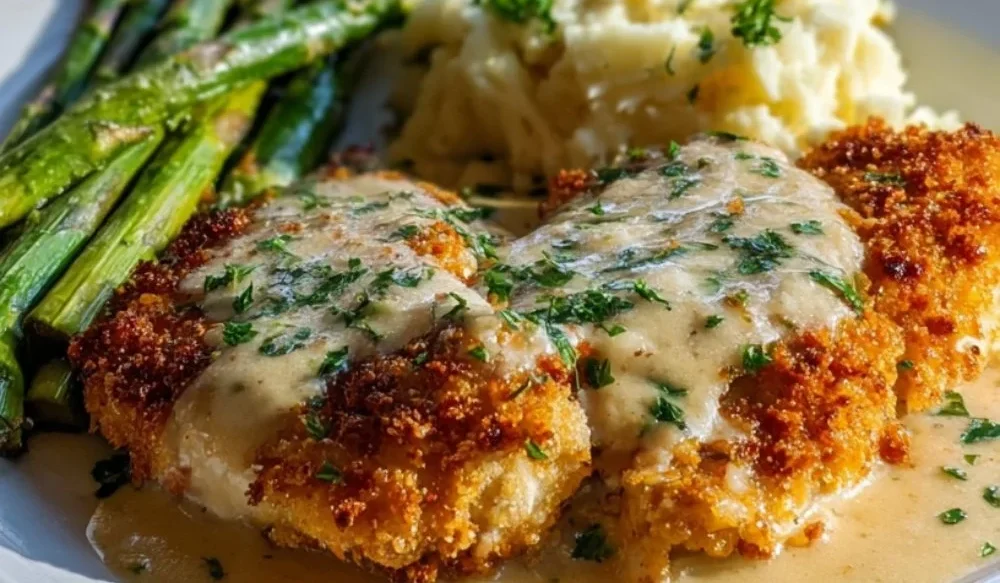
Prepare Chicken: Season cutlets with salt and pepper., Coat Cutlets: Dredge in flour, dip in egg, then coat with breadcrumb-Parmesan mixture., Pan-Fry: Heat olive oil in skillet. Cook chicken 3–4 minutes per side until golden and crisp. Transfer to plate., Make Sauce: In same skillet, melt butter. Add garlic and sauté until fragrant. Stir in broth, cream, and Parmesan. Simmer until thickened. Season to taste., Combine: Return chicken to skillet, spoon sauce over, and garnish with parsley., Serve: Pair with mashed potatoes, pasta, or roasted vegetables.
Ingredient analysis through a chef’s lens
Each ingredient contributes a specific functional property beyond flavor. Thin chicken cutlets ensure rapid, even cooking and a large surface area for crust formation; their thinness is what allows 3–4 minute sears without undercooking or overcooking. All-purpose flour dehydrates the surface and produces a tacky primer for the egg wash. Eggs coagulate during cooking, binding crumbs and creating a continuous crust. Breadcrumbs supply the coarse texture; if they are too fine the crust becomes paste-like, while very coarse panko will create lofty, brittle structure. The ½ cup grated Parmesan folded into the breadcrumbs lends salt, umami, and a low-moisture fat that crisps under heat.
Olive oil provides a moderately high smoke point and contributes flavor; butter added later rounds the sauce and carries aromatic compounds. Garlic must be cooked gently to avoid bitterness: softening until aromatic rather than aggressively browned preserves its sweet, savory qualities. Chicken broth introduces saline and gelatinous notes that round out the sauce without adding dairy heaviness, and heavy cream stabilizes the emulsion while allowing for glossy viscosity. The additional ¼ cup Parmesan in the sauce acts as both a thickener and a flavor tie to the crust. For reference on balanced quick dishes that pair well with this preparation, review quick, easy recipes.
Kitchen workflow & technique breakdown
Mise en place is not optional: have the flour, beaten eggs, and breadcrumb-Parmesan mixture in three separate shallow trays arranged in the order of operation. Place cutlets on a plate with a light dusting of salt applied immediately before dredging; salting too early can draw moisture and impede binding. Heat the skillet over medium-high until the oil shimmers but does not smoke—this indicates correct thermal capacity for crust formation. Work in batches if necessary to avoid crowding; overcrowding reduces pan temperature and results in soggy crusts.
When frying, resist moving the cutlets for the first minute; an initial undisturbed contact allows the crust matrix to set and prevents tearing. Use an instant-read thermometer if uncertain—thin cutlets will reach safe internal temperature quickly, usually around 150–155°F when removed to rest (carryover will bring them to 160–165°F). Transfer to a wire rack set over a sheet pan to prevent steaming; direct contact with a flat surface traps steam and softens the crust. While the chicken rests, deglaze the skillet to collect the fond: this is where the pan sauce gains its depth.
Texture control, heat management & timing
Texture is controlled through temperature and timing. The skillet must be hot enough for a rapid Maillard reaction but not so hot that the breadcrumb fat and Parmesan oxidize and burn before the underlying proteins set. Target a consistent medium-high heat and monitor oil temperature visually: small bubbles should form at the edge of the coating as it sears. Timing is fixed—3–4 minutes per side—because the cutlets are thin; extend time only if the crust is under-colored after testing with a spatula.
In the sauce, start with the skillet on medium heat when you add butter and lower slightly when adding cream; excessive heat will break the emulsion and make the sauce grainy. Simmer gently to reduce and thicken; aggressive boiling will reduce volume too quickly and can curdle cream. The goal is a coatable cream that will cling in a thin layer to the crust without saturating it—think glossy nappé rather than a heavy blanket.
Professional variations
For a refined variation, finish the breadcrumb mix with 1–2 teaspoons of finely chopped fresh herbs such as thyme or flat-leaf parsley to introduce aromatic lift without altering texture substantially. Substitute panko for a lighter, airier crust, but compensate with finely grated aged Parmesan to retain the toasty umami. For a cleaner pan sauce, use a white wine deglaze before adding the broth to introduce acidity and evaporative aromatics; allow the wine to reduce by half to avoid a sharp alcohol note. For a dairy-lean sauce with similar mouthfeel, use a combination of one-third crème fraîche and two-thirds reduced cream to provide stability and a subtle tang.
For production at scale, finish the cutlets in a 350°F oven for 5–7 minutes after searing to standardize internal temperature while keeping the crust intact. When preparing multiple batches, reserve the last batch’s fond to build the sauce and adjust seasoning conservatively, tasting for salt only after the Parmesan and broth have integrated.
Finishing touches & plating philosophy
Plating should emphasize contrast and restraint. Place the cutlet slightly off-center to create negative space for the sauce. Spoon the creamy garlic sauce primarily on the non-crusted edge and around the base of the cutlet to preserve crispness at first bite. A fine scatter of fresh parsley or a few thyme leaves provides a textural counterpoint and visual clarity without overwhelming flavor. Consider a smear of lightly buttered mash or a string of al dente pasta tossed with a touch of lemon to provide acidity that cleanses the palate.
Temperature consistency is critical: warm the serving plates briefly so that the sauce does not congeal immediately on contact. If a glossy finish is desired, pass the sauce briefly through a sieve to remove garlic solids and whisk in a small knob of cold butter off heat for shine.
Maintaining quality after cooking
Avoid covering the cutlets with foil directly after cooking; trapped steam will soften the crust. Rest on a wire rack at moderate room temperature and spoon sauce only at plating. If you must hold the dish, keep chicken in a single layer in a low oven (200–225°F) on a rack to maintain crispness while preventing drying. Reheat gently in a 350°F oven for short intervals; frying again is the fastest way to re-crisp, but it should be used sparingly to avoid overcooking.
Sauce reheating should be done over low heat with a brief splash of broth or cream to re-emulsify if separation occurs. Do not boil; gentle heat preserves texture. For advance prep, keep components separate: crusted cutlets at room temperature for short holding, sauce refrigerated and reheated slowly.
Questions from home cooks (chef answers)
Q: Why use flour before egg—can I skip it?
A: The flour step absorbs surface moisture and creates a dry layer that improves egg adhesion. Skipping it increases the likelihood of an uneven, patchy crust and can lead to the coating sliding off during frying.
Q: My crust becomes soggy—what went wrong?
A: The three most common causes are overcrowding the pan (which lowers temperature), transferring to a flat surface (which traps steam), or not having enough heat initially to set the crust. Use a wire rack to rest and ensure the oil is properly heated.
Q: My sauce separated—how do I fix it?
A: Remove from heat and whisk in a small splash of cold liquid (broth or cream) slowly to bring the sauce back together. If separation persists, strain and then whisk over low heat while adding a tablespoon of cold butter to re-emulsify.
Q: Can I use chicken breasts instead of thin cutlets?
A: If using whole breasts, butterfly and pound them to an even thickness to match the timing; otherwise, increase cooking time and consider finishing in the oven to avoid over-browning.
Final chef notes
Consistency in technique yields predictable results: standardize cutlet thickness, control skillet temperature, and respect the order of mise en place and dredging. Each component—flour, egg, crumbs, cheese, oil, butter, broth, cream—serves a structural or flavor role. Understand those roles and the dish becomes repeatable and adaptable. For further ideas on complementary desserts or small-batch sweets to pair with this main course, see an approachable collection such as easy baked donut bars or a rich confection guide like easy homemade chocolate fudge.
Conclusion
This preparation balances crisp, savory crust and a silky, restrained garlic cream that complements a variety of sides; for additional reference on sauce ratios and variations, consult this detailed recipe analysis at Creamy Garlic Parmesan Chicken – Salt & Lavender. For another presentation and testing notes on this specific dish, review a comparative recipe walkthrough at Parmesan Crusted Chicken with Creamy Garlic Sauce.
Parmesan Crusted Chicken with Creamy Garlic Sauce
Ingredients
Method
- Season the cutlets with salt and pepper.
- Dredge cutlets in flour, dip in beaten eggs, then coat with breadcrumb-Parmesan mixture.
- Heat olive oil in a skillet over medium-high heat.
- Cook the chicken cutlets for 3–4 minutes per side until golden and crisp.
- Transfer cooked chicken to a plate to rest.
- In the same skillet, melt the butter and add minced garlic, sautéing until fragrant.
- Stir in chicken broth, heavy cream, and the 1/4 cup of grated Parmesan.
- Simmer sauce until thickened and season to taste.
- Return the chicken to the skillet, spooning sauce over each piece.
- Garnish with fresh parsley or thyme before serving.