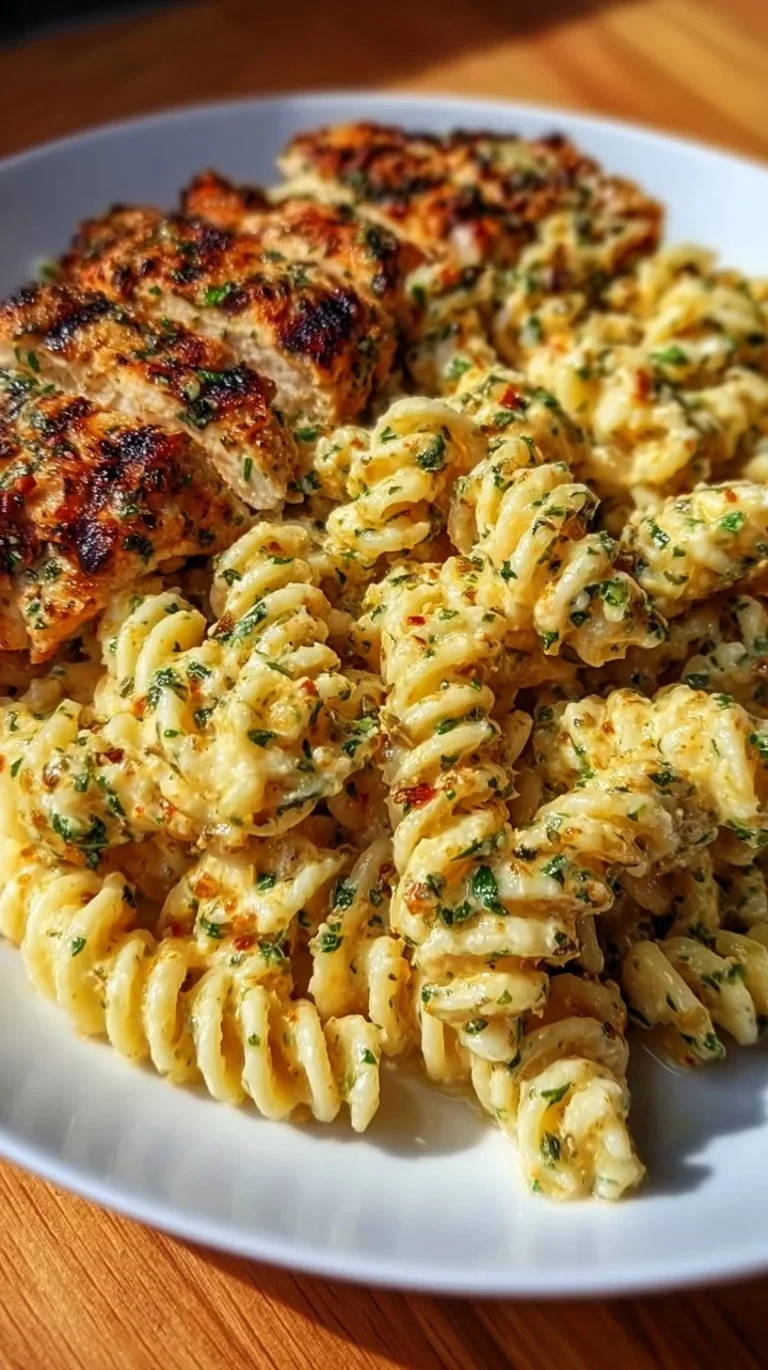
Low Carb Stuffed Chicken Breast
There are certain recipes that arrive at a kitchen like a weathered postcard from a place you’ve never been, carrying the scent of sunlight and the whisper of other lives. Low Carb Stuffed Chicken Breast is one of those quiet messengers: deceptively simple, intimate in scale, and generous in memory. It folds creamy cheeses and wilted greens into the white heart of the bird and, in doing so, becomes less a rigid formula than an invitation to gather — around a rustic table in a hill town, in a compact city apartment after a long day, or at a kitchen island where conversation simmers as steadily as the pan. For readers who love kitchens that lean toward low-carb comfort, this recipe sits comfortably alongside other creative, satisfying dishes like a creamy low-carb chicken casserole with broccoli and bacon, each offering its own intimate version of nourishment.
A recipe like this is a living thing; it carries the fingerprints of whoever folds the filling, the cadence of the home in which it is cooked, and a small archive of tastes that travel with the cook. In the paragraphs to come I want to walk with you through its origin, its sensory map, and the ways different places have made it feel like theirs. I’ll place the precise ingredients and directions in their own sections so you can hold the recipe and the story side by side, as I have seen done in many kitchens from coastal towns to mountain hamlets.
The origin story & regional influence behind this dish
There is no single ancestral village for stuffed chicken breasts — they are, in many respects, a pattern found across kitchens worldwide: meat wrapped or filled with something softer, somewhere between preservation and celebration. In the Mediterranean, for instance, you might find chicken parcels lavishly layered with herbs and cheese; in parts of France, poulet farci occupies Sunday tables; in India, you’ll encounter the spirit of stuffing in kebabs and cutlets. The Low Carb Stuffed Chicken Breast is the contemporary heir of these traditions: it borrows the European love of cheese and spinach while answering modern appetites for lighter, grainless plates.
Historically, the idea of stuffing meats was practical as much as ceremonial. A filling could stretch a smaller cut, make a lean protein feel richer, or transform a plain Sunday roast into a centerpiece. In regions where cream cheese and Parmesan are common on the shelves — the diaspora kitchens of North America, parts of Europe influenced by Italian import — flavors evolved toward the tang of cultured dairy and the bright, iron-rich bite of spinach. This dish, then, is a crossroads: the fold of Old World technique and New World pantry, a culinary meeting place where trade, migration, and home economics all left footprints.
How to make Low Carb Stuffed Chicken Breast
Making this stuffed chicken is an act of patience and a small, domestic ritual. There is an intimacy to cutting a pocket in a breast and tucking velvet into it — a gesture that feels like tucking a child into bed. The steps are straightforward and kind; they require only care, a hot pan for a brief sear, and an oven to finish the promise of tenderness. Below I list the ingredients and directions exactly as they appear in the recipe, so you can follow them without alteration.
Ingredients :
4 chicken breasts, 8 oz cream cheese, softened, 1/2 cup grated Parmesan cheese, 2 cups fresh spinach, chopped, 1 teaspoon garlic powder, Salt and pepper to taste, Olive oil for cooking
Directions :
- Preheat the oven to 375°F (190°C)., 2. In a bowl, mix the cream cheese, Parmesan cheese, chopped spinach, garlic powder, salt, and pepper until well combined., 3. Cut a pocket in each chicken breast and stuff generously with the cheese and spinach mixture., 4. Heat olive oil in a skillet over medium heat and sear the stuffed chicken breasts for 2-3 minutes on each side until golden., 5. Transfer the chicken to a baking dish and bake for 20-25 minutes, or until the chicken is cooked through., 6. Let rest for a few minutes before serving.
Ingredients through a cultural & historical lens
Each ingredient has a story if you listen closely. The chicken breast, white and neutral, acts as a canvas; in a region where spices run bright, it might have once been marinated in yogurt and turmeric before receiving a filling. Cream cheese is an American twentieth-century kitchen staple — churned from the desire for a milder, spreadable dairy — and Parmesan arrives like a parchment of Italy, aged and fragrant, its crystals a reminder of long seasons and cool cellars. Spinach carries with it the simple luxury of greens: in peasant kitchens, greens were often the most prized harvest, transformed by the warmth of butter, olive oil, or cheese into something celebratory.
Salt and pepper are the invisible companions of every kitchen culture, while olive oil whispers of the Mediterranean coast — growers and groves where oil is not a commodity alone but a language. Garlic powder is the modern convenience, an echo of the fresh cloves that would have been crushed in a mortar and pestle in kitchens where slowness was part of the ritual. Read as a collection, these ingredients map a global pantry: local enough to be personal, broad enough to be familiar in kitchens across continents. If you enjoy the marriage of rich dairy and vibrant greens in easy weeknight formats, you might also find a kinship with a low-carb bacon cheeseburger casserole, another comfort that reinterprets tradition for modern tastes.
Cooking the dish: sensory notes & traditional techniques
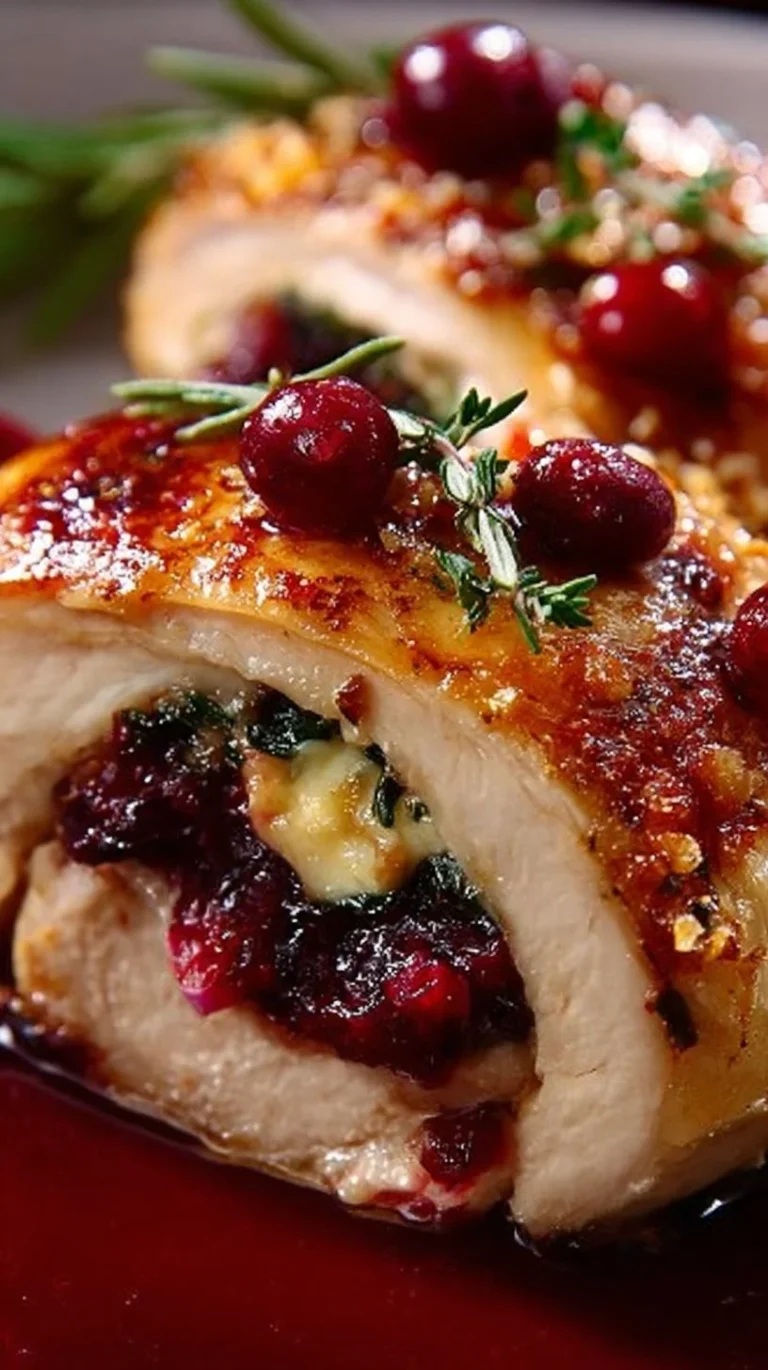
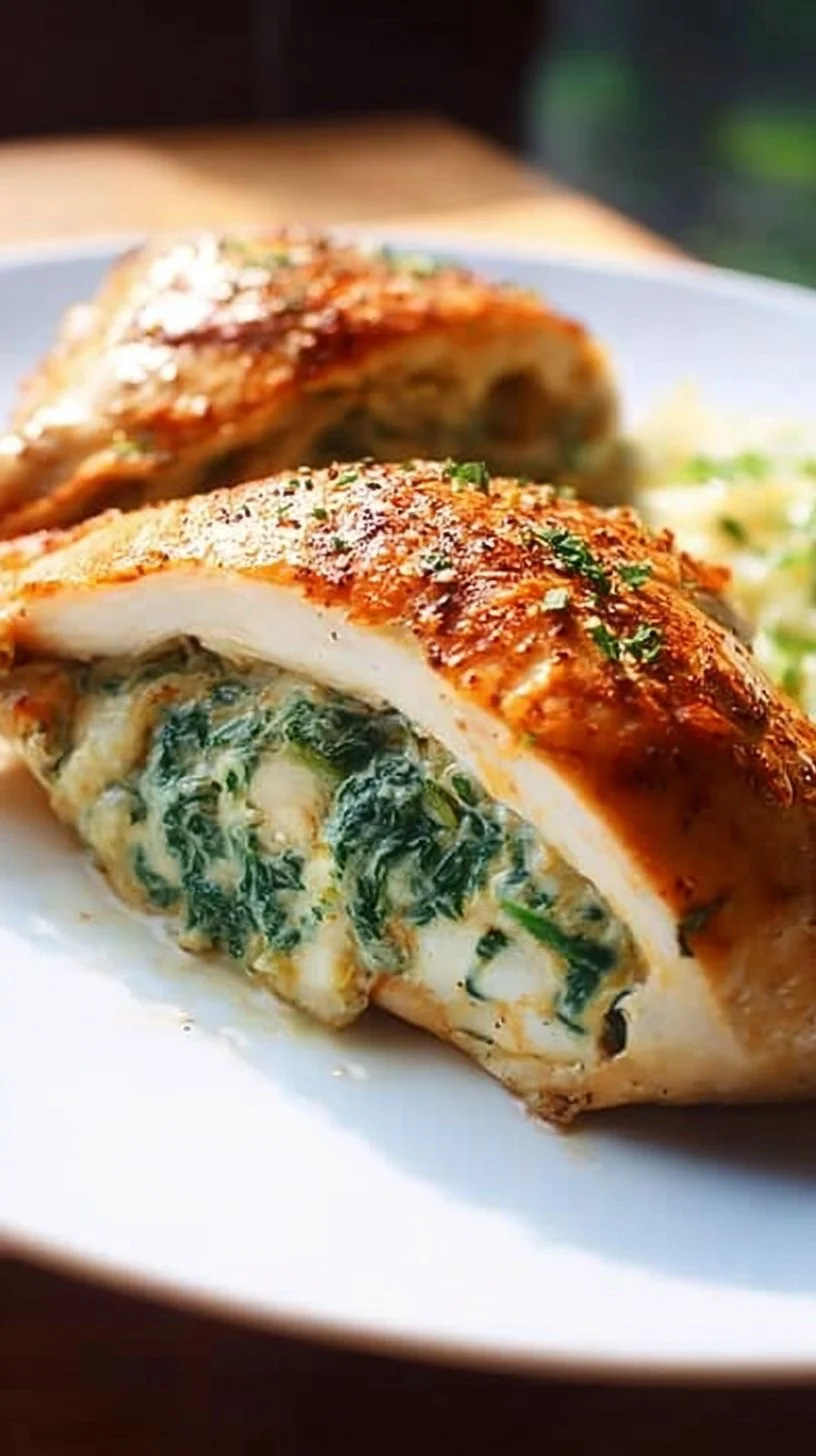
To cook this dish is to orchestrate texture: the sear gives a thin, caramelized skin with a whisper of smoke; the interior promises creaminess punctuated by the tender give of spinach. When the skillet meets olive oil, the air fills with a warm, green scent that marries the ricochet of garlic powder to the vegetal sweetness of wilted leaves. The first slice into a rested breast reveals a cross-section — pale meat caging a molten heart — and there is a small rejoicing in that reveal, as if one has opened a present.
Traditional techniques resurface in the handling of heat and time. The brief sear — two to three minutes — is an echo of cooks who know the value of a crust: flavor created by brownness. The oven finish is the slow lullaby, a communal hush that lets the filling and meat become one. In many old kitchens, the resting stage was not a nuisance but a sacred pause, a social grace that allows juices to redistribute and conversations to continue while plates are prepared. The result should be warm and yielding, with the creamy filling teasing the palate rather than overwhelming it.
How different regions prepare their version
Across regions, variations tell stories of climate, crop, and custom. In coastal areas with abundant seafood, cooks sometimes replace or augment the filling with crab, crabmeat folded into cream cheese and herbs, producing a salt-sweet echo of the sea. In the alpine valleys of Europe, cooks might add smoked ham or replace spinach with chard, the smoked meats carrying the fragrance of wood-fired smoke. In Latin American kitchens, a touch of cumin or a sprinkle of cotija might appear, aligning the dish with local spice sensibilities.
Contemporary low-carb tables have also adapted this format with global nods: a turmeric and cilantro filling for those leaning toward South Asian flavors, or a sun-dried tomato and basil heart for lovers of Italian brightness. Each adaptation reframes the stuffed breast as a vessel for identity, much as stuffed vegetables and meats have done worldwide. If you delight in cross-cultural reimagining, consider how this dish converses with other inventive plates such as teriyaki pineapple chicken-stuffed peppers, which pair sweet and savory in a way that honors place while inventing new rituals.
Traditional ways this dish is shared or served
This is the sort of plate that sits comfortably at both a modest weeknight dinner and a table with friends. In some homes it becomes part of a light supper: a breast halved across a bed of simple greens, a wedge of lemon, bread set aside for conversation. In others, it steps into more ritualized meals — perhaps served alongside roasted root vegetables in winter, or with a bright salad and chilled wine in summer. The way it is shared often reflects relationships: a single portion plated with care for a partner returning late from work; a pan set at the center of a small family table, offered by the cook with a smile; slices laid out for a potluck where each guest brings part of the story.
Serving is an emotional act. In my travels I have seen it plated in sun-dappled courtyards and in fluorescent-lit diners, and in each place it bore the imprint of hospitality: quiet, deliberate gestures — a sprinkle of extra Parmesan, an olive oil drizzle, a few cracked peppercorns — that transform the practical into the ceremonial. If you want to pair it with comforting side dishes, you may find inspiration in contemporary vegetable approaches such as sticky honey-garlic cauliflower, which echoes the interplay of sweet and savory and the joy of shared plates.
Storing the dish without losing its cultural essence
Leftovers carry memory in the way they reheat. To preserve the texture, cool the breasts to room temperature, then tuck them into an airtight container. When reheating, a gentle approach — a splash of water in a warm oven or a brief return to a low pan with a lid — will protect the creaminess of the filling without drying the meat. In many cultures, leftover stuffed meats become the basis for new meals: thinly sliced and folded into sandwiches, or turned into a hearty salad of warm meat and greens. The act of repurposing is itself a cultural practice, one that honors thrift and invention.
If frozen, wrap each breast tightly to avoid ice crystals; when thawed, treat them gently. The flavors remain forgiving, and the dish often tastes like an additional memory: a weekday lunch that whispers of the Sunday it was made.
Cultural questions people often ask
People often ask whether such a dish is "authentic." The answer is that authenticity is less a fixed mark and more a living conversation — between ingredients, hands, and households. Others ask how to keep it low-carb without sacrificing pleasure. The secret is balance: choose quality cheeses, a generous handful of greens, and give the meat room to rest. Many worry about the sear damaging the filling; rest reassures both the cook and the dish.
Curiosity also turns to regional pairings, wine choices, and substitutions for dietary needs. These questions reveal something lovely: cooks are less interested in rules than in connection. They want to make food that feeds both body and belonging.
A closing note on food, memory & travel
Travel teaches that recipes are living translations of place. A stuffed chicken breast cooked in a mountain kitchen carries different light and conversation than one prepared on a city balcony, but both hold the same essential generosity: the desire to take something simple and make it more. When you make this dish, you participate in a lineage of cooks who stitched warmth into meals and offered them as invitations. Keep notes, adjust with gratitude, but remember the heart of the recipe — its tenderness and its hospitality.
Conclusion
If you want a quick reference to similar adaptations of this idea — a spinach-stuffed, low-carb take that leans healthy — you might explore a helpful how-to at Spinach Stuffed Chicken Breasts – a healthy low carb dinner option!. For another popular, well-tested keto-focused version that highlights the same marriage of cheese and spinach, see Keto Stuffed Chicken Breasts – Low Carb – I Breathe I’m Hungry. And for a quick, gluten-free spin you can prepare in about half an hour, consider 30-Minute Keto Stuffed Chicken – Low Carb & Gluten Free. Each link offers a different voice on the same comforting idea — a reminder that recipes travel, adapt, and keep us company wherever we eat.
Low Carb Stuffed Chicken Breast
Ingredients
Method
- Preheat the oven to 375°F (190°C).
- In a bowl, mix the cream cheese, Parmesan cheese, chopped spinach, garlic powder, salt, and pepper until well combined.
- Cut a pocket in each chicken breast and stuff generously with the cheese and spinach mixture.
- Heat olive oil in a skillet over medium heat and sear the stuffed chicken breasts for 2-3 minutes on each side until golden.
- Transfer the chicken to a baking dish and bake for 20-25 minutes, or until the chicken is cooked through.
- Let rest for a few minutes before serving.