Dijon Oven Baked Salmon
There are meals that announce themselves with a clatter of plates and laughter, and then there are those that arrive quietly—on a humble tray, with a gentle perfume of mustard and citrus—that ask only to be noticed. Dijon Oven Baked Salmon belongs to the second kind. In kitchens from Parisian apartments to coastal homes in Maine, this dish moves between lives with an ease born of simplicity. It is not a spectacle; it is a small, warm ritual that folds into the rhythms of dinner, of weekday routines made ceremonial, of travelers recounting a day’s discoveries over a plate.
I remember the first time I tasted mustard-baked salmon in a tiny guesthouse on the edges of Brittany. The house had narrow windows that let in the Atlantic wind and a stove that smelled faintly of seaweed and wood smoke. A woman—part cook, part storyteller—set a sheet of foil before me, brushed the fish with her fingers, and spoke of how a dab of Dijon could lift the oily richness of the salmon into something almost celebratory. That evening the dish became not just a flavor but a memory: the gulls, the cracked harbor, the soft conversation in a language I didn’t fully understand. It is the kind of dish that can also sit humbly in a modern kitchen, dressed in olive oil and lemon, and still ferry you to those coastal lanes.
If you enjoy pairing simple, comforting mains with other reliable bakes, consider how this salmon might sit alongside a classic like baked chicken cordon bleu for a convivial, cross-cultural dinner table—the kind that blends French technique with homey, global comforts.
The origin story & regional influence behind this dish
The marriage of Dijon mustard and fish feels inevitable when you trace the map of European tastes. Dijon, the mustard of Burgundy, carries an assertive, peppery note that has long been the condiment of choice for sauces and vinaigrettes. Salmon, by contrast, tells a story of cold rivers and northern seas—Alaska, Norway, Scotland, the Pacific Northwest—all places where the fish’s oily, velvet flesh is a staple of life and ritual. The two together are an echo of trade, migration, and adaptation: mustard seeds moved with merchants; salmon moved with the seasons; cooks, always ingenious, found ways to make one enhance the other.
In France, mustard is an emblem of both rustic cuisine and refined technique. In Scandinavia, a similar pairing—though often with dill and cream—embraces the sea’s gifts with restrained elegance. On the American Pacific coast, Dijon turns up in quick weeknight meals, where wild salmon is treated with respect and speed. The dish as written—brushed and baked—owes less to haute cuisine and more to a lineage of practical, home-centered cooking where robust flavor need not be complicated. It is a song of place: the sharp, terroir-laden mustard against a backdrop of fish that remembers fjords and estuaries.
Yet this simple formula also reveals globalization’s gentle hand. Olive oil and lemon—ingredients from Mediterranean suns—are sprinkled into the mix, the anchor for a mild brightness that travels well across continents. The result is a hybrid that feels both provincial and global, the kitchen table transformed into a junction where Burgundian seeds meet northern tides and southern citrus.
How to make Dijon Oven Baked Salmon
Preparing this salmon is an act of translation: you turn raw, elemental ingredients into a single, intimate experience—the kind that can be completed in under half an hour and then linger in memory. The method is intentionally unassuming: a brush, an oven, and a patience that is more of the heart than the hands. Before you begin, think of the dish as a compact ritual. Lay out your fillets as you would line up postcards from places you have loved; brush on the mustard as if you were writing a small dedication; then let the oven do its quiet finishing.
Ingredients :
4 salmon fillets, 2 tablespoons Dijon mustard, 1 tablespoon olive oil, 1 tablespoon lemon juice, 1 teaspoon garlic powder, Salt and pepper to taste, Chopped fresh parsley for garnish (optional)
Directions :
- Preheat your oven to 400°F (200°C)., 2. In a small bowl, mix together the Dijon mustard, olive oil, lemon juice, garlic powder, salt, and pepper., 3. Place the salmon fillets on a baking sheet lined with parchment paper., 4. Brush the Dijon mixture over the salmon fillets evenly., 5. Bake in the preheated oven for about 12-15 minutes, or until the salmon is cooked through and flakes easily with a fork., 6. Garnish with chopped parsley if desired, and serve immediately.
Ingredients through a cultural & historical lens
When I look at the short list above, I see a kind of culinary map: Dijon mustard carries centuries of French culinary culture in its pungent, spicy seeds; olive oil whispers of Mediterranean groves and sun-warmed fruit; lemon speaks less of geography and more of global trade routes that brought citruses into northern kitchens; garlic powder is a nod to modern convenience, a pantry shorthand that lets traditional flavors arrive faster. Salt and pepper, the universal seasoning, are the travellers’ constants.
A dish that can be made with a jar of mustard and a squeeze of lemon reflects how traditions adapt. In the old kitchens of Burgundy, mustard would be ground by hand and folded into beurre blanc or vinaigrette; here, it is brushed on fillets for quick caramelization. In coastal households where fish is abundant, preparations are often minimal—salt, heat, perhaps a local herb. The Dijon coating gives the salmon a crust that hints at the ceremonial while remaining eminently weeknight-friendly.
For those mornings when breakfast needs the same comfort palette, there are other baked goods and dishes that echo this balance of richness and lift; you might be reminded, in mood if not in flavor, of the bright simplicity found in a baked Greek yogurt breakfast, where moderate ingredients produce remarkable harmony.
Cooking the dish: sensory notes & traditional techniques
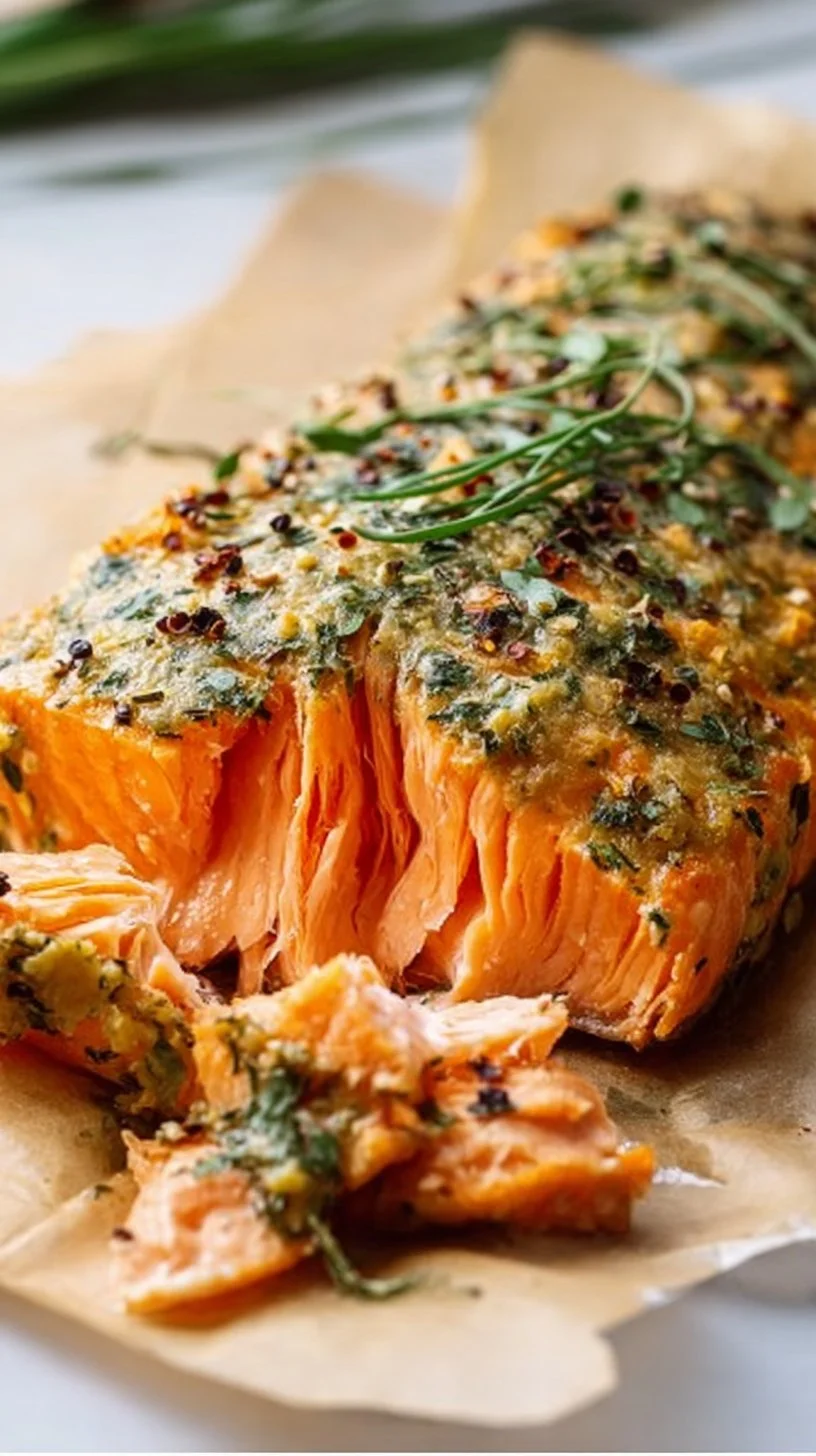
This is less a technical manual and more an invitation to notice. As the Dijon mixture meets salmon, there is an olfactory change that marks the beginning of the ritual: the mustard’s peppery vapor rises, brightened by lemon’s citrusy high note and softened by the grassy warmth of olive oil. The oven’s heat concentrates these aromas into a thin lacquer on the fish. When the fillet comes out—its edges slightly bronzed and the center yielding when prodded by a fork—the air around it is both citrus-clean and comfortingly savory.
Texture matters here as much as flavor. Salmon’s skinless side, if used, will be silk beneath a slight crust of mustard. The flesh will flake but remain unctuous, the kind of mouthfeel that reminds you why certain foods are loved across cultures. In traditional kitchens, cooks might finish the fish with a scatter of parsley, or with a drizzle of warm butter rubbed with herbs—an older, richer echo of the olive oil noted in the modern recipe.
This recipe’s appeal lies in how quickly these contrasts—the bright and the rounded, the crisp and the yielding—find an elegant balance. It’s the same balance that, in other regional dishes, might come from combining smoke with acidity or fat with a dash of heat. There is no strict technique beyond attentiveness: watch the oven, taste the lemon before adding more, and remember that the best food is usually made with calm hands.
How different regions prepare their version
Traveling with this dish in mind is like watching a melody receive different instruments. In the Mediterranean, cooks will often accent Dijon-style coatings with local herbs—rosemary, thyme, or oregano—turning the dish in a sun-drenched direction. On the Scandinavian coast, a dill garnish or a side of pickled vegetables reframes the salmon toward the region’s cold-water traditions. In the American South, you may find the mustard given a touch of brown sugar or honey, lending a caramelly counterpoint to the fish’s richness.
In markets where wild salmon is the rule, the fish itself may speak more loudly than the mustard; the preparation is respectful and light. In urban kitchens, where convenience matters, garlic powder replaces fresh garlic and olive oil stands in for butter, yet the soul of the dish remains unchanged. These local adaptations are culinary dialects—variations of a shared sentence that reveal climate, harvest, and habit. Even dessert choices at the same table, such as a beloved local sweet, can tell you about where the meal took place; an American family might end with baked cinnamon sugar donuts, tying the savory and sweet into a single domestic story.
Traditional ways this dish is shared or served
This is a meal that lives easily in small gatherings: a weeknight dinner for two, a modest summer supper with friends, or a family meal that asks only that everyone gather around a single tray. In Brittany, I’ve eaten similar preparations where the fish is served alongside boiled potatoes and a generous bowl of green salad—simple accompaniments that let the salmon sing. In other places, this dish becomes part of a larger spread: roasted vegetables, crusty bread, and a glass of white wine or a light rosé.
There is a communal quality to it. The ease of baking the whole thing at once means it is often served family-style, removed from the oven and placed in the center of the table, steam rising like a brief, fragrant weather. For gatherings focused on sweet endings and shared plates, a plate of easy baked donut bars might arrive later, nodding to the way savory mains and simple sweets anchor memories of hospitality across cultures. In many homes, such a salmon is not reserved for ceremony; it is a weekday blessing, an ingredient of ordinary affection.
Storing the dish without losing its cultural essence
Leftovers are an honest conversation with the past night’s meal. Stored carefully, the salmon keeps its character for a day or two—wrapped in parchment or a shallow container, chilled. The mustard’s tang will continue to mingle with the oil and lemon, and although reheating softens texture, the flavor remains a memory of the original moment. Many cultures prize the transformation that happens overnight: flavors deepen, and the dish becomes suited to salads, flaky sandwiches, or even a quick topping for warm grains. The essence of the dish—its simplicity, its aromatic clarity—survives when one treats the leftovers with gentle care rather than aggressive reheating.
Cultural questions people often ask
Why Dijon? Because its sharpness cuts through the salmon’s natural oiliness, creating a contrast that many palates find irresistible. Is olive oil necessary? No, but it nods toward Mediterranean influence and keeps the dressing slick and light. Can you use fresh garlic instead of powder? Of course—many cooks prefer the intimacy of fresh ingredients, while others celebrate the reliability of pantry staples. People also ask which side dishes are traditional; the answer is that tradition is often what’s on hand: boiled potatoes, a green salad, roasted seasonal vegetables, or a simple pilaf.
A closing note on food, memory & travel
Food is a way of keeping time. A single recipe, like this Dijon-besprinkled salmon, can carry within it storms of seasons, ports of call, and the soft domesticity of countless kitchens. It is a dish that proves how global flavors can be both accessible and evocative, how a few well-chosen ingredients can recall a shoreline, a sunlit market, or the quiet comfort of home. Wherever you serve it—on a wooden table in a rented cottage, under the apartment lights of a city far from the sea, or at a long family meal—it arrives as an invitation: to taste, to remember, and to share.
Conclusion
For a step-by-step illustrated take on a similar preparation, see Dijon Baked Salmon – The Best Baked Salmon Recipe, which emphasizes simplicity and flavor. If you prefer a video demonstration to accompany your first attempt, the tutorial at Baked Salmon Recipe (VIDEO) – NatashasKitchen.com offers a helpful visual guide. For a Mediterranean-inspired variation that celebrates lemon and garlic alongside Dijon, consult Baked Dijon Salmon with Lemon and Garlic – The Mediterranean Dish.
Dijon Oven Baked Salmon
Ingredients
Method
- Preheat your oven to 400°F (200°C).
- In a small bowl, mix together the Dijon mustard, olive oil, lemon juice, garlic powder, salt, and pepper.
- Place the salmon fillets on a baking sheet lined with parchment paper.
- Brush the Dijon mixture over the salmon fillets evenly.
- Bake in the preheated oven for about 12-15 minutes, or until the salmon is cooked through and flakes easily with a fork.
- Garnish with chopped parsley if desired, and serve immediately.