30-Minute Beef Stir Fry
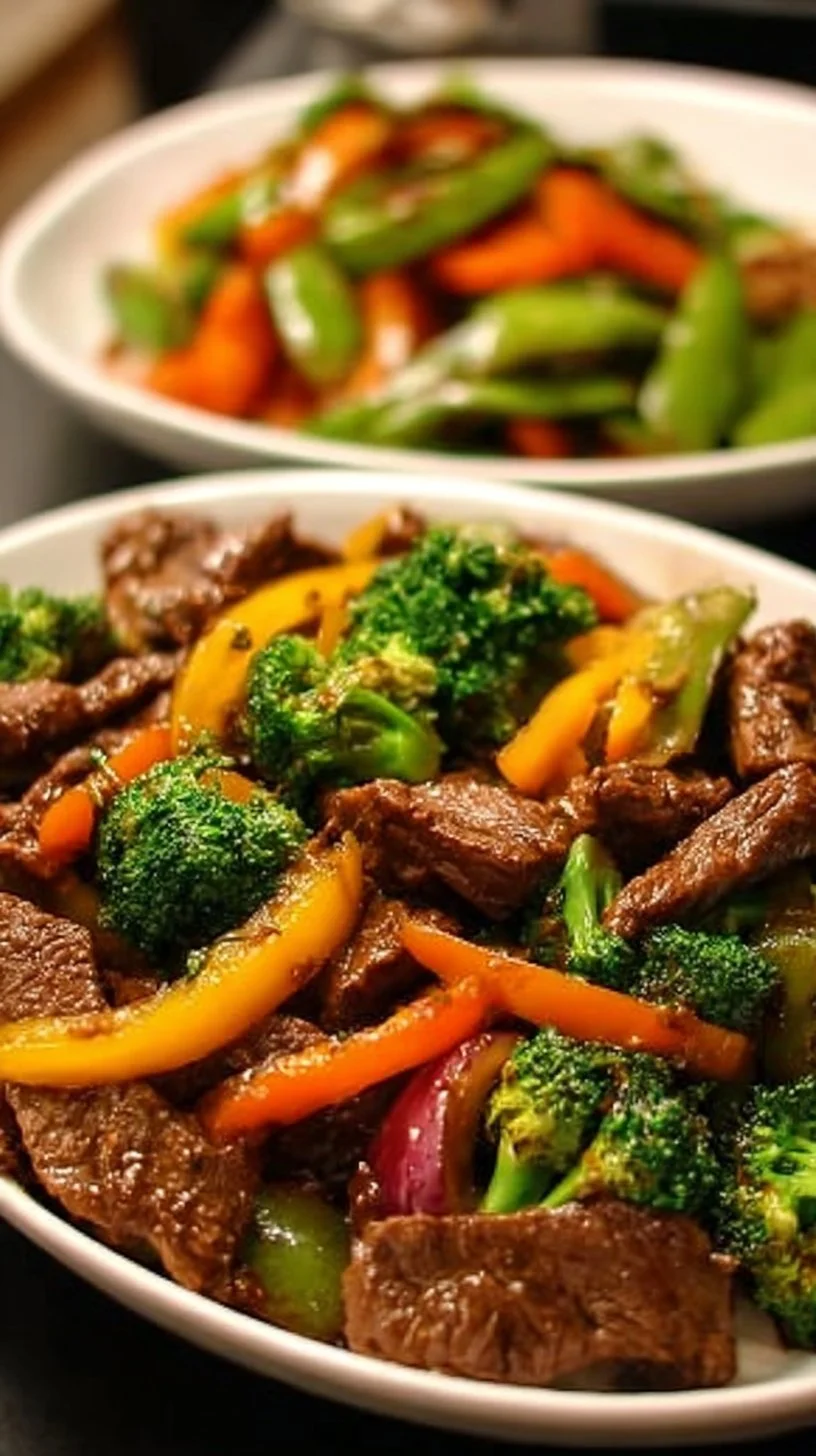
When I first met a 30-Minute Beef Stir Fry, it was on a rain-wet evening in a small apartment above a narrow street market. The city outside hummed with neon and the low thud of scooters; inside, a single pan sang to life with garlic, ginger and the metallic sizzle of thinly sliced beef. That swift, fragrant chorus — a pulse of soy and oyster sauce, the bright snap of peppers and broccoli — felt like a shortcut through time, a condensed memory of kitchens I had known and kitchens I had only imagined. This dish is the kind of meal that carries the map of a place in its aroma: open markets, communal tables, and the human habit of turning haste into ritual.
There is a paradox at the heart of stir-fries: they are both urgently immediate and deeply rooted. They can be made in thirty minutes, yet they are born of centuries of culinary practice, of techniques passed hand to hand. If you want a slow-cooked counterpart to set beside it on the table — a foil that shows how heat transforms texture when taken to the opposite extreme — you might read about a slow-braised roast to appreciate the contrast with this quick pan-sear approach: slow-braised beef roast with cranberry-balsamic glaze. That other dish is leisurely and ceremonious; the stir-fry is brisk and conversational. Together, they make a small lesson in how time changes taste.
The origin story & regional influence behind this dish
The stir-fry is a migratory recipe, a technique rather than a single point on a map. Its roots are in the woks and open fires of East and Southeast Asia, where high heat and swift movement were answers to both scarcity and abundance: a way to coax flavor from small amounts of fat and to keep vegetables bright and meat tender during short, intense cooking. Chinese regional cuisines, particularly Cantonese and Sichuan, popularized the idea of flash-cooking in oil to seal flavor and texture. The modern "beef stir fry" you might find on a busy weeknight table is an adaptation — a transliteration of those practices into global households that have made them their own.
As trade and migration moved people and ingredients, the dish folded in local influences. Oyster sauce, a deeply savory component here, is itself a product of coastal culinary economies, introduced into many inland kitchens as a touch of briny, fermented umami. Soy sauce provides a salty backbone that resonates across East Asia, while cornstarch — a later addition born of global ingredient exchange — helps create the glossy finish almost everyone expects. The result is a recipe that reads like a map of culinary contact: coastal tastes, inland techniques, and new-world starches meeting in one pan.
If you travel inland from the coastal cities where oyster sauce and soy were commonplace, you’ll find stir-frying translated through other textures and spices, but the essential rhythm remains: heat, motion, and immediacy. For a reflection on how other preparations luxuriate in time rather than heat, consider how a long-braised beef roast changes the conversation at the table: slow-braised beef roast with cranberry-balsamic-glaze.
How to make 30-Minute Beef Stir Fry
Making this recipe is less of a technical exercise and more an act of hospitality: quick, thoughtful, and generous. The bones of the method are simple and leave space for small improvisations — a different vegetable here, a sharper pepper there — but they always honor the three virtues of a good stir-fry: heat, timing, and seasoning. When you follow these steps, you are practicing a rite of efficiency that has fed workers, students, families, and travelers for generations.
Ingredients :
1 pound beef (sliced thinly), 2 cups mixed vegetables (e.g., bell peppers, broccoli, carrots), 3 tablespoons soy sauce, 1 tablespoon oyster sauce, 1 tablespoon cornstarch, 2 tablespoons vegetable oil, 2 cloves garlic (minced), 1 teaspoon ginger (grated), Salt and pepper to taste
Directions :
- In a bowl, mix sliced beef with soy sauce, oyster sauce, and cornstarch. Let marinate for 10 minutes., 2. Heat vegetable oil in a large skillet or wok over medium-high heat., 3. Add garlic and ginger, stir-fry for about 30 seconds until fragrant., 4. Add marinated beef to the skillet, cooking until browned and cooked through, about 4-5 minutes., 5. Add mixed vegetables and stir-fry for another 3-4 minutes until they are crisp-tender., 6. Season with salt and pepper to taste., 7. Serve hot over rice or noodles.
Ingredients through a cultural & historical lens
Each item on that short ingredients list carries a story. The beef slides thinly into the pan because in many traditional households, meat was rationed and sliced with economy — the thinness borrowed from necessity becomes elegance, cooking quickly and remaining tender. Soy sauce is a liquid archive; depending on its origin it can speak of wheat-rich northern mills or rice-forward southern fermentations. Oyster sauce, invented in the early 20th century as a way to bottle the taste of the sea, reflects coastal ingenuity and the human impulse to preserve flavor. Cornstarch is a modern mediator: it does not just thicken, it creates the glossy sheen that in global dining cultures has come to signify "done right."
Vegetables tell the story of seasons and markets. Bell peppers bring a sweet, sun-ripened note; broccoli is a later, global addition that signals cross-cultural exchange; carrots lend earthiness and color. Even salt and pepper are markers of trade routes: black pepper once cost fortunes and now sits humbly in every modern kitchen. In the brief act of marinating, these ingredients negotiate with time — a ten-minute truce that is enough to let soy and oyster lodge into the meat’s fibers and for cornstarch to promise a silky finish.
If you want to reflect on how a contrasting, slow-cooked preparation dignifies beef differently, a long braise makes that conversation clear: consider the slow roast’s depth and glaze as a companion piece to this rapid, joyful dish: slow-braised beef roast with cranberry-balsamic-glaze.
Cooking the dish: sensory notes & traditional techniques
To cook a stir-fry is to conduct an orchestra of small gestures. The first inhale — garlic and ginger hitting hot oil — is like the overture; it tells you everything you need to know about the direction of the next minute. The aroma is immediate: sharp, warm, and energizing. The actual act of tossing and turning the ingredients in the pan is less about aggression and more about choreography; each movement preserves the shine, crunch and color.
Texture is central. The beef, sliced thin, should still bear the memory of its movement — slightly yielding, not tough, with the cornstarch giving a delicate silk that hugs each strand. Vegetables should remain bright and slightly resistant to the bite — "crisp-tender" is the phrase chefs use, but it is really a sensation of vitality: an audible snap followed by a soft give. The final seasoning is a delicate tuning: salt and pepper as punctuation marks on a sentence already rich with umami.
Traditional technique honors timing rather than exact minutes. Grandmothers who grew up without timers cooked by sight and smell, by the sound of the sizzle and the glisten of the oil. In many cultures, a stir-fry is cooked in stages: aromatics first, protein second, and vegetables last — a ritual that ensures balance and keeps the colors vivid. To learn it is to learn to listen.
How different regions prepare their version
If you follow the stir-fry’s trail across the world, you will find it wearing different accents. In Cantonese kitchens, subtlety reigns: light seasoning, quick sear, an emphasis on the ingredient’s original flavor. Sichuan versions bring peppercorns and chili oil that numb and enliven simultaneously. In Korea, a similar approach might favor gochujang for depth and heat; in Japan, a teppanyaki-style quick sear elevates the umami with a touch of lacquered soy. Even within a single country, regional palates modulate the dish: sweeter profiles near coastal markets, earthier, heartier takes where long winters demand more robust fare.
When this stir-fry traveled into Western households, it adapted again. The generous use of oyster sauce, and the marriage with broccoli and bell pepper, became a shorthand for "Asian-inspired" in many kitchens. That adaptation speaks to the dish’s flexibility: it accepts new companions and still tells the same story of speed and savor. For a look at how slow, indulgent beef preparations offer a counterpoint to the stir-fry’s urgency, it is enlightening to compare methods with a long-braised roast: slow-braised beef roast with cranberry-balsamic-glaze.
Traditional ways this dish is shared or served
This is not a solitary dish. In many homes it is the center of a communal spread: steaming bowls of rice, pickled vegetables that cut the richness, and a pot of tea to cleanse the palate. It is the weeknight hero, served hurriedly to hungry children and tired partners. In small restaurants it becomes a fast-friendly staple, plated over rice or noodles for patrons who want warmth and efficiency in equal measure.
The act of sharing a stir-fry is intimate. Dishes are passed, spoons dip into communal bowls, and the conversation circulates as quickly as the food. In less hurried settings, stir-fry becomes part of a banquet, a contrast against slow-simmering soups and sticky rice. The way it is served — piping hot, slightly glossy, aromatic — encourages immediacy: eat now, while the crunch sings and the sauce is still warm.
Storing the dish without losing its cultural essence
Leftovers are a modern test of authenticity. The virtues of a stir-fry — color, crispness, and shine — are ephemeral. Refrigeration will blunt textures; broccoli softens, and the glossy cornstarch sheen can become a muted coat. Yet there are gentle ways to preserve the dish’s soul. Store components separately when possible: the beef with its sauce can be kept apart from the vegetables, which can be briefly revived in a hot pan with a splash of oil to restore some of their bite. Reheat quickly over high heat — the goal is to wake the flavors, not to stew them back to life.
Keeping the cultural essence also means preserving the companion rituals: reheat over rice, pour fresh tea, and eat with others. The memory of the dish is not merely in its texture but in the context of how it is consumed.
Cultural questions people often ask
Why is the beef sliced thin? It reflects an economy of resource and a technique to make every bite tender and quick to cook. Why use oyster sauce? For many coastal cultures, it was an accessible way to grant dishes a deep, rounded savor that salt alone could not provide. What makes a stir-fry authentic? Authenticity is less about rigid ingredients and more about approach: respect for fresh ingredients, speed, and an ear for timing. And for those who wonder whether a quick stir-fry can carry the weight of tradition — yes, it does. Tradition often thrives in everyday practices that are repeated and shared.
People also ask about substitutions and regional variations, but perhaps the most meaningful question is practical and cultural: how can a simple dish like this continue to tell stories? The answer lies in keeping its gestures alive — marinating briefly, searing quickly, inviting others to the table.
A closing note on food, memory & travel
Food is a portable archive. A thirty-minute stir-fry can hold the memory of a market, a child’s laughter, a rainy night, and a distant coast in a single mouthful. As a traveler and writer, I have found that the quickest dishes often contain the densest histories. They are pragmatic, adaptable, communal — and they travel well, absorbing the colors of each region they meet.
This recipe is a small itinerary: the speed of the pan, the maritime whisper of oyster sauce, the global arrival of cornstarch, and the enduring human desire to turn what is available into something comforting. Each time you make it, you add your own footnote to the dish’s long story.
Conclusion
If you want a compact recipe that captures speed, flavor, and a global story, this 30-Minute Beef Stir Fry is an invitation to practice a long tradition in a short time. For further inspiration and related preparations, you can explore a few thoughtfully curated recipes and essays that resonate with this dish’s spirit: find a classic quick version in the Allrecipes collection at Quick Beef Stir-Fry Recipe – Allrecipes, a brothy, broccoli-forward take at 30-Minute Beef and Broccoli Stir Fry (Quick & Easy!) | PWWB, a reflective narrative about mid-speed beef preparations at 30-Minute Beef & Broccoli – The Splendid Table, and a glossy, sweeter style in a Mongolian beef rendition at 30-Minute Mongolian Beef – Taste And See.
30-Minute Beef Stir Fry
Ingredients
Method
- In a bowl, mix sliced beef with soy sauce, oyster sauce, and cornstarch. Let marinate for 10 minutes.
- Heat vegetable oil in a large skillet or wok over medium-high heat.
- Add garlic and ginger, stir-fry for about 30 seconds until fragrant.
- Add marinated beef to the skillet, cooking until browned and cooked through, about 4-5 minutes.
- Add mixed vegetables and stir-fry for another 3-4 minutes until they are crisp-tender.
- Season with salt and pepper to taste.
- Serve hot over rice or noodles.