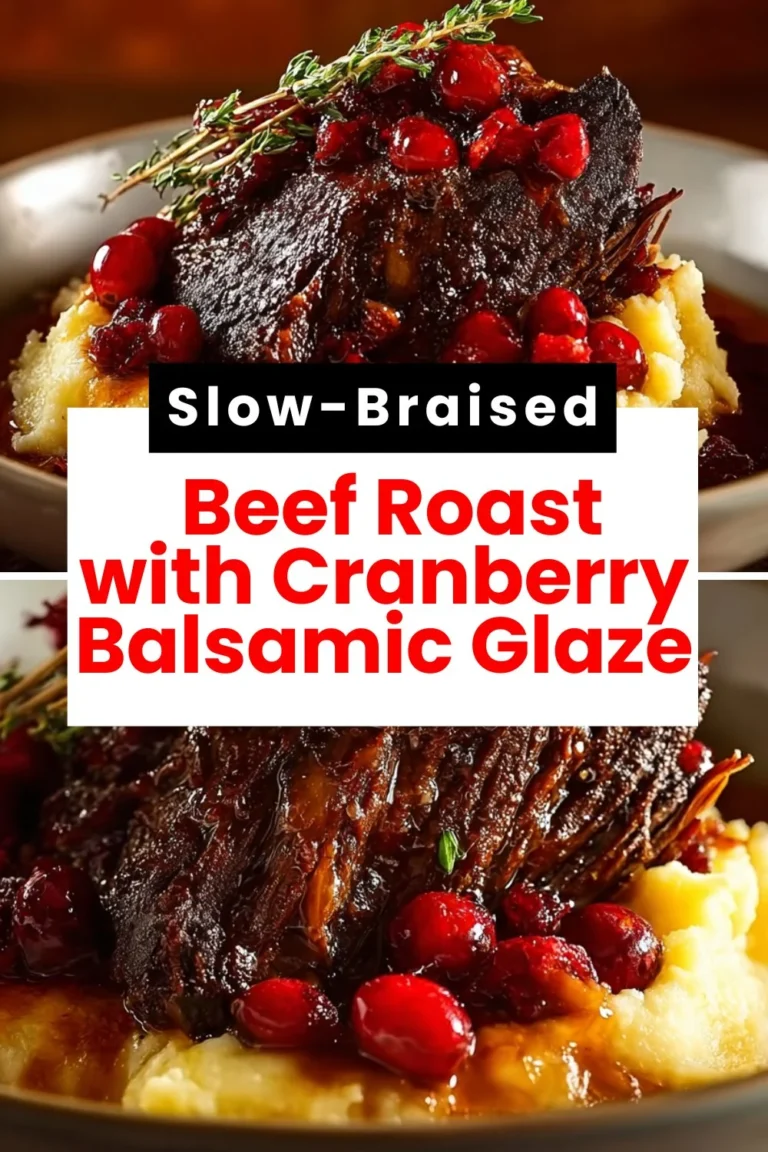
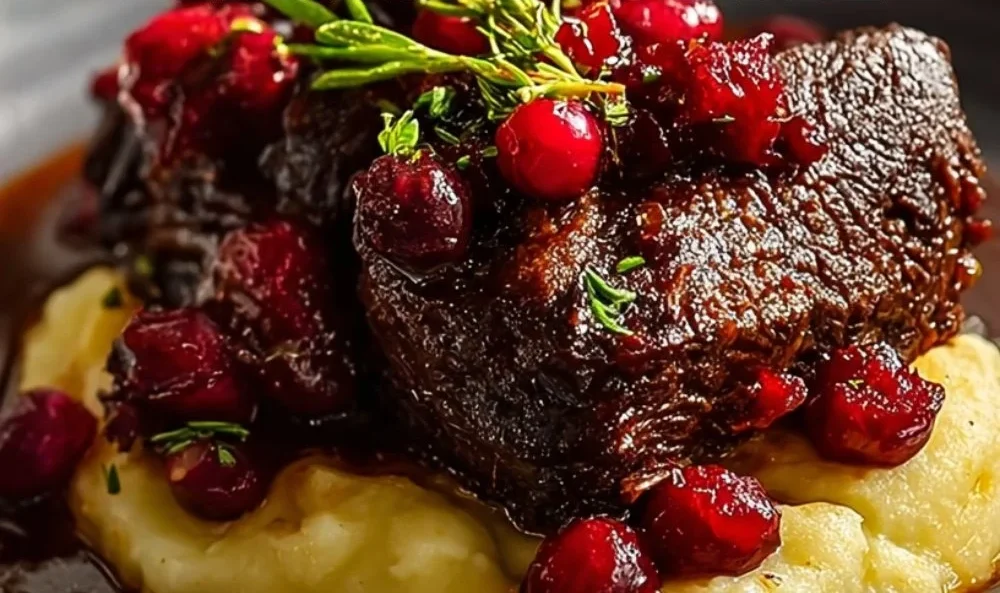
Slow-Braised Beef Roast with Cranberry Balsamic Glaze
Introduction
There are moments in travel when a single scent—a sharp, fruit-sweet tang, the warm musk of seared beef, the vinegary note of aged balsamic—stitches memory to place. I first met this slow-braised beef roast with cranberry balsamic glaze in a kitchen where the windows were fogged from steam and a radio played an old ballad in another language. A woman named Sofia, who had lived between two continents, set a heavy pot on the table and pushed a plate of tender meat toward me with an invitation that needed no translation. The roast tasted like late autumn in a small town and like a holiday thrown around an assembly of mismatched chairs; it tasted like family.
Recipes arrive in our lives like emissaries from elsewhere—small maps to other people’s seasons, storms, and celebrations. If you love the tart-sweet interplay of fruit and savory meat, you might also savor the delicate counterpoint in a dessert like cranberry crumble bars, which, like this roast, balances bright acidity against comforting richness.
This piece is for those who want a dish that reads like a travel diary: slow, layered, and hospitable. It is for cooks who want to sit and listen as food tells them where it has been.
The origin story & regional influence behind this dish
The pairing of tart berries and rich meat feels inevitable once you encounter the old recipes of people who live where winters linger and sugar was once a precious commodity. Cranberries, once gathered by hand in bogs and marshes, have been a mainstay in North American tables for centuries, while vinegars—especially the dark, sweet balsamics aged in small wooden casks—carry Mediterranean stories of trade and time. To find them together on a plate is a kind of culinary globalization that began long before air travel: an English or Mediterranean acid meets an indigenous fruit of the North American coasts, and both are mediated by pastoral, hearth-centered practices.
The slow-braised roast itself is older than empires. The practice of slow-cooking tough cuts of meat until they yield is a near-universal human answer to economy and patience—an old field cook’s logic that turns collagen to silk when heat and time are given in equal measure. In this dish, chuck roast—a working cut from the shoulder—is democratized by slow braising, while cranberries and balsamic act like travelers bringing new brightness and depth.
Regionally, you often find this recipe adapted to local markets. In New England, a place of cranberry bogs and brick farmhouses, the fruit is a nostalgic fixture; balsamic will sometimes arrive in small bottles, a luxury borrowed from emigrant kitchens. In parts of Southern Europe, a sweet-sour sauce over meat recalls agrodolce traditions; in Scandinavian homes, tart preserves similarly balance fatty meats. The result is a dish that reads as both New World and Old, a cross-cultural conversation simmered low.
How to make Slow-Braised Beef Roast with Cranberry Balsamic Glaze
To make this roast is to follow a generous, patient rhythm: sear, let the aromatics soften, introduce the berries and vinegar, then surrender the pot to the slow heat of the oven. The process feels like a ritual of letting go—the exact opposite of modern haste. Below are the ingredients and directions as given; think of them as a traveler’s notes, a map to be followed with sensitivity and care.
Ingredients :
2-3 lbs chuck roast, 1 cup cranberries (fresh or frozen), 1/2 cup balsamic vinegar, 1 onion, chopped, 3 cloves garlic, minced, 2 cups beef broth, 2 tablespoons olive oil, Salt and pepper to taste, Fresh herbs (like rosemary or thyme) for garnish
Directions :
- Preheat your oven to 325°F (160°C)., 2. In a large oven-proof pot or Dutch oven, heat the olive oil over medium-high heat. Season the chuck roast with salt and pepper, then sear it on all sides until browned., 3. Remove the roast and add the chopped onion to the pot. Sauté until translucent, then add the minced garlic and cook for another minute., 4. Return the roast to the pot, add the beef broth, cranberries, and balsamic vinegar. Stir to combine., 5. Cover and braise in the oven for 3-4 hours, until the meat is fork-tender., 6. Once done, let it rest before slicing. Serve with a drizzle of the sauce and garnish with fresh herbs.
Ingredients through a cultural & historical lens
Each item on that ingredient list carries a story. Chuck roast is economical and honest: the kind of meat once fed farmhands and sailors alike, a cut whose worth is realized only by slow heat. Cranberries are rooted in place and season; their tartness once preserved the names of months and festivals. Balsamic vinegar speaks of barrels and patience—its sweetness is not sugar alone but time in wood and air.
Onion and garlic are the universal translators; they bridge cuisines and anchor flavors to the savory. Beef broth is memory preserved in liquid, a concentrated history of bones simmered low. Olive oil brings an almost Mediterranean sun to the dish, a reminder that even the most regional recipes take on new meanings when ingredients travel. Salt and pepper, of course, are universal alchemists.
When people bring these elements together, they are not just following ratios; they are continuing customs of preservation, of balancing sweet and sour to lean into what the seasons provide. There is also a social history: dishes like this were often made for communal tables, where the long braise allowed busy households to multitask—fields tended in the morning, a pot left to do the slow work of turning toughness into tenderness.
Cooking the dish: sensory notes & traditional techniques
Put your hand near the pot as the roast sears and you will feel a kind of alchemy: the fat renders and the air fills with the brown, bittersweet scent of caramelizing meat. The first softening of onion releases a sweet perfume that whispers against the deeper note of garlic. When balsamic hits the hot pot, it lifts the kitchen into a moment: sharp, almost floral heat that blooms and then quiets as it mixes with the beef broth. Cranberries, when they meet the warm liquid, pop and dissolve like small suns, leaving behind a hint of pucker and a bright color streak through the sauce.
Traditionally, the technique is slow and forgiving. This is not a recipe for timers and flash—it’s for those who understand that a dish reveals itself when allowed to rest in its own steam. In many cultures, a pot like this would be left on the hearth for hours, with a lid clamped down and life continuing around it—the playing of cards, the mending of nets, the telling of stories. The sound of a slow oven in a modern kitchen is different, but the effect is the same: patience conjures tenderness.
Texture is the ceremony here: the meat should fall apart with a fork yet still feel like sustenance, and the sauce should coat rather than drown. A garnish of rosemary or thyme is more than decoration; it’s a fragrant punctuation that connects the dish to the garden and the season.
How different regions prepare their version
Walk through terrains of taste and you will find variations that echo local climates and customs. In New England, cooks lean into cranberries, sometimes adding a touch of orange or maple to reflect local sweetness. In Italy, a similar approach would favour agrodolce elements—vinegar and sugar paired with leaner cuts or even game. In parts of Eastern Europe, a sharp fruit might blend with cabbage or root vegetables, reinforcing the dish’s role as winter sustenance.
In coastal communities where fish once dominated, you might find the balsamic note applied to slow-roasted pork or lamb instead. In places where wine is plentiful, a splash might substitute part of the beef broth, introducing vineyard texture. The fundamental marriage—tart fruit, aged vinegar, slow meat—remains; the accents shift. Travelers who love this roast will notice sibling recipes in unexpected places: a sweet-and-sour pot roast in a farmhouse, a cranberry-infused lamb in a seaside town, a balsamic reduction spooned over a winter stew.
If you are curious about desserts that carry the cranberry through to another course, regional meals often move from savory to sweet in complementary ways—consider how a tart, crumbly bar echoes the same bright acidity that wakes up rich meat. For a sense of that transition, one might explore a recipe like mini Easter cheesecakes with chocolate eggs, which carry fruit and richness into dessert.
Traditional ways this dish is shared or served
Community is at the heart of this roast’s tradition. It is a dish for large tables and small gatherings alike, for the harvest festival and the impromptu reunion. In many households, a pot of braised meat is the anchor of a repast where plates are passed around, bread is torn rather than sliced, and seconds are offered with a laugh. It is also a holiday favorite: the bright cranberry notes feel at home alongside root vegetables, roasted chestnuts, or a slaw of bitter greens.
Serve it simply—thick slices on a platter, sauce ladled over, sprigs of fresh herbs scattered like confetti. Accompaniments vary by region: buttery mashed potatoes in colder climates, roasted root vegetables where the earth’s sugars are celebrated, or crusty bread in places that prize sauce-sopping. In homes where leftovers are prized, this roast becomes tacos, sandwiches, or folded into a soup the next day—the kind of practical creativity born of frugality and affection.
For a sense of the dish moving from savory to sweet in another kitchen, you might notice how the same tartness that wakes the roast can refresh a dessert course, echoing flavors in cranberry crumble bars and other regional sweets.
Storing the dish without losing its cultural essence
Preserving the dish is not purely about refrigeration; it is about preserving hospitality. Cool the roast in its sauce, then store in a shallow container to allow even cooling. The magic here is that the flavors often deepen overnight: the cranberry note softens and the balsamic folds further into the meat. Reheat gently—slowly, at low heat—so that the texture remains soft and the sauce thickens without scorching. If you must freeze, do so in a way that honors the dish: wrap tightly, label with a note about the day it was made, and consider saving a small jar of fresh herbs to add at the moment of serving to restore the aromatic brightness.
Culturally, the practice of sharing leftovers—sending a bowl to a neighbor, handing a container to a friend moving house—is part of the dish’s life. Food that carries stories thrives when passed on.
Cultural questions people often ask
Does the combination of cranberries and balsamic belong to a single tradition? Not originally. It is an example of culinary syncretism: ingredients traveling and finding companionship on the plate. People ask whether the dish is “authentic”—a misplaced obsession. Authenticity is a living thing; this roast is authentic to homes where resources met invention.
Is the dish festive or everyday? It can be both. The slow braise makes it suitable for celebration, but the humble cut of meat and simple pantry ingredients make it an everyday kind of luxury. People wonder how to make it without special equipment; a heavy pot or Dutch oven suffices, just as a hearth once did.
How do you adjust for seasonal variance? Use fresh cranberries in their season for a bright pop; frozen does beautifully when the season has passed. Balsamic quality matters for depth but not for making the dish; a simple aged vinegar will bring the same soul.
A closing note on food, memory & travel
Food remembers for us. A roast like this carries the weight of hands that tended fields, the patience of people who waited, the migrations of ingredients, and the small improvisations that make a dish someone’s own. Traveling with this roast in mind is traveling by taste: you learn how climates shape fruit, how economies shape meat choices, and how people stitch strangers into friends with a shared platter.
When Sofia pushed her plate across the table, she gave me more than a meal. She offered a story of seasons and farewells, of a family that moved between ports yet kept a simple pot on the stove. I think of her each time I sear a shoulder and pour in vinegar and berries; the kitchen becomes a place of conversation rather than mere production.
The slow-braised beef roast with cranberry balsamic glaze is a dish that invites you to slow down, to listen, to share. In its warmth you can find the map of a thousand small journeys.
Conclusion
For variations and inspiration, see the richly layered take on this pairing at Closet Cooking’s Cranberry Balsamic Roast Beef, which explores the tang of fruit against simmered meat. If you are curious about another homey version and how cranberry interacts with savory braises, Olivia’s Cuisine offers a comforting perspective at Cranberry Balsamic Roast Beef – Olivia’s Cuisine. For slow-cooker or oven-centric adaptations that lean into holiday traditions, consider the creative approaches in a seasonal guide like Cranberry Christmas Roast (Oven + Slow Cooker).
Slow-Braised Beef Roast with Cranberry Balsamic Glaze
Ingredients
Method
- Preheat your oven to 325°F (160°C).
- In a large oven-proof pot or Dutch oven, heat the olive oil over medium-high heat.
- Season the chuck roast with salt and pepper, then sear it on all sides until browned.
- Remove the roast and add the chopped onion to the pot. Sauté until translucent, then add the minced garlic and cook for another minute.
- Return the roast to the pot, add the beef broth, cranberries, and balsamic vinegar. Stir to combine.
- Cover and braise in the oven for 3-4 hours, until the meat is fork-tender.
- Once done, let it rest before slicing. Serve with a drizzle of the sauce and garnish with fresh herbs.