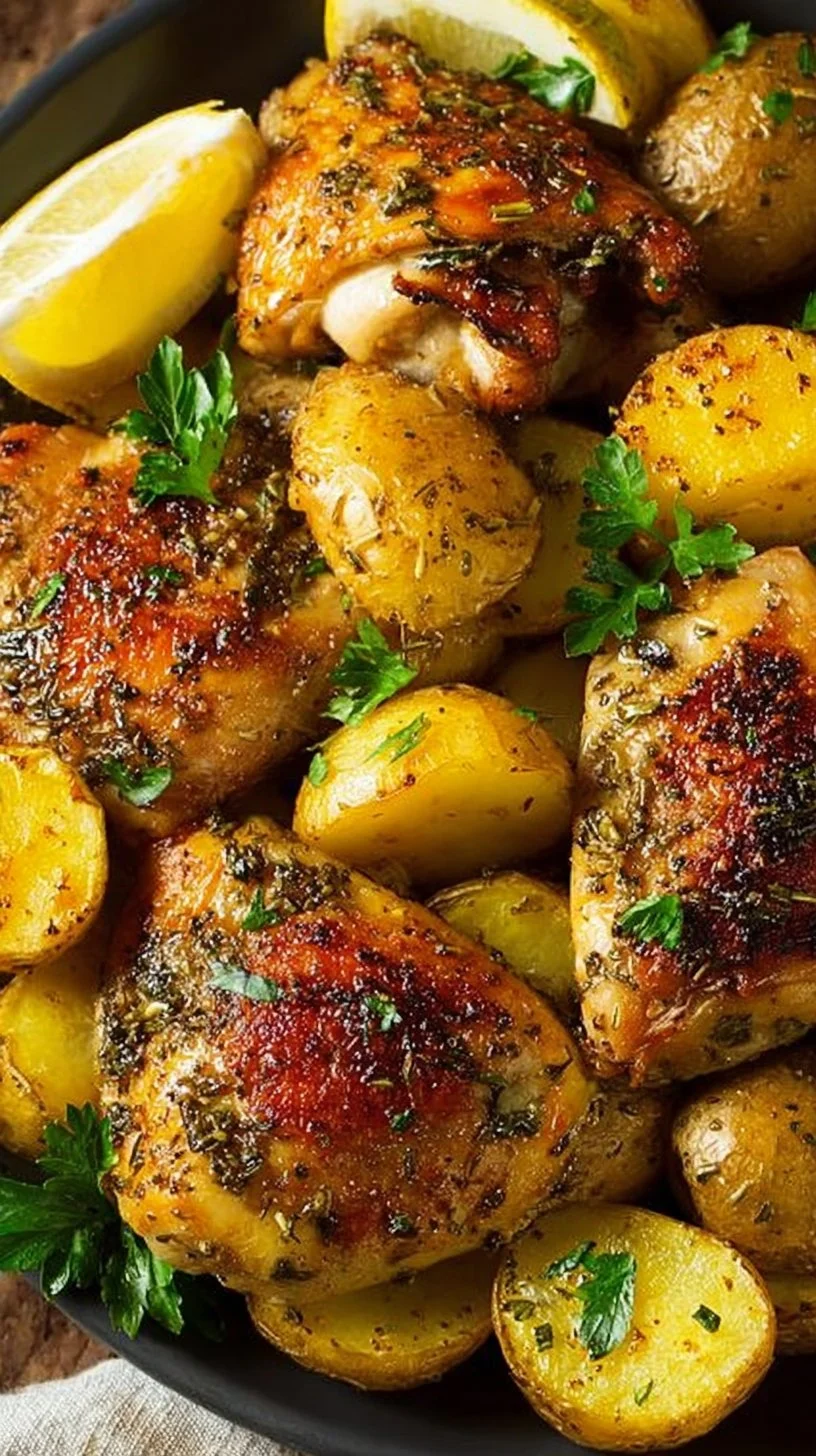
Greek Chicken and Potatoes
*** Introduction ***
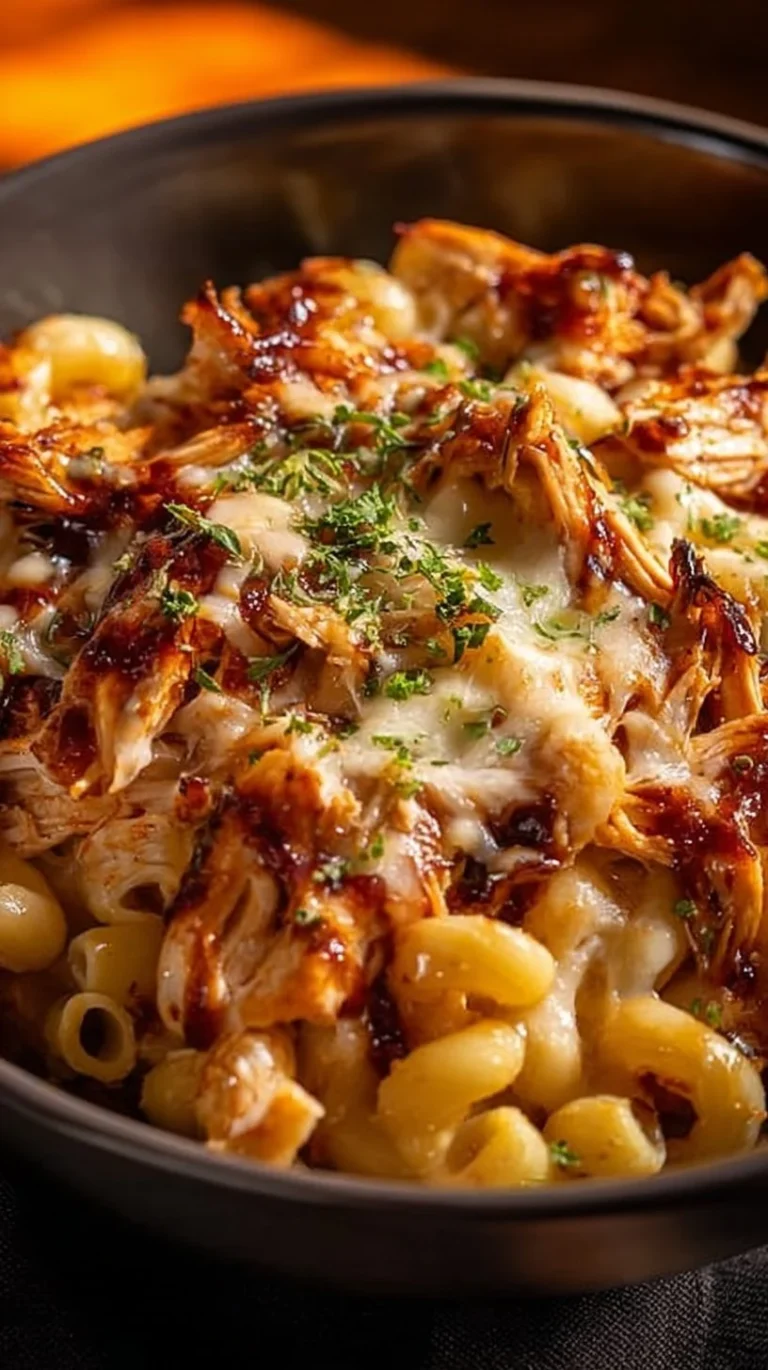
Greek Chicken and Potatoes is a study in restraint and precision: a small set of ingredients arranged to extract maximal flavor through simple, reliable technique. The recipe as written relies on four primary levers—olive oil, citrus, garlic, and oregano—applied to chicken breasts and potato chunks, then roasted at 400°F (200°C). When executed with attention to seasoning distribution, surface dehydration, and oven management, this composition produces contrasts of golden, crisp exteriors and tender interiors, with a bright, herb-forward profile. For cooks who move between composed weeknight roasts and more composed casseroles, the same principles apply; see how comparable approaches inform richer preparations like BBQ chicken mac and cheese technique, where balancing moisture and surface texture is equally crucial.
*** The culinary logic behind this dish ***
At its core, the dish pairs starch and protein in a single roasting environment—one heat source, two textures to manage. The lemon and garlic supply acid and sulfurous aromatics that cut through the oil and enrich the chicken’s surface flavor; oregano brings volatile oils that intensify at roasting temperatures. Olive oil functions not just as flavor carrier but as a conductor for heat, promoting Maillard reactions on the chicken skinless surface and the potatoes’ cut faces. Roasting at 400°F accelerates surface browning while allowing the interior to cook through in the 25–30 minute window provided the pieces are proportioned correctly. The culinary logic is to synchronize the rate of heat transfer into both ingredients so that the potatoes achieve caramelized edges at the same moment the chicken reaches a safe, juicy finish.
*** How to make Greek Chicken and Potatoes ***
This section expands on the precise techniques to convert the recipe’s simple directions into a consistently excellent result. Follow the ingredient list and directions exactly, but apply methodical control at each stage:
Mise en place: Allocate a shallow bowl for the marinade, a rimmed baking sheet for roasting, and a separate tray for the marinated chicken and potatoes. Preheat the oven to 400°F (200°C) before you begin to ensure immediate, steady heat when the tray goes in; delayed oven preheat compromises browning and extends cooking times.
Marinating: Combine olive oil, minced garlic, dried oregano, lemon juice, salt and pepper in the bowl and thoroughly emulsify. Coat the chicken breasts evenly—this ensures the acid and aromatics contact the protein uniformly. Marinate for at least 30 minutes as specified; this timeframe allows surface flavor penetration and a modest denaturing of the proteins that enhances moisture retention and texture without the risk of overacidifying the meat.
Arrangement on the pan: Spread the potato chunks in a single layer and position the chicken so it has space around each piece. Avoid crowding; crowded pans steam rather than roast. Drizzle any remaining marinade over the potatoes so their cut faces receive oil and seasoning to promote browning.
Oven monitoring: Roast for 25–30 minutes, observing color on the potatoes and using a thermometer on the chicken if available. A probe inserted into the thickest part of a breast should read 165°F (74°C) for safety; if a thermometer is not used, visual cues—clear juices and firm but yielding texture—are secondary indicators.
Resting and serving: Allow the chicken to rest briefly once removed so juices redistribute before slicing and plating. Serve hot to preserve the contrast between crisp, aromatic exterior and moist interior.
*** Ingredients : ***
4 chicken breasts, 4 medium potatoes, cut into chunks, 4 cloves garlic, minced, 1 tablespoon dried oregano, 1 tablespoon olive oil, 1 lemon, juiced, Salt and pepper to taste
The ingredients are intentionally minimal; each plays a focused role. The chicken breasts supply lean protein whose neutral flavor benefits from the citrus and herb marination. Medium potatoes provide a starchy counterpart that benefits from both oil and acid to develop an exterior crust while remaining tender inside. Minced garlic releases allicin, which becomes flavor-forward after roasting; dried oregano supplies concentrated aromatic phenols that withstand heat better than herbaceous alternatives. The single tablespoon of olive oil in the ingredient list is an overall indicator—use enough to coat evenly without creating an oil bath that impedes browning.
*** Directions : ***
- Preheat the oven to 400°F (200°C)., 2. In a bowl, mix together the olive oil, garlic, oregano, lemon juice, salt, and pepper., 3. Marinate the chicken breasts in the mixture for at least 30 minutes., 4. Place the marinated chicken and potato chunks on a baking sheet., 5. Drizzle any remaining marinade over the potatoes., 6. Roast in the oven for 25-30 minutes, or until the chicken is cooked through and the potatoes are tender and golden brown., 7. Serve hot.
These directions present a compact sequence. Each step is purposeful: preheating sets the heat gradient, emulsifying the marinade distributes seasoning molecules, marination primes flavor penetration, and the roasting interval is designed for synchrony. Follow them exactly, but add technical checkpoints—confirm oven calibration, size potatoes uniformly, and consider a thin slice at the thickest point of the breast to verify doneness near the shorter end of the time range.
*** Ingredient analysis through a chef’s lens ***
Evaluate each ingredient not as an isolated element but as part of a thermal and chemical system. Olive oil transfers heat and lubricates—too little and the potatoes adhere; too much and they steam. Lemon juice introduces acidity that brightens and tenderizes surface proteins but also reduces the oil’s ability to adhere if applied in excess. Dried oregano, with its essential oils, offers a more stable flavor profile under heat than fresh leaves, which are more volatile and often require late addition. Garlic is best when minced finely so it disperses and releases flavor quickly; larger pieces will brown unevenly and can impart burnt bitterness if exposed to high direct heat for the full roast time. The balance of salt and pepper controls extraction of water from the surface and influences the depth of Maillard reaction—proper salting early in the process enhances browning and internal seasoning.
*** Kitchen workflow & technique breakdown ***
An efficient workflow minimizes handling time between seasoning and roasting and maintains steady oven conditions. Sequence tasks logically: preheat oven, wash and cut potatoes uniformly (1–1.5 inch pieces), mince garlic, combine marinade, and set chicken into the marinade. While the chicken marinates, toss the potatoes in a little extra oil if the recipe’s 1 tablespoon does not sufficiently coat them—this is justified as an execution adjustment, not a recipe change, because even distribution of the stated olive oil is the objective. Arrange the baking sheet so larger pieces are on the outer edges where heat is slightly stronger. Use a rimmed sheet or low-sided pan to encourage airflow and allow fat to pool away from food surfaces rather than steaming them. For single-pan consistency, rotate the sheet halfway through the roast if your oven has hotspots.
*** Texture control, heat management & timing ***
Texture control is the interplay of surface dehydration and internal gelatinization. Potatoes require conductive heat to convert starches; their cut faces provide the surface area for caramelization. Chicken breasts, lean by nature, need rapid surface color to lock in juices; too long at lower heat will dry them. That is why 400°F is chosen: it accelerates Maillard browning while keeping total cook time short. Manage timing by standardizing piece sizes—thicker breasts may need the full 30 minutes or a brief finish under the broiler for color, without overshooting the internal temperature. If the potatoes are not tender at the same time the chicken is done, remove the chicken to rest and return the potatoes for an additional 5–8 minutes to achieve golden crispness. Conversely, if the potatoes are done but the chicken is not, finish the chicken on a separate pan or lower the oven temperature slightly and cover the potatoes to prevent excess color development.
*** Professional variations ***
From a professional perspective, minor technique adjustments can shift the dish toward different flavor profiles while respecting the original ingredient set. For deeper roast aroma, blister the garlic quickly in a hot pan before adding to the marinade—this mellows raw sharpness and develops sweet-roasted notes. For more herbal intensity, bloom the dried oregano in the oil on gentle heat to release its volatile oils prior to combining with lemon; this changes the aromatic profile without adding ingredients. To vary texture, parboil the potatoes for 5–7 minutes, then shock and dry before roasting to accelerate interior tenderness while preserving the ability to crisp the exterior. These are tactical changes to technique rather than alterations of the ingredient list; they are recommended for cooks seeking controlled variation.
*** Finishing touches & plating philosophy ***
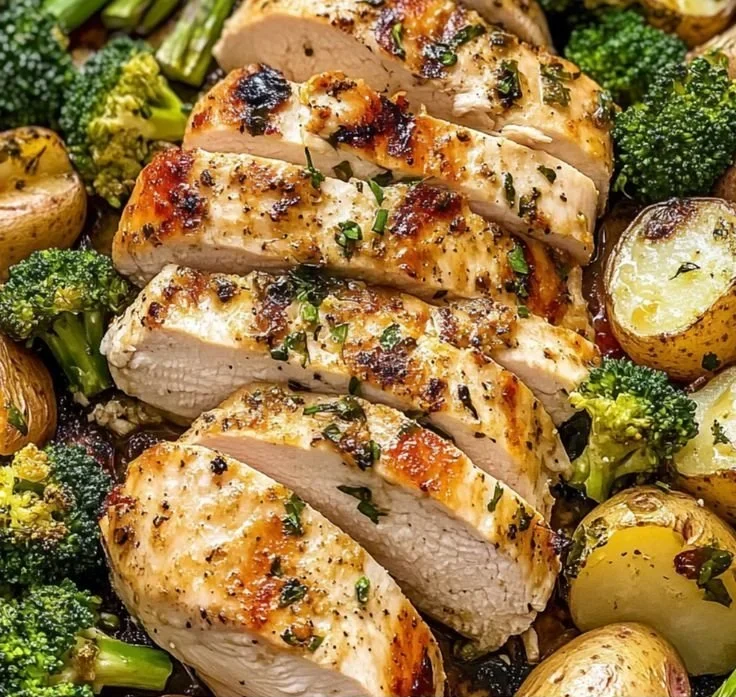
Finish the chicken with a light squeeze of fresh lemon immediately before service to lift the aromatics and accentuate contrast. A few pinches of flaky salt applied to both chicken and potatoes at the end will sharpen the flavor perception without increasing overall sodium. On the plate, present the chicken sliced across the grain to reveal the cooked interior and to make each portion easy to eat; nest the potato chunks so their golden faces are exposed. Arrange with restraint: the objective is to highlight texture and color contrasts—golden edges against pale tender interiors—rather than to embellish with superfluous garnishes.
*** Maintaining quality after cooking ***
Retention of texture post-cooking requires temperature and humidity control. If holding for service, keep chicken loosely tented with foil to retain warmth while allowing some steam to escape; too tight a tent will soften the exterior. If potatoes are held longer than 15 minutes, place them in a low oven (250°F/120°C) on a rack to maintain crispness without further browning. For refrigeration and reheating, slice chicken thinly and reheat gently in a low oven under a shallow pool of reserved marinade or a light drizzle of olive oil to prevent drying; refresh potato crispness with a high-heat bake or brief sauté in a hot skillet.
*** Questions from home cooks (chef answers) ***
Q: Can I use bone-in chicken or thighs instead of breasts?
A: Yes, but alter timing. Bone-in pieces require longer roast time; synchronize by cutting potatoes smaller or parboiling them so they finish at the same moment as the longer-cooking dark meat. Monitor internal temperature and use a thermometer.
Q: Should I peel the potatoes?
A: Peeling is optional. Leaving skins on adds texture and helps the potatoes hold their shape; clean skins contribute caramelized color and more rustic flavor.
Q: Is the lemon juice necessary?
A: Yes—acid brightens flavors and aids surface seasoning. If you cannot use lemon, a splash of white wine vinegar provides acidity but will shift the aromatic balance.
Q: How to prevent garlic from burning?
A: Mince garlic finely so it disperses in the marinade and does not sit directly exposed on the surface for the entire roast; alternately, add some minced garlic midway through marination to reduce direct exposure time to oven heat.
Q: My chicken often dries—how to avoid it?
A: Standardize breast thickness with a light butterflied or flattened profile so pieces cook evenly. Use a thermometer to remove at 165°F (74°C), and rest briefly to redistribute juices.
*** Final chef notes ***
Execute the recipe with discipline: precise cuts, consistent seasoning distribution, and controlled heat create the dish’s signature balance. The interplay of lemon and oregano with garlic and olive oil is simple, but the refinement lies in timing and surface management. Treat the pan as a stage where color development and moisture migration are orchestrated. Small technical choices—piece size, pan spacing, rotation—produce large differences in the final plate.
Conclusion
For a practical reference on variations and visual technique, consult the Dinner at the Zoo Greek Chicken and Potatoes take on roasting and marinade ratios. If you’re exploring a more lemon-forward approach and step-by-step photography, review the Greek Chicken Recipe with Lemony Potatoes for complementary technique cues. For another professional perspective that emphasizes timing and crisping methods, examine Heather Christo’s The Best Greek Chicken and Potatoes.
Greek Chicken and Potatoes
Ingredients
Method
- Preheat the oven to 400°F (200°C).
- In a bowl, mix together the olive oil, garlic, oregano, lemon juice, salt, and pepper.
- Marinate the chicken breasts in the mixture for at least 30 minutes.
- Place the marinated chicken and potato chunks on a baking sheet.
- Drizzle any remaining marinade over the potatoes.
- Roast in the oven for 25–30 minutes, or until the chicken is cooked through and the potatoes are tender and golden brown.
- Allow the chicken to rest briefly before slicing and plating. Serve hot.