Garlic Herb Chicken
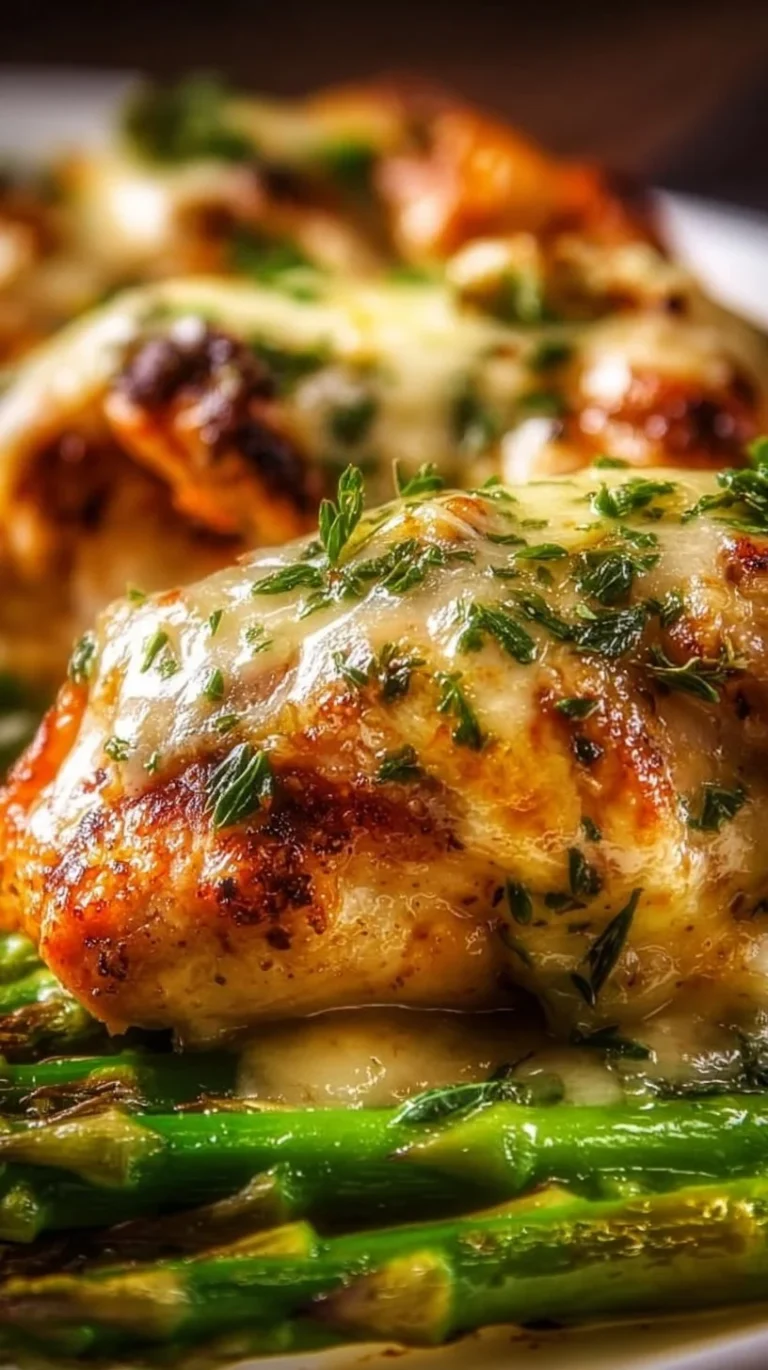
Garlic Herb Chicken is a focused study in building depth of flavor from modest components through controlled heat and deliberate timing. This recipe pairs seared chicken breasts with a concentrated pan sauce of garlic, herbs, honey, and soy — ingredients that play complementary roles in aroma, umami, sweetness, and acidity. The method is straightforward but requires attention to surface development, deglazing technique, and oven finish to achieve a juicy interior and a glossy sauce. For cooks interested in translating the same flavor profile into other formats, consult a technical variation such as the preparation used in this cheesy garlic chicken wraps, which retains the core garlic-herb elements while adjusting texture and presentation.
The culinary logic behind this dish
The recipe is built on three culinary principles: Maillard reaction, flavor concentration through reduction, and balance of tastes. Searing the chicken at medium heat yields Maillard crusts that provide savory, roasted aromatics and a textured contrast to the tender interior. The pan sauce—garlic, dried thyme, dried rosemary, chicken broth, honey, and soy—combines savory and sweet elements; soy adds fermented umami and salt, honey provides sweetness and glaze potential, and broth supplies body and a base for emulsification. Bringing this mixture to a simmer synthesizes the components, allowing volatile aromatics from the garlic and herbs to bloom while reducing liquid to intensify flavors and thicken the sauce enough to coat the chicken.
Dried herbs are used deliberately: they deliver concentrated flavor without releasing excessive moisture the way fresh herbs can, which is important for achieving a caramelized surface during sear. The oven finish is a controlled, gentle heat step that ensures even carryover cooking without excessive surface drying. The cumulative effect is a dish that balances texture and layered savory-sweet flavor while remaining technically accessible.
How to make Garlic Herb Chicken
Make mise en place first. Trim and pat-dry the chicken breasts, measure liquids, and mince the garlic. Preheat the oven to 375°F (190°C) so it is fully achieved before the skillet enters. Heat the oil until it shimmers but does not smoke; this is the correct window for searing. Sear the chicken to develop color, then use the pan’s fond and the prepared liquid mixture to deglaze and build sauce. Bring the sauce to a gentle simmer to meld flavors, then transfer the pan to the oven to finish cooking through without overbrowning. Rest briefly before serving with mashed potatoes to allow the juices to redistribute and the sauce to thicken slightly.
Ingredients :
4 chicken breasts, 2 tablespoons olive oil, 4 cloves garlic, minced, 1 teaspoon dried thyme, 1 teaspoon dried rosemary, Salt and pepper to taste, 1/4 cup chicken broth, 1/4 cup honey, 2 tablespoons soy sauce, Mashed potatoes (for serving), Parsley (for garnish)
Directions :
- Preheat the oven to 375°F (190°C).
- In a large skillet, heat olive oil over medium heat.
- Season the chicken breasts with salt and pepper.
- Add the chicken to the skillet and sear for about 5 minutes on each side, until golden brown.
- In a small bowl, mix together minced garlic, thyme, rosemary, chicken broth, honey, and soy sauce.
- Pour the mixture over the chicken in the skillet and bring to a simmer.
- Transfer the skillet to the oven and bake for 20-25 minutes, or until the chicken is cooked through.
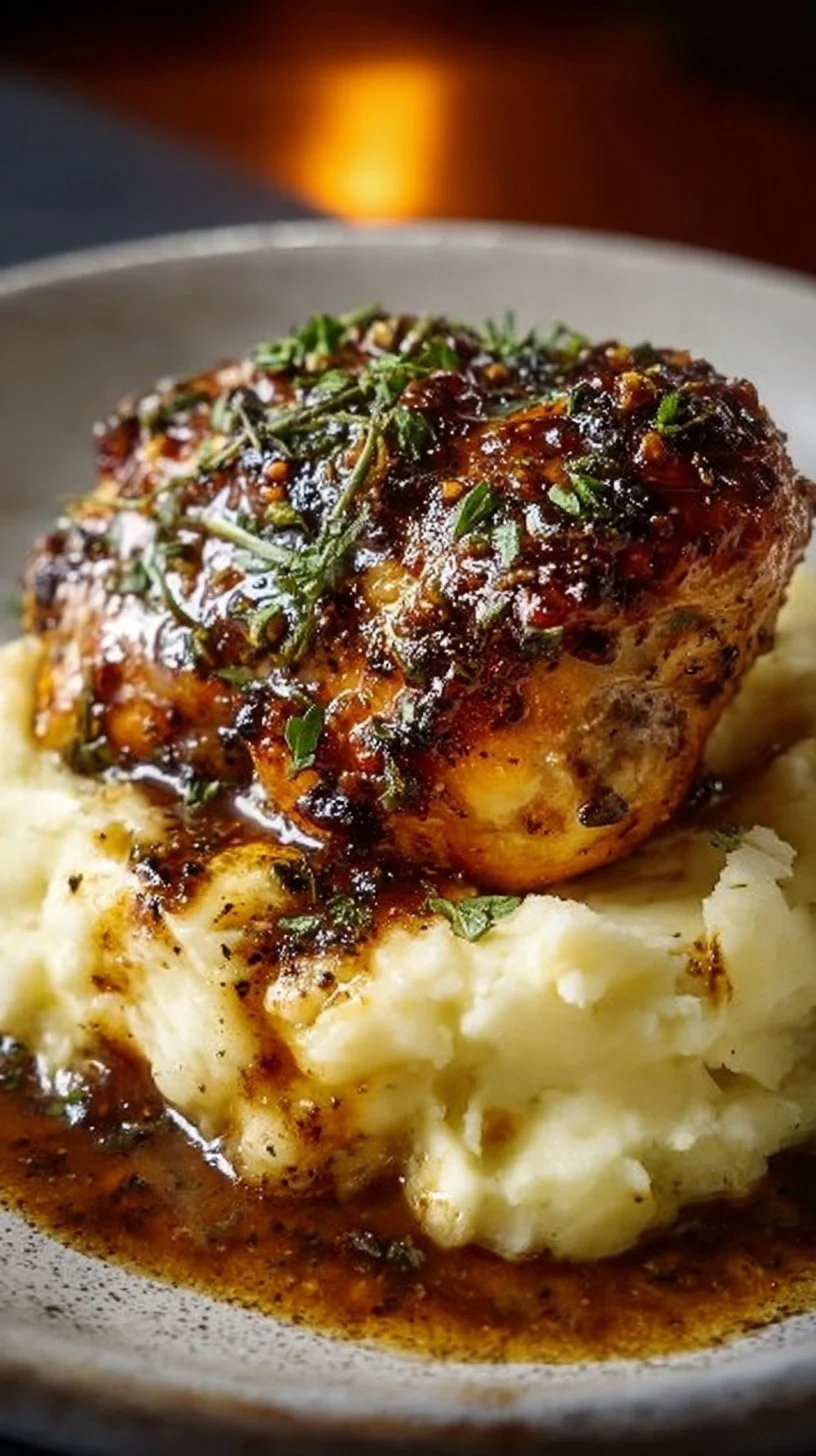
- Serve the chicken with creamy mashed potatoes and drizzle with pan sauce. Garnish with parsley if desired.
Ingredient analysis through a chef’s lens
Each ingredient has a functional purpose. Olive oil is a vehicle for heat transfer and a carrier for fat-soluble flavor compounds; its smoke point and neutral aromatics make it suitable for medium-heat searing. Garlic provides sulfurous compounds that transform into sweet, roasted notes when heated briefly, but if allowed to burn they produce bitterness — hence the timing to add it within a liquid matrix rather than to a screaming-hot pan.
Dried thyme and rosemary offer concentrated volatile oils that bloom during the simmer and oven phases; their low moisture content minimizes steam that could inhibit Maillard reaction. Honey serves a dual role: it adds sweetness and aids in creating a glossy, slightly viscous sauce through simple sugar concentration. Soy sauce contributes salt and a glutamate-rich umami backbone that contrasts and stabilizes honey’s sweetness. Chicken broth supplies liquid for deglazing and a base for sauce viscosity once reduced.
Mashed potatoes are not merely a side; they are a vehicle for temperature contrast and textural pairing. Their creamy starchiness contrasts the seared exterior and draws sauce, creating a composed mouthfeel. Parsley is a final aromatic lift — its fresh herbaceousness cuts through the dish’s sweetness and oiliness.
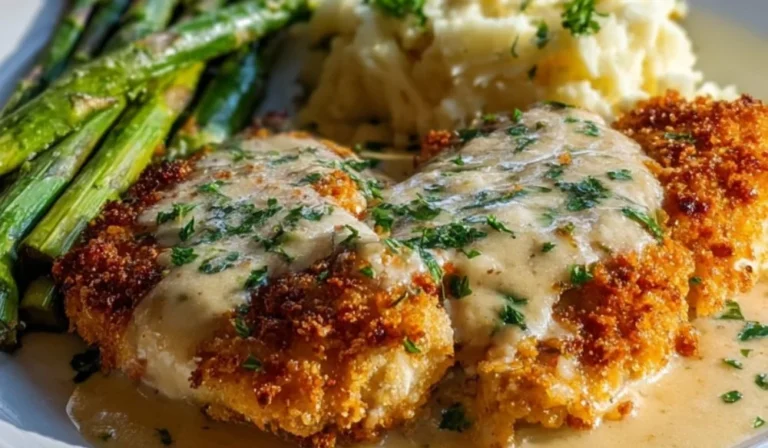
For further adaptation of garlic-forward chicken preparations and texture contrasts, this example of crispy Parmesan chicken with garlic sauce demonstrates how different coatings and finishing techniques affect crust and sauce adhesion.
Kitchen workflow & technique breakdown
Efficient workflow begins with mise en place: dry and season the chicken, mince garlic, and pre-mix the sauce components. Preheat the oven to 375°F to ensure an immediate transition from stove to oven; an underheated oven prolongs the cooking time and risks uneven doneness. Heat the skillet over medium — a compromise temperature that allows the exterior to color within roughly five minutes per side without burning. If the skillet is too hot, the exterior will char and internal temperature will remain undercooked; too cool, and the chicken will poach rather than sear.
When searing, use enough oil to coat the pan and prevent sticking. Do not move the breasts during the initial contact period; stable contact creates uniform browning. After flipping, reduce movement to preserve the crust. Remove any excess oil if it’s smoking, then add the sauce mixture directly to the pan, scraping fond to release concentrated brown bits into the liquid. Bring to a simmer to integrate flavors and slightly reduce volume before transferring to the oven.
Place the skillet on the middle rack for even convection. For consistent doneness, use an instant-read thermometer; remove chicken at 160°F (71°C) and allow carryover to reach 165°F (74°C) while resting. For reference on translating garlic-butter aromas into a saucy finish, this dreamy garlic-butter chicken technique shows sauce emulsification strategies that are instructive when refining pan sauces.
Texture control, heat management & timing
Texture control is governed by two simultaneous processes: surface browning and internal coagulation. Browning occurs quickly and should be targeted before the internal temperature approaches the danger zone. Timing the sear to about five minutes per side achieves a deep golden color on average-sized breasts; thicker breasts may require a slightly longer sear or a brief oven blast under higher heat to finish without drying.
Heat management shifts from conductive (skillet) to convective (oven). The pan sauce must be brought to a simmer so its temperature rises evenly; a vigorous boil will break emulsions and risk scorching the sugars in the honey. Aim for a glossy sheen in the reduced sauce — it will coat the back of a spoon and cling lightly to the chicken. Resting for five to eight minutes after the oven permits juices to re-distribute; slice too early and you lose moisture onto the cutting board.
If using a thermometer, target 160°F at removal; residual heat will complete the final 5°F. For very thin breasts, sear quickly to brown and then reduce oven time; for thick breasts, consider butterflying to equalize thickness or using a gentle oven temperature to avoid over-browning.
Professional variations
While the recipe must remain unchanged for the purpose of execution, a chef may apply professional techniques to scale or refine textures without altering the ingredient list: poach the breasts briefly in seasoned stock to start temperature equalization before searing for a shorter time; or use a two-stage sear — high heat for 90 seconds to color, then medium heat to develop deeper Maillard flavors. For sauce refinement, strain the pan sauce through a fine-mesh sieve to remove herb fragments and emulsify with a small knob of cold butter off-heat to enrich mouthfeel. For an entrée with a richer crust, finish chicken under a broiler for one minute after oven roasting, watching closely to prevent burning.
For production kitchens, finish the sauce to a slightly looser consistency so it can be scooped and held; reduce more aggressively for à la carte service where a thicker glaze is preferable.
Finishing touches & plating philosophy
Plating should highlight contrasts: place a quenelle or mound of creamy mashed potatoes as the foundation, then lay the chicken breast atop or adjacent, sliced on a bias to reveal internal doneness. Spoon the pan sauce judiciously — a glossy ribbon over the chicken and a light pool near the potatoes enhances both flavor and visual appeal. A scatter of chopped parsley provides a visual and aromatic counterpoint; finely minced parsley releases volatile aromatics without altering the sauce’s texture.
Maintain balance: do not drown the chicken in sauce, which obscures the seared surface and dilutes the texture contrast. Serve immediately to preserve the temperature differential between the hot pan sauce and the slightly cooler mashed potatoes.
Maintaining quality after cooking
If not serving immediately, hold chicken warm at 140–150°F in a low oven or insulated box to prevent drying while avoiding further cooking. Store leftover chicken and sauce separately for best texture; reheating the sauce over low heat prevents sugar scorch and preserves gloss. When reheating chicken, use low oven heat (275–300°F) under foil to restore temperature without collapsing the crust; microwave reheating will compromise texture.
For make-ahead service, reduce the sauce to a looser finish and finish with a brief reduction at service to freshen flavors and restore viscosity. Keep garnishes chilled and add just before service to retain color and brightness.
Questions from home cooks (chef answers)
Q: How to prevent garlic bitterness?
A: Avoid browning minced garlic directly in a hot, dry pan. In this method, the garlic is combined with liquids and added to the pan to simmer; the liquid tempers the garlic’s exposure to direct, high heat and allows sweet aromatic development without burning.
Q: Can I use fresh herbs instead of dried?
A: Fresh herbs will provide a brighter, less concentrated flavor. If substituting, use roughly three times the volume of fresh herbs to dried, add them later in the simmer or at finish to preserve volatile aromatics, and be aware that their moisture can slightly affect searing if added too early.
Q: What size breasts are ideal?
A: Uniform, medium-thickness breasts (about 6–8 ounces) yield predictable cook times for a five-minute sear per side. For larger breasts, consider butterflying or slightly extending oven time while monitoring with a thermometer.
Final chef notes
Precision in heat and timing is the principle that elevates this straightforward recipe into a reliably refined dish. Control sear temperatures, respect the role of the pan fond, and bring the sauce to a measured simmer rather than a boil. Rest before serving to preserve juiciness, and use the mashed potatoes intentionally as a textural and thermal counterpoint. Small technical choices — when to add garlic, how aggressively to reduce the sauce, and when to use the oven — determine whether the final plate reads as balanced and professional or flat and overcooked.
Conclusion
For a quick, technique-driven reference on similar weeknight preparations that emphasize a creamy garlic-herb profile, consider exploring 15-Minute Creamy Garlic Herb Chicken – My Life In An Apron, which demonstrates rapid stovetop emulsification strategies. If you are interested in one-skillet finishes and mid-week convenience techniques, this 1-Pan, Creamy Garlic Herb Chicken – Butter Be Ready article shows how to manage sauce consistency and timing in a single pan. For an approach that emphasizes butter-enriched herb sauce and alternate finishing methods, review the technique presented in Garlic Herb Chicken – Chisel & Fork for ideas on sauce enrichment and plating.
Garlic Herb Chicken
Ingredients
Method
- Make mise en place: trim and pat-dry the chicken breasts, measure liquids, and mince the garlic.
- Preheat the oven to 375°F (190°C).
- In a large skillet, heat olive oil over medium heat until it shimmers but does not smoke.
- Season the chicken breasts with salt and pepper.
- Add the chicken to the skillet and sear for about 5 minutes on each side, until golden brown.
- In a small bowl, mix together minced garlic, thyme, rosemary, chicken broth, honey, and soy sauce.
- Pour the mixture over the chicken in the skillet and bring to a simmer.
- Transfer the skillet to the oven and bake for 20-25 minutes, or until the chicken is cooked through.
- Serve the chicken with creamy mashed potatoes and drizzle with pan sauce.
- Garnish with parsley if desired.