Walking Taco Casserole
Introduction
In the warm hush of a roadside fairground or a kitchen where the radio hums like a distant conversation, Walking Taco Casserole arrives like a small, generous revelation. I remember the first time I encountered its saucy, crunchy promise: a friend from the Midwest carried a foil tray to a potluck, its edges browned and bubbling, and the aroma—tomato-lime, toasted corn, and the familiar perfume of melted cheddar—unfurled across the lawn. That smell threaded through my memory like a place name, familiar and new at once. Food, for me as a travel writer, is always a map and a passport. It is how cultures cross streets, how domestic rituals reach into public life. The Walking Taco Casserole is both a patchwork of American habits and a shorthand for comfort, convenience, and communal joy.
There are echoes here of street food, of county fairs, and of family Sunday dinners, all folded into one pan. Perhaps surprising, the casserole’s spirit is kin to playful innovations such as dessert tacos, where culinary imagination bends form into something that both comforts and delights. In this essay I follow the casserole’s scent through kitchens, across regional borders, and into the small acts—sharing a tray, passing a spoon, scraping the last piece into a tortilla—that make a recipe into a memory.
The origin story & regional influence behind this dish
The story of the Walking Taco Casserole is a story of American improvisation. It is less a single origin than a convergence of practices: the love of the taco-folded-within, the Frito pie phenomenon, the casserole’s cozy practicality. In the American Midwest and parts of the Southwest, where potlucks are ritual and convenience is a virtue, one can trace a line from the dusty county fair concession stand to the casserole dish left steaming on a church hall table. The “walking taco”—taco fixings served inside a single-serve bag of corn chips—became a way to eat on the go without losing the pleasure of toppings. The casserole translates that convenience back into a communal vessel: the same flavors in a format that invites sharing and conversation.
Culturally, the dish sits at the crossroads of Mexican-American influence and home-cooking sensibilities. The flavor palette—ground beef, salsa, beans, cheese—speaks to a long history of cultural exchange in North American kitchens. The casserole is not an authentic regional dish from Mexico; rather, it is a distinctly American expression of the taco’s adaptability, where convenience meets celebration. In the same way that other dishes adapt to local ingredients and social habits, the Walking Taco Casserole picks up accents from the places where it travels: sharper cheese in dairy-rich areas, smoky salsa where chiles are revered, sweeter corn where summer bounty is honored.
How to make Walking Taco Casserole
Making this casserole is, in many households, an act of care disguised as simplicity. It is the dish you bring when you want to feed a crowd without pretense. It asks for nothing more than honest ingredients and the patience to let them come together in a warm, cheesy bed. Below are the components and steps exactly as they have been handed down and simplified into a recipe that fits weeknights, potlucks, and the lingering comfort of a long conversation over dinner.
Ingredients :
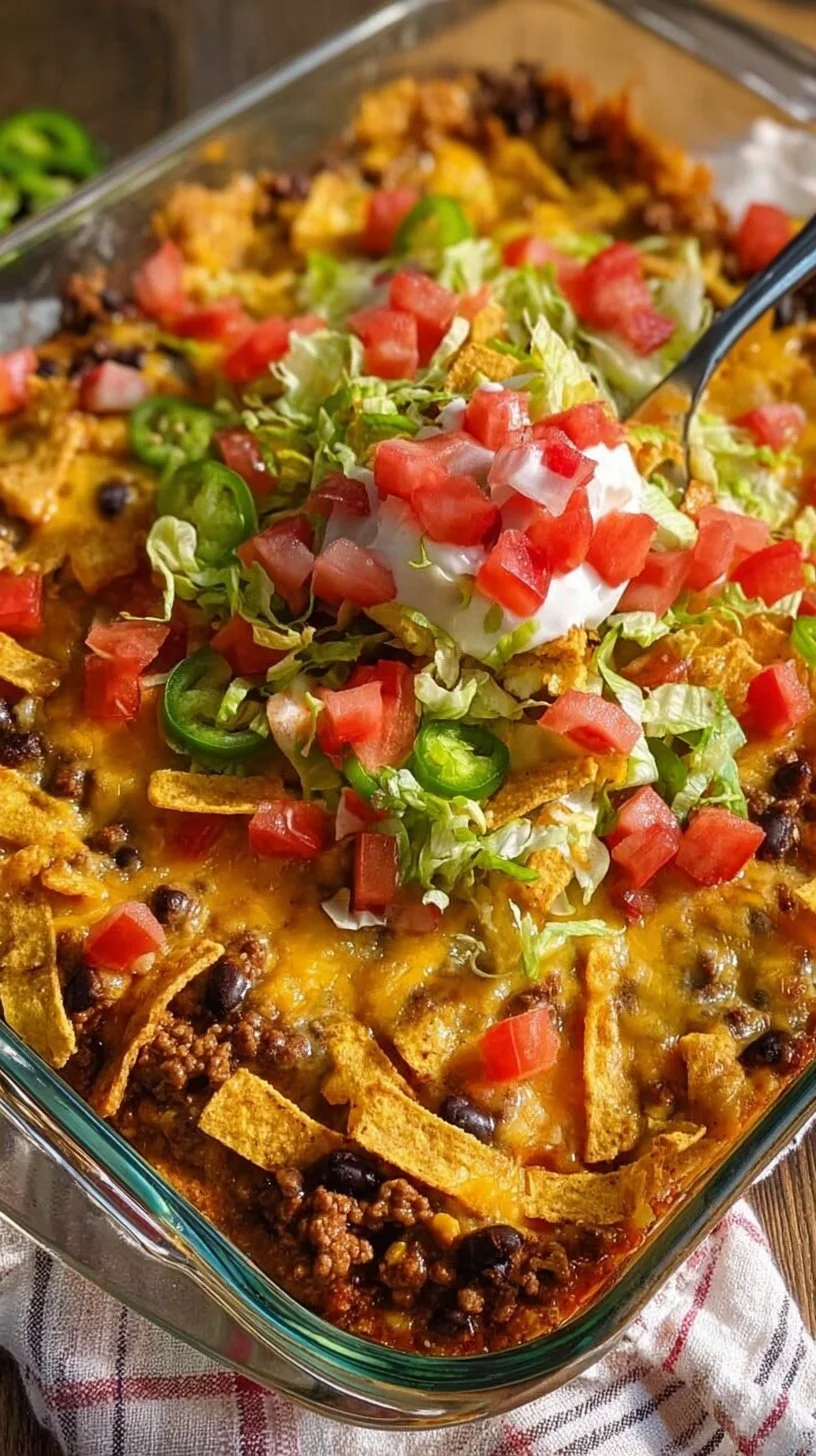
1 lb ground beef, 1 packet taco seasoning, 4 cups tortilla chips, 2 cups shredded cheese, 1 can black beans, drained and rinsed, 1 can corn, drained, 1 cup salsa, Optional toppings: chopped tomatoes, lettuce, sour cream, avocado
Directions :
- Preheat your oven to 350°F (175°C)., 2. In a skillet, cook the ground beef over medium heat until browned. Drain excess fat., 3. Stir in taco seasoning and water as directed on the packet., 4. In a large mixing bowl, combine the cooked beef, black beans, corn, and salsa., 5. In a greased baking dish, layer tortilla chips, followed by the beef mixture, and then top with shredded cheese., 6. Bake in the preheated oven for about 15-20 minutes, until the cheese is melted and bubbly., 7. Serve hot with your choice of toppings.
Ingredients through a cultural & historical lens
Each item in the ingredients list carries a small cultural biography. Ground beef has long been an American pantry staple, a protein of accessibility and versatility. Taco seasoning sachets, sold in small bright packets on grocery shelves, are emblematic of globalization and the commodification of spice—an instant bridge to a flavor tradition without the home cook needing an entire spice cabinet. Tortilla chips, whether imported or mass-produced in local factories, speak to the transformation of maize—the ancient grain of Mesoamerica—into a snack that is now global. Black beans and corn are ancestral companions to that grain, their presence a quiet nod to Indigenous and Latin American foodways that shaped the continent’s palate long before supermarkets.
Salsa, often made from tomatoes, chiles, and lime, is calcium for the soul: bright, acidic, and redolent of sun. Cheese melts into communal memory—cheddar, Monterey Jack—its richness binding disparate elements into one mouthful that feels like home. Optional fresh toppings—tomatoes, lettuce, avocado—bring lightness and seasonality, a reminder that even casserole culture makes room for the living season.
Cooking the dish: sensory notes & traditional techniques
The first sensory note is the scent of browned meat, the little caramelized edges that signal Maillard magic but, more essentially, the warmth of a homely kitchen. Add taco seasoning and water—the aroma shifts, taking on cumin’s earth, chili’s gentle heat, and the faint citrus lift that claims a salsa’s brightness. Mixing beans and corn with salsa is more than convenience; it is a layering of textures: the velvet of beans, the pop of corn, the saucy gloss that will cloak the chips.
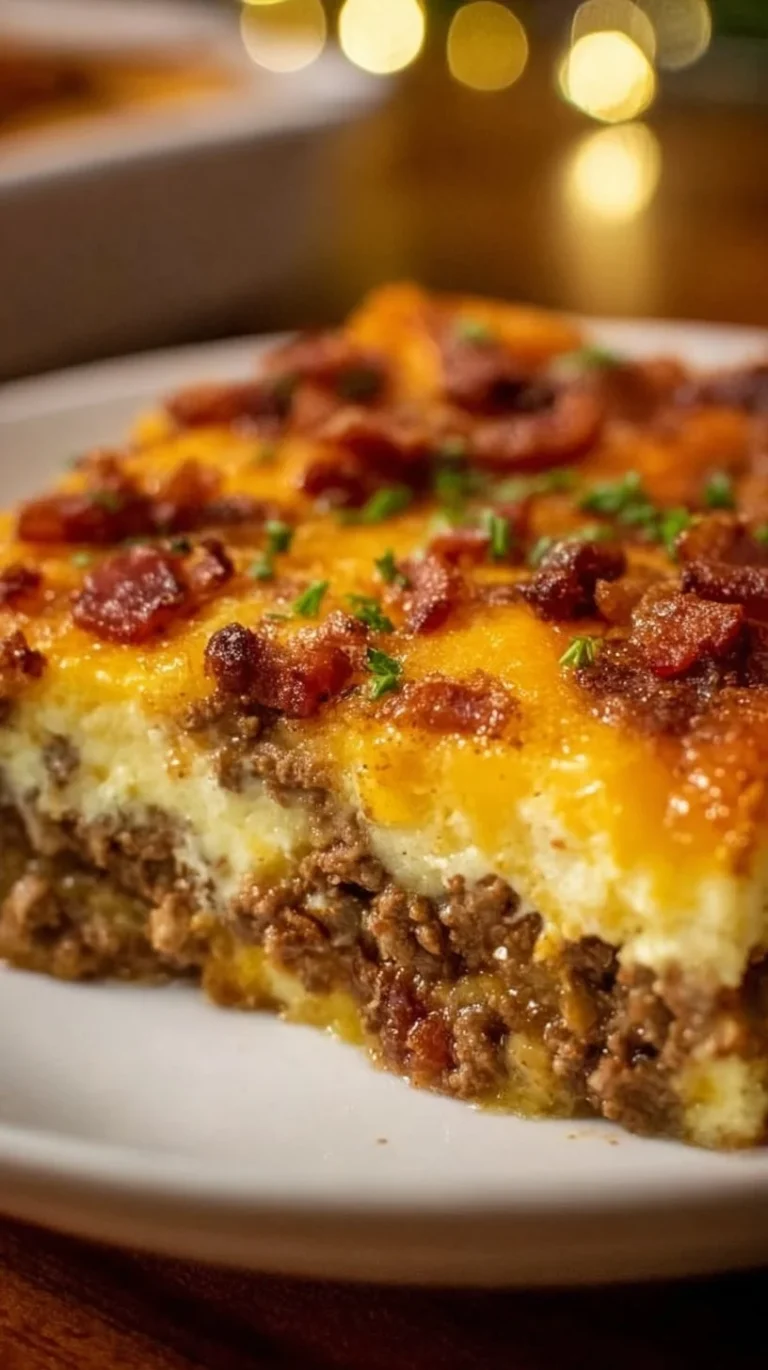
When the layers go into the oven, the house changes. Heat coaxes the cheese into a molten landscape; the tortilla chips soften at the edges yet still offer shards of crunch in the center—an interplay of textures that is the casserole’s theatrical thrill. Traditionally, casseroles are not fussed over. They are built, left to meld, and then presented whole: a communal act of generosity. Serving is ritualistic too—spoons passed around, plates filled, small debates about the right amount of sour cream or the virtue of avocado slices. These rituals are as much a part of the recipe as any spice.
How different regions prepare their version
Regional variations of the Walking Taco Casserole are a testament to how a recipe travels and adapts. In the Southwest, cooks may fold in roasted hatch chiles or use a smoky roasted salsa that lends a whisper of mesquite. In Texas, you might find a version with a deeper spice profile and a heavier hand with cumin and cayenne, sometimes topped with pickled jalapeños. Midwestern interpretations often lean into comfort: more cheese, a creamier salsa, and an inclination toward canned convenience that suits busy calendars and cold winters.
Coastal regions add their own gloss: a squeeze of lime, cilantro as a fresh punctuation, and the occasional addition of sweet corn when summer yields it. In cities with strong Latin American communities, the casserole may be an occasion to introduce fresher elements—homemade salsa cruda, toasted corn, or a sharp crumbly queso fresco—ways of honoring the dish’s inspiration while keeping the casserole’s communal ease. In some places, folks use ground turkey or a chorizo-beef mix, signaling local preferences and available meats. Wherever it is made, the casserole is a mirror reflecting local tastes and the hands that make it.
In a nod to comfort hybrids across America, aficionados sometimes speak of mash-ups—dishes that combine distant culinary languages—and one can see how the communal spirit of casseroles resonates with other creative comforts like a mac-and-cheese meatloaf casserole, where the urgency to soothe a table births unorthodox but beloved solutions.
Traditional ways this dish is shared or served
Sharing a Walking Taco Casserole is a choreography of small, quiet intimacies. It is set on picnic tables under string lights at neighborhood gatherings, transported in foil to potlucks where plates are passed like offerings, and carved out for school fundraisers where every scoop is a vote for community. Families often assign ritual roles: someone brings the chips, another whips the topping tray—tomatoes, lettuce, avocado—and a senior member offers the first piece, as if to bless the meal. At tailgates, the casserole sits next to grills and thermoses like a warm anchor in the chill, a communal hearth.
There is tenderness in the practical: it is easy to scale, forgiving of substitutions, and modest in appearance while extravagant in comfort. In many households, the casserole becomes the dish that announces evenings of catching up, the one that says, “stay a while.” Even children learn the etiquette—how to layer chips on a plate before the hot filling melts them into a mosaic of crunchy and soft. These small, repeated acts of serving and eating turn a simple recipe into ritual, a family narrative retold.
You will find cousins to this sharing instinct across food cultures—portable, single-serve street foods that invite privacy in public, and large, homey casseroles that gather people around a common dish. Such parallels are why I often think about the casserole as a social instrument as much as a food.
A playful taco cousin can illustrate how culinary forms travel from street stall to home oven, changing but always keeping a trace of their origin.
Storing the dish without losing its cultural essence
Leftovers are stories waiting to be retold. A Walking Taco Casserole cools, is refrigerated, and becomes tomorrow’s rapid comfort. The key to preserving its soul lies not in preservation techniques but in intention: heat it gently, add a dash of fresh salsa, crown it with fresh toppings, and you revive not only flavors but the convivial energy of the original meal. Freezing is possible, though it softens chips; in some households, people choose to freeze the beef-and-bean mixture separately and assemble chips and cheese fresh before baking. That way, the crunch is preserved and the final bake becomes an act of re-creation rather than mere reheating.
In many cultures, reheating is an art. A small splash of water or extra salsa can restore moisture, while a brief oven time revives texture better than the microwave. More important than technique is the ritual: reheating with intention—inviting someone to join, chopping fresh avocado, squeezing a lime—keeps the dish’s social function alive.
Cultural questions people often ask
People often ask if this casserole is “authentic.” The question itself reveals an anxiety about origins and ownership. Walking Taco Casserole is authentic to a specific set of American practices: portability, communal eating, and the joyful pragmatism of potluck culture. It borrows language from Mexican cuisine and from Indigenous ingredients, and its authenticity is that of a hybrid born from meeting places—county fairs, school halls, neighborly kitchens.
Another frequent question: is it healthy? The casserole’s health is a negotiation—choose lean meat, add more beans and corn, crown with fresh produce—and it becomes a nourishing, balanced meal. A third question is about seasonality: can this dish be summer? Winter? The answer is yes; it adapts. In summer, fresh corn and salsa lift it; in winter, it becomes a warm, consoling bowl that invites layers of cheese and a side of hearty greens.
A closing note on food, memory & travel
Travel teaches that every dish is a conversation between place and people, between past and present. Walking Taco Casserole is a compact chronicle of American life—practical, convivial, a little bit improvisational. It is the dish you stumble upon in a new town and recognize because of the familiarity of its flavors; it is what you bring to a stranger’s table and leave a piece of yourself behind.
Dishes like this are more than sustenance; they are passports that require no stamps. They carry scent and texture and the memory of hands that make them. In kitchens across regions—under porch lights, in church halls, around picnic tables—this casserole travels, and with it, stories: of the grandmother who added extra cheese, the teenager who learned to brown meat without supervision, the neighbor who showed up with a bowl of fresh salsa. That is the true essence of a recipe: not its measured steps, but the lives it warms.
Conclusion
If you want to see how others have embraced and adapted this comforting casserole, a good place to start is with reflections on its many forms, such as Walking Taco Casserole: A Fiesta of Flavors in Every Bite, which explores homey variations and communal appeal. For a one-pan, weeknight-friendly take that honors the dish’s ease, consider Easy Walking Taco Casserole (One-Pan!) – Real Food Whole Life, a practical rendition that keeps the spirit intact. And for a personal, home-kitchen reflection on the casserole and its many faces, Walking Taco Casserole Recipe (Frito Pie) – Glenda Embree offers a warm, lived-in perspective worth exploring.
Walking Taco Casserole
Ingredients
Method
- Preheat your oven to 350°F (175°C).
- In a skillet, cook the ground beef over medium heat until browned. Drain excess fat.
- Stir in taco seasoning and water as directed on the packet.
- In a large mixing bowl, combine the cooked beef, black beans, corn, and salsa.
- In a greased baking dish, layer tortilla chips, followed by the beef mixture, and then top with shredded cheese.
- Bake in the preheated oven for about 15-20 minutes, until the cheese is melted and bubbly.
- Serve hot with your choice of toppings.