Garlic Butter Chicken
Introduction
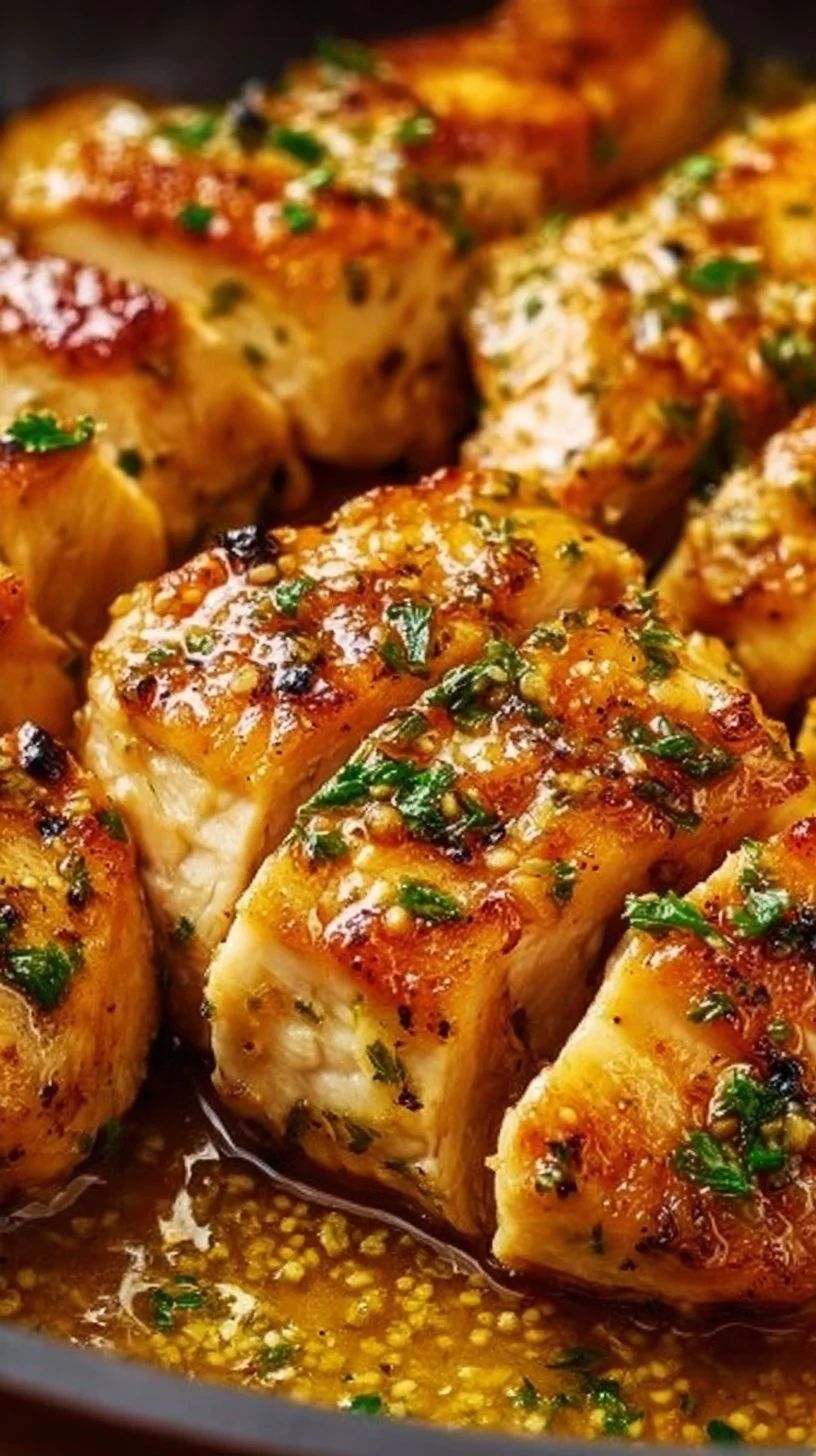
When I first met Garlic Butter Chicken was on a rain-streaked evening in a coastal town that smelled of lemon rind, warm bread, and the sea’s hush. The dish arrived simply—two golden cutlets, a glossy rim of butter, shards of garlic that glowed like tiny moons—and yet it tasted like a memory I hadn’t known I carried: the hush of family kitchens, the hush of arriving somewhere familiar. That evening, a woman named Sofia told me the recipe had come to her through a cousin who’d sailed from a small Adriatic port and learned to brown chicken the way coastal grandmothers browned fish—slowly, with reverence. She called it “comfort that travels” and laughed when I asked for the recipe.
Food travels the same way people do: by boat, by market, by memory. The simple mechanics of garlic, butter, and chicken are a map of migration and trade—olive oil hints at Mediterranean markets, the chicken’s ubiquity speaks of peasant ingenuity, and the lithe shimmer of wine in the pan carries the shadow of vineyards. If you want to read one modern iteration that frames this dish for a quick weeknight, I would recommend a neighborly version like the one that pairs the cutlets with pasta as a homey duet: a garlic butter chicken and bowtie pasta pairing. But for now, let us wander through the scent of browned meat and melted butter, and trace how this unassuming recipe folds into places and people.
The origin story & regional influence behind this dish
Garlic and butter aren’t bound to a single homeland. Garlic is a poem across Asia, the Mediterranean, and Latin America; butter traveled north through pastoral Europe and later merged with olive oil in border kitchens. The marriage of garlic and butter over seared protein appears in innumerable regional tongues: in French bistros as a simple beurre à l’ail glazing roasted poultry; in Italian trattorias as a light finishing sauce; in American home kitchens as a fast, brilliant weeknight solution. The story of Garlic Butter Chicken is therefore not linear but braided.
In the coastal villages of southern France or northern Italy, a cutlet might be bathed in browned butter and brightened with herbs grown in windowsills. In the American South, butter’s indulgence is tempered by the directness of pan-seared chicken with a whisper of garlic. The dish’s adaptability reflects global trade patterns—garlic’s cultivation moved along ancient caravan routes; salt and pepper became household standards through colonial and mercantile histories; wine or broth arrived as choices shaped by what people had on hand. What we now call Garlic Butter Chicken is a distilled heirloom: a recipe that carries traces of vine, pasture, and garden—each region lending its accent.
How to make Garlic Butter Chicken
To speak of how to make this dish is to imagine the moment of contact—the chicken meeting the hot pan, the immediate perfume of searing skin and the first bubbles of butter. It is less a technical manual than a small ritual: heat, patience, a measured surrender to time. You begin with oil warming, then the chicken laid down and left to form a golden identity. The deglaze—wine or broth—lifts the caramelized whispers of flavor, and the butter returns them, rich and luminous. Then the garlic, added at the last breath, blooms in that molten pool, and the chicken returns to be dressed, spooned, and served. It is a brief choreography that often opens doors to stories: who taught the sear, who taught the deglaze, which spoon was used for licking.
Ingredients :
3 tablespoons olive oil, 1 1/2 pounds boneless skinless chicken breasts (pounded to an even thickness (4 average-sized breasts)), 1 to 2 teaspoons 21 Salute Seasoning or poultry seasoning, 1 teaspoon kosher salt (or to taste), 1 teaspoon freshly ground black pepper (or to taste), 1/2 cup white wine* or chicken broth (or as necessary), 3 tablespoons unsalted butter (or more if you want extra sauce), 1 tablespoon garlic (finely minced; or to taste), 2 teaspoons fresh parsley (optional for garnishing)
Directions :
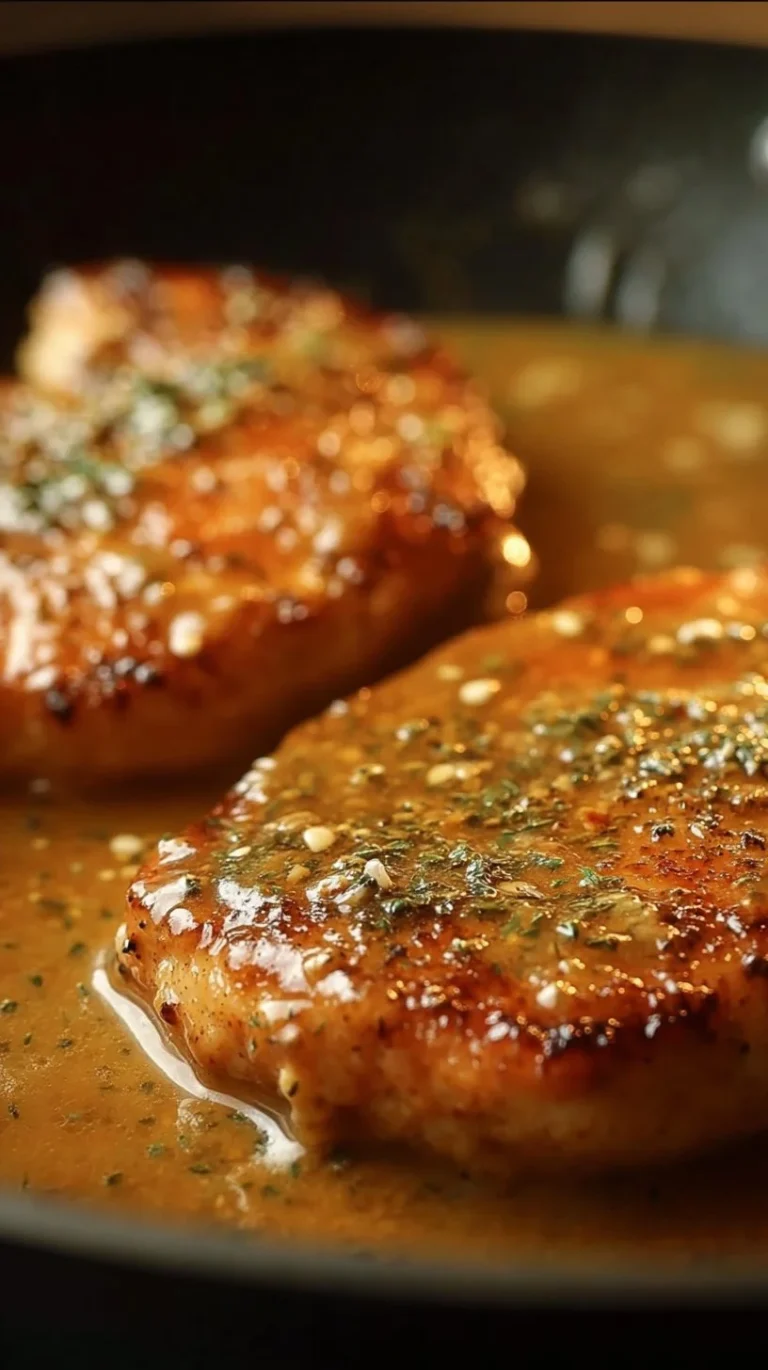
To a large skillet, add the olive oil, pounded chicken, evenly season with 21 Salute, salt, pepper, and cook over medium-high heat for 5 minutes. Do not touch, move, or disturb the chicken while it is searing. After 5 minutes, flip chicken over. It should have a medium golden color. For thicker/bigger chicken breasts, sear for 6-7 minutes., Allow chicken to cook on the second side for about 5 minutes, or until done and cooked through. Again, do not disturb the chicken while it’s searing., Remove chicken with a slotted spatula and place it on a plate to rest., Using caution, deglaze your skillet by adding wine (or broth) and allow the liquid to bubble up and steam violently for a few seconds., Add the butter and allow it to melt, about 1 minute; stir continuously until melted., Add the garlic and cook until fragrant, about 1 minutes; stir continuously., Turn the heat off, add the chicken back into the skillet, flip it around in the garlic butter sauce, and spoon the sauce over the chicken., Optionally garnish with parsley and serve immediately.
Ingredients through a cultural & historical lens
Reading the ingredients like pages in a traveler’s notebook reveals centuries of palate evolution. Olive oil is the old-world carrier of flavor; where butter is prized in pastoral cabinets, olive oil is anointing. The choice between white wine and chicken broth pins the recipe to place: wine suggests table culture where grapes are as everyday as water; broth speaks to economies where nothing is wasted and every simmered bone is a blessing. The garlic—one tablespoon finely minced—acts as a cultural signature. In Spain, garlic might be more aggressive; in parts of East Asia, ginger would play a sister role. Parsley as garnish is a European punctuation, a green flourish that brings brightness.
The seasoning named “21 Salute” nods to modern blends that synthesize regional herbs and spices into a single shaker—a modern culinary diasporic convenience. Kosher salt and black pepper are universal anchors: they speak of kitchens where flavor has been democratized, where taste is calibrated by hand and memory rather than by ceremony.
Cooking the dish: sensory notes & traditional techniques
The technique is less about precision and more about attention. Heat the pan until it’s almost impatient; the oil should shine and murmur. Lay the chicken and resist the urge to shift it—the loudest voice in the kitchen will be the sizzle, then the smell: a smoky whiff of Maillard browning, like toasted hazelnut or late-summer hay. That aroma is ancestral—meat browning has been a signal across cultures that food is transmuting into something else.
When you deglaze, watch the pan release its brown relics into the wine. It’s a moment of reclamation, of flavor rescued from heat and turned into sauce. The butter melts into a satin sheet; the garlic, added just after, infuses and softens, no longer raw but not burned—aromatic without aggression. Serve it while the sauce still glistens; the sauce is the memory-maker: a spoonful can recall a veranda conversation, an aunt’s voice, or a train-platform embrace.
Traditional cooks will tell you about rest: letting the chicken sit for a few minutes on a plate. This short pause allows the juices to explain themselves again and creates tenderness. In home kitchens, that plate becomes a stage for conversation as much as a cooling rack—people talk while the food gathers itself.
How different regions prepare their version
Travel reveals a recipe’s many dialects. In Provence, sprigs of thyme or a tear of lemon zest will lean the dish toward brightness, and olive oil may share the pan with a knob of butter for a bridge between Mediterranean and continental tastes. In Naples or Rome, a leaner approach uses less butter and more wine, the garlic cut larger and left to roast into a mellower sweetness.
In the American Midwest, Garlic Butter Chicken might arrive with mashed potatoes and a gravy-like saucing—sturdy, comforting, and unapologetically hearty. In coastal Asia, a reinterpretation uses toasted garlic, sometimes mixed with soy and a touch of sugar, turning the dish into a bittersweet umami song; for an example of inventive pairings that mix protein with buttery garlic flavors, home cooks often adapt the treatment for fish such as in a creative pairing like garlic butter chicken and salmon, where technique and texture converse.
Each region’s version is less a rewrite and more a conversation—ingredients are adapted to gardens, to markets, to the weather of a place, but the core promise remains: crisped surface, fragrant garlic, and buttery embrace.
Traditional ways this dish is shared or served
Food is always social. In some towns, Garlic Butter Chicken is served family-style on a large platter, the sauce pooled so everyone can dip bread. In others, it is plated alone with a green ribbon of salad, the parsley a modest promise of freshness. In urban apartments, it is a weeknight triumph, a dish that manages to be both quick and ceremonious; in rural kitchens it becomes a Sunday roast cousin—lighter but no less ceremonious.
Often, the ritual includes bread—rustic, torn—used to mop the pan, a silent testimony to thrift and pleasure. Sometimes it’s paired with rice, sometimes with pasta. A cross-cultural cousin might be a layered bake that takes the same garlic-butter ethos and stacks it with potato and cheese; to see how garlic-butter flavors play in a different hearty context, cooks sometimes look to similar preparations like the garlic butter steak and potato bake that lands on many communal tables: garlic butter steak and potato bake. Shared plates, family conversation, and the passing of a single spoon to reclaim the last of the sauce are the customs that make the dish communal.
Storing the dish without losing its cultural essence
Leftovers are memory in waiting. Store the chicken in a shallow container so the sauce doesn’t trap steam and soften the sear. Refrigerate promptly; the next day, reheat gently—briefly in an oven or in a skillet with a splash of broth to reawaken the sauce—so textures return without becoming soggy. But honor the ritual of reheating: warm slowly, spoon the sauce again, and let the garlic and butter rejoin like old friends.
Preserving the cultural essence is less about technique and more about intention. Reheating for a quiet meal alone can be a remembrance. Reheating for company can be a ritual of retelling: what city the chicken came from, which aunt first braised it, what train was late that day. Transferring the memory is part of storage—label the container not only with the date but with a small note of the story you tasted.
Cultural questions people often ask
People ask whether garlic overwhelms, whether butter is decadent, whether wine is essential. The answer is always contextual: adjust garlic to taste and mood; use butter for silk and oil for lightness. Wine is a historical punctuation—use it if you have it, broth if you do not. They ask whether chicken breasts are the only acceptable cut; breasts are quick and clean, but thighs carry a darker memory of flavor and hold up well to longer, gentler cooking.
Another common question: is this dish “traditional” anywhere? It is and it isn’t—its ingredients are ancient and widespread, but the specific construction—pan-seared breasts finished in garlic butter—feels of the modern home kitchen: efficient, unpretentious, and adaptable. People often ask for shortcuts; the truest shortcut is good salt, good heat, and the generosity to let the sauce be more than seasoning—let it be hospitality.
A closing note on food, memory & travel
There is a small tenderness in realizing that simple food can be a passport. Garlic Butter Chicken is not a museum piece; it is a living dish that has been repackaged and reloved in kitchens around the world. Its beauty lies in its humility—the way it asks only for heat, patience, and a little butter, and in return offers warmth, shine, and the soft assurance of home. Wherever I have eaten it—from a harbor-side trattoria to a bustling city apartment—the dish carried with it conversations, the clink of glasses, the hush after the last fork.
And so, when I make it now, I think of Sofia and the rain, of cousins with tide-streaked hands, of grandmothers who tuned the flame by ear, and of strangers who became friends over a shared plate. Cooking becomes, in these small waypoints, a geography of affection.
Conclusion
For cooks who want to explore variations and simple weeknight ideas, there are helpful modern takes such as Garlic Butter Chicken (4 Ingredient Sauce!) | Don’t Go Bacon My Heart, which highlights how a few pantry items can make a memorable sauce. If you like bite-sized, snackable twists on the theme, consider the approach in The 3-Ingredient Garlic Butter Chicken Bites I Can’t Stop Making, a recipe that adapts the flavors for quick plates. For a community-tested version that many home cooks praise, there’s a comforting rendition at This Garlic Butter Chicken Recipe Is ‘Definitely a Keeper’ – Allrecipes.
May your next pan carry not only the rich sheen of butter and the perfume of garlic, but also the long, humming history of kitchens that taught us how to share.
Garlic Butter Chicken
Ingredients
Method
- To a large skillet, add the olive oil and heat it over medium-high heat.
- Add the pounded chicken and season evenly with 21 Salute, salt, and pepper.
- Cook the chicken for about 5 minutes without touching, moving, or disturbing it while it sears.
- After 5 minutes, flip the chicken over; it should have a medium golden color.
- For thicker or larger chicken breasts, sear for 6-7 minutes on this side.
- Allow the chicken to cook on the second side for about 5 minutes or until done and cooked through.
- Remove the chicken with a slotted spatula and place it on a plate to rest.
- Deglaze the skillet by carefully adding wine (or broth) and allow the liquid to bubble up and steam vigorously for a few seconds.
- Add the butter and allow it to melt, stirring continuously for about 1 minute.
- Add the minced garlic and cook until fragrant, about 1 minute while stirring continuously.
- Turn off the heat, add the chicken back into the skillet, flip it around in the garlic butter sauce, and spoon the sauce over the chicken.
- Optionally garnish with parsley and serve immediately.