Best Baked Cinnamon Sugar Donuts Recipe Ever
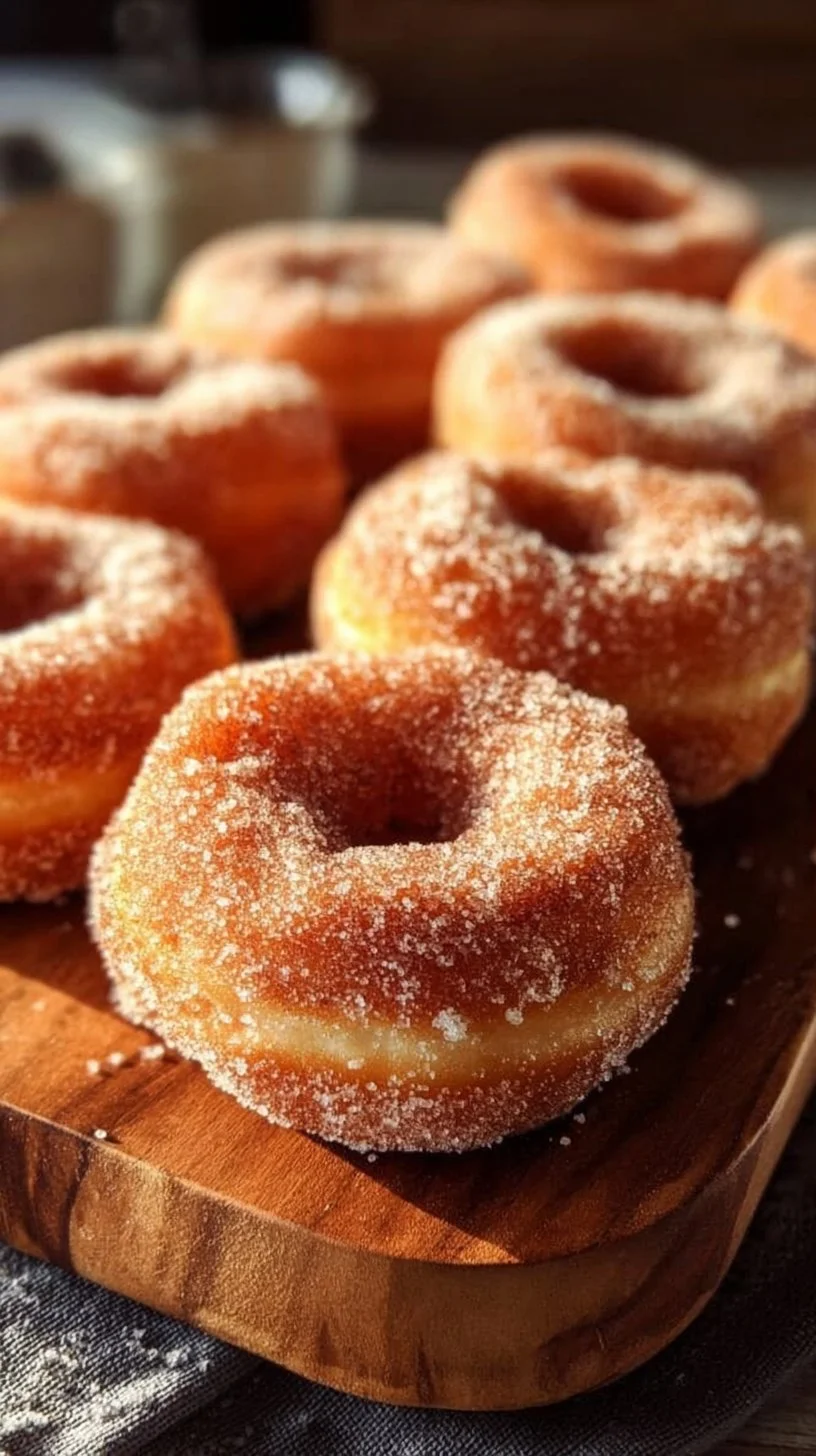
The Best Baked Cinnamon Sugar Donuts Recipe Ever is a refined, accessible approach to a classic laminated-sugar donut profile using an oven-baked method. The objective is to achieve a tender crumb, pronounced cinnamon aroma, and a thin, adhesive butter layer that allows a crystalline sugar shell to adhere uniformly. Precise control of mixing, temperature, and handling produces donuts with a light interior structure and an evenly textured exterior that optimizes mouthfeel and flavor transfer. For a contrasting study in baked goods technique, see baked chicken cordon bleu to compare assembly and heat management strategies across preparations.
The culinary logic behind this dish
This recipe balances chemical leavening with minimal physical manipulation. Baking powder provides a neutral, immediate lift, creating an open but controlled crumb without the extended proofing required by yeast. The modest sugar in the batter contributes to Maillard browning and tenderness, while the post-bake cinnamon-sugar coating supplies the dominant sweetness and texture contrast. Butter, incorporated melted, contributes both richness and a lower viscosity batter that yields a uniform rise and thin cell walls; this encourages a moist interior and delicate crust. Whole milk (or almond milk) adds fat and proteins that help stabilize the foam created during baking, improving oven spring and retention of crumb structure. Each ingredient is purposeful: leavening for structure, milk and eggs for emulsification and moisture, butter for tenderness and flavor, and the cinnamon-sugar coating for immediate aromatic impact and textural contrast.
How to make Best Baked Cinnamon Sugar Donuts Recipe Ever
The method prioritizes restraint: minimal mixing to avoid gluten overdevelopment, controlled filling to ensure consistent oven spring, and immediate coating to exploit surface heat for adhesion and crust formation. Follow the recipe sequence precisely; temperature and timing are central to texture. When preparing the batter, keep wet and dry components separate until combining to prevent premature activation of the baking powder. Use a piping bag for consistent portions so each cavity reaches the same degree of expansion in the oven. Immediately brush the warm donuts with melted butter and roll in the cinnamon-sugar mixture; the residual heat causes a thin glaze to set and the sugar to form a subtle, crisp shell. The directions below are integral and must be followed as written.
Ingredients :
2 cups all-purpose flour, 1 cup granulated sugar, 2 teaspoons baking powder, 1 teaspoon ground cinnamon, 1/4 teaspoon salt, 3/4 cup milk (whole milk or almond milk), 2 large eggs, 4 tablespoons unsalted butter, melted, 1 teaspoon vanilla extract, For the coating:, 1/2 cup granulated sugar, 1 teaspoon ground cinnamon, 4 tablespoons unsalted butter, melted
Directions :
Preheat your oven to 375°F (190°C) and grease your donut pan with non-stick spray or butter., In a large mixing bowl, whisk together the flour, sugar, baking powder, cinnamon, and salt., In a separate bowl, combine the milk, eggs, melted butter, and vanilla extract. Whisk until smooth., Gradually add the wet ingredients into the dry ingredients, stirring gently with a spatula until just combined. Be careful not to overmix., Spoon the batter into a piping bag or use a spoon to fill each donut cavity about 3/4 full. Smooth the tops if necessary., Bake for 10-12 minutes, or until the donuts spring back when lightly touched. Let them cool in the pan for 5 minutes before transferring to a wire rack., For the coating, mix the granulated sugar and cinnamon in a shallow bowl. Brush the warm donuts with melted butter and roll them in the cinnamon sugar mixture until evenly coated.
Ingredient analysis through a chef’s lens
All-purpose flour provides a middling protein level that strikes the balance between structure and tenderness. The 2 cups are calibrated to yield enough gluten scaffolding to support the batter during oven expansion without producing chew. Using 1 cup of granulated sugar in the batter keeps internal sweetness restrained so the external coating reads as the primary sweet note; this preserves contrast. Two teaspoons of baking powder is a moderate amount that affords predictable lift within the short bake time; it is important the baking powder be fresh for consistent leavening. Ground cinnamon at 1 teaspoon in the batter adds background spice that complements the more dominant coating. The choice of milk—whole or almond—changes mouthfeel; whole milk increases richness and cohesion, while almond milk reduces density and provides a lighter finish. Eggs contribute emulsification and coagulation, setting the crumb during the final phase of baking. Four tablespoons of melted butter deliver fat evenly throughout the batter; melting rather than creaming reduces aeration and minimizes coarse cell structures. The coating components are deliberately simple: a 50:1 ratio of sugar to cinnamon in the external mixture ensures a uniform shell without clumping, and the 4 tablespoons of melted butter for brushing act as an adhesive medium that promotes even coverage.
Kitchen workflow & technique breakdown
Organization and sequence reduce variability. Measure dry ingredients and whisk to aerate and distribute the baking powder evenly; this step ensures uniform rise. Separately combine wet ingredients to fully hydrate proteins and fats, which promotes a cohesive emulsion when combined with the dry mix. When folding wet into dry, use a wide spatula and make three to five strokes, removing large pockets of flour but retaining some lumps; this prevents gluten overdevelopment that would yield toughness. Transfer batter to a piping bag for portion control—this is faster and more consistent than spooning and minimizes handling of the pan that could deflate the batter. Preheating the oven to a stable 375°F (190°C) supplies a consistent thermal environment for rapid initial expansion; if the oven is under-temperature, the baking powder will not act properly and the crumb will be dense.
Plan the coating station before baking: have the cinnamon-sugar mixed and the melted butter warmed but not scalding. Cooling the donuts in the pan for five minutes allows the crumb to set sufficiently to handle, while still retaining surface heat necessary for the butter to absorb and the sugar to adhere. Use a wire rack to allow air circulation; this prevents steam from condensing on the bottoms and softening the sugar shell.
Texture control, heat management & timing
Heat is the primary manipulator of texture here. Oven temperature and bake time govern cell wall elasticity and coagulation rate. At 375°F (190°C), the exterior sets quickly, capturing the volume created by baking powder while preserving moisture internally. The 10–12 minute bake window is narrow; visual and tactile cues are more reliable than time alone—look for a pale-golden surface and a gentle spring back when pressed. Cool for five minutes in the pan to avoid tearing delicate edges during transfer. Immediate brushing with melted butter exploits residual heat to create an interface where sugar crystallizes into a thin, crisp layer; waiting too long permits the exterior to cool and the sugar to slide off rather than adhere.
Control batter temperature: ingredients at room temperature emulsify efficiently and reduce the risk of a curdled-looking batter. Overmixing introduces larger, uneven air pockets and tougher crumb; undermixing leaves flour streaks and produces inconsistent rise. Both extremes impact final texture.
Professional variations
Maintain the recipe’s measures, but consider professional-level technique variations without altering ingredient ratios: use a small offset spatula to smooth tops for an even crust; rotate the pan halfway through baking only if your oven has known hot spots; rest the batter briefly (5 minutes) to allow entrained air to settle for a more uniform cell structure. For a dairy-free approach, substitute almond milk as permitted in the recipe; note that almond milk reduces emissivity during browning, so monitor color and increase oven time by one to two minutes if necessary. If desiring an intensified cinnamon note without altering measurements, toast whole cinnamon sticks briefly to release volatile oils and grind immediately, then use the same amount—this deepens aroma. For a more glazed finish instead of granular sugar, melt the coating butter with an additional tablespoon and incorporate it into a powdered sugar glaze, but this changes final texture and should be treated as a conscious variation rather than a substitution.
For method cross-reference on cinnamon-centric bake techniques, consult the technique notes in the cinnamon roll bliss bars recipe to compare spice integration strategies.
Finishing touches & plating philosophy
Finishing is functional as well as aesthetic. The butter brush is the final functional act that enables the sugar shell; brush gently and cover uniformly to prevent pooling. Rolling the warm donuts ensures crystalline sugar adhesion and creates surface contrast between the matte interior and the glistening exterior. For plating, arrange donuts on a shallow platter in a single layer to avoid crushing; temperature contrast matters—serve warm to accentuate volatile aromatics and to maintain the integrity of the sugar shell. Garnish should be minimal to respect the intended flavor profile: a light dusting of extra finely ground cinnamon or a few whole spice sprigs on the side for visual context. Use white or neutral platters to emphasize the warm golden color of the donuts.
Maintaining quality after cooking
These donuts are best consumed within the first few hours for optimum textural contrast. If storage is necessary, place cooled donuts in a single layer in an airtight container at room temperature for up to 24 hours; refrigeration accelerates staling and sogginess as the sugar draws moisture. For brief refreshment, reheat gently in a 300°F (150°C) oven for 3–4 minutes to reactivate the butter layer and re-crystallize surface sugar without drying the crumb. Avoid microwaving, which collapses the sugar shell and creates a rubbery texture. For transport, separate layers with parchment to prevent abrasion of the sugar coating.
Questions from home cooks (chef answers)
Q: What causes dense donuts? A: Overmixing the batter or using cold ingredients yields a denser crumb. Mix until just combined; ingredients at room temperature emulsify more effectively and promote lift.
Q: My sugar coating slides off. Why? A: If the donuts are allowed to cool fully before brushing with butter and rolling, the sugar will not adhere. The adhesive action requires residual heat to loosen surface proteins and allow butter to absorb—work while donuts are warm.
Q: Can I freeze the donuts? A: Freeze uncoated donuts on a tray until firm, then transfer to a sealed container. Thaw and reheat briefly, then apply the butter/sugar coating to preserve texture. Coating before freezing often yields a soggy surface on thaw.
Q: Why does my oven burn the edges before the centers are done? A: Uneven heat distribution or pans placed too close to heating elements cause this. Use the middle rack, verify oven accuracy with a thermometer, and use a light-colored donut pan to reduce excessive browning.
Final chef notes
Precision matters in this recipe: consistent measurements, control of mixing, and timing at each stage produce predictable results. Treat the oven as an active ingredient—temperature stability and rack position alter the final crumb and surface. The simplicity of the ingredient list is intentional; technique is the variable that elevates these donuts. For an iterative improvement process, document bake times, oven position, and any ingredient substitutions so you can reproduce a preferred outcome reliably.
Conclusion
For additional professional reference and alternative approaches to this same class of baked cinnamon sugar donuts, review the detailed method at Baked Cinnamon Sugar Donuts – Sally’s Baking Addiction, compare coating techniques with the version at Baked Cinnamon Sugar Donuts – Broma Bakery, and examine the variations and troubleshooting notes at Best Baked Cinnamon – Sugar Donuts Recipe – Cooking with Manuela.
Baked Cinnamon Sugar Donuts
Ingredients
Method
- Preheat your oven to 375°F (190°C) and grease your donut pan with non-stick spray or butter.
- In a large mixing bowl, whisk together the flour, sugar, baking powder, cinnamon, and salt.
- In a separate bowl, combine the milk, eggs, melted butter, and vanilla extract. Whisk until smooth.
- Gradually add the wet ingredients into the dry ingredients, stirring gently with a spatula until just combined. Be careful not to overmix.
- Spoon the batter into a piping bag or use a spoon to fill each donut cavity about 3/4 full. Smooth the tops if necessary.
- Bake for 10-12 minutes, or until the donuts spring back when lightly touched.
- Let them cool in the pan for 5 minutes before transferring to a wire rack.
- Mix the granulated sugar and cinnamon in a shallow bowl.
- Brush the warm donuts with melted butter and roll them in the cinnamon sugar mixture until evenly coated.