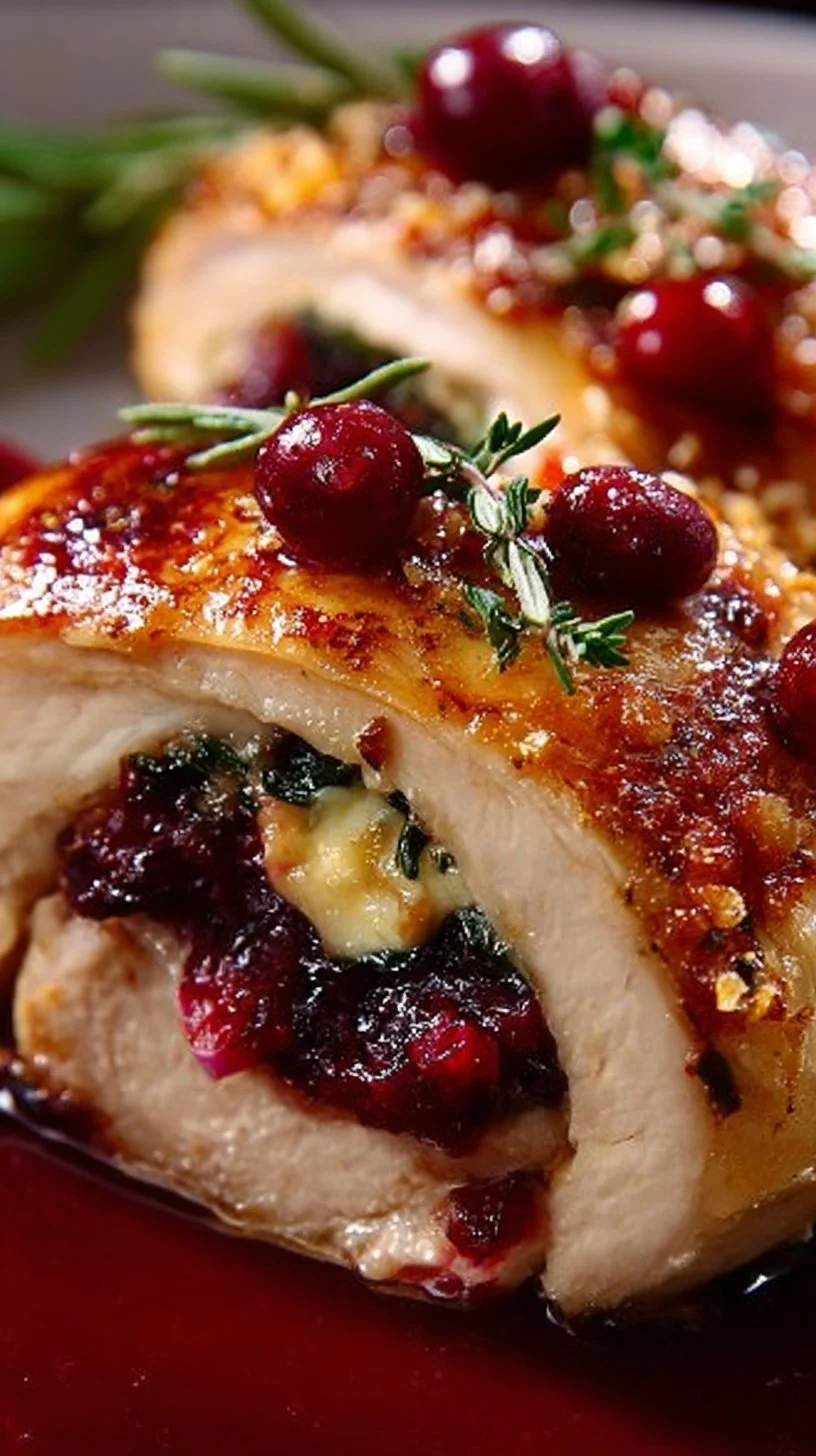
Impressive Cranberry Brie Stuffed Chicken
Introduction
I first met this dish on a cold evening in a small guesthouse on the outskirts of Sofia, where the hum of tramlines and the scent of wood smoke braided with the warm, crystalline sweetness of baked fruit. The house belonged to an elderly couple who treated me like kin: a steaming plate of Impressive Cranberry Brie Stuffed Chicken arrived at our table as if it had always belonged to the liturgy of their hospitality. It was a dish that felt both seasonal and cosmopolitan, a pairing of northern fruit with a soft French cheese, wrapped in the everyday muscle of the chicken breast. As I ate, the room seemed to hold its breath—the cranberry’s tart brightness cut through the cream of the brie, and the crust added a whisper of comfort. The memory of that night has since become a compass for journeys that chart the meeting points of food, migration, and memory.
On that trip I was carrying a small notebook and a bigger appetite; later, at a seaside kitchen in Portugal and a market stall in Riga, I found echoes of that stuffed chicken—different cheeses, other fruits, always the same impulse: to fold contrasting textures and flavors into one neat, tender package. If you want a sense of how a recipe like this travels and changes, you can begin with a humble sweet: the way a tart cranberry crumble moves from festive tables into weekday kitchens, a lineage I have traced in recipes like cranberry crumble bars, where fruit and buttered crumbs sing the same seasonal song.
The origin story & regional influence behind this dish
Stuffed poultry is almost as ancient as the rituals that gather people around tables. Romans kitted out fowls with nuts and dried fruit; medieval cooks hid marzipan and spices into birds for feasts. The specific marriage of cranberry and brie maps a more recent, transatlantic history. Cranberries are North American natives, once gathered by Indigenous peoples for food, medicine, and dye. Brie, on the other hand, whispers of French pastures—soft, bloomy-rind cheese that carries an almost floral musk. To stuff a chicken breast with brie and cranberries is to make a small, domestic treaty between continents: the tart wildness of New World fruit and the indulgent, creamy signal of Old World cheese.
This hybrid is very much a child of modern kitchens where accessibility and seasonality meet curiosity. In Europe, especially in northern climates, tart berries have long been married to richer dairy to balance flavor and fortify the palate against long winters. In North America, cranberries are often associated with holiday tables and sweet-tart preserves, and when fused with brie they become both familiar and novel—comforting, yet elevated. The panko crust and honey-orange glaze, meanwhile, give the dish a texture and brightness that nod toward contemporary gastronomy: global ingredients arranged with a home cook’s intuition.
How to make Impressive Cranberry Brie Stuffed Chicken
This is the moment where a memory becomes kitchen practice. The method itself is straightforward—there is no need for elaborate equipment, only attention and patience. The heat of the pan will seal thinly the surface while the oven finishes the tenderness, and the interplay of melted brie and jewel-like cranberries will narrate itself as you cook. Below I place the exact ingredients and directions as they were given the night I first tasted this stuffed chicken—simple, direct, and entirely replicable.
Ingredients :
2 boneless, skinless chicken breasts, 1 tablespoon olive oil, 1/2 cup fresh cranberries, 1/4 cup honey, 1/4 cup orange juice, 1/4 teaspoon ground cinnamon, 1/4 teaspoon ground ginger, 1/4 teaspoon salt, 1/4 teaspoon black pepper, 4 ounces brie cheese, rind removed and cut into small pieces, 1/4 cup chopped fresh parsley, 1/2 cup panko breadcrumbs, 1 tablespoon butter, melted
Directions :
Preheat your oven to 375°F (190°C). , Heat the olive oil in a medium saucepan over medium heat. , Add the fresh cranberries to the pan and cook, stirring occasionally, until they begin to soften and burst, about 5 minutes. , Stir in the honey, orange juice, ground cinnamon, ground ginger, salt, and black pepper. , Continue cooking the cranberry mixture, stirring occasionally, for another 3-4 minutes, until it thickens slightly. , Remove the cranberry mixture from the heat and set it aside to cool. , Cut a pocket in the center of each chicken breast, being careful not to cut all the way through. , Stuff each chicken breast with equal amounts of the brie cheese pieces. , Spoon a portion of the cooled cranberry mixture into each chicken breast, over the brie cheese. , Secure the opening of each chicken breast with toothpicks to keep the filling in place during cooking. , Heat a large oven-safe skillet over medium-high heat. , Place the stuffed chicken breasts in the skillet and sear them for about 2-3 minutes on each side until golden brown. , While the chicken is searing, combine the panko breadcrumbs and melted butter in a small bowl. , Once the chicken is browned, remove it from the skillet and set it aside. , Spread the panko mixture evenly over the top of each chicken breast. , Return the chicken to the skillet and transfer the skillet to the preheated oven. , Bake the chicken for 20-25 minutes or until the chicken reaches an internal temperature of 165°F (74°C). , Remove the chicken from the oven and let it rest for 5 minutes before serving. , Sprinkle the chopped fresh parsley over the chicken just before serving for a burst of color and freshness.
Ingredients through a cultural & historical lens
When you read a list of ingredients, you are also reading a map of trade routes, seasons, and social change. Olive oil traces back to Mediterranean groves and centuries of quotidian use; panko breadcrumbs carry the lightness of Japanese milling and the modern economy of packaged pantry staples; orange juice hints at citrus groves warmed by sun and carried by ships. Each measure in the ingredient list is a small historical marker.
Cranberries, for instance, were used by Native American communities not only as food but also to preserve meat and dye cloth—practical uses that transformed into festive confections under later colonial kitchens. Honey and citrus together are a Mediterranean marriage that traveled around the globe, serving as a natural sweetener and brightener long before industrial sugar became ubiquitous. Brie, a product of French terroir, carries with it a centuries-old cheese-making tradition that values pasture, microbial terroir, and age. By assembling these into a single dish, you are performing an act of culinary collage—lifting ingredients from distinct geographies and histories and letting them converse at your table.
This is the sort of cross-cultural stitching you can see echoed elsewhere: where a simple crust can bring universal comfort, much in the way a crunchy topping transforms both sweet and savory plates. If you enjoy how textures shift in these conversations, you might also explore dishes that marry fruit to savory proteins in the way I’ve written about other recipes like parmesan-crusted chicken, where a crust reimagines the chicken’s voice.
Cooking the dish: sensory notes & traditional techniques
What makes this chicken memorable is the contrast: the tart, almost electric pop of cranberries against the slow, arresting richness of melted brie. As the cranberries soften in honey and orange, they release a perfume—bright citrus lifted by wild berry—and the cinnamon and ginger leave a gentle warmth at the back of the throat. When you sear the chicken, listen: the sizzle is a promise, a brief, toasty note before the oven gently coaxes the meat to tenderness.
The panko topping is important for sensation. When it browns it becomes a shattering counterpoint to the supple interior, a nod to the universal human affection for contrast. In homes where people have long cooked with stuffed birds, the technique is less about precision and more about timing and generosity—avoiding overwork, allowing fillings to shine. The toothpicks in the directions are both practical and ritual: small stitches securing an offering to the oven, a promise that what emerges will be whole and ready to share.
How different regions prepare their version
Across regions, you will find variations tuned to local produce and taste. In New England, cooks might use dried cranberries or a tart cranberry relish simmered with maple syrup instead of honey, lending a smoky sweetness that nods to local sap-to-syrup traditions. In France, a version might swap honey for a pale, floral syrup and use a milder, creamier brie—served with a slender green salad and a glass of crisp, local wine. In the Balkans, where I first tasted this dish in a guesthouse, cooks might add a touch of ajvar or paprika to the mix, an echo of smoked peppers and a reminder that savory reds have an easy companionship with tart fruit.
Even within urban kitchens, people reinterpret the dish with what’s at hand: one cook I met wrapped the breasts in a thin slice of prosciutto for salt and restraint; another layered spinach with the brie, making a nod to classic fillings that stretch back to peasant cuisines trying to make protein go further. For a hearty, glazed accompaniment and a richer texture, some bakers and home cooks use breadcrumbs seasoned with parmesan and herbs—a technique that reminds me of a slow braise finished with a fruit-balsamic glaze in my notes on a different roast: slow-braised beef roast with cranberry-balsamic glaze. These regional riffs are less about right or wrong than about a shared appetite to marry bright and rich.
Traditional ways this dish is shared or served
Though it has the polish to be a centerpiece at a dinner party, this stuffed chicken also belongs at quieter tables: Sunday lunches, holiday leftovers reimagined on weekday plates, or small celebratory suppers. In many families the act of stuffing and securing the bird is communal, an intimate choreography where children and elders can both find their roles—one tearing parsley, another spooning cranberry mixture, a third tucking brie into pockets with care.
In festive contexts it’s often presented whole on a platter, the panko crust a golden banner across a landscape of carved slices, each showing a surprise jewel of cranberry and molten white cheese. It settles beautifully alongside roasted root vegetables, a bowl of buttery polenta, or simply a wedge of rustic bread. In homes where weather governs the menu, this dish migrates from table to table in late autumn and winter, its cranberry element tethered to the rhythm of the seasons.
If you’re considering variations for a gathering, think about how other dishes set the tone: light salads for contrast, rustic sides for comfort, or citrusy accompaniments to echo the orange in the cranberry glaze. And remember that the ritual of serving, the pause before the first cut, is as much a part of the dish as the ingredients themselves—what makes food memorable is not only its flavor but the company and setting in which it is eaten. For ideas on how a crust or topping can transform texture and feeling in a household favorite, look to narratives around other crusted mains such as the recipe I linked earlier.
Storing the dish without losing its cultural essence
Leftovers from a soulful meal carry more than calories; they are concentrated memories. To store this stuffed chicken with respect for its textures, let it cool completely before wrapping to avoid sogginess. Keep slices in airtight containers and reheat gently so the brie softens again without separating completely. If you anticipate leftovers, consider keeping the panko topping separate and crisping it in a pan before scattering over warmed slices—this small gesture revives the original textural contrast.
Cultural essence is more than texture; it is best preserved by how you return to the dish. Reheating with a splash of orange juice, or reheating alongside a little buttered greens, is a way to honor the original balance of bright and rich. In many traditions, the act of repurposing leftovers—into sandwiches, salads, or a simple pilaf—continues the story of the meal and keeps it alive.
Cultural questions people often ask
People often wonder whether such a dish is “authentic” and what that even means. My answer is always that authenticity is a living thing; it travels, is borrowed, and then becomes something belonging to the kitchen that adopts it. Another common question is whether brie will melt too quickly and leak—this is less about cheese physics and more about trust in timing: let the oven do its slow work. Others ask how to honor the cranberry’s tartness without overwhelming the palate; the simple answer is restraint: a spoon of the compote, a sliver of brie, and the rest left to the eater’s appetite.
People also ask how such a recipe fits into seasonal and ethical cooking. Use local cranberries and pasture-raised chicken where possible; small choices like these connect the recipe to place and to the people who grow and raise our food.
A closing note on food, memory & travel
Every dish is an itinerary. The Impressive Cranberry Brie Stuffed Chicken is more than a recipe; it is a small archive of movements—of fruit and cheese, of hands that have learned to fold flavors together. On my travels, I have watched strangers turn a shared plate into an opening for conversation: a mother teaching her curious child how to spoon a filling, an old man describing the first time he tasted cranberries, a young couple arguing affectionately over whether to add parsley. These moments are the real recipe: hospitality, curiosity, and a willingness to let different traditions rest side by side on one plate.
Conclusion
For a practical reference and variations on this idea, you might compare the method to the clear step-by-step guidance in Cranberry Brie Stuffed Chicken Breasts – Downshiftology, which shows a home-cook friendly approach. To see a version that includes greens and different stuffing dynamics, explore the take on Cranberry and Brie Stuffed Chicken – iFoodReal.com. If you are curious about richer, indulgent adaptations that add a smoky, wrapped element to the same flavor family, read the imaginative riff in Bacon Wrapped Cranberry Brie Stuffed Chicken Breasts.
Impressive Cranberry Brie Stuffed Chicken
Ingredients
Method
- Preheat your oven to 375°F (190°C).
- Heat the olive oil in a medium saucepan over medium heat.
- Add the fresh cranberries to the pan and cook, stirring occasionally, until they begin to soften and burst, about 5 minutes.
- Stir in the honey, orange juice, ground cinnamon, ground ginger, salt, and black pepper.
- Continue cooking the cranberry mixture, stirring occasionally, for another 3-4 minutes, until it thickens slightly.
- Remove the cranberry mixture from the heat and set it aside to cool.
- Cut a pocket in the center of each chicken breast, being careful not to cut all the way through.
- Stuff each chicken breast with equal amounts of the brie cheese pieces.
- Spoon a portion of the cooled cranberry mixture into each chicken breast, over the brie cheese.
- Secure the opening of each chicken breast with toothpicks to keep the filling in place during cooking.
- Heat a large oven-safe skillet over medium-high heat.
- Place the stuffed chicken breasts in the skillet and sear them for about 2-3 minutes on each side until golden brown.
- While the chicken is searing, combine the panko breadcrumbs and melted butter in a small bowl.
- Once the chicken is browned, remove it from the skillet and set it aside.
- Spread the panko mixture evenly over the top of each chicken breast.
- Return the chicken to the skillet and transfer the skillet to the preheated oven.
- Bake the chicken for 20-25 minutes or until the chicken reaches an internal temperature of 165°F (74°C).
- Remove the chicken from the oven and let it rest for 5 minutes before serving.
- Sprinkle the chopped fresh parsley over the chicken just before serving for a burst of color and freshness.