Greek Yogurt Brownies
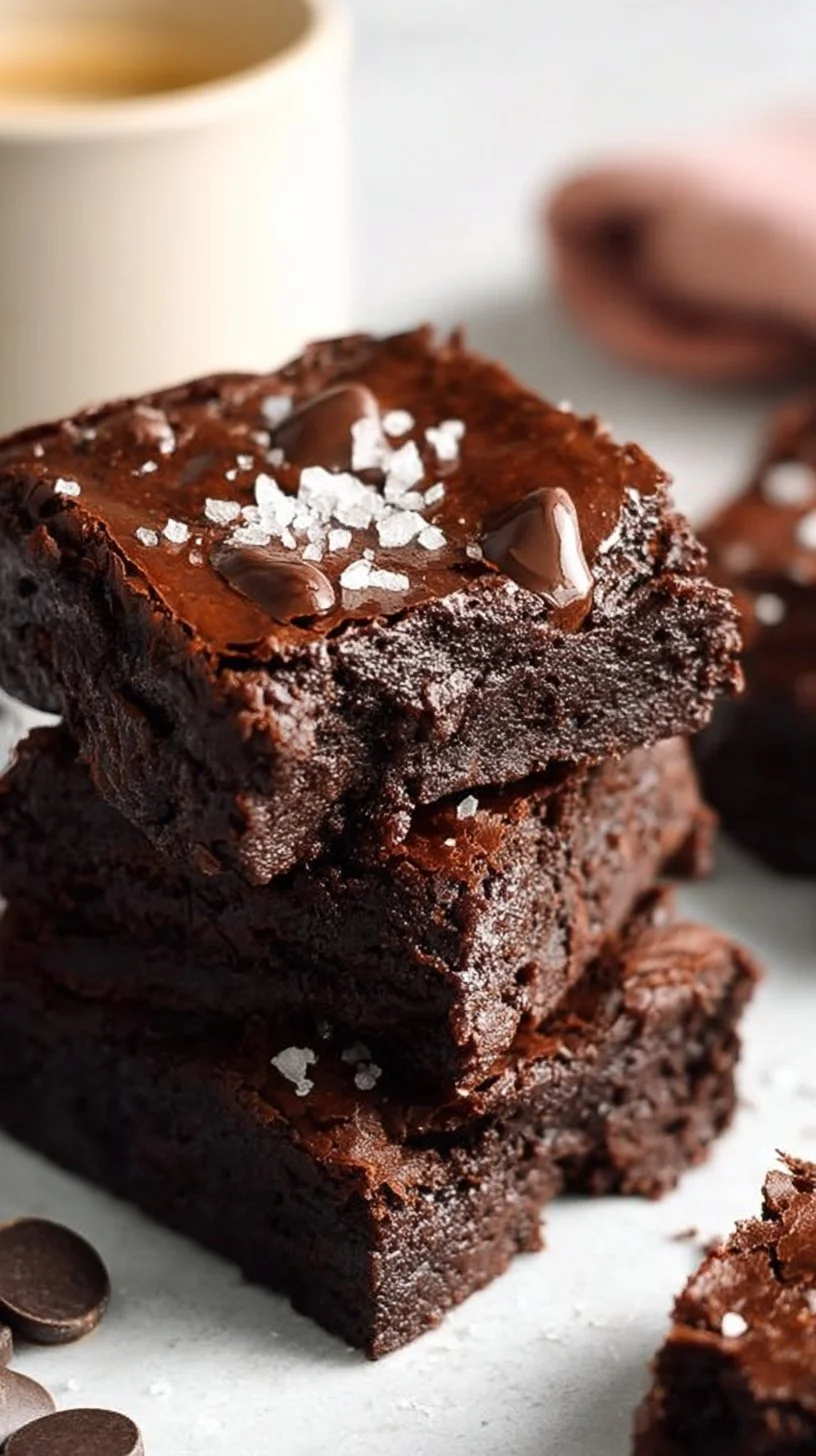
The smell of slow-melting chocolate and the bright tang of yogurt — these two scents, when married, have a way of transporting you. I first met Greek Yogurt Brownies in a small apartment above a bakery in a city that never sleeps: a half-open window, a street vendor selling oranges, and a friend who carried with her a heritage of Mediterranean summers and Midwestern afternoons. It was the kind of recipe that arrives as diplomacy between two culinary cultures, a compact, fudgy compromise that says: comfort can be reparative, and indulgence can be rooted in wholesome choice.
As a traveler and a storyteller, I habitually trace food back to the places and people who make it meaningful. In that afternoon kitchen I learned that brownies, an American castaway from Victorian shipboard puddings and home-baked experimentation, can be tempered by Greek ingredients and global sensibilities. The result is less about invention than conversation — between cocoa and cultured milk, between the desire for a lighter bite and the human craving for a warm, chocolate-scented memory. For those curious about variations on the brownie theme, there are playful relatives like chocolate-covered strawberry brownies that flirt with fruit and glaze, and their existence confirms how one simple slab of batter can adopt countless personalities.
The origin story & regional influence behind this dish
Brownies belong to the American pantry — dense, square, and coaxing us to break rules about portion and propriety. Yet the Greek yogurt element introduces a different lineage: centuries-old traditions of milking and preserving, of cultures where tang and creaminess are proud. Greek yogurt itself is a distillation of pastoral life, a thickening process that concentrates flavor and history. When American home bakers began to translate this tang into cakes and cookies, what emerged felt like a bridge: a nod to Mediterranean larders layered into North American rhythm.
The regional influence is subtle but real. In Greek villages, dairy is central to conviviality; in Brooklyn brownstones or suburban kitchens, Greek yogurt arrived with immigrant grocers and boutique food brands, and there it found an eager audience. The brownie was an invited guest who benefited from that tang — moisture without grease, a slightly tart counterpoint to cocoa’s bittersweetness. This is a recipe born of migration in both the literal and culinary sense: techniques and tastes traveling and softening the edges of tradition, producing a hybrid that tastes at once familiar and novel.
How to make Greek Yogurt Brownies
Making these brownies has the intimacy of a domestic ritual. It is about the small choreography of bowls, the cooling of melted chocolate, and the waiting hour as the squares set — a pause that allows the senses to recover and anticipate. In many places where I’ve tasted this version, the act of baking is conversation: someone stirring, someone tasting, the oven ticking like a clock that measures stories rather than minutes. While the recipe is straightforward, the making is a ceremony of textures — glossy melted chocolate cooling into a velvet fold with yogurt, the casual scatter of chocolate chips like tiny promises.
As you mix, allow yourself to think of kitchens in other lands where warmth and chocolate are shared. In a Thessaloniki café you might hear the clink of spoons against ceramic cups; in an American diner you might remember the grease-stained counter of your youth. This recipe threads those memories together. For bakers who enjoy exploring brownie’s many moods, regional riffs are easy to find; lovers of tender crumb often turn to adaptations such as heart-shaped brownies for festive tables, and these little variations show how a simple base can host an entire vocabulary of celebration.
Ingredients :
2/3 cup Sugar-Free Chocolate Chips (divided), 1 teaspoon Coconut Oil, 3/4 cup Plain Greek Yogurt, 1 large Egg, 1/4 cup Almond Milk (or soy milk, or any milk of choice), 1/2 cup Granulated Sweetener (sugar-free brown erythritol or coconut sugar or brown sugar), 1 teaspoon Vanilla Extract, 1/2 cup Oat Flour (or all-purpose flour ightly packed, swept ), 1/2 cup Unsweetened Cocoa Powder, 1 teaspoon Baking Powder, 1/4 teaspoon Salt
Directions :
Preheat the oven to 350°F (180°C)., Line an 8-inch x 8-inch brownie pan with parchment paper. Slightly oil the pan. Set aside., In a microwave-safe bowl, melt 1/3 cup chocolate chips and coconut oil. Set aside to cool for a few minutes at room temperature., In a mixing bowl, whisk the dry ingredients: flour, cocoa powder, sweetener, baking powder, and salt. Set aside., In another large bowl, whisk plain Greek yogurt, egg, vanilla extract, milk, and melted cooled chocolate mixture., Sift the dry ingredients into the wet ingredients and stir with a silicone spatula until just combined., Stir in the remaining 1/3 cup chocolate chips and distribute evenly in the batter., Pour the batter into the prepared brownie pan., Bake for 20-23 minutes at 350°F (180°C) or until a toothpick inserted in the brownie comes out clean., Cool immediately on a cooling rack for an hour before cutting.
Ingredients through a cultural & historical lens
Each item on the ingredient list is a story in miniature. Cocoa powder carries the legal and illicit histories of colonial trade and the slow evolution of chocolate from drink to baked good. Oat flour speaks to places where wheat might be scarce and oats reign: Scotland, Northern Europe, and modern kitchens that favor whole grains. Coconut oil whispers tropical provenance, an echo of islands and seafaring routes. Greek yogurt itself is a palimpsest — shepherds refining milk by centuries-old practice, and urban markets rebranding it as a healthful modern staple.
Even the choice of sweetener is political and regional. Granulated sweetener options speak to global shifts: from cane sugar fields in the equatorial belt to newer low-glycemic alternatives popular in health-conscious kitchens across cities like Melbourne and San Francisco. Almond milk, once a niche pantry item, now evokes the Pacific Northwest’s taste for plant-based substitutions. In this way the recipe is a map: each ingredient marks a point on global trade routes, migration paths, and contemporary consumer values. Without altering a single measure, the list tells you as much about where we have been as about what we will eat today.
Cooking the dish: sensory notes & traditional techniques
This is not a recipe that screams technique; it sings of balance. The aroma while the brownies bake is layered: first the deep, woody element of cocoa, then the sweet, faintly tropical whiff of coconut oil, and finally that lactic, almost citrusy lift that Greek yogurt lends when warmed. The texture is a study in contrasts — the initial crackle of a slightly crisp top yielding to a molten, fudgy interior. The cooling hour is essential for texture to set; it transforms goo into something sliceable and ceremonial.
Traditional techniques here are not about precision so much as respect. Allowing the melted chocolate to cool before folding into yogurt avoids curdling and preserves silkiness; letting the brownies rest prevents the rush to cut and serves as a moment of communal attention. In many cultures where desserts are shared, this pause is rich with meaning: it is the time for stories, for tea, for arranging plates, for arguing over who gets the corner piece. That human pause is part of the technique — a ritual of hospitality that turns baking into belonging.
How different regions prepare their version
Every place I visit offers a twist. In Mediterranean kitchens, bakers sometimes swap almond milk for a dash of thick, strained orange blossom water, producing a brownie with floral lift. In parts of Asia, you will find a softening of the chocolate intensity and an addition of rice cake or mochi elements; the playful pairing of texture is akin to desserts such as mochi brownies where chew meets chocolate. North American versions might favor sugar-free chips and erythritol for a health-forward audience, while Latin American cooks might fold in a hint of cinnamon or a sprinkle of sea salt that harks back to cacao’s regional combinations.
In urban bakeries that draw on global palates, these brownies become ambassadors. They might be offered alongside coffee in Athens, in cafes crowded with students and expatriates, or on a farmer’s market stall in Portland, where the vendor will tell you about swapping dairy practices without losing any of the bite. Each iteration keeps the soul of the brownie while allowing local tastes to steer the conversation.
Traditional ways this dish is shared or served
These brownies move between occasions with an unpretentious grace. They are as suitable for a pilgrim’s thermos in a train compartment as they are for a formal afternoon tea. In households with multi-generational kitchens, the slab is often portioned with ritual: corners reserved for the eldest, crumbs swept into the hands of children. For celebrations, small squares are sometimes dusted lightly with cocoa or a fine zest to mark the occasion. In modern urban ritual, the brownies are folded into lunchboxes as an offering of love — a quiet, portable comfort.
Serving is an intimate act. A single brownie with coffee is an amulet against loneliness; several stacked on a plate at a communal table speak of abundance. In many places where I’ve recorded recipes, the sharing is accompanied by story: a grandmother recounting a kitchen mistake turned masterpiece, or a friend insisting that this is the only recipe that keeps the memory of a loved one alive. Food is not just nourishment; it is a mnemonic device, and these brownies are particularly good at recalling soft afternoons and the hands that molded them.
Storing the dish without losing its cultural essence
Storage is practical and ceremonial. Wrap the cooled brownies in parchment or keep them in an airtight tin, and they will retain their mood for several days. Refrigeration will extend life and slightly firm the crumb; some cultures prefer that firmer, cooler square, slicing it thin and serving it with strong tea. If you must freeze, freeze whole slabs so that thawing feels like restoring a moment rather than reconstructing one.
Yet the cultural essence — the sharing and the memories — is not preserved in plastic but in practice. Store with a note: who baked them, when, for what reason. Tuck in a memory like a bay leaf; when the brownies are later unfurled, the physical sweetness will combine with recollection and become richer. This is how food circulates meaning across time: through taste, through repetition, and through the small acts of preservation that families commit to.
Cultural questions people often ask
People often ask whether using Greek yogurt is an authentic nod to Greece or simply a modern substitution. The answer is both: it’s an adoption of texture and flavor rooted in tradition, used today in a new context. Others ask whether sugar-free chocolate chips change the soul of the brownie; they do alter sweetness, but sweetness is subjective. In my travels I’ve learned that what matters most is intention — is the brownie made to nourish, to celebrate, to remember? Those reasons matter more than any single ingredient.
Another common question involves the balance of health and pleasure. Is the point to make a “diet-friendly” brownie or to craft a textured, flavorful treat? Communities resolve this differently. In some, fewer calories are a practical necessity; in others, richness is an act of love. Both approaches can coexist because recipes are not commandments but invitations.
A closing note on food, memory & travel
Every kitchen, whether in a hillside village or a downtown loft, is an archive of human movement. Greek Yogurt Brownies are evidence that recipes evolve as people migrate, adapt, and remember. Each bite is both a sensory pleasure and a small testament to the ways tastes travel. When you bake a pan, you are participating in a lineage — of shepherds and farmers, of home bakers and itinerant cooks — and you are adding your voice to it.
I have eaten versions of this brownie at bus stations and before sunrise in coastal towns, and in quiet living rooms where a family photo watches over the counter. Each time, the experience is stitched to the place: the humidity making the top softer in tropical climates, the slow oven of a mountain cabin deepening the chocolate. Food guides us through geography by the simplest acts of sharing, and these brownies, modest and eager, are excellent guides.
Conclusion
If you want to compare this take to other imaginative brownie spins, I often refer readers to a practical pantry-friendly rendition from a Foodie With Family Greek yogurt brownies recipe that explores texture and timing, and to a lighter-calorie interpretation at The Big Man’s World Greek Yogurt Brownies (Under 100 Calories!) for those curious about slimming down without sacrificing warmth.
Greek Yogurt Brownies
Ingredients
Method
- Preheat the oven to 350°F (180°C).
- Line an 8-inch x 8-inch brownie pan with parchment paper. Lightly oil the pan and set aside.
- In a microwave-safe bowl, melt 1/3 cup chocolate chips and coconut oil. Let it cool for a few minutes.
- In a mixing bowl, whisk together the dry ingredients: oat flour, cocoa powder, sweetener, baking powder, and salt.
- In another large bowl, whisk Greek yogurt, egg, vanilla extract, almond milk, and the melted chocolate mixture.
- Sift the dry ingredients into the wet ingredients and stir until just combined.
- Stir in the remaining 1/3 cup chocolate chips and mix until distributed evenly.
- Pour the batter into the prepared brownie pan.
- Bake for 20-23 minutes or until a toothpick inserted in the center comes out clean.
- Cool immediately on a cooling rack for an hour before cutting.