Pumpkin Cottage Cheese Bake: Healthy, Easy & High-Protein Fall Treat
Introduction
This Pumpkin Cottage Cheese Bake is a compact, protein-forward expression of autumnal flavors executed with restrained technique and precise timing. The formula—cottage cheese, eggs, pumpkin, a binder of oats or almond flour, sweetener, spice, and a single leavening agent—creates a structure that relies on coagulation rather than fat or prolonged aeration. The approach is functional: develop flavor through spice balance and controlled heat, manage moisture to produce a tender but sliceable set, and use simple finishes to elevate the plate. For cooks seeking efficient seasonal sweets or protein-forward desserts that slot into weekday routines, consult complementary recipe categories like quick easy recipes for serving and accompaniment strategies.
The culinary logic behind this dish
At its core this bake leverages three culinary principles: protein coagulation for structure, starch or nut meal for body, and concentrated squash flavor. Cottage cheese supplies curds and a high protein matrix that coagulates with eggs; this creates the primary set and mouthfeel. Pumpkin puree introduces viscous cellulose and starch, which bind water and contribute color, aroma and the vegetal sweetness central to the profile. The oats or almond flour operate differently: rolled oats will gelatinize and contribute a toothsome crumb and more starch-driven cohesion; almond flour contributes oil, a finer crumb and a silkier mouthfeel but less mechanical binding.
Pumpkin pie spice is not merely seasoning; it’s an aromatic map that guides perception of sweetness and warmth. Maple syrup or brown sugar provides soluble sugars that assist browning and flavor depth when exposed to heat. Baking powder is present to give a modest lift and to prevent excessive density; it is not intended to aerate the custard in the way beaten egg whites would. Understanding these roles informs decisions about texture control and baking parameters that follow.
How to make Pumpkin Cottage Cheese Bake: Healthy, Easy & High-Protein Fall Treat
In practice the method prioritizes gentle emulsification, even distribution of particulate ingredients, and a steady oven environment to avoid curd fragmentation or a split surface. The directions provided are intentionally succinct; each step has a technical rationale that I will unpack in subsequent sections to ensure reliable results and a refined final product.
Ingredients :
2 cups (16 oz) cottage cheese, 3 large eggs, 1 cup pumpkin puree (not pumpkin pie filling), ½ cup rolled oats or almond flour, ½ cup maple syrup or brown sugar, 2 tsp pumpkin pie spice, 1 tsp vanilla extract, 1 tsp baking powder
Directions :
Preheat oven to 350°F (175°C) and lightly grease a 9×9-inch baking dish.
<, p id=”instruction-step-2″>2. In a large bowl, whisk together the cottage cheese, eggs, pumpkin puree, maple syrup, and vanilla., p id=”instruction-step-3″>3. Stir in the oats or almond flour, pumpkin spice, and baking powder., p id=”instruction-step-4″>4. Pour the mixture into the baking dish and smooth the top., p id=”instruction-step-5″>5. Bake for 40–45 minutes, until center is set and a toothpick comes out clean., id=”instruction-step-6″>6. Let cool before slicing and serving.
Ingredient analysis through a chef’s lens
Cottage cheese: It is a coarse curd dairy with high moisture and a protein network that sets when heated. The curd size contributes to texture; if a silky mouthfeel is desired, brief pureeing with an immersion blender before combining will rupture the curds and create a more homogeneous custard. Leaving them whole yields a pleasantly grainy, cottage-cheese identity.
Eggs: Eggs are the heat-set binder. Their proteins coagulate between roughly 62–82°C, transforming the loose mixture into a sliceable block. Overbake and the proteins will tighten excessively, causing dryness and a cracked surface; underbake and the center will be loose and weeping. The listed bake time is a balance to achieve set yet tender curd.
Pumpkin puree: Not only flavor but texture—pumpkin contributes fibrousness and soluble pectin-like elements that absorb liquid. Use plain puree (not pie filling) to maintain control over sugar content and spices.
Rolled oats vs almond flour: Choose oats for economy, extra structure and a modest chew; choose almond flour for richness and a more delicate crumb. The choice also affects hydration—oats will absorb more water during baking and will firm the set.
Sweetener: Maple syrup brings aromatic compounds and a liquid medium that will slightly thin the batter; brown sugar gives caramel notes with a drier measure. Adjustments should be made only by those comfortable with subtle shifts in texture.
Pumpkin pie spice and vanilla: These aromatics must be balanced. Higher spice intensity masks pumpkin’s delicate vegetal notes; reduce the spice if using particularly robust maple syrup or if serving alongside strongly spiced components.
Baking powder: The single teaspoon gives lift that keeps the texture from being cloyingly dense; it also interacts with the sugars to promote a gentle Maillard coloration at the edges.
Kitchen workflow & technique breakdown
- Mise en place: Measure all elements. Because the recipe is short, discipline in mise en place prevents overmixing and saves time at the oven.
- Mixing: Whisk the liquid ingredients first—cottage cheese, eggs, pumpkin, maple syrup, vanilla—to create a uniform aqueous phase. Whisking distributes egg proteins evenly and ensures uniform coagulation. After the liquids are homogenous, fold in the dry components (oats/almond flour, spice, baking powder) to avoid activating starches prematurely and to minimize gluten development if oats are used.
- Vessel: A 9×9-inch baking dish is specified to achieve a relatively thin, even slab. Changing pan dimensions will affect thickness and therefore bake time. A deeper pan will require longer, lower-temperature baking to achieve the same internal set without over-browning.
- Smoothing: A flattened surface encourages even browning and predictable center set. Use an offset spatula or the back of a spoon to remove air pockets and distribute solids evenly before entering the oven.
- Bake environment: The recipe assumes a standard dry oven. If your oven runs hot, reduce temperature by 10–15°F and extend time; if convection is used, reduce temperature by 25°F and watch for early color development.
For additional meal planning around this kind of recipe see resources for easy dinner recipes which pair well with protein-rich bakes in a weekly rotation.
Texture control, heat management & timing
The final texture should be tender, slightly springy, and cohesive. Key control points:
- Batter temperature: Room-temperature eggs yield a more consistent coagulation curve; cold eggs can cause uneven set.
- Hydration: The ratio of wet to dry determines springiness. If using oats, expect a slightly firmer, chewier result; almond flour will give a silkier, slightly more fragile slice. Resist the impulse to add more dry ingredients if the batter seems loose—oven time will resolve excess looseness as proteins set and starches absorb liquid.
- Oven temperature and placement: Mid-oven placement ensures even circulation. The toothpick test is appropriate: a clean toothpick indicates the proteins and starches have set, but be aware that cottage cheese curds can adhere to the probe and create false positives; rely also on a gentle jiggle—if the center moves as one mass it’s ready.
- Resting: Allow at least 20–30 minutes to cool in the pan; residual heat continues to set the interior. Cooling also allows the bake to firm for clean slices. Rapid slicing when hot will lead to collapse or a loose center.
Professional variations
- Blended custard: For a uniform, cheesecake-like texture, pulse the cottage cheese and pumpkin in a food processor until smooth before combining with eggs. This reduces the curd grain and produces a denser, more refined crumb.
- Streusel top: For a contrast of texture, sprinkle a small streusel (butter, brown sugar, oats or almond flour) over the top after smoothing and before baking. This introduces toasty notes and textural contrast.
- Layered approach: Bake a thin base of almond flour or oat crust first, then pour the batter and bake until set for an approach that mimics a more conventional cheesecake structure.
- Spices and inclusions: Add a teaspoon of espresso powder to deepen caramel notes, or fold in toasted pepitas for crunch. Avoid adding high-moisture inclusions (e.g., fresh fruit) that will release liquid during baking.
Finishing touches & plating philosophy
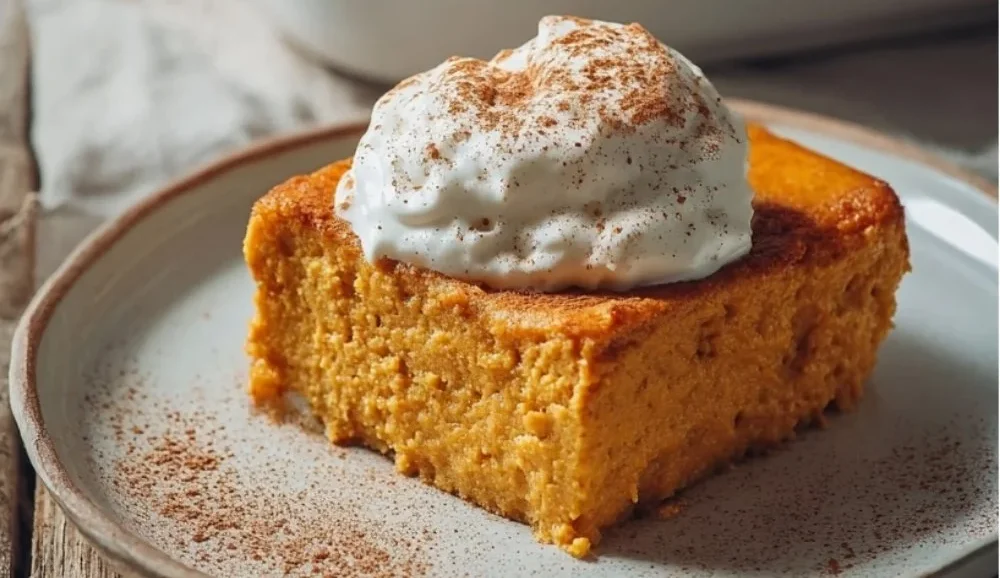
This bake benefits from restraint. A light dusting of fine powdered sugar or a delicate swirl of reduced maple syrup is sufficient. Consider texture contrast—serve with a dollop of lightly sweetened Greek yogurt or crème fraîche to add acidity and cut the sweetness. Warm slices retain a more open, custardy texture; slightly chilled slices take on a denser, cheesecake-like character and will slice cleaner.
Plating for service: cut straight-edged portions using a hot, dry knife between cuts for sharp presentation. Garnish with toasted seeds or a micro-herb sprig placed off-center to emphasize negative space and allow the bake’s warm orange tone to remain the focal point. If serving multiple portions, rest the baked slab fully before slicing to reduce moisture loss and maintain clean edges.
Maintaining quality after cooking
Storage: Refrigerate in an airtight container for up to 4 days. The protein and moisture matrix will continue to equilibrate, and some water release may occur—refrigerate uncovered for 10–15 minutes before serving to remove the chill and soften the texture. Freezing is possible: cut into single portions, wrap tightly, and freeze for up to 3 months. Thaw overnight in the refrigerator and reheat gently.
Reheating: Use a low oven (275–300°F) or microwave at medium power in short bursts to avoid overcooking proteins and drying the piece. A brief steam over warm Water in a closed oven can revive a slightly dry slice without further denaturing the proteins.
Questions from home cooks (chef answers)
Q: My bake came out grainy from the cottage cheese. How to avoid?
A: Pulse the cottage cheese in a food processor before mixing if you prefer a smooth texture. Alternatively, use smaller curd cottage cheese and ensure thorough but gentle whisking to integrate air without breaking the curds excessively.
Q: Can I substitute sugar for maple syrup?
A: Yes; brown sugar is specified as an alternative. If using granulated sugar, consider adding a tablespoon of molasses to mimic the complexity of maple or brown sugar. Adjust moisture slightly—granulated sugar will not add extra liquid.
Q: How do I know when it’s done without overbaking?
A: Use the toothpick for a basic test, but also watch for a subtle spring in the center and golden edges. The surface should not appear wet. Err on the side of slightly under rather than over; carryover heat will complete the set during the resting period.
Q: Can I halve or double the recipe?
A: Halving is straightforward with a smaller pan and reduced bake time; monitor closely. Doubling requires a larger, shallower pan to maintain thickness and bake characteristics, or bake in two pans to preserve the specified depth.
Final chef notes
This recipe is an exercise in balancing hydration, protein coagulation, and spice layering. Small adjustments—blending the cottage cheese, swapping binders, or tempering spice—will alter mouthfeel and aroma but not the essential logic. Keep oven temperatures moderate and treat the batter with minimal agitation: overworking will yield a tighter, less tender set. Use resting as an ally; the bake achieves its final texture off-heat. For consistent results, maintain precise measurements and respect the bake time window; sensory cues (spring, color, toothpick) are your ultimate guide.
Conclusion
For an alternate take that leans toward a richer, cheesecake-like finish using similar ingredients, consult the detailed adaptation at Pumpkin Cottage Cheese Cheesecake – The Pancake Princess.
Pumpkin Cottage Cheese Bake
Ingredients
Method
- Preheat oven to 350°F (175°C) and lightly grease a 9×9-inch baking dish.
- In a large bowl, whisk together the cottage cheese, eggs, pumpkin puree, maple syrup, and vanilla.
- Stir in the oats or almond flour, pumpkin spice, and baking powder.
- Pour the mixture into the baking dish and smooth the top.
- Bake for 40–45 minutes, until the center is set and a toothpick comes out clean.
- Let cool before slicing and serving.