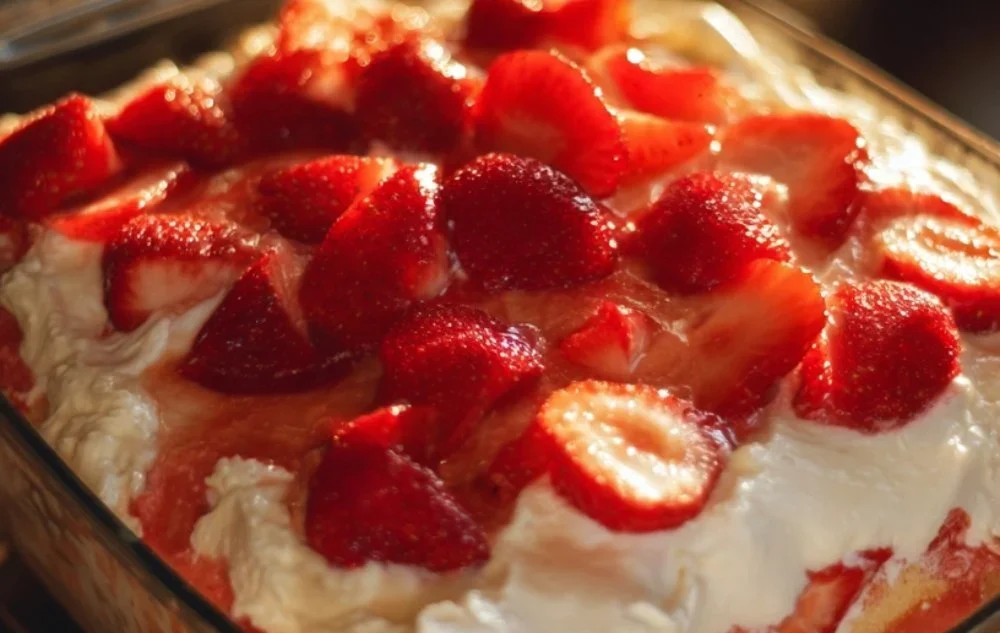
Strawberry Heaven
Introduction
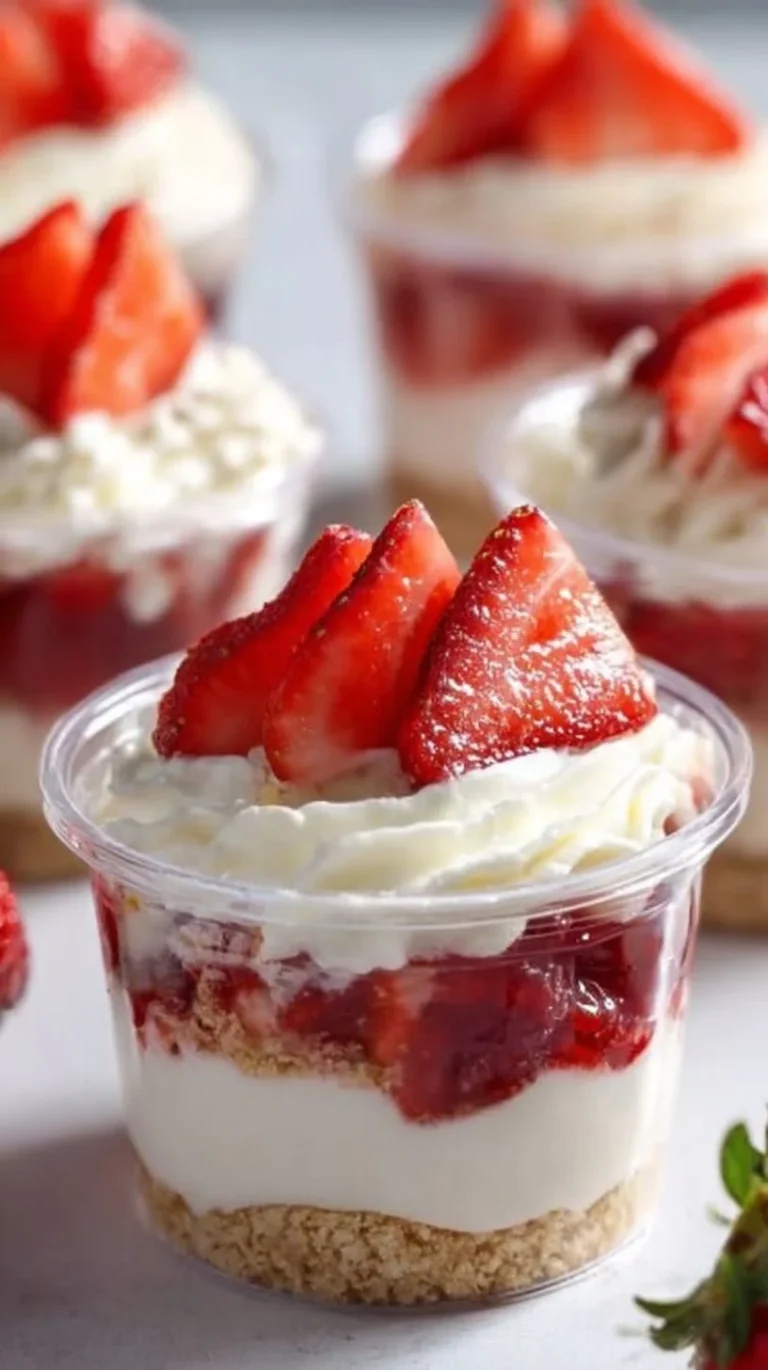
I first met Strawberry Heaven on a sunlit terrace above a bustling market in a coastal town where the air tasted faintly of salt and warm sugar. A woman with flour-dusted hands set a small glass of the dessert in front of me and smiled as if she had handed me a memory rather than a plate: the bloom of red strawberries, the creamy pale cloud that cradled them, a sprig of mint like a green exclamation at the rim. To call it a dessert is true but incomplete; it is a pause, a shared breath after a day stretched across market stalls and old streets. As a traveler and writer, I collect such moments—flavors that anchor me to places, to hands, to seasons. Strawberry Heaven is one of those simple miracles that maps whole summers into a spoonful.
What makes this dish feel like home in so many different places is not an exotic technique or rare spice but its economy of sweetness: fruit, cream, a little sugar and vanilla. Those few elements open into as many histories as there are kitchens. In one village it might be a shorthand for courtship—grandmothers teaching granddaughters how to macerate fruit at the same time as they teach the rhythm of the hands. In another, it is a festival dessert, brought to long wooden tables when the strawberry harvest arrives. The recipe I write about here is unadorned and pure; its simplicity invites stories, and the stories are where the dish becomes vast.
The origin story & regional influence behind this dish
Strawberries have followed humanity like a bright, attentive companion. Wild varieties were gathered long before they were cultivated, their red flesh signaling ripeness to hunter-gatherers and later to the growers who coaxed them into larger, sweeter cultivars. In Europe, strawberries became fashionable in the gardens of the Renaissance and the vernacular kitchens of the countryside alike. Wherever cream was plentiful—Northern Europe, the British Isles, parts of France—people discovered how well the two paired: the berry’s acid cutting the richness of dairy, the cream smoothing the fruit into a soft, indulgent lull.
The idea of macerating fruit—tossing it with sugar and letting it soften into its own syrup—is older than many written cookbooks. It is a technique born of seasons and patience, a practice that lets the fruit speak with the aid of a gentle nudge. From the British Eton Mess to Italian fragole con panna, from American strawberry shortcake’s biscuits and splashes of cream to elaborate French fraisier (a layered cake), the strawberry-plus-cream pairing bends to the character of place. Climate, dairy traditions, and the scale of social life—whether intimate family suppers or grand tea ceremonies—determine how the dish is presented and what it comes to mean.
How to make Strawberry Heaven
Ingredients :
2 cups fresh strawberries, hulled and sliced, 1 cup heavy cream, 1/2 cup powdered sugar, 1 teaspoon vanilla extract, 1 cup whipped cream (optional, for topping), Mint leaves (optional, for garnish)
Directions :
- In a mixing bowl, combine the sliced strawberries with 1/4 cup of the powdered sugar. Toss gently and set aside to macerate for about 15 minutes.
- In another bowl, whip the heavy cream with the remaining powdered sugar and the vanilla extract until soft peaks form.
- Gently fold the macerated strawberries into the whipped cream until combined.
- Spoon the mixture into dessert bowls or glasses.
- Top with whipped cream and garnish with mint leaves if desired.
- Serve immediately and enjoy your Strawberry Heaven!
The recipe above is both a set of instructions and an invitation. When you follow it, you are not simply assembling ingredients; you are entering a tradition of waiting and listening—letting the sugar draw the strawberry’s juices out like a small confession, then linens of cream cradling those juices. The minimalism of the directions leaves room for the intangible: the season, the light where you serve it, the people at your table.
Ingredients through a cultural & historical lens
Each component carries a quiet biography. The strawberries are seasonal ambassadors; in temperate climates they mark a brief window of abundance and are often associated with youth, fertility, and the return of light after winter. Their cultivation and commercial spread—from garden escapes to modern berry farms—tell a story of human intervention and taste evolution.
Heavy cream speaks of dairy cultures where milk was plentiful and transformed into things that last and comfort. In rural kitchens, cream once separated by hand in crocks and churns—this legacy of labor still flavors the way people approach such desserts: with respect for texture and richness. Powdered sugar is the bearer’s soft touch, a refinement that became more accessible as milling and processing advanced. Vanilla extract carries a longer, darker history—botanical glamour imported across oceans, once an expensive scent and flavor that today can sit as a humble pantry staple.
Whipped cream and mint are the flourishes of hospitality. The optional whipped topping, airy and covetous, signals a desire to elevate the dessert into ceremony. Mint is an herb of cooling and fragrance; its presence is less about flavor than about the suggestion of a garden, a fresh exhale.
Cooking the dish: sensory notes & traditional techniques
Making Strawberry Heaven is as much about sound and scent as it is about sight. There is the soft clatter of a bowl on a kitchen table, the rustle of leaves as you pick the berries, the faint whisper of sugar crystals kissing strawberry flesh. When fruit macerates, it sighs—juices gather, the scent of berries deepens and becomes almost syrup-like. The cream, when lifted and turned, holds the light as if it were cloud made of milk; to fold strawberries into it is to compose a gentle weather.
Traditional techniques here are gestures rather than machinery: the gentle toss to macerate, the patient beat until the cream gains a quiet firmness, the coaxing fold that preserves air and color. These motions are passed down like songs; they are learned by watching rather than by measuring. The reward is tactile: a spoon sinks into a bowl of layered softness, cool and smooth, while the whole room gets a whisper of vanilla and berry, a smell that always seems to recall sunlight.
How different regions prepare their version
Across regions the same elements recombine into local languages. In England, a cousin of Strawberry Heaven appears as Eton Mess—broken meringue folded with cream and berries—its texture more fragmented, its sweetness tethered to brittle shards of baked egg whites. In Italy, fragole con panna presents strawberries with a simple crown of whipped cream, often enjoyed after a family dinner in the warm glow of late evening, the fruit’s aroma mingling with espresso and conversation.
In the American South, strawberries meet biscuits and buttermilk, conjuring the ritual of shortcakes at county fairs and Fourth of July picnics. In France, strawberries may be woven into more architectural desserts—layers, mousses, and glazes—yet the underlying dialogue of sweet dairy and tart fruit remains the same. In warmer climates strawberries may be blended with tropical fruits, and in places where dairy is less central to cuisine, crushed nuts or light syrups might play the supporting role, demonstrating how a simple concept travels and adapts.
Traditional ways this dish is shared or served
Strawberry Heaven is often a communal dessert: shared bowls at a picnic, small glasses passed between hands at a family gathering, an elegant spoonful set before a loved one on a balcony at dusk. It appears at harvest tables where neighbors bring platters to share, and in quiet kitchens where a mother prepares a small portion to soothe a child after a scraped knee. Presentation varies—glass bowls that show the marbled pinks and whites for a dinner party, wooden bowls for a rustic picnic—but the act of serving remains an act of offering.
In many cultures serving a simple fruit-and-cream dessert is an inexpensive way to honor a guest. It says: the season is generous, I want to share it with you. At festivals, the dessert might be ladled from a large bowl, everyone dipping in, exchanging scraps of gossip and laughter. In restaurants, it becomes a refined note, plated with delicate mint and a drizzle of strawberry syrup, translating homely memories into a curated experience.
Storing the dish without losing its cultural essence
Strawberries and cream are ephemeral; storage is a negotiation with time. The dish is at its best when fresh—the strawberry’s texture intact, the cream airy. Practical advice—hold the fruit and cream separately until the moment of serving, or keep the macerated fruit chilled but not soaked—can preserve both texture and story. In many homes, preserving the integrity of the dessert is not only about technique but about the pace of hospitality: dessert is served within the hour because that is when the seasonal gift is truest.
If you must store, a shallow container in the coldest part of a refrigerator will slow the fruit’s surrender to syrup. But remember that the cultural essence of Strawberry Heaven is its immediacy: it is a dish meant to be eaten in the glow of the same day that the berries are bright. Refrigeration is a practical solution, not a substitute for the ritual of shared immediacy.
Cultural questions people often ask
Why does macerating the strawberries matter? People often wonder about this gentle step. Maceration is less about chemistry and more about patience: it coaxes out the fruit’s scent and softens texture so the strawberry and cream can speak the same language on the palate.
Is this dessert only a summer thing? Traditionally, yes—strawberries are seasonal. But in global markets and greenhouses, the fruit has become more available, and with that availability come new rituals: winter terraces under warm lights, off-season gatherings where the dessert becomes a memory of summer.
Can it be a celebratory dish? Absolutely. Despite its simplicity, Strawberry Heaven adapts beautifully to celebration. It is both intimate and ceremonial, capable of dressing a small anniversary dinner or a communal holiday table.
Does it have to be fancy? No. The dish’s beauty is its humility. It can be as elegant as glassware permits or as plain as a tin bowl shared between friends.
A closing note on food, memory & travel
Travel teaches that the simplest recipes often carry the richest proofs: of place, of economy, of human care. Strawberry Heaven is a lesson in how small acts—hulling a berry, a pinch of sugar, a breath of vanilla—become anchors in our lives. The dessert travels easily between cultures because it is built on elemental pleasures, and those pleasures are where memory lodges itself. A spoonful can conjure a childhood veranda, a market stall under a blue sky, a grandmother’s laugh. Each time you make it, you write another line into a long, understated history.
When I return to a city I loved, I seldom seek the grand restaurants. I look for the small, steady kitchens that still understand the economy of a strawberry and a spoon. In those places, Strawberry Heaven is not a recipe to be perfected but a ritual to be renewed—a way of saying that sweetness can be quiet and that food, at its best, is a map of human tenderness.
Conclusion
For variations, recipe notes, and community-shared versions that echo the same simplicity, see this Strawberry Heaven Recipe – Food.com, which preserves the homely spirit of the dessert. If you enjoy reading how home cooks adapt this dish across tables and traditions, browse the collection at Strawberry Heaven | Just A Pinch Recipes for personal stories and tweaks. For a more elaborate, cake-based take that still celebrates the strawberry-and-cream conversation, consider the layered approach shown at Strawberry Heaven On Earth Cake – Gonna Want Seconds.
Strawberry Heaven
Ingredients
Method
- In a mixing bowl, combine the sliced strawberries with 1/4 cup of the powdered sugar. Toss gently and set aside to macerate for about 15 minutes.
- In another bowl, whip the heavy cream with the remaining powdered sugar and the vanilla extract until soft peaks form.
- Gently fold the macerated strawberries into the whipped cream until combined.
- Spoon the mixture into dessert bowls or glasses.
- Top with whipped cream and garnish with mint leaves if desired.
- Serve immediately and enjoy your Strawberry Heaven!