Marshmallow Swirl Fudge
Introduction
There are recipes that arrive like postcards: brief, steady, and full of the weather of a place. Marshmallow Swirl Fudge is one of those postcards — a compact, sweet dispatch that carries the warmth of a kitchen, the chatter of a family table, and the soft, pillowy echo of campfire nights. As a traveler who reads maps in aprons and stamps in recipe cards, I find this confection to be a small, portable archive of comfort. Its glossy surface captures light the same way a winter window does, and its tender center remembers every hand that stirred it. In Sofia, where patisseries cultivate precision and the air smells of roses and espresso, a square of marshmallow-laced chocolate feels at once exotic and intimately known.
This introduction is a moment to pause and notice the simple alchemy of sweetened condensed milk and chocolate chips, of miniature puffs of marshmallow that soften and keep their personality in the fold. In places from the Balkan cold to baking-scented kitchens in the American Midwest, this fudge becomes a way to map relationships: between seasons and shelf life, between childhood and present, between the local and the imported. It is a small thing with a large memory.
The origin story & regional influence behind this dish
Fudge as a concept was born more from domestic ingenuity than grand culinary design. Its roots are American, emerging in the late 19th century as a simpler, quicker cousin to poured sugar confections. The addition of marshmallow into fudge is a later, playful twist — a mid-20th-century improvisation that folded the mallows’ airy sweetness into dense chocolate. This variation tells a story of postwar kitchens where convenience products like sweetened condensed milk and pre-packaged marshmallows became symbols of modern domesticity.
Regionally, the Marshmallow Swirl Fudge migrates comfortably. In New England parlors it may appear with a dusting of sea salt and a strong cup of tea, in the American South it might nestle beside pecans and bourbon-spiked traditions, and in Central European towns it blends into the ritual of sharing at holiday markets. Wherever it lands, it adapts — reflecting the local habit of sweetness. The mountains and markets of Sofia, for example, will twist it with local walnuts or a whisper of Bulgarian rosewater in conversation rather than in recipe, because food here is often about scent as much as taste.
This candy sits at the crossroads of convenience and ceremony: the ease of a stovetop melt and the ceremonious act of sharing a cut square across a crowded table. The marshmallow swirl is the invitation in the dish — a soft, pillowy promise that nostalgia will be folded into every bite.
How to make Marshmallow Swirl Fudge
Making this fudge is less a technical exercise than a translation of feeling into matter. The steps are few, but each gesture — lining a pan, stirring until glossy, folding in the marshmallows — is a ritual. It asks for patience as much as attention, and that pause is where memory accrues. A family in Sofia will tell you they make it while the children set napkins and fold into the kitchen; a grandmother in Ohio will hum a hymn as she spreads the glossy chocolate into a pan. The making is as much about the company as the chemistry.
Ingredients :
2 cups semisweet chocolate chips, 1 can (14 oz) sweetened condensed milk, 1 cup mini marshmallows, 1 tsp vanilla extract, 1/2 cup chopped nuts (optional)
Directions :
- Line an 8×8 inch baking dish with parchment paper., 2. In a medium saucepan over low heat, combine chocolate chips and sweetened condensed milk. Stir until melted and smooth., 3. Remove from heat and stir in vanilla extract., 4. Fold in mini marshmallows and nuts, if using., 5. Pour the mixture into the prepared dish and spread evenly., 6. Allow to cool at room temperature for 1-2 hours, or until set., 7. Cut into squares and enjoy!
Ingredients through a cultural & historical lens
Look at these ingredients as a small trade route. Chocolate chips, a modern convenience dating back to the early 20th century, speak to industrial chocolate becoming household-friendly. Sweetened condensed milk has an older, global biography: used in tropical and temperate regions where fresh milk would spoil, it became a staple in colonial kitchens and later in global desserts. Its concentrated sweetness is a preservation story and a commerce story, one of evaporated dairy crossing oceans.
Marshmallows themselves are relics of botanical history. The original marshmallow was made from the sap of the marsh mallow plant, a medicinal root used by ancient Egyptians. Over centuries, the aerated confection evolved into the gelatin-and-sugar treat we now fold into puddings and grills. Vanilla extract carries the memory of Mesoamerican cultivation and later global demand — a scent that whispers colonization, trade, and the eventual democratization of flavor as extract bottles found homes on shelves worldwide.
Nuts are optional in the recipe, but culturally they carry local signatures: pecans in the American South, walnuts across Eastern Europe, hazelnuts in Mediterranean kitchens. Choosing a nut is choosing a place — choosing the taste of an orchard or a grove, and the tactile memory of biting into a meeting of sweet and crunch.
Cooking the dish: sensory notes & traditional techniques
There is a small theater in these few steps. The saucepan becomes a stage: chocolate chips dissolve into a ribbon of brown, slick and glossy, as the sweetened condensed milk softens into a satin sauce. The aroma is immediate and primal — warm chocolate, the dense sweetness of condensed milk, and a hint of caramel that seems to come from nowhere. Stirring is a meditative motion; in many families it is the part of the recipe reserved for a particular person, an elder or a quiet child who loves the rhythm.
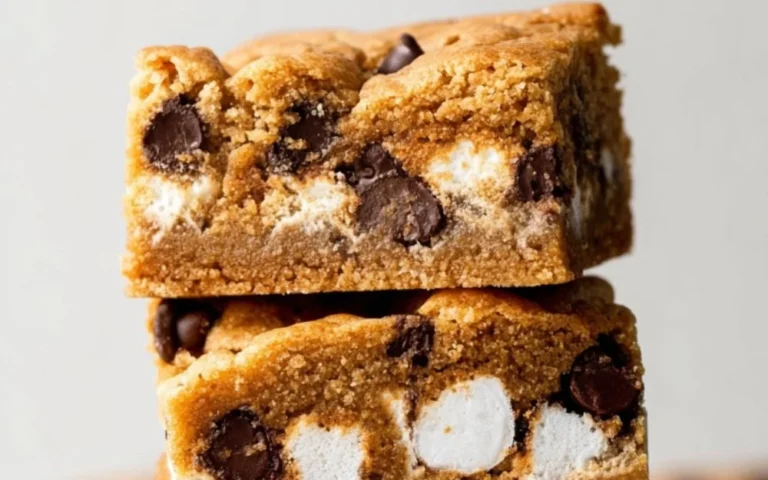
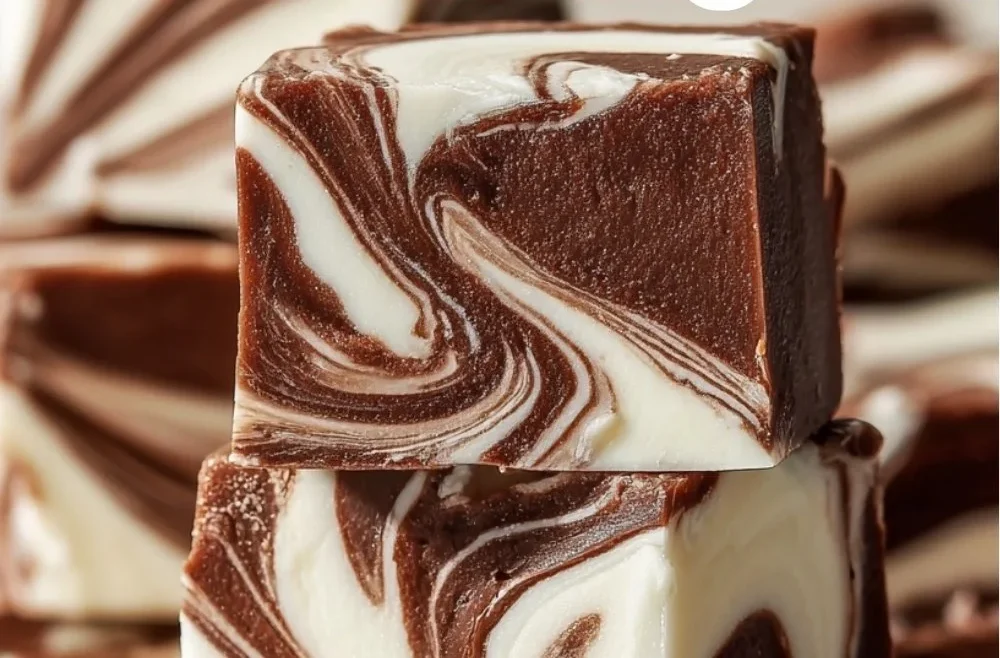
When vanilla slips into the warm mixture, the scent lifts — floral, deep, an old-fashioned perfume that turns a kitchen into a memory. Folding in the mini marshmallows is the final act of intimacy: they do not dissolve completely but create soft interruptions within the glossy chocolate, like clouds cut out against a cocoa sky. The set, at room temperature, is part of the ritual. Waiting for the fudge to firm is a lesson in patience and anticipation; it is how restraint sweetens desire.
In traditional households, these techniques are taught by watching rather than by reading — by the way a grandmother watches the chocolate for a sheen, or how a neighbor teaches the art of gentle folding so the marshmallows remain distinct. These are not technical maneuvers so much as cultural choreography.
How different regions prepare their version
Across continents, the Marshmallow Swirl Fudge adapts without losing its silhouette. In the American Midwest, you might find it in cookie swaps and church bazaars, where the marshmallow swirl is often punctuated with a scattering of chopped pecans and the squares are cut into generous, unassuming pieces. The Deep South will invite bourbon to the periphery or insist on pecan abundance. In parts of Eastern Europe, families may prefer walnuts and a fiercer dark chocolate, giving the squares a more bittersweet personality suited to stronger teas and black coffee.
In Southeast Asia, where sweetened condensed milk is a long-favored ingredient, the fudge blends seamlessly into the pantheon of sugary treats but is sometimes served with tropical notes — a dusting of toasted coconut or slices of dried mango in neighboring plates. In cosmopolitan cafés from Sofia to Seoul, you’ll find artisanal takes that glaze the top with sea salt or fold in a swirl of fruit jam; these versions are less about nostalgia and more about conversation between textures and flavors.
None of these versions betray the original simplicity; each region’s interpretation is a commentary on local ingredients and hospitality rituals.
Traditional ways this dish is shared or served
Marshmallow Swirl Fudge travels best when cut small and presented with care. It has been a fixture on holiday trays and charity tables, offered beside spiced cookies and nut brittles. In schools and scout meetings, children sell it by the bagful at fundraisers — currency for extracurricular dreams. At family reunions it appears on tiered plates: the fudge square is an emissary, meant to be unwrapped, broken, and passed along.
Serving it is an intimate practice. In some homes, fudge-squares are placed on doilies and handed with a napkin as a ritual of welcome. In others, a communal tin on the kitchen counter signals permission to indulge, and the act of reaching for a square becomes a small social bond. In festivals, fudge is portioned in neat rows, each piece a nod to order and shared sweetness.
Storing the dish without losing its cultural essence
Storage is practical but also ritualistic. A tin box or a jar with a ribbon can turn leftover fudge into a gift — a way of preserving both treat and tenderness. Traditionally, this fudge keeps well at room temperature for short periods; refrigeration is acceptable but transforms the glide of the bite into something firmer. In climates where humidity is high, thoughtful wrapping — wax paper, parchment, or tight lids — protects texture and memory alike.
How a family stores its sweets tells you about the rhythms of its life: a house that keeps confections in a cool pantry invites slow savoring; one that packs them into boxes for travel indicates a culture of giving. In Sofia, people know that preventing condensation is key; they will let the fudge come to room temperature before packing it away to avoid the betrayal of sogginess.
Cultural questions people often ask
People ask, “Is this authentic?” The honest answer is that authenticity is a moving shore — recipes gain salt and sun as they travel. The Marshmallow Swirl Fudge is authentic as a vessel of memory and adaptation. Another common question: “Can it be healthy?” It can be made more modest in portion and shared in small squares, because its cultural function often lies in generosity rather than in quantity. Folks also wonder, “Why marshmallows?” — and the answer is simple: they introduce lightness and nostalgia, a textural reminder of campfires and childhood confections.
Many ask about substitutions, but when viewed through a cultural lens, substitutions are less about efficiency and more about dialogue with local ingredients. Swap nuts for local tree offerings, or let vanilla echo a local floral note. Each change tells a story, and the curiosity is part of the dish’s living tradition.
A closing note on food, memory & travel
I have eaten this fudge on late trains and early mornings, in a kitchen with a cracked tile floor and in a boutique hotel where a pastry chef offered it as an ode to comfort. In each place, the fudge was a small compass — showing me what people valued in the sweet moments they chose to share. Travel teaches that food is never just about sustenance; it is about the conversation between a place and the person who brings that place to the table.
A single recipe like Marshmallow Swirl Fudge becomes a kind of map when folded into memory: it points to seasons, to hands that taught the recipe, to the lullabies hummed while waiting for the chocolate to cool. Carrying these flavors across borders is a generous act; each square shared is a moment of cultural exchange, a soft negotiation of how sweetness can bridge difference.
Conclusion
For those who want a visual guide or another voice on this familiar comfort, a contemporary take can be found at Irresistible Marshmallow Swirl Fudge – Steep & Stone, which offers a friendly presentation of the idea. If you are curious about classic variations and a slightly different name for the confection, the traditional recipe style is explored in the Chocolate Snowswirl Fudge Recipe. For an intimate blog perspective and step-by-step reflections, see Recipe: Chocolate Snowswirl Fudge | Cooking On the Side.
These links are companions on a sweet journey; take a square, fold it into your palm, and let the memory travel.
Marshmallow Swirl Fudge
Ingredients
Method
- Line an 8×8 inch baking dish with parchment paper.
- In a medium saucepan over low heat, combine chocolate chips and sweetened condensed milk. Stir until melted and smooth.
- Remove from heat and stir in vanilla extract.
- Fold in mini marshmallows and nuts, if using.
- Pour the mixture into the prepared dish and spread evenly.
- Allow to cool at room temperature for 1-2 hours, or until set.
- Cut into squares and enjoy!