Cookie Dough Protein Dip
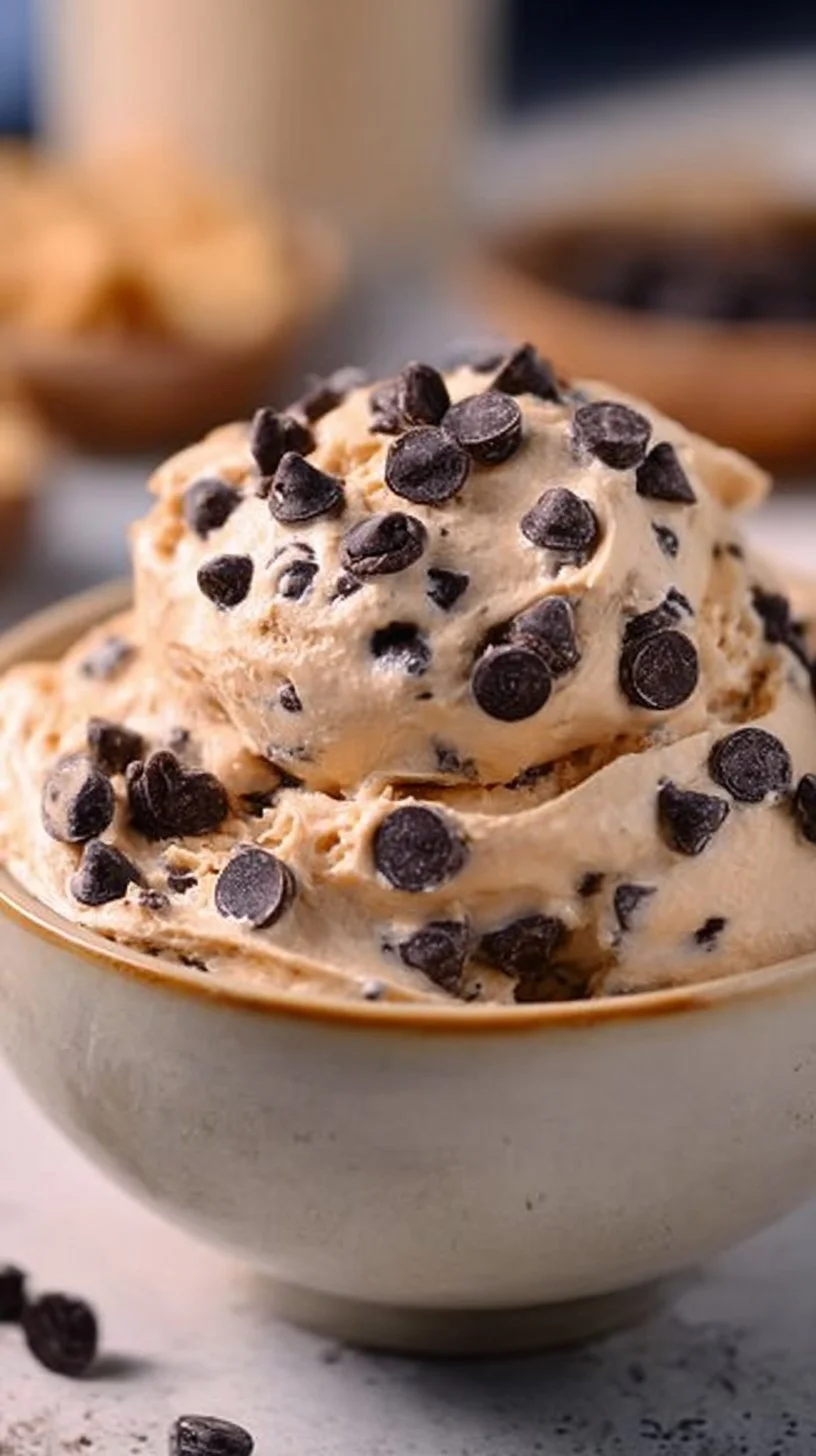
On a humid afternoon in a Lisbon courtyard or a brisk dawn at a Brooklyn farmer’s market, a small bowl of Cookie Dough Protein Dip feels like a quiet bridge between places and moments. It carries the sweet, reassuring memory of licking a wooden spoon after a batch of cookies, and the practical modernity of people who want pleasure that also fits into a busy life. If you have ever wandered from a busy street into a café because you caught the scent of vanilla or warm peanut butter, you know the magnetic pull of simple flavors reassembled into something new.
This dip belongs to that lineage of snacks that invite gathering: small plates to pass, spoons to share, laughter spilling as freely as the honey drizzled from a small jar. It is not luxurious in the way of elaborate desserts; rather, it is honest and intimate, a comfort folded into a protein-rich, yogurt-based form that travels well between cultures and seasons. For readers who love the nostalgic riff of baked goods and the convenience of dips, this recipe sits comfortably next to things like cake-mix cookie bars, offering a fresh take that is both modern and familiar.
The origin story & regional influence behind this dish
To speak of origins for something as contemporary as Cookie Dough Protein Dip is to trace the converging histories of a handful of ingredients and the cultural habits that shaped their use. Yogurt is ancient—its tang and cream have fed civilizations from the steppes of Central Asia to the Mediterranean. Peanut butter, a nineteenth-century New World invention, became an American pantry staple during the twentieth century, heralding a new era of convenience and protein-rich spreads. Chocolate chips, born out of a 1930s American innovation to preserve chocolate chunks in cookies, injected whimsy into refrigerators around the world.
In the late twentieth and early twenty-first centuries, two trends accelerated the birth of dishes like this dip. One was the wellness movement—people seeking higher-protein snacks after workouts or between errands without sacrificing flavor. The other was the revival of communal eating: dips and spreads that could be eaten with fruit, crackers, or simply a spoon. The Cookie Dough Protein Dip is a synthesis—a Greek-yogurt base from the Mediterranean, peanut butter as a New World comfort, honey or maple as indigenous sweeteners, and chocolate chips as a nostalgic wink. It is both borderless and very of-its-time.
How to make Cookie Dough Protein Dip
There is a small, almost ceremonial rhythm to making this dip: a spoonful of yogurt, a slab of peanut butter, the slow ribbon of honey, then the dotting of chocolate like stars. A bowl becomes a world in which texture and flavor find a perfect balance. You do not need complex tools—just a sense for the way ingredients fold together. The technique is one of gentleness: coaxing rather than forcing, tasting for balance, letting the aroma of vanilla unfurl.
If you prefer a visual or comparative moment to guide you, think of assembling mezze in a Mediterranean kitchen: components brought together on a single platter, each element preserving its identity while contributing to a collective harmony. This dip asks to be savored that way—shared, scooped, and spoken about.
Ingredients :
1 cup Greek yogurt, 2 tablespoons peanut butter or nut butter of choice, 2 tablespoons honey or maple syrup, 1/4 teaspoon vanilla extract, 1/4 cup chocolate chips or mini chocolate chips, A pinch of salt
Directions :
In a bowl, mix Greek yogurt, peanut butter, honey, and vanilla extract until smooth. Stir in chocolate chips and a pinch of salt. Serve immediately and enjoy as a dip with fruit or whole grain crackers.
Ingredients through a cultural & historical lens
Reading each ingredient like a map, you see centuries and continents layered into a single spoonful. Greek yogurt whispers of pastoral life—goats on terraced hillsides, family dairies where milk was cultured by time and touch. The peanut—immigrant to Europe from the Americas—became a protein beacon for industrialized societies, its spreadable form democratizing rich, nutty flavor. Honey is older than agriculture, a sweet that married itself to ritual and medicine in cultures from Egypt to Polynesia. Maple syrup carries the boreal forests and Indigenous techniques of North America, a seasonal labor transformed into sticky golden amber.
Vanilla and chocolate are stories of contact and exchange. Vanilla’s floral perfume has been shaped by colonial trade routes, and chocolate, once a ceremonial drink of Mesoamerica, has been remade into the familiar chips that punctuate our snacks. A pinch of salt, seemingly unremarkable, is a small act of alchemy—drawing out sweetness the way traders once used salt to preserve and flavor across distance. Together, these ingredients create a dip that tastes of modern mobility: ancient practices blended with contemporary needs.
For a sense of how sweet, portable snacks travel and transform, consider how different approaches to cookie-like treats appear in other recipes like Easter cake mix cookie bars, where festivity and practicality meet on holiday tables.
Cooking the dish: sensory notes & traditional techniques
The first spoonful is a study in contrasts: the cool creaminess of Greek yogurt tempered by the warm, dense embrace of peanut butter; chocolate chips that offer tiny, crisp interruptions; a honeyed thread that ties the flavors to something deeper and older. The aroma is soft—not the heady richness of a baked cookie, but a gentler, sweeter perfume that hints at vanilla pods and roasted nuts.
Traditional techniques here are less about heat and more about touch. The act of stirring is akin to the motions of small family kitchens everywhere—the same wrists that fold batter for a cake, that mix spices in a mortar, that knead dough for bread. Serving vessels matter: a small ceramic bowl passed between hands in a Spanish bar, a mason jar propped open at a picnic, or a tiny porcelain dish on a Japanese tea table. Each setting rewrites the experience.
This is a dip meant to be eaten immediately, but there is also something ritualistic in the pause before the first bite: the arranging of apple slices, the gentle clink of crackers, the way conversation settles into the lull that food creates.
How different regions prepare their version
Across regions, the Cookie Dough Protein Dip keeps its essence even as small swaps echo local habits. In the American Midwest, where peanut butter is king, recipes cling to the original profile, sometimes calling for crunchy peanut butter for textural contrast. In parts of northern Europe, where yogurt culture is strong but dairy is often richer, skyr or a thicker strained yogurt might stand in, lending an almost cheese-like creaminess. In places with strong nut traditions like North Africa or the Levant, tahini or almond butter might be used as an homage to sesame and almond pastes—transformations that nod to local palates without obscuring the dish’s identity.
In autumnal regions, people might add warming accents—cinnamon or maple syrup resonant with the season—which calls to mind other spiced treats like chewy maple cinnamon cookies. Elsewhere, chocolatiers’ preferences influence the chip: dark shards in a Bordeaux salon, milk chips in an American family kitchen, mini chips in a child’s lunchbox. The dip’s portability makes it a natural canvas for regional reinterpretation.
Traditional ways this dish is shared or served
Sharing this dip is a small cultural performance. In American potlucks, it arrives alongside crudités and hummus, a sweet counterpoint to savory platters. In Mediterranean homes, it might be placed on a long table of small plates where fingers move from one bowl to another, each helping themselves as conversation winds through stories. On a British picnic blanket, it complements cheese and oat biscuits; in Tokyo, it could sit beside fruit and green tea, the sweetness balancing the bitterness of the brew.
For many families, the dip becomes shorthand for comfort and togetherness: a quick after-school treat, a late-night spoonful eaten in the quiet of a kitchen lit only by fridge light, a contribution to a brunch spread. Seasonal rituals form around it—an easy addition to holiday breakfasts or a practical offering at housewarmings. In each case, the way it is shared—communally scooped or served in individual pots—reveals something about hospitality: a culture that values generosity will place a communal bowl at the center; a culture that values formality may pre-portion it with care.
If you are exploring festival tables and holiday dips, you might notice parallel traditions in recipes such as Easter dip, where sweetness and ritual intertwine.
Storing the dish without losing its cultural essence
Storage is a practical question that touches on respect for the food’s character. Keep the dip refrigerated in a covered bowl to preserve the yogurt’s tang and the peanut butter’s cream. If you must prepare ahead, allow the chips to be stirred in just before serving so they remain texturally alive. When transported, a small insulated bag keeps the mixture cool and the flavors intact.
There is a cultural dimension to storage as well. In climates where refrigeration is a recent addition, families historically made similarly perishable treats to be eaten quickly, in a single sitting—an ethic of immediacy now echoed in the instruction to “serve immediately” in the recipe. Modern refrigeration permits a slower pace, but the most resonant way to keep the dip’s spirit is to preserve its role as a connector: make it for sharing, not stashing.
Cultural questions people often ask
Is it safe? Because this dip avoids raw eggs and uses cultured yogurt, it sidesteps many concerns associated with raw cookie dough. People often ask if it is “healthy”—a loaded question that depends on context. It is protein-forward and can be part of a balanced snack, yet it is also a dessert-like pleasure; portion and company matter.
Others wonder if it’s “authentic.” Such a question misreads the dip’s nature. Authenticity here is not a relic of tradition but a living conversation—how present tastes, available ingredients, and memory fold into something new. People also ask about substitutions for allergies or dietary practice; the recipe’s allowance for nut butter alternatives acknowledges the global palette of nuts and seeds, offering inclusive paths without altering the core identity.
A closing note on food, memory & travel
Food is what lingers—the scent that opens a memory, the texture that anchors a story. Cookie Dough Protein Dip carries small volumes of history: pastoral dairies, the peanut’s voyage, the slow spread of vanilla, the joyful crackle of chocolate. It is a recipe meant to be made quickly and eaten slowly, to be passed around and to prompt conversation about where flavors come from and what they mean to us.
When I taste it in Naples, it feels different than when I taste it at a bus station in Marrakech. The setting shifts the meaning: in one place it is a quick comfort between errands; in another it is an indulgence that marks a day of travel. That fluidity is the gift of modern recipes—they are at once anchored and mobile, personal and public. Carry this dip across borders on a spoon, and you carry a small, portable memory.
Conclusion
For a contemporary riff on cookie-dough nostalgia that fits into hectic lives and diverse tables, see how similar ideas are explored in the piece on Cookie Dough Dip – Kale Kouture, which celebrates the playful side of sweet dips. If you are interested in protein-rich, peanut-butter-forward variations, there is also a thoughtful guide in High-Protein Peanut Butter Cookie Dough Dip – Laura Ligos Nutrition that examines nutritional tweaks and serving ideas.
Cookie Dough Protein Dip
Ingredients
Method
- In a bowl, mix Greek yogurt, peanut butter, honey, and vanilla extract until smooth.
- Stir in the chocolate chips and a pinch of salt.
- Serve immediately and enjoy as a dip with fruit or whole grain crackers.