Avocado Toast with Poached Egg
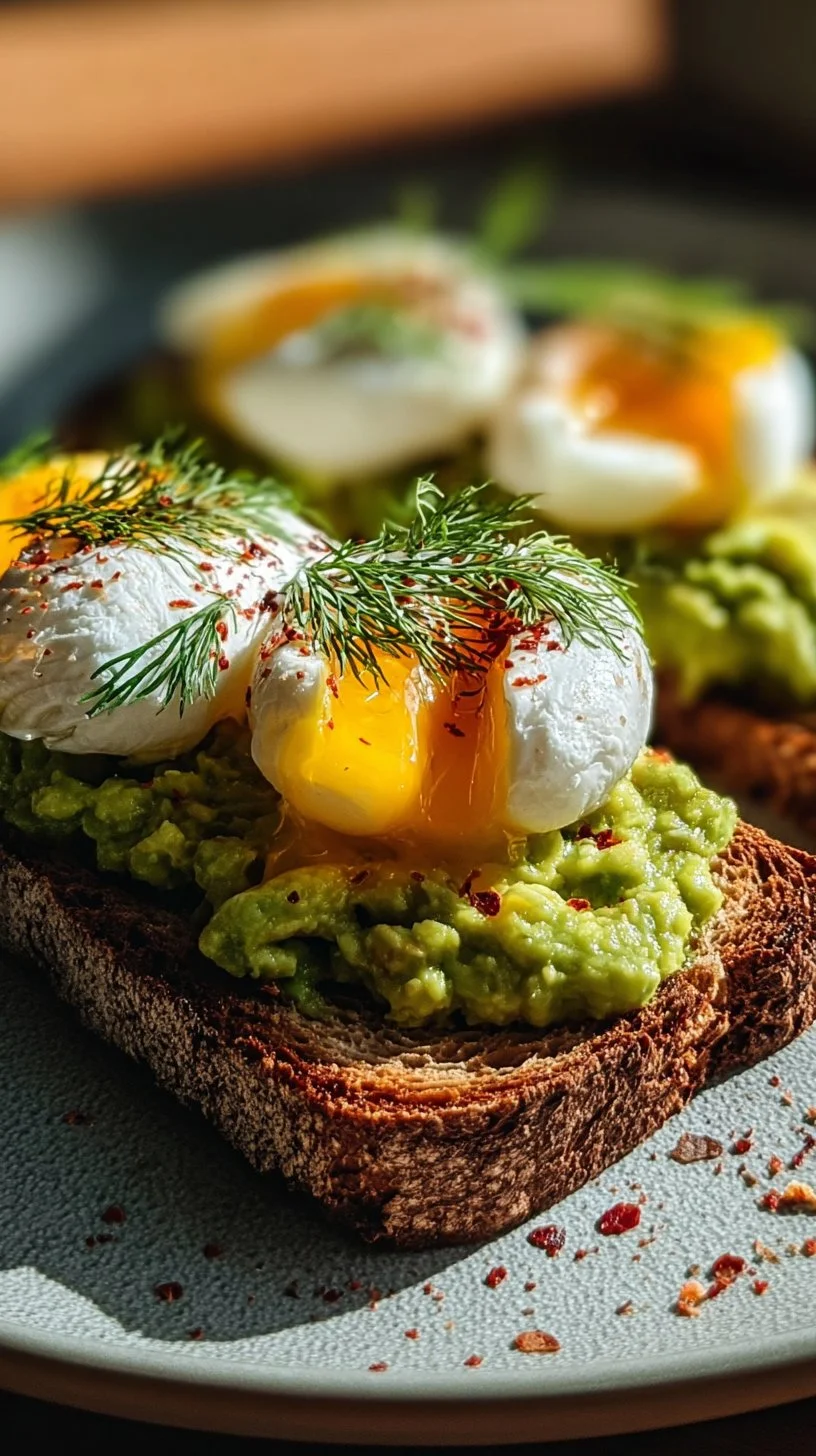
There are dishes that arrive quietly at a table and become the language of a morning. Avocado Toast with Poached Egg is one such phrase — simple, unpretentious, and at once a map of place, habit, and small domestic ceremony. I first met it on a narrow balcony in Lisbon, where the Atlantic light turned the avocado’s flesh into a green like sea glass; another time, it was the thick, buttery bread under a jacaranda tree in Buenos Aires. Each encounter left the same comforting impression: a warm, crisp bread haloed by creamy green, a soft golden yolk that tears like a silk ribbon. These are the textures and moments that turn a recipe into a memory. For those who like sweet endings to their savory mornings, I remember telling a friend about this dish while sharing ideas for brunch and desserts, much like the little decadences in recipes such as mini Easter cheesecakes with chocolate eggs, which are small celebrations in their own right.
The origin story & regional influence behind this dish
Avocado Toast feels modern, even avant-garde, but its roots are braided through regions and histories. Avocados are native to Central and South America; they were cultivated by the Aztecs and revered for their richness long before European palates encountered them. The concept of bread topped with something spreadable is older than any of us imagine — from Egyptian flatbreads to Mediterranean bruschetta — and yet, the particular union of ripe avocado and toasted bread is a late-century, urban phenomenon that reveals as much about migration and trade as it does about taste.
In California, this combination took on an ethos: the sunlit, citrus-harvested vibes of the West Coast, where healthful living and aesthetic plating became the language of cafes and kitchens. In Melbourne, the dish became a gallery of micro-herbs and unexpected spices; cafes there ritualized it into a midday social currency. In Mexico, where avocado has a deep cultural lineage, the pairing with bread can be a practical household comfort rather than a culinary proclamation, flavored with lime and chili and bound to family breakfasts. If you trace the routes of people and fruit, you find that this dish sits at a crossroad — indigenous fruit, colonial bread, and modern global ideas of what breakfast should feel and taste like.
How to make Avocado Toast with Poached Egg
The beauty of Avocado Toast with Poached Egg is that it asks little and returns much. It is a recipe that carries the ease of domestic life and the kind of careful attention that makes ordinary mornings ceremonious. The act of toasting bread until it sings with crunch, of coaxing a silky poached egg so its yolk becomes an improvisational sauce, is less about technique and more about presence.
In ports and city kitchens, the dish is often made quickly for one person, lovingly for two, or as the quiet center of a family table. A cafe in a coastal town might add a drizzle of local olive oil and a pinch of sea salt harvested from nearby flats; a street vendor in a bustling market might serve the avocado simply mashed and spiced, wrapped in bread like a small, palm-held peace offering. The instructions below preserve the essential steps that make this dish both approachable and luminous.
Ingredients :
2 slices whole grain or sourdough bread, 1 ripe avocado, 2 large eggs, 1 tablespoon lemon juice, Salt, to taste, Pepper, to taste, 0.5 teaspoon red chili flakes (optional), Fresh dill or cilantro, for garnish, Olive oil, for drizzling
Directions :
Toast the bread until golden brown and crispy. You can use a toaster or a pan., In a bowl, scoop out the flesh of the ripe avocado. Add lemon juice, salt, and pepper. Mash the avocado with a fork until you achieve a creamy consistency., In a pot, bring water to a gentle simmer. Optionally, add a splash of vinegar to help the egg whites hold their shape. Create a gentle swirl in the water and carefully slip one egg into the center. Poach the egg for 3-4 minutes until the white is firm and the yolk is runny. Repeat with the second egg., Spread a generous amount of the mashed avocado on each slice of toasted bread., Carefully place a poached egg on each slice of avocado toast., Season the eggs with red chili flakes if desired, drizzle with olive oil, and garnish with fresh dill or cilantro. Adjust seasoning with additional salt and pepper to taste.
Ingredients through a cultural & historical lens
Look closely at the ingredient list and you can read a story of climate, commerce, and culture. Sourdough or whole grain bread evokes regions with a tradition of slow fermentation and community ovens; sourdough carries the whisper of millstone and early morning bakers. The avocado is a tropical denizen whose cultivation maps colonial trade routes and modern agribusiness — the fruit’s availability in far-flung markets is a recent miracle of cold-chain logistics. Lemon juice is the citrus note that moves across cuisines, cutting through fat and bringing brightness; its presence is evidence of Mediterranean and New World affinities.
The poached egg is itself an emblem of domestic ritual. In some traditions, eggs are a symbol of renewal and family — think of breakfast tables where eggs are staple, ritualized through generations. The addition of red chili flakes or fresh herbs is where personal and regional tastes assert themselves: a sprinkle of chili is a nod to bold, spicy palates; dill or cilantro ties the dish to Northern European or Latin American kitchens respectively. Olive oil, drizzled like a last blessing, connects the dish to places where that oil is liquid gold, while a simple grind of pepper speaks the universal language of seasoning.
Cooking the dish: sensory notes & traditional techniques
To cook this dish in a way that honors tradition is to pay attention to small sensory cues. The bread should smell faintly toasty, a warmth that carries the memory of grain and oven. The mashed avocado should be cool and fragrant, with lemon’s high note cutting through its buttery weight. When the egg is gently cooked in simmering water, it produces a pale, tender white that holds a liquid sun within; when cut, that yolk spills like a warm river across the green.
In many kitchens, poaching eggs is less a precise science and more a weather report: water that simmers too furiously bruises the egg white; a too-gentle bath refuses to shape it. Some cooks add vinegar because their mothers did, a small inherited trick that anchors the egg while honoring a lineage of practice. Olive oil is often drizzled at the end — not to show mastery, but to remind the palate that food can be finished with a gesture as simple as a kiss. All these actions are sensory: the sound of bread entering hot pan, the hiss and crisp, the sight of translucent egg white wending to opaque, the smell of citrus and oil commingling.
How different regions prepare their version
What I love about this dish is its adaptability. In Mexico City, you might find it served with vivid chile de árbol, crumbled cotija, or a smear of refried beans beneath the avocado. In Tel Aviv, sesame seeds and za’atar might be sprinkled on top; in Tokyo, a thin strip of nori could be the unexpected bracing note. In Melbourne, the dish is an invitation to microgreens and a fuss of pickled radish, while in Lisbon a drizzle of local olive oil and a squeeze of lemon nod to the Atlantic.
Regional variations are less about altering the recipe and more about layering local identity onto it. A café in Rome might grate pecorino for a salty, savory finish; a New York deli could add capers and smoked salmon as a nod to its smoked-fish heritage. These local inflections are the culinary equivalent of dialect — the same sentence spoken at cafes around the world, each time with an accent. For inventive pairings, I often think of savory dishes that accompany brunch culture, or a contrasting richness like the garlic-butter steak that some tables pair with indulgent breakfasts garlic butter steak with parmesan cream sauce on days when breakfast becomes a feast.
Traditional ways this dish is shared or served
Avocado Toast with Poached Egg is intimate food. It is a solo act — a single plate with the morning sun — but it is also communal. At family tables, it is often prepared on a weekend and portioned out with generous hands; at cafés, it arrives plated as a social signal: we linger, we talk, we take pictures. In some households, the act of poaching an egg is a shared ritual, a parent teaching a child how to sense the water’s temperature and the feel of a soft yolk. In others, the dish becomes part of celebratory brunches, presented alongside pastries, coffee, and conversation that stretches like the light of a lazy Sunday.
There are also ceremonial instances: in coastal towns where fishermen return with the morning catch, this toast might be served alongside smoked fish; in agricultural communities, it might be a simple farmers’ fare, made from bread baked that day and avocados pulled from a backyard tree. The way it is shared says more about the people than the recipe itself. It signals ease, care, and a willingness to make the everyday feel like an occasion.
Storing the dish without losing its cultural essence
Storing Avocado Toast with Poached Egg is less about preservation and more about remembering that some dishes resist being saved. Avocado oxidizes and turns brown when left exposed; the magic of a poached egg lies in its immediate, molten yolk. If you must store components, keep them separate: mashed avocado sealed with plastic wrap pressed directly onto its surface will slow browning, and toasted bread can be cooled and kept in an airtight container to preserve crispness. Poached eggs can be held briefly in warm water, but they are always happiest when consumed soon after they are made.
Culturally, the advice to eat it fresh is also a small prescription for presence: the dish asks that we be there for it. In many cultures, the pleasure of this toast is tied to the now — to a morning shared at the table, to the sound of coffee, to conversation that smells like cinnamon and citrus. That fleetingness is part of its charm and is worth protecting even in modern routines.
Cultural questions people often ask
People often ask where avocado toast “comes from,” as if foods have a single birthplace. The honest answer is that it emerged from many places at once, a convergence of ingredients and social desire. Others wonder whether it is “healthy,” and the answer lives in complexity: the dish is a balance of fats, proteins, and grains, and its cultural role often shapes its nutritional story. A question I hear frequently is about substitutions — but substitutions are often not about scarcity but identity. In some kitchens, a squeeze of lime is not a substitution but a declaration of place; in others, chili is a familial insistence.
Another common cultural question is whether this is a brunch fad or a lasting culinary touchstone. From a global perspective, the persistence of this toast across cities and kitchens suggests it has settled into the culinary vocabulary rather than passing like a trend. It adapts because it listens — to seasons, to local produce, and to the human need for a meal that is both simple and ceremonious. If you’re curious about playful, festive food moments that are as much about gathering as taste, you might enjoy thinking about recipes for treats like Oreo cookie egg balls or the playful shell of a coconut dome with chocolate spread placed beside a savory plate. These contrasts show how food shapes mood and memory.
A closing note on food, memory & travel
Food is a language of belonging. Avocado Toast with Poached Egg speaks softly but widely: it tells of avocado groves and neighborhood bakeries, of morning rituals and the quiet artistry of simple hands. When I travel, I collect these small domestic scenes — the café in which a barista folds the paper just so, the balcony where a plate is set down with the day’s light, the market vendor who offers a sample of fruit as though offering a story. These are the things that stick. They are not landmarks on a map but landmarks of feeling.
When you prepare this dish, think of the places it inhabits: not just a recipe, but a moment of generosity, a small bridge between cultures that says, “Sit. Eat. Stay awhile.” The poached egg’s golden heart and the avocado’s soft green call us to slow down, to savor, and to remember that the best travel is not only measured in miles but in breakfasts shared and the quiet rituals that become our own. If you enjoy imagining savory delights beside playful confections, you might be tempted by festive treats such as rice krispies egg treats, which show how food anchors celebration in texture and color.
Conclusion
For those who want to try a reliable, kindly guide to the technique and inspiration of this dish, there are lovely online resources that balance instruction with story, including a straightforward demonstration of the classic pairing on a simple poached egg and avocado toast recipe. If you’re looking for an elevated take with extra flavor play, an inventive riff can be found in an upgraded avocado toast with poached eggs that explores texture and seasoning. And for those who like a salty, savory contrast like bacon alongside their egg, a comforting rendition is offered in a recipe for avocado toast with bacon and poached egg. Each of these pages carries its own voice, much like the many kitchens that make this humble dish a morning ritual the world over.
Avocado Toast with Poached Egg
Ingredients
Method
- Toast the bread until golden brown and crispy. You can use a toaster or a pan.
- In a bowl, scoop out the flesh of the ripe avocado. Add lemon juice, salt, and pepper. Mash the avocado with a fork until you achieve a creamy consistency.
- In a pot, bring water to a gentle simmer. Optionally, add a splash of vinegar to help the egg whites hold their shape.
- Create a gentle swirl in the water and carefully slip one egg into the center. Poach the egg for 3-4 minutes until the white is firm and the yolk is runny. Repeat with the second egg.
- Spread a generous amount of the mashed avocado on each slice of toasted bread.
- Carefully place a poached egg on each slice of avocado toast.
- Season the eggs with red chili flakes if desired, drizzle with olive oil, and garnish with fresh dill or cilantro. Adjust seasoning with additional salt and pepper to taste.