Cinnamon Roll Protein Crepes
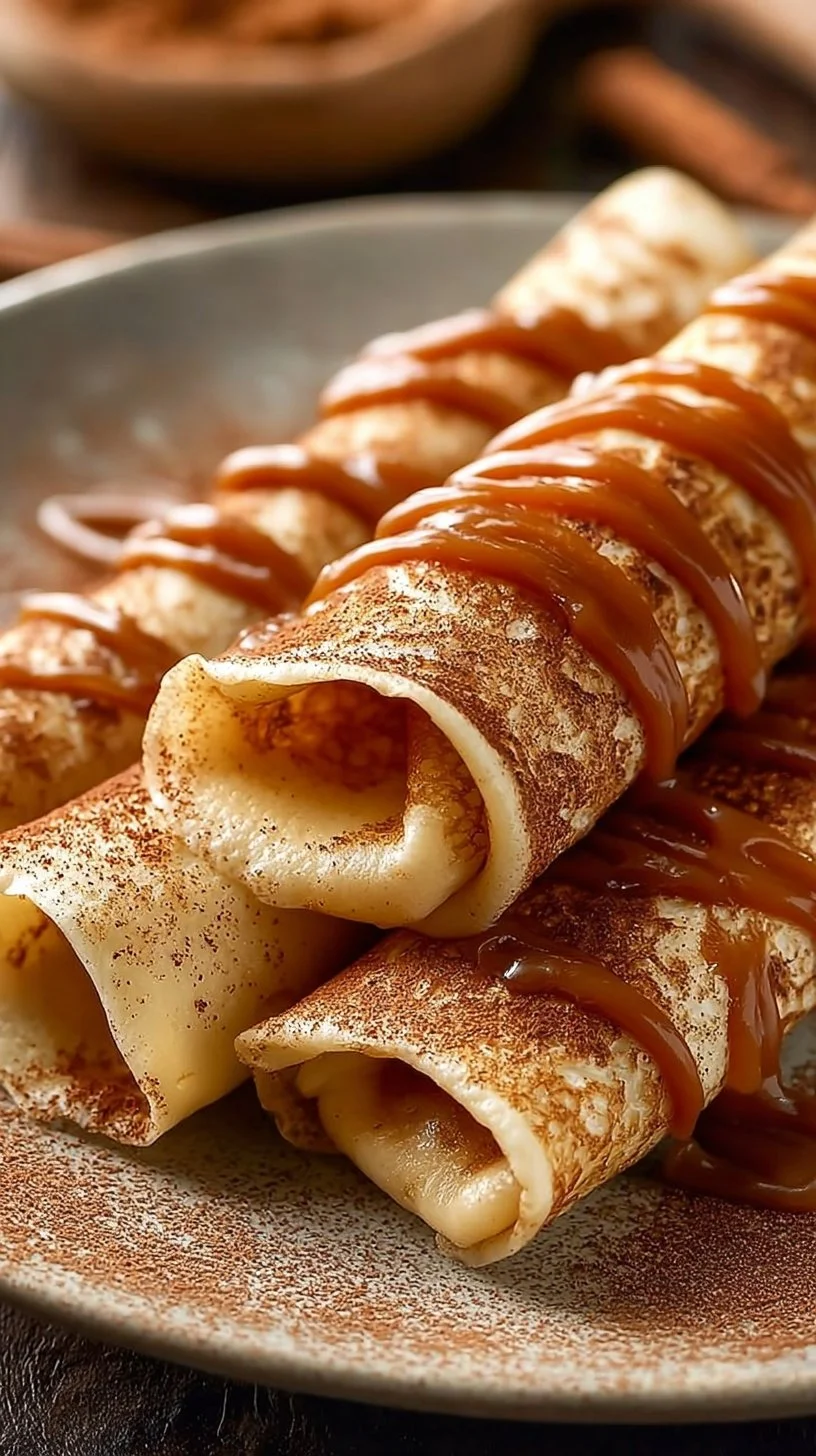
There is a particular kind of comfort that arrives when warmth and spice meet a thin, delicate fold of batter — a hush of cinnamon rising in a quiet kitchen, the hush broken only by the gentle sizzle of butter. Cinnamon Roll Protein Crepes are not merely a quick breakfast or a protein-forward twist on a pastry; they are an invitation to a morning that remembers itself. Traveling through continents, I have found these crepes sitting at the crossroads of Scandinavian simplicity and French finesse, yet they arrive each time with a homely, almost hymn-like insistence: eat slowly, remember something you loved.
On a damp morning in Stockholm I watched a grandmother assemble something like this — the batter was thinner, the swirl of cinnamon more confessional than decorative — and she spoke of rituals that had nothing to do with nutrition labels and everything to do with ritual. Later, in a bright, sunlit flat in Lisbon, a young couple folded their crepes around yogurt and berries, laughing over the same cinnamon that had warmed the northern air in my memory. Culinary journeys like these are threaded through recipes, and if you are curious about variations on the theme, you might enjoy the gentle, nostalgic twist offered in a nearby recipe for cinnamon roll bliss bars that treats cinnamon as an edible memory.
The origin story & regional influence behind this dish
Cinnamon as a spice carries the weight of centuries: it sailed the spice routes, adorned royal tables, and found tender homes in the hands of bakers from Lisbon to Lahore. The crepe itself, so French in name, is the product of a peasant ingenuity that prized thinness and versatility. When these two traditions meet — the airy, almost theatrical technique of crepes with the warm, homey spiral of cinnamon rolls — something gentle and cosmopolitan is born.
In Scandinavia, cinnamon rolls (kanelbullar) are a ritual with a national holiday around their aroma in many households. In France, the thinness of a crepe suggests economy and elegance at once. Bringing them together, as the Cinnamon Roll Protein Crepes do, is less about invention than about translation: translating the solace of a cinnamon roll into the pared-down grace of a crepe. In the American kitchen, where convenience weds health trends, the protein crepe becomes a bridge between indulgence and daily sustenance. For those who love layered textures, there’s a sibling dessert that plays similarly with cinnamon and roll technique, such as the original cinnamon roll bliss bars that reimagine sweetness in slab form.
How to make Cinnamon Roll Protein Crepes
Making these crepes is an act of quiet devotion rather than a display of culinary fireworks. The routine of measuring, whisking, and pouring becomes a meditation on texture, aroma, and patience. Below are the exact ingredients and directions for how these crepes come together — unchanged, and offered as a faithful script to guide your hands.
Ingredients :
1 cup all-purpose flour, 2 eggs, 1 cup milk (or a milk alternative), 1 tsp vanilla extract, 1 tbsp cinnamon, 2 tbsp sugar (or sweetener of choice), 1/4 tsp salt, Butter or oil for cooking
Directions :
- In a bowl, mix the flour, eggs, milk, vanilla extract, cinnamon, sugar, and salt until smooth., 2. Heat a non-stick skillet over medium heat and grease with butter or oil., 3. Pour a ladle of batter into the skillet and swirl to coat the bottom thinly., 4. Cook for about 1-2 minutes until the edges lift and the bottom is golden., 5. Flip and cook for an additional minute on the other side., 6. Repeat with the remaining batter., 7. Serve warm, topped with your favorite toppings such as yogurt, fruit, or a drizzle of maple syrup.
Ingredients through a cultural & historical lens
When you read a list of ingredients, you are reading a condensed map of trade, climate, and choice. Flour and eggs speak of temperate fields and backyard hens; milk suggests dairy traditions, whether cow, oat, almond, or soy — each carrying a regional signature. Vanilla extract whispers of New World adaptations and colonial trade. Cinnamon is the most visibly worldly: once reserved for royalty, now affordable and ubiquitous, it remains a reminder of the paths sailors took and the tastes they exchanged.
The modest sugar in this recipe nods to a modern recalibration of sweetness. In many traditional homes, cinnamon and sugar together were a celebratory pairing reserved for weekends or festival mornings. Today, protein-oriented variations speak to contemporary values — wanting nourishment that supports an active life but still craves the familiar warmth of spice. If you follow the scent of cinnamon across recipes, you’ll stumble into family traditions that celebrate slow breakfasts and communal hands, such as the chewy comforts of maple-cinnamon cookies, which keep the spice in a different texture yet the same emotional landscape.
Cooking the dish: sensory notes & traditional techniques
Watch the batter as it settles into the skillet: a mirror of pale tan, flecked with cinnamon, spreading in a thin, even veil. The initial hiss is small but full of promise; the edges lift like a page turning when the underside is ready. The scent is immediate — that warm, woody, slightly sweet cinnamon that seems to make the air itself softer. Texture is all in the friction between thinness and tender chew: paper-thin crepe edges that crisp and a center that yields like a well-worn page.
Tradition here is tactile. In some French homes, the wrist flick used to spread batter in the pan is a taught secret; in others, a gentle swirl of the pan suffices. In Sweden, the cinnamon might be mixed into a butter-sugar paste and smeared as a ribbon; here, the spice is integrated into the batter, making every layer carry a uniform warmth. The butter or oil you choose alters the whisper of browning: butter gives a nutty, browned-milk note, while neutral oil permits the spice to float more freely. When served with yogurt and fruit, the tang and acid cut the spice like a sun through morning fog.
How different regions prepare their version
Across Europe, the crepe is a canvas. In Brittany, buckwheat crepes hold savory fillings; in Paris, paper-thin crêpes fold around lemon and sugar. Scandinavian kitchens favor cardamom or cinnamon-sugar blends in their baked goods, and when crepes borrow that bracket of spices, the resulting dish feels both familiar and small-town sacred. In North America, the crepe often shoulders a brunch weight: folded over ricotta and berries, or rolled with a layer of cinnamon-flavored protein filling for a health-conscious crowd.
In the Middle East and South Asia, thin pancake traditions bring their own spices and accompaniments — rose water, orange blossom, or a scattering of chopped pistachios. If one were to cross-pollinate more boldly, the Cinnamon Roll Protein Crepes might meet a drizzle of date syrup or a smear of tahini and find new fans among breakfast tables in Beirut or Karachi. The beauty of this dish is its adaptability: it can be austere and restorative or ornate and social, depending on the local palate and season.
Traditional ways this dish is shared or served
Food becomes memory in the act of sharing. In many northern European homes, a plate of cinnamon buns or a stack of spiced crepes sits at the center of a table where conversation meanders from weather to family gossip. Crepes are often passed around, folded and eaten with fingers rather than cut formally — a communal intimacy. In café culture, a single crepe might accompany a newspaper and a cup of coffee, a private ritual that nonetheless participates in a public rhythm.
At holiday tables, cinnamon signifies more than flavor: it signals hearth and history. Families pass down how to fold, what to fill, and who gets the first bite. For the traveler who finds these crepes in different corners of the world, the act of sharing becomes a translation of hospitality: a kind offer of something warm, gently spiced, and easy to fold into conversation.
Storing the dish without losing its cultural essence
Leftover crepes carry traces of their morning in their texture. Wrapped carefully, they keep their sense of occasion. Reheating on a low pan, with a dot of butter, restores some of the crispness at the edges and the warmth that cinnamon loves. In the age of refrigeration and meal prep, storing crepes in layers separated by parchment preserves their integrity, but the true care is in the reheating: a gentle, patient approach that honors their original mood.
Cultural essence is less about preserving a perfect crust and more about retaining the ritual. If you wrap crepes for a picnic, bring along your small jar of syrup or honey and a spoonful of fruit preserves, and turn the reheating into a shared act. In many households, the reheating method itself is part of the memory — the electric skillet at a cabin, a pan over a camping stove, or the oven warmed for a family breakfast.
Cultural questions people often ask
People often ask: Are these crepes authentic to any one country? The honest answer is that this dish is an immigrant of traditions — a hybrid that belongs to kitchens rather than borders. Others ask whether altering ingredients (for protein or diet) loses the soul of a recipe. I have learned that soul lives in ritual and memory more than in exact proportions; what matters is the intention behind the plate. Some wonder about pairing: should it be sweet or savory? The crepe’s gentle sweetness and cinnamon character invite both approaches — a dollop of yogurt and fruit resonates with Northern Europe, while a savory cheese might recall French street vendors.
A closing note on food, memory & travel
Travel teaches that recipes are living stories, edited by the hands that carry them, the markets that feed them, and the weather that seasons them. Cinnamon Roll Protein Crepes are a small, fragrant chapter in that ongoing manuscript: they speak of chilly mornings warmed by spice, of kitchens that make room for health and indulgence at once, and of the simple human ritual of breaking bread — or, in this case, folding crepes — together. If you make them at dawn in a rented apartment far from home, their scent will still have the power to anchor you; if you share them with strangers, they will become a memory you both carry forward.
Conclusion
For further inspiration and variations on Cinnamon Roll Protein Crepes, you might compare how others have adapted the idea in recipes such as this Cinnamon Roll Protein Crepes – MattsfitChef, explore an earlier high-protein take with regional adjustments at High Protein Cinnamon Roll Crepes (GF, low sugar, low carb), or see a creative chef’s twist in a notable iteration like Cinnamon Roll Crepes Recipe | Bobby Flay | Food Network. Each link offers a different conversation partner for your own kitchen experiments and memories.
Cinnamon Roll Protein Crepes
Ingredients
Method
- In a bowl, mix the flour, eggs, milk, vanilla extract, cinnamon, sugar, and salt until smooth.
- Heat a non-stick skillet over medium heat and grease with butter or oil.
- Pour a ladle of batter into the skillet and swirl to coat the bottom thinly.
- Cook for about 1-2 minutes until the edges lift and the bottom is golden.
- Flip and cook for an additional minute on the other side.
- Repeat with the remaining batter.
- Serve warm, topped with your favorite toppings such as yogurt, fruit, or a drizzle of maple syrup.