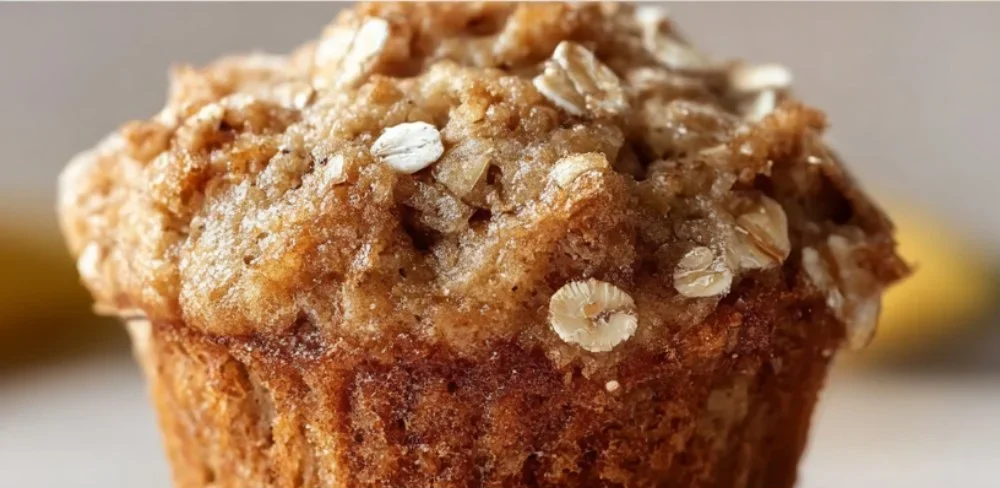
Banana Oatmeal Muffins
Introduction
There are cities that cradle a recipe like a familiar secret, and then there is the quiet intimacy of a kitchen where the smell of warm bananas and toasted oats announces the arrival of comfort. In my travels I have come to think of Banana Oatmeal Muffins as one of those small, portable stories — the kind of food that travels in pockets and suitcases, that rides on bicycles past seaside markets and sits on the windowsill of a highland apartment while rain writes patterns on the glass. In Sofia, I once watched a grandmother tuck a paper-wrapped muffin into the hand of a schoolboy as if passing along a talisman. He bit into it with the solemn joy of someone receiving a map to home.
The muffins are unpretentious: humble fruit, the coarse honesty of oats, and a sweetness that feels like an apology or a promise. Yet within that simplicity lies a geography of influence: colonial trade winds that ferried bananas from tropics to temperate ports, pastoral oats rooted in northern fields, and the modern hunger for quick, wholesome food on the move. When you bite into one, you taste an edible timeline — an orchard and an oatmeal bowl, a morning kitchen in Minneapolis, a pastry stall in a Spanish mercado, and a seaside café in Cape Town. For a traveler, they are also a way to orient oneself; their aroma signals warmth, welcome, and the possibility of a remembered afternoon.
As a writer who keeps a suitcase half-packed and a notebook full of tasting notes, I find these muffins the kind of recipe that lets you reconcile travel’s briskness with domestic care. They fold countries into a single mouthful, and in the hands of different cooks they become little cultural artifacts — sweet, nourishing, and resilient. This is why, when I describe them, I do so as less of a culinary instruction and more of an invitation to hold memory in your hands.
The origin story & regional influence behind this dish
Banana Oatmeal Muffins sit at a crossroads where New World produce meets Old World grain. Bananas, native to Southeast Asia and carried across oceans by traders and colonizers, found new soils in the Caribbean and Central America, where they became staple fruits and export goods. Oats, meanwhile, have long been associated with cooler climates — Scotland’s porridge culture and the hearty oats of Northern Europe lent a texture and a sensibility that travelers and migrants carried into new kitchens.
The muffin itself is an Anglo-American invention: a convenient, individually portioned adaptation of breads and quick cakes that flourished with the accessibility of baking powder and sugar in the 19th century. In the United States, muffins evolved into hybrids of cake and bread, often flavored by local produce. The union of banana and oats likely emerged from an era of thrift and ingenuity — overripe bananas, too sweet for the fruit bowl, were mashed and partnered with oats to make a bread that was filling, portable, and forgiving.
Regional influence appears in small but telling ways. In New England, where oats are part of the pastoral diet, one might find these muffins denser, brushed with butter and eaten with black coffee. In the American South, a hint of molasses or the addition of pecans nods to cornmeal kitchens. In Mediterranean markets, a streak of olive oil and the use of honey over refined sugar reflect local palates. In cities, where plant-based awareness is more prevalent, the recipe often migrates toward plant milks and coconut oil, becoming a modern vegetarian staple. Each version is, in its own way, a map of place.
How to make Banana Oatmeal Muffins
To make these muffins is to take part in a small ritual that translates abundance into sustenance. There is a domestic poetry to mashing bananas — the way, under the relentless press of a fork, a browned, spotted fruit becomes silk and sweetness. Mixing the oats is like raking a small field into order, and when the wet and dry meet, you feel the warm logic of alchemy: separate elements reconcile and a batter becomes a promise. The baking is quiet theater; as heat works its slow prophecy, edges brown, centers rise, and steam carries scent into the room like a messenger.
For those who travel with recipes in their minds, this dish is forgiving. It does not demand perfect technique, only honest ingredients and the patience to allow an oven to do its work. Fold chocolate or berries into the batter as you would choose a companion for a long walk — with care, and the knowledge that small additions change the story but do not erase the heart of it.
Ingredients :
2 ripe bananas, mashed, 1 cup oats, 1/4 cup maple syrup (optional), 1/2 teaspoon baking powder, 1/2 teaspoon baking soda, 1/4 teaspoon salt, 1/2 teaspoon cinnamon (optional), 1/2 cup milk (or plant-based milk), 1/4 cup vegetable oil or melted coconut oil, 1/2 cup chocolate chips or blueberries (optional)
Directions :
- Preheat your oven to 350°F (175°C) and line a muffin tin with liners., 2. In a large bowl, mix the mashed bananas and maple syrup., 3. Add in the oats, baking powder, baking soda, salt, and cinnamon. Mix until combined., 4. Stir in the milk and oil until just blended., 5. If using, fold in chocolate chips or blueberries., 6. Fill muffin liners about 2/3 full with the batter., 7. Bake for 15-20 minutes, or until a toothpick comes out clean., 8. Allow muffins to cool before serving.
Ingredients through a cultural & historical lens
Every ingredient in this list carries provenance and cultural baggage. Bananas were once luxury items in European markets, then became emblematic of plantation economies and global trade. Their presence signals both tropical abundance and complex histories of labor and commerce. Oats suggest northerly landscapes and the peasant kitchens of Scotland and Scandinavia; they are the edible echo of fields and winters, a grain designed for warmth and endurance.
Maple syrup, optional but evocative, brings a regional specificity — the resinous, woody sweetness of North American maple forests, where tapping trees is as much a cultural practice as a food production method. Salt is the universal equalizer: a mineral that has anchored economies and cuisines alike. Baking powder and baking soda speak of industrial modernization: the chemical means by which home cooks in the 19th and 20th centuries could summon rise and texture without long fermentation.
Milk — whether dairy or plant-based — is the fluid history of pastoralism, loaned from cow, almond, or oat, carrying with it the tastes of particular landscapes. Coconut oil nods to tropical churns and island kitchens, while chocolate chips bring the cacao legacy from Mesoamerica, now transformed into global confection. Together, these elements illustrate how a simple muffin is a mosaic of terroirs and histories.
Cooking the dish: sensory notes & traditional techniques
There are moments in cooking that are less about instruction and more about attention. When the batter is mixed, close your eyes and inhale: the banana’s green-sweet perfume should hum against the faintly nutty, dry aroma of oats. Cinnamon, if included, will suggest library dust and warm spices; maple syrup will add a delicate resin note that turns ordinary sweetness into something rounded and wood-scented.
Texture is where this recipe sings: the oats give a grainy resilience, a chew that reminds you of mornings outdoors, while the bananas soften the crumb into a tender, yielding center. If blueberries are folded in, they burst like small stories of summer; chocolate chips melt like secret indulgences. Baked properly, the exterior will have a thin, caramelized crust while the inside remains moist, almost dense — a plushness that commemorates the banana’s ripeness.
Traditional techniques around such muffins are not complex: they involve moderation and respect. Many grandmothers will tell you not to overmix — to stir until the ingredients are merely combined, an informal wisdom that honors a tender crumb. In some kitchens, the oats are given a brief soak in the milk to soften them and allow their flavors to bloom; in others, quick-bake oats are used for a heartier texture. These small habits are regional and familial signatures, the culinary equivalent of a regional accent.
How different regions prepare their version
Traveling with this muffin, you find subtle differences like linguistic variations. In Toronto, a bakery might swap chocolate for maple-glazed walnuts, a nod to Canadian staples. In coastal Portugal, a baker might fold in lemon zest and a dusting of coarse sugar, bridging tropical banana with Iberian citrus. In Mumbai, a version could include crushed cardamom and a drizzle of jaggery — the banana becomes a vehicle for local spice and sugar traditions.
Northern European adaptations emphasize oats: sometimes ground into a coarse flour to create a denser, porridge-like texture. In Australia, with its thriving plant-based movement, coconut oil and almond milk are common, and ripe bananas are celebrated alongside native wattleseed for an earthier note. In Caribbean kitchens, mashed banana may be paired with rum-soaked raisins or allspice, echoing plantation-era flavor combinations and festive contexts.
These regional variants reveal more than taste; they reveal networks of garden, market, and memory. A muffin carries within it an implicit conversation between a recipe’s origin and the palate of the place it inhabits.
Traditional ways this dish is shared or served
Throughout many cultures, a muffin is more than food — it is social glue. In schoolyards, it is an offering; in office kitchens, it is a peace-brokering snack; in alpine cabins, it is the reward for a winter walk. Banana Oatmeal Muffins are often wrapped in wax paper and handed out to neighbors, included in picnic baskets, or placed on a café counter beside a pot of strong tea.
In Eastern Europe, a similar quickbread might be offered with a dollop of sour cream or yogurt, transforming sweetness into a balanced morning course. In Latin America, a muffin handed to a child on the way to school is a portable reminder of parental care. At communal events and potlucks around the world, these muffins are prized because they travel well and suit varied diets; their humble ingredients make them egalitarian.
Sharing them often involves ritual: the cutting of a muffin in half for a friend, a plate placed at the edge of a table for the baker to taste, or the way they are arranged in a tin, steam mingling between lids and paper. These are acts of reciprocity, small kindnesses that stitch communities together.
Storing the dish without losing its cultural essence
Storage might seem prosaic, but it is itself a preservation of memory. Wrapped in cloth and stowed in a breadbox, muffins keep their warmth much like stories saved for retelling. If you refrigerate them, allow them to return to room temperature before serving; the chill dulls textures and flavors that are revived by a subtle warmth. If frozen, place them in airtight containers and thaw slowly — a muffled oven or a gentle steam restores much of the original tenderness.
Cultural essence is preserved less by technique and more by intention. Serving a defrosted muffin with the same ritual — a handwritten note, a cup of coffee from the same pot, the presence of the person who baked it — keeps the tradition alive. In many families the way muffins are stored and shared is itself a tradition: a communal container in a shared kitchen, a designated morning where the muffins are eaten together.
Cultural questions people often ask
People often wonder: Is this a healthy snack or an indulgence? The answer depends not just on ingredients but on context. In regions where oats have been a survival food, these muffins are sustenance; in places where they are an occasional treat, they are indulgence. Others ask whether the recipe is truly “traditional.” The truth is that many beloved recipes are hybrid inventions — the product of migration, necessity, and innovation.
Another common question is about substitutions: can one make them vegan, gluten-free, or sugar-free? Yes, but each substitution tells a story. A plant-based milk speaks of contemporary dietary ethics or local shortages of dairy; a gluten-free oat might indicate celiac considerations or a reinterpretation of grain traditions. People also ask about peak ripeness for bananas: the speckled, almost black-skinned banana is culturally valorized as the sweetest, the most indulgent, and often the one that triggers this recipe.
A closing note on food, memory & travel
Food is a way to remember places we have slept, people we have loved, and mornings we have lost to transit and found again. Banana Oatmeal Muffins are a kind of anchor: a small, edible proof that sweetness can be made portable, that grain and fruit can be reconciled, and that recipes travel like songs. When I tuck one into my bag before a long train ride, I am carrying not merely calories but a narrative — the memory of a kitchen I once stood in, the echo of a market, the kindness of a stranger who passed me a paper-wrapped treat.
In the end, recipe and travel are kin. Both require attention, a willingness to accept imperfections, and an openness to the unexpected. The humble muffin teaches patience: for the batter to rest, for the oven to work, for flavors to meld. And when you share one, you give more than food; you give a small piece of a journey, an edible postcard marked with warmth.
Conclusion
If you want further variations and inspirations, this plant-based take on Banana Oatmeal Muffins offers a minimalist approach that celebrates simplicity and ease: Banana Oatmeal Muffins – Naturallie Plant-Based. For a family-friendly, approachable rendition with practical tips, consider this homey guide: Easy Banana Oatmeal Muffins (SO Good). And for a classic, widely used recipe that illustrates the muffin’s enduring popularity, see: Banana Oat Muffins Recipe.
Banana Oatmeal Muffins
Ingredients
Method
- Preheat your oven to 350°F (175°C) and line a muffin tin with liners.
- In a large bowl, mix the mashed bananas and maple syrup.
- Add in the oats, baking powder, baking soda, salt, and cinnamon. Mix until combined.
- Stir in the milk and oil until just blended.
- If using, fold in chocolate chips or blueberries.
- Fill muffin liners about 2/3 full with the batter.
- Bake for 15-20 minutes, or until a toothpick comes out clean.
- Allow muffins to cool before serving.