Porridge Basic Recipe
Introduction
I learned to listen to porridge in a tiny guesthouse on the edge of a North Sea town — not because it declared itself with any flourish, but because it spoke in the soft language of steam and memory. In the predawn light, the kitchen hummed gently: a kettle calling, a wooden spoon tracing circles in a quietly bubbling pot. That simple, cream-thick bowl arrived like a calm weathered traveler; it was small, unassuming, and yet it held the warmth of a hundred mornings. As a traveler who follows food like a compass, porridge has often been the first true voice of a place for me — modest, honest, and shaped by the hands that stir it. In that way it becomes less a recipe and more a conversation: between land and climate, between grain and milk, between a household and the larger tide of history.
Porridge, in its most elemental form, is a comfort that sits somewhere between sustenance and ritual. Its steam carries the scent of home; its texture, whether sleek and velveteen or heartily grainy, tells a story of what a culture values in the morning. In the following pages I will wander through the origins, the regional inflections, and the human stories tied to the humble Porridge Basic Recipe. I will describe how it feels to watch oats swell in milk and water, to catch the first pale curl of steam, and to share a bowl with someone who remembers a version taught by a grandmother. The details here are simple — 50 g zarte Haferflocken, 100 ml Wasser, 100 ml Milch — yet within them lies a map of climate and tradition, of migration and modernity.
The origin story & regional influence behind this dish
Oats do not belong to one nation. They belong to climates where wheat struggles — the cool, damp places of Northern Europe, where barley and oats were safer bets against spring frosts. From the Scottish Highlands to the Germanic plains, oats became a staple that sustained working bodies and feeding mouths. In many regions, porridge was born of necessity: a way to turn a small store of grain into generous bowls that could travel with shepherds, fishermen, and voyageurs. Over centuries, porridge evolved from coarse, boiled groats to the soft “zarte Haferflocken” we now use — flakes flattened by millstones, then steel rollers, making a quicker, silkier porridge.
This simple recipe is shaped by continental rhythms. The measured balance of water and milk speaks to a compromise between scarcity and abundance. Water tempers the richness of milk when it was a guarded household treasure; milk returns richness and a scent of pasture. In each region the porridge took on the profile of the land: porridge made in peat-smoky kitchens of Scotland tasted of hearth and wind; in Alpine valleys, the milk lent a grassy sweetness; in northern German houses, it carried the quiet efficiency of a weekday breakfast, punctuated by generous toppings on a Sunday. Porridge is not a dish that claims territory; it absorbs the terroir of its makers.
How to make Porridge Basic Recipe
Describing how to make this porridge is less about technique than about attention. The recipe — three ingredients that converge into a soft, forgiving custard — invites a kind of slow listening. Bring the water, the milk, and the oats together; watch as the first bubbles appear, as the grains swallow liquid and plump. Lower the heat and let the pot breathe; the surface will go from glossy to velvet. The crucial act is the gentle, constant motion of the spoon: a human counterpoint to the passive heat, a way to coax the oats into cream and to keep the bottom from scorching. Serve it while steam still warms the air, and allow any topping to be placed like a small blessing.
This is not a stage for precision choreography. It is a quiet ritual: the pan that remembers last week’s soup, the stove that still hums of the morning’s tea, the spoon whose handle fits the knuckle like a familiar greeting. In homes where porridge is ancestral, the rhythm of stirring can be a way of telling a child a story without words.
Ingredients :
50 g zarte Haferflocken, 100 ml Wasser, 100 ml Milch
Directions :
Wasser, Milch und Haferflocken in einem Topf zum Kochen bringen. Danach die Hitze herunterschalten., Für ca. 5 Minuten leicht köcheln lassen, bis die das Porridge cremig wird und die gewünschte Konsistenz erreicht ist. Ständig umrühren, damit nichts anbrennt., Das Porridge mit den Toppings der Wahl servieren.
Ingredients through a cultural & historical lens
Those three measurements are a distilled geography. Oats are the hardiness of the north: once a weed in wheat fields, then a staple cereal. They carry the texture of fields and the slow labor of threshing and milling. The 50 g measure is modest — a single serving in a world where sharing and stretching were practical imperatives. Water is a universal equalizer; it marks the line between scarcity and abundance. Milk, in this trio, adds the social ingredient: pastures, livestock, and the labor of dairying families. Historically, milk had meanings: in rural Alpine homes it implied a morning curd and an availability dictated by the season; in urban settings, it hinted at supply chains and market access.
Beyond the practical, each ingredient is wrapped in cultural signifiers. Oats in Ireland might evoke a deep, peaty porridge eaten with a slice of butter; in a German kitchen “zarte Haferflocken” suggests a softer, more industrially processed flake that cooks quickly. Milk might be raw and unpasteurized in some rural corners and homogenized and long-life in others, and each change alters the aroma and mouthfeel of the finished bowl.
Cooking the dish: sensory notes & traditional techniques
When milk and water begin to boil together with oats, the first sense engaged is smell: a faintly sweet, cereal scent that can be grassy or nutty depending on the oats’ origin. The sound is close and private — small pops of steam, the slow sigh of a pot. As the porridge thickens, the aroma becomes richer, almost lactic, with a comforting roundness that invites slow inhalations. The texture is where porridge most tells its story: undercooked oats feel like small obstructions in the mouth; overcooked porridge glues to the pot and loses lightness. The ideal is somewhere in between — a cream that yields to the spoon but retains hints of individual flakes.
Traditional techniques vary. In some northern kitchens, a wooden spoon is preferred because it reminds the cook of previous mornings; stirring becomes a lineage. On hearths where embers regulate the heat, cooks learned to sense the simmer not by temperature but by the small, regular breathing of the pot. In other homes, the pot will briefly be lifted off the stove so residual heat finishes the thickening. These gestures are less about precision and more about a tactile conversation with the food.
How different regions prepare their version
Travel through the porridge world and you’ll find hospitable differences. In Scotland, porridge often uses coarser oats made for slow-cooking, seasoned simply with salt and sometimes a knob of butter; it is the food of both working fields and ceremonial breakfasts. English versions might be thinner, softened with milk and crowned with jam or brown sugar. In Germany and neighboring countries, the quick-cooking “zarte Haferflocken” makes a creamier bowl, often enhanced by fruit compotes or a scatter of seeds. Scandinavian porridge can be buttery and dense, sometimes sweetened with cardamom or topped with lingonberries, echoing the region’s love for tart counterpoints.
When porridge crossed oceans, it found new companions: in Eastern Europe, kasha made from buckwheat took a similar place; in Asia, congee — though rice-based — mirrors porridge’s role as morning balm. In Latin American kitchens, atole and arepas play parallel roles. Each region answers a common question differently: should porridge be a blank canvas or a chorus of flavors? The answer reveals much about local palates.
Traditional ways this dish is shared or served
Porridge often arrives as a communal act. In households, it’s ladled from a single pot into bowls, with the oldest or youngest first — an act that carries both respect and care. In coastal inns and farmhouses, porridge was the practical fare that could be replenished and portioned easily for workers heading into the fields. Ceremonially, there are gentle rituals: a spoonful offered to a newborn in some traditions, the larger pot placed at communal tables during harvest festivals, or porridge served at wakes and communal gatherings when warmth and sustenance were needed more than luxury.
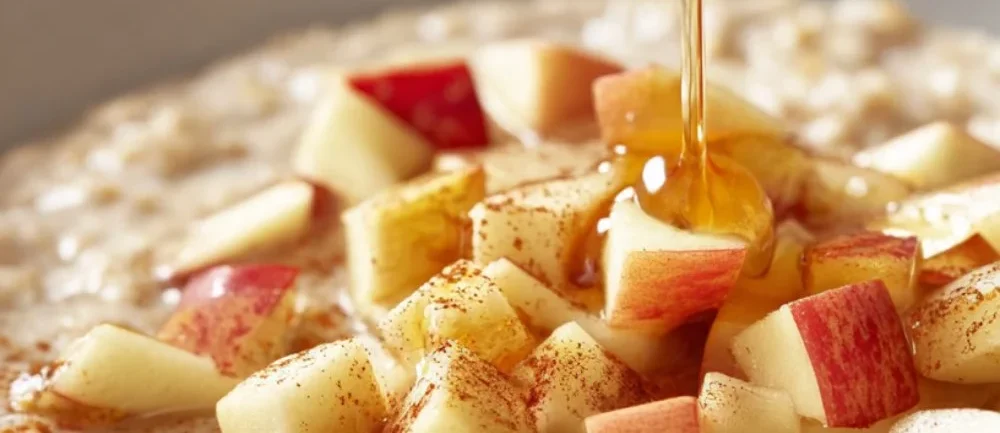
Toppings and accompaniments tell their own stories: a smear of butter might indicate a house with access to dairy; honey or preserves point to foraging or orchard years; seeds and nuts mark contacts with trade and changing diets. Each bowl is both private comfort and social document.
Storing the dish without losing its cultural essence
Porridge stubbornly resists time. Left overnight, its texture changes as the oats absorb every last drop — some cultures take to this with joy, setting porridge aside and reheating it into a denser, colder comfort. To store without losing essence, keep the pot covered in the coolest part of the house or, in modern kitchens, refrigerate in an airtight container. Reheating gently over low heat with a splash of milk or water restores silkiness. For those who treasure ritual, reheating is never mindless: a spoonful stirs memory as much as texture, and the addition of a fresh topping — a knob of butter, a spoon of fruit — can make the resurrected bowl sing again.
There is also a cultural rule: porridge is most honest when served warm. Cold porridge has its admirers (overnight oats are now globally fashionable), but in places where porridge is traditionally morning fare, the steam and slightly transformed aroma of a freshly cooked pot are part of the act of hospitality.
Cultural questions people often ask
People often wonder whether porridge is a peasant food or a gourmet one. The answer is both: it began as a pragmatic staple and now, in cafés and kitchens around the globe, porridge has been reimagined as a canvas for artisanal toppings. Another frequent question is whether porridge is healthy. Historically, porridge’s endurance owes much to its nutrition: oats provide slow-release energy and a kind of satiety that allowed laborers to work long days. Modern concerns — gluten sensitivity, plant-based diets — have reshaped porridge’s companions rather than its core: plant milks, seed toppings, and gluten-free oats answer contemporary needs while keeping the bowl’s essence.
There are also linguistic curiosities: the word “porridge” conjures different textures and expectations depending on the listener’s geography. Is porridge oatmeal? Is it gruel? These are not only culinary queries but cultural signposts, revealing what we expect from our breakfasts and how we narrate comfort.
A closing note on food, memory & travel
Every bowl of porridge I’ve shared on the road has been a small map pointing homeward: a spoonful has reunited me with mornings in rustic kitchens, with markets at dawn, and with faces that offered a bowl as an invitation to stay. Porridge is not dramatic. It does not demand attention with flambéed edges or exotic spices. Instead, it invites the patient noticing of small things: the sheen on a fresh spoon, the way milk swells the oats, the soft exhale of steam when a lid is lifted. Its power lies in continuity and adaptability. From a shepherd’s flask to a city café’s porcelain bowl, porridge holds a story of places where weather, labor, and kindness intersect.
If you travel with a sense of curiosity, porridge becomes a generous companion. It tells you about the fields behind a farmhouse, the milk route that used to run through a village, the hands that know how long to stir. In learning a basic recipe like this one, you are not merely following instructions; you are stepping into a lineage of mornings, where simplicity is a form of wisdom and where every topping is a small act of domestic poetry.
Conclusion
For a practical reference to classic approaches and to see variations rooted in regional traditions, you might consult the German basic porridge outline at Porridge Grundrezept. If you are curious about a gluten-free take and modern adaptations that preserve porridge’s heart, this guide is helpful: Basic Recipe for Gluten Free Porridge – Jenny is baking.
Porridge
Ingredients
Method
- Bring water, milk, and oats to a boil in a pot.
- Lower the heat and let it simmer gently for about 5 minutes, stirring constantly until the porridge becomes creamy and reaches the desired consistency.
- Serve the porridge warm with your choice of toppings.