Vegan Baked Oats with Raspberries
Introduction
I remember the first time a simple bowl of baked oats arrested me in a small apartment overlooking a quiet Lisbon lane. Steam lifted like a soft, familiar fog from a shallow dish studded with raspberries, and the smell — roasted oats, a faint whisper of banana, the tart, sunwarmed perfume of red fruit — transported me between cities and seasons. As a traveler who stitches a life of memory together through food, I have learned that recipes are waypoints. They are shorthand for place, for weathered hands in different kitchens, for mornings when people gather as the world is still soft.
This Vegan Baked Oats with Raspberries is such a waypoint. It is modest in its ingredients yet resonant in the way it holds flavors and histories: oats that recall the windswept fields of northern Europe, bananas that speak of warmer climes and long trade routes, and raspberries that come like a bright punctuation mark, an echo of hedgerows and market stalls. As you read, imagine a bright ceramic ramekin on a windowsill, light spilling over a city waking up, and the hush that follows when someone takes the first spoonful. This is not merely breakfast; it is a small ceremony — a moment that can be repeated in many places and yet never loses the mark of where it was first tasted.
The origin story & regional influence behind this dish
Baked oats sit at the intersection of pantry practicality and regional adaptation. The humble oat — Avena sativa — has been a staple across the cooler climates of Northern Europe, Scotland, and parts of Scandinavia for centuries. In these places, oats served as a daily sustaining grain, turned into porridge, oatcakes, or gruel. The transition from porridge to baked forms of oats is modern but inevitable: the same ingredients, reimagined through the lens of ovens, ramekins, and a global palate.
The vegan iteration with banana, cocoa, and almond milk is a product of cross-continental influence. Bananas are New World blessings transported by centuries of trade; almond milk recalls Mediterranean gardens where almonds once thickened sauces and sweetened simple drinks. Raspberries, with their sharp, aromatic quality, feel native to European hedgerows — bright, seasonal, and slightly wild. Together, they create a dish that maps a centuries-old movement of ingredients: fields to caravans, coasts to kitchens.
Culturally, such a dish sits easily in urban cafés in Berlin or Copenhagen, on a rustic farm table in Galicia, or in a sunlit apartment in Athens. It’s a reminder that regional foods grow out of necessity — what is available and what keeps — even as they are reinvented by modern sensibilities like veganism and the desire for quick, wholesome breakfasts.
How to make Vegan Baked Oats with Raspberries
There is a gentle ritual to preparing this baked oat dish that mirrors the slow rhythms of places where mornings are treasured. The ingredients are few and honest; the method favors ease over ceremony. Think less of strict technique and more of an intimate assembly: blending textures until they sing together, topping with fruit as if placing small jewels, and sliding the dish into a warm oven where transformation happens quietly.
The appliance of heat is, here, geographically neutral: ovens exist around the world, but the way an oven hums in a Parisian flat is the same soft promise it gives in a small Chilean kitchen. What changes is the atmosphere — the light, the conversation, the scent of coffee or sea air that mixes with the baked oats as they brown at the edges. This is cooking as a modest act of joy.
Ingredients :
1 Banane (reife), 70 g Haferflocken, 1 EL Backkakao, 1/2 TL Backpulver, 2-3 EL Ahornsirup, 150 ml Mandelmilch (ungesüßt), 45 g Himbeeren (frische)
Directions :
Alle Zutaten (außer die Himbeeren) in einen Mixer geben und mixen bis eine glatte Masse entsteht., Die Masse in eine kleine ofenfeste Form geben und das Ganze noch mit den Himbeeren toppen., Im vorgeheizten Backofen bei 180 Grad für ca. 20-25 Minuten backen., Anschließend die Baked Oats aus dem Ofen holen und kurz abkühlen lassen. Du kannst sie entweder so genießen wie sie sind oder mit geschmolzener Schokolade oder mit weiteren Zutaten toppen.
Ingredients through a cultural & historical lens
Every ingredient in this list carries a provenance that can be read like a map. Oats, once considered a coarse grain for northern climates, have moved from peasant table to health-conscious menu. They embody resilience — tolerant of poor soils and short seasons — and so they came to represent comfort and sustenance in lands where winters are long.
Banana, now ubiquitous, was once an exotic fruit brought to European consciousness through colonial trade routes. When paired with oats, it offers both sweetness and binding power in plant-based recipes, replacing eggs with its creamy texture. Cocoa — a single spoonful here — is a condensed history of tropical farms, colonial economies, and global demand, yet it also delivers warmth and a grounding bitterness that balances the raspberry’s acidity.
Almond milk, a quieter alternative to dairy, has roots in Mediterranean and Middle Eastern cuisines where nuts were used for both savory and sweet purposes. Ahornsirup (maple syrup) journeys from North American forests to global tables, carrying with it the scent of sap boiled down over open flames — a taste of forested springs.
Raspberries, small and bright, reflect seasonal, local harvesting traditions that many regions still honor. Farmers’ markets, foragers in hedgerows, and backyard gardeners all preserve the berry’s place as a summer jewel. Together, these items are a compact history lesson: local grain, tropical fruits and cocoa, and sweeteners that tell stories of forests and trade.
Cooking the dish: sensory notes & traditional techniques
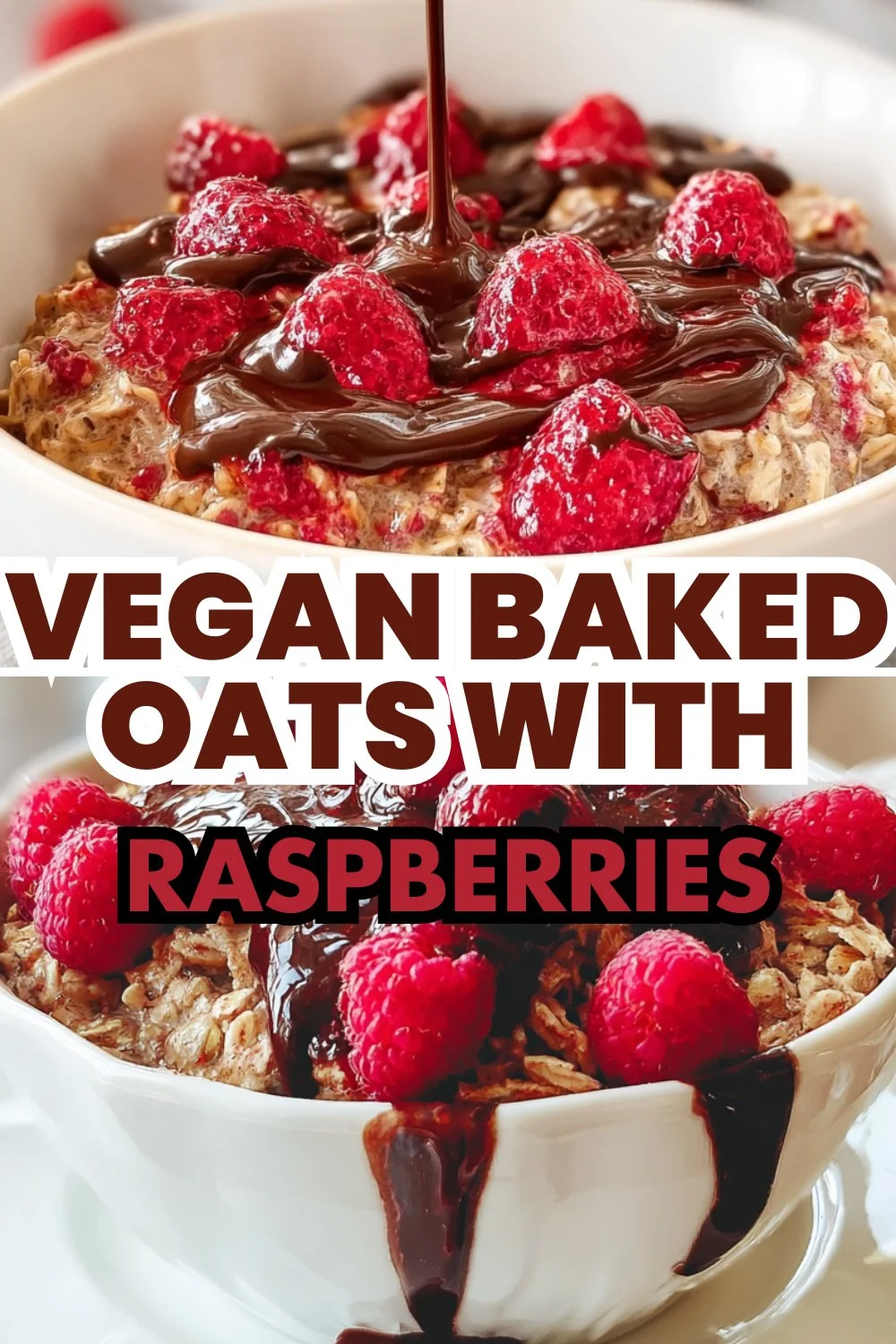
When the ingredients mingle in the blender, the sound is a gentle whir, like a distant rain. The texture becomes a glossy batter, the banana dissolving into silk and the oats softening into promise. Pouring that mixture into a ramekin releases a small sigh — a domestic prelude. Topping with raspberries is a deliberate act: they sink just so, their skins taut and their color saturated like small pieces of red glass.
As the dish bakes, the aroma shifts. There is the toasted smell of oats — warm, nutty — layered with cacao’s deeper, almost mineral whisper. The banana gives a soft, fruity sweetness that fills the room without overpowering. After about twenty minutes, a crust forms: the edges caramelize, the center sets, and the raspberries offer tiny eruptions of perfume as their juices mingle.
In many traditional cuisines, baking was reserved for communal ovens or special days; here, the simple act of placing something in heat reconnects the maker to that longer history. The tactile pleasure of spooning the warm oats from the dish, feeling the contrast between the slightly crisped rim and the tender middle, is universal.
How different regions prepare their version
Across Europe, you might find baked oats leaning toward the rustic: a heavier, more porridge-like texture with a topping of apples or plums instead of raspberries, sweetened with honey in places where beekeeping is common. In North America, the influence of maple syrup and a penchant for bold flavors might see a sprinkle of chopped nuts or a smear of nut butter. In the Mediterranean, slight twists may introduce citrus zest and almonds; in parts of Asia, the same formulation could be adapted with soy milk and a touch of sesame or matcha for a local echo.
Each regional version reveals local climate, available produce, and culinary temperament. Where berries are seasonal and treasured, this baked oat becomes a celebratory summer dish. Where spices are abundant, a pinch of cardamom or cinnamon might appear. Yet, regardless of these small shifts, the heart of the dish — oats transformed into something warm, spoonable, and sustaining — remains the same.
Traditional ways this dish is shared or served
This dish travels comfortably between solo solace and communal sharing. In quiet villages, it might be served steaming, placed on the kitchen table for family to scoop at with spoons, a quiet morning conversation unfolding. In city cafés, it arrives in a shallow bowl alongside a dark coffee, to be savored slowly between the start of errands. Seasons influence how it is presented: in summer, a scattering of fresh herbs or a few extra berries; in winter, a drizzle of warmed syrup and a scattering of toasted seeds as a nod to scarcity turned generous.
There is intimacy in sharing a baked oat dish. The spoon passed across a table, the shared delight at a crisped edge, the ways people riff on the toppings — these are small rituals that anchor days. In some households, the recipe is adapted and named after a grandparent or a beloved neighbor; in others, it is the quiet thing you make for yourself on a slow Sunday morning.
Storing the dish without losing its cultural essence
Leftovers of baked oats carry the same memory they had when fresh, but storage matters. Kept in a cool place, covered, the texture will become denser and the raspberries will seep their flavor through the baked oat body, turning it more jamlike in parts. To preserve the sense of ceremony, reheat gently: a few minutes in a warmed oven or a careful touch in a toaster oven revives the crust and releases aromas that bring the room back to life.
In many cultures, reheating is itself a ritual — a way to mark time and to connect the present meal with its making. Packaged for travel, this dish becomes breakfast on a train, a picnic by a river, or a small comfort in rented rooms far from home. Store it with a note of where it came from: an anchor for memory when you encounter its flavor again.
Cultural questions people often ask
People often ask whether this is “authentic” and to that I say: authenticity is a living thing. This recipe is authentic to a moment in culinary history when pantry staples meet global ingredients and when people seek nourishment that aligns with ethics and environment. Others wonder if it’s truly a breakfast — but in many cultures, the lines between meal times are porous and practical.
Another common question is about substitutions or shortening the recipe. While variations exist, the integrity here is in the balance: the oats, banana, almond milk, and raspberries each play a role. Removing a component changes the memory it evokes, even if it still comforts. Finally, people ask whether such a simple dish can carry meaning — and the answer is yes; food that is shared, repeated, and loved becomes meaningful simply through its place in daily life.
A closing note on food, memory & travel
I have eaten baked oats in tiny apartments, sunlit cafés, and under awnings in rainy markets. Each version left the same impression: food as a small, portable homeland. The dish asks little and returns much — a warm, modest meal that contains within it the map of where its ingredients come from and the stories of those who prepared it.
To travel is to collect these small rituals and to notice what they open in us: comfort, belonging, and a sudden, fierce nostalgia for a place we have only just left. When you make this Vegan Baked Oats with Raspberries, think of the people who grew the raspberries, the farmers who tended the oats, and the hands that once slid something small into an oven and called a household to breakfast. Let each spoonful be an invitation to remember and to imagine.
Conclusion
If you want to compare this version with other lovingly curated recipes, you can visit a German-language page that shares a similar approach at Baked Oatmeal Rezept mit Himbeeren (Vegan), or read a regional take that pairs raspberry and chocolate notes at Baked Oats Himbeere Schoko – veganer.wandel. These resources echo the same simple pleasure: modest ingredients, warm ovens, and the quiet joy of a shared morning.
Vegan Baked Oats with Raspberries
Ingredients
Method
- Place all ingredients except the raspberries into a blender and mix until smooth.
- Pour the mixture into a small oven-safe dish and top with raspberries.
- Bake in a preheated oven at 180°C (356°F) for about 20-25 minutes.
- Remove from the oven and let cool slightly. Enjoy as is or top with melted chocolate or other ingredients.