Cheesy Potato Egg Scramble
Introduction
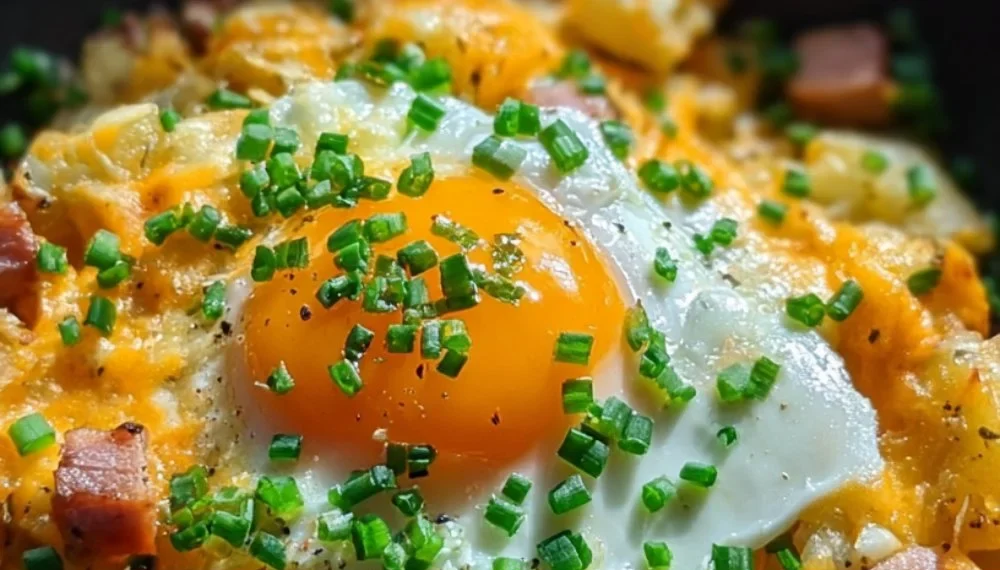
This dish is an exercise in elemental cookery: starch, egg, fat and acid-driven salt, transformed into a single pan preparation that balances texture and immediacy. As a professional chef I value recipes that teach technique as much as they provide sustenance. The Cheesy Potato Egg Scramble reduces classical components — pan-fried potatoes, properly seasoned scrambled eggs and melting cheese — into a concise, repeatable method. The objective is not simply to combine ingredients, but to control Maillard reaction on the potatoes, coagulation of the eggs to the desired curd size, and the melt-and-bind function of cheddar. Each decision in timing, heat and agitation determines whether the final plate is layered and refined or uneven and one-dimensional.
The following sections explicate the culinary logic behind each action, the sensory cues to monitor, and the professional adjustments that preserve texture and flavor. The goal is to enable immediate, consistent success in a home kitchen while elevating technique in ways that are appropriate for daily cooking.
The culinary logic behind this dish
At its core the scramble addresses three fundamental transformations: caramelization of potato surfaces, protein coagulation of the eggs, and emulsion and binding by fat and cheese. Potatoes require sustained surface contact with a hot pan and sufficient fat to develop a golden crust; this is where flavour is concentrated through Maillard reactions. Eggs require precise thermal control to produce curds that are tender rather than rubbery; lower, gentler heat yields glossy, creamy curds. Cheese contributes both flavor and functional fat-protein interaction — melted cheddar integrates with residual heat to create a cohesive matrix that unites the crisp potato and soft eggs.
Salt timing and particle size influence moisture migration and texture: salting potatoes too early can draw out moisture and delay browning, whereas salting eggs right before cooking seasons the protein network without invoking excessive water release. Fat choice — olive oil versus butter — alters aroma and mouthfeel. Olive oil gives a cleaner, higher smoke point option favorable for sustained frying; butter contributes milk solids and a nutty aroma but browns and may burn if heat is mismanaged. The ideal execution manages these competing variables so that the potatoes are crisp, the eggs tender, the cheese melted through, and the overall temperature remains inviting.
How to make Cheesy Potato Egg Scramble
This section reproduces the provided directions verbatim and then unpacks each step with professional rationale and timing guidance.
Directions :
- Heat the olive oil or butter in a large skillet over medium heat.
- Add the diced potatoes and cook until they are crispy and golden brown, about 10-15 minutes, stirring occasionally.
- If using, add the chopped ham or bacon and cook for a few more minutes until heated through.
- In a bowl, whisk the eggs with salt and pepper.
- Pour the eggs into the skillet with the potatoes and stir gently to scramble.
- Once the eggs are cooked to your liking, sprinkle the shredded cheddar cheese on top and let it melt.
- Remove from heat and garnish with green onions if desired.
- Serve hot.
Step-by-step technique and timing notes:
- Step 1: Heat control is foundational. Use a heavy-bottomed skillet for even thermal mass. Bring the pan to a steady medium before adding fat; the fat should shimmer but not smoke. This establishes a stable contact temperature for the potatoes and limits sticking.
- Step 2: Uniform dicing is essential for even cooking. Arrange the potatoes in an even layer and allow uninterrupted contact for initial searing; only stir once the edges show color. For 2 mm variation in dice size, expect up to ±2 minutes in coloring time. The 10–15 minute window assumes a medium flame and a 1–1.5 cm dice.
- Step 3: If using ham, add it late to prevent drying; if bacon is used, precook to render fat and crispness, then add back to the skillet so rendered fat contributes to potato browning. This step is both a flavor integration and a fat management decision.
- Step 4: Whisk eggs to a homogenous mixture; do not overbeat to the point of foam, as incorporated air will change curd structure. Season with salt and pepper just prior to cooking to season proteins without extracting excess water.
- Step 5: Pour eggs across the pan to coat surface area. Stir gently with a silicone spatula or wooden spoon, making deliberate folds rather than vigorous agitation to create medium-sized custard-like curds.
- Step 6: Remove heat slightly before adding cheese if you prefer a silkier melt and to avoid overcooking eggs from residual heat. Allow three to five minutes for cheddar to soften and integrate; a gentle lid for 30–45 seconds accelerates uniform melting.
- Step 7 & 8: Finish immediately; resting for too long will allow residual heat to continue coagulatory changes, firming the eggs beyond the desired tenderness.
Ingredients :
2 medium potatoes, diced, 4 large eggs, 1 cup cheddar cheese, shredded, 1/2 cup chopped ham or bacon (optional), Salt and pepper to taste, 2 tablespoons olive oil or butter, Chopped green onions (for garnish, optional)
Note: Do not modify the ingredients or measurements. The proportions are designed to yield a balanced ratio of starch to protein and cheese for a single skillet portion.
Directions :
- Heat the olive oil or butter in a large skillet over medium heat.
- Add the diced potatoes and cook until they are crispy and golden brown, about 10-15 minutes, stirring occasionally.
- If using, add the chopped ham or bacon and cook for a few more minutes until heated through.
- In a bowl, whisk the eggs with salt and pepper.
- Pour the eggs into the skillet with the potatoes and stir gently to scramble.
- Once the eggs are cooked to your liking, sprinkle the shredded cheddar cheese on top and let it melt.
- Remove from heat and garnish with green onions if desired.
- Serve hot.
Ingredient analysis through a chef’s lens
Potatoes: A medium-starch potato such as Yukon Gold offers a favorable balance between structure and creaminess; it crisps while retaining interior tenderness. The dice size influences surface-area-to-volume ratio — smaller dice crisp faster and can become dry if overcooked; larger dice take longer to cook through.
Eggs: Four large eggs provide sufficient protein to coat and adhere to the potatoes, creating a cohesive matrix. Egg temperature affects the rate of coagulation; room-temperature eggs begin to set more gradually, which helps form larger, tender curds.
Cheddar cheese: Cheddar melts readily and brings a sharp, savory counterpoint. Younger cheddars melt smoother; aged cheddars contribute a more pronounced flavor but can be less elastic. The one-cup measure is calibrated to provide flavor and binding without overwhelming the eggs’ texture.
Ham or bacon: Optional protein adds salinity, fat and texture contrast. Use bacon for rendered fat and crispness; ham adds meaty presence without additional fat rendering. The timing of their introduction controls moisture and texture outcomes.
Fat: Two tablespoons of olive oil or butter supply the necessary medium for heat transfer and flavor. Butter enhances aroma through milk solids; olive oil provides a cleaner fat profile and a higher smoke tolerance.
Aromatics (green onions): A final garnish adds freshness and a slight sulfurous brightness that cuts through the richness.
Kitchen workflow & technique breakdown
An efficient workflow minimizes overcooking and preserves texture contrast. Mise en place: dice potatoes uniformly, shred cheese, whisk eggs and season, and have ham/bacon ready if used. Preheat the pan and measure fat before starting; this avoids temperature drops when ingredients hit the surface.
Start with the potatoes — they require the longest time and benefit from uninterrupted searing. While potatoes cook, whisk eggs and prepare garnish. If using bacon, consider rendering it in the pan first, then removing and finishing potatoes in the rendered fat; this seeds the oil with flavor. Alternatively, brown potatoes, then add pre-cooked bacon and allow it to heat through as directed.
When eggs are poured, reduce agitation to prevent over-fragmentation of curds; the objective is even cooking across potato clusters. A single pan approach is efficient, but a two-pan workflow (one for potatoes, one for gently scrambled eggs) can yield superior egg texture if you prefer complete control — fold the potatoes into the eggs at the end rather than the inverse.
Texture control, heat management & timing
Texture is achieved through selective heat application. For potatoes, maintain medium to medium-high heat to develop color without burning. Use contact time rather than continuous stirring. For eggs, reduce to medium-low when pouring; residual pan heat will continue to set eggs, so remove from heat slightly before reaching target doneness if you desire very creamy curds.
Timing cues:
- Potatoes: 10–15 minutes to golden, depending on dice and pan.
- Eggs: several minutes — watch for a custardy sheen; stop when the curds are slightly underdone as carryover heat finishes them.
- Cheese: 1–3 minutes to soften fully; a brief covered rest promotes even melt.
Control moisture by patting potatoes dry if they were washed recently; excess surface moisture prevents browning. If the pan becomes crowded, potatoes steam instead of sear — work in batches or use a larger skillet.
Professional variations
Without altering core ingredients, technique variations can refine the dish:
- Crisp-protein-forward: Render bacon first, remove, fry potatoes in the bacon fat, then add bacon back late for contrast.
- Herb infusion: Add thyme or chives at finish for aromatic lift; avoid prolonged cooking of delicate herbs.
- Creamier eggs: Finish eggs with a small knob of butter off-heat for silkiness.
- Textural lift: Finish with a handful of finely diced raw apple or pickled jalapeño for acid and crunch; add only at plating.
These variations respect the ingredient list while using technique to shift character toward crispness, creaminess or acidity.
Finishing touches & plating philosophy
Finishing is as much about temperature as composition. Serve hot to retain contrast between crisp potatoes and tender eggs. Garnish sparingly with chopped green onions to provide a bright, green counterpoint and to cut fat. For plating, use a shallow bowl or warmed plate to maintain heat without collapsing textures; allow the cheese to form thin strands over the eggs for visual and textural cohesion.
Avoid over-garnishing; every element should make a structural or flavor contribution. If serving family style, present the skillet at the table to preserve heat and allow diners to portion themselves, but ensure the skillet handle is protected and the surface is stable.
Maintaining quality after cooking
This dish is best eaten immediately. If reheating is necessary, employ gentle methods: reheat single portions in a low oven (300°F/150°C) for short intervals to revive crispness, or use a nonstick skillet over low heat with a small splash of oil to refresh potato texture while protecting egg tenderness. Microwave reheating tends to toughen eggs and should be avoided unless time is constrained — in that case, reconstitute with a teaspoon of water and cover to create gentle steam.
Store leftovers tightly chilled in a shallow container. For next-day service, refresh potatoes separately in a hot pan before adding eggs to avoid a uniformly overcooked texture.
Questions from home cooks (chef answers)
Q: How do I avoid rubbery eggs? A: Cook eggs over moderate-to-low heat and remove from heat while slightly underdone; carryover heat continues coagulation. Overwhisking introduces air, which changes curd structure; whisk just to homogeneity.
Q: Can I use frozen shredded potatoes? A: Yes, but ensure they are fully thawed and patted dry to avoid steaming. Frozen options often benefit from a higher initial heat to evaporate surface moisture.
Q: Which cheddar is best? A: A medium, young cheddar gives the best melt and balanced flavor. Very aged cheddars contribute complexity but can be oilier and less cohesive when melted.
Q: Should I salt the potatoes early? A: Lightly salting at the start is acceptable, but heavy salting can draw moisture and impede browning. Reserve final seasoning adjustments until the end.
Final chef notes
Precision in the basics yields a superior scramble: consistent dice, controlled heat, minimal agitation of eggs, and attention to moisture management. This recipe demonstrates how modest ingredients, when executed with intention, produce clarity of flavor and textural contrast. Small decisions — when to add the ham, whether to use butter or oil, when to remove the pan from heat — have outsized effects on the final result. Treat each stage as an opportunity to refine texture and deepen flavor through controlled heat and timing.
Conclusion
For a practical reference and an alternate preparation approach, consider this recipe on Everyday Delicious: Cheesy Potato Egg Scramble – Everyday Delicious. For a comparative home-kitchen method and tips oriented toward family cooking, see Egg and Potato Scramble – LovingHomeschool.com.
Cheesy Potato Egg Scramble
Ingredients
Method
- Heat the olive oil or butter in a large skillet over medium heat.
- Add the diced potatoes and cook until they are crispy and golden brown, about 10-15 minutes, stirring occasionally.
- If using, add the chopped ham or bacon and cook for a few more minutes until heated through.
- In a bowl, whisk the eggs with salt and pepper.
- Pour the eggs into the skillet with the potatoes and stir gently to scramble.
- Once the eggs are cooked to your liking, sprinkle the shredded cheddar cheese on top and let it melt.
- Remove from heat and garnish with green onions if desired.
- Serve hot.