Creamy Garlic Parmesan Chicken Pasta
Introduction
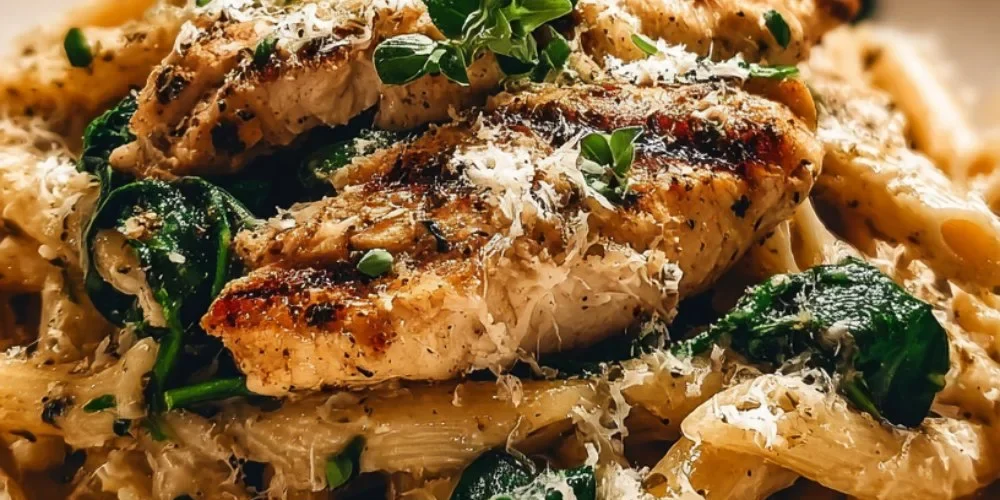
There are meals that arrive like soft weather fronts, changing the mood of a kitchen the way rain changes the face of a city. Creamy Garlic Parmesan Chicken Pasta is one of those domestic storms—gentle, familiar, and wholly transformative. I first found this dish late one autumn in a modest apartment above a bakery where the scent of warm bread drifted through the stairwell. The dish arrived steaming in a shallow pan, the pasta glossy and pooled in a sauce that smelled of garlic and sun-warmed herbs; it felt less like a plate and more like a small, generous map of home. As a traveler across many kitchens and countries, I have learned that the foods we make in our everyday are the true monuments of place: they tell stories about labor, about what is saved and what is splurged on, and about the little rituals that stitch family days together. This is a culinary note on comfort—rooted not in grand tradition but in the honest, lived practice of making something that nourishes both body and memory.
The origin story & regional influence behind this dish
Creamy pasta dishes, garlicky sauces, and simple chicken preparations belong to a long, interconnected history of regional cuisines in Europe and beyond. The lineage of this particular assembly—pasta carrying a glossy, cheese-laced sauce with garlic and chicken—travels through Italy’s kitchens into the immigrant tables of North America and then into global home cooking. It is a child of translation: Parmesan, the grana of the Po Valley exported for centuries, meets Greek yogurt, a tangy stand-in for heavier creams, and whole wheat pasta, a nod to modern sensibilities about grain and texture.
In many southern European towns, a plate like this might be more olive oil than cream, more solitude than flourish—pasta tossed simply with garlic, a drizzle of oil, a shower of grated hard cheese. Yet migration and trade have braided these threads. In urban neighborhoods where different traditions live cheek by jowl—Eastern European, Mediterranean, Middle Eastern—home cooking becomes an act of negotiation. Greek yogurt, prized for its bright tang and creamy body, finds its way into pasta, softening the assertiveness of Parmesan. Chicken, affordable and adaptable, replaces pricier proteins. The result is hybrid: traditional flavors reframed for practicality and the rhythms of modern life.
How to make Creamy Garlic Parmesan Chicken Pasta
The making of this dish is as much about the gestures as the ingredients—the pan warmed, the garlic releasing its perfume, the soft tug of pasta into sauce. In kitchens large or small, the process can feel like a short, intimate ritual: pasta cooked until it yields beneath the fork, chicken browned into delicate morsels, yogurt mixed with cheese to create a cloak that unites them. This is not a ceremony of precision but of attention; the heart of the recipe is in the moment you lift the pan and the aroma unfurls.
Ingredients :
8 ounces whole wheat pasta, 1 pound lean chicken breast, diced, 1 cup Greek yogurt, 1 cup grated Parmesan cheese, 3 cloves garlic, minced, 1 tablespoon olive oil, Salt and pepper to taste, Fresh parsley, chopped (for garnish)
Directions :
- Cook the whole wheat pasta according to package instructions. Drain and set aside., 2. In a large skillet, heat olive oil over medium heat. Add the diced chicken breast and cook until no longer pink, about 5-7 minutes., 3. Add minced garlic and sauté for 1-2 minutes until fragrant., 4. Reduce the heat to low and stir in Greek yogurt and Parmesan cheese, mixing until well combined., 5. Add the cooked pasta to the skillet and toss to combine. Season with salt and pepper to taste., 6. Serve hot, garnished with fresh parsley.
Ingredients through a cultural & historical lens
Look closely at the ingredient list and you will see a world of movements. Whole wheat pasta speaks to a revival of older grains and a growing appetite for texture and depth beyond the pale strand of refined semolina. Whole grains were once the norm; the modern return to them is as much cultural—a small rebellion against the flattened, industrialized palate—as it is nutritional. Chicken breast, diced and lean, reflects a global preference for accessible protein with minimal fuss. Greek yogurt is a fascinating pivot: strain-rich and tart, it carries the pastoral stories of shepherds and mountain dairies into the quick pace of city kitchens. Parmesan cheese, with its crystalline salt and nutty backbone, is the distant, storied relative—aged, regional, and richly articulated in flavor.
Garlic acts as the connective tissue across cultures. Whether in the tagines of North Africa, the sofritos of Iberia, or the aglio e olio of Italy, garlic is the scent that summons people to the table. Olive oil, modest in measure here, is the Mediterranean whisper in the recipe—a reminder that even small gestures in a pan can evoke wide geographies of taste and habit.
Cooking the dish: sensory notes & traditional techniques
When you begin, notice how the kitchen changes. The oil glints like a small sun in the pan. As the chicken hits that heat it releases a soft patter, a sound that promises change. The garlic follows, fragrant and immediate: not an aggressive blaze but a gentle perfume. The spoon lifts the meat, reveals browned edges, and that brown—maillard—carries browned, nutty whisper notes that Parmesan will later echo.
Texture is a conversation here. Whole wheat pasta has a grainier, more assertive chew than its refined counterparts; it resists the sauce just enough to create a satisfying give with every bite. Greek yogurt, when introduced gently and at low heat, forms a comforting cloak: tangy, cool yet warm, binding cheese to pasta in a way that feels homemade rather than laboratory-smooth. Parmesan brings salt and crystalline crunch as it melts and melds, turning simple components into a cohesive whole. Parsley is the final green punctuation—freshness against the richness.
Though the method is straightforward, there is a traditional principle at play: tempering. Introducing dairy to heat slowly and stirring gently is a way many cultures protect the texture and honor the ingredients, ensuring yogurt and cheese meld without breaking. These are small, time-taught practices passed from neighbor to neighbor, kitchen to kitchen, often learned by watching a mother or a friend, rather than reading a manual.
How different regions prepare their version
Travel north to central Europe and you might find variations leaning on cream or butter, with more assertive use of herbs like dill or tarragon that sing in those landscapes. In Mediterranean spots, cooks might splash in more lemon, more olive oil, and use yogurt sparingly or not at all, favoring a finish of shaved hard cheese. In Middle Eastern-influenced kitchens, you could encounter a whisper of sumac or a scattering of toasted pine nuts for textural contrast. Across Latin America, one sees a bolder garlic note and sometimes the inclusion of local cheeses or a handful of cilantro.
In urban American kitchens, this recipe becomes a canvas for adaptation: whole wheat pasta nods to health-conscious choices, Greek yogurt modernizes the sauce, and the quick-cook chicken suits busy lives. In farmhouse kitchens from Eastern Europe to the Balkans, similar clocks of flavor exist—pasta or grain, a simple protein, herbs from the garden—each reflecting abundance as it is available and precious, not ostentatious.
Traditional ways this dish is shared or served
This is food of the shared pan. In many homes it is plated family-style, the skillet placed in the center of the table so conversation can orbit it. The serving is informal: bowls, spoons, laughter, and the occasional argument about who gets the last forkful of cheese and parsley. In neighborhoods where stoic workdays meet vibrant evenings, this kind of dish is often what arrives at kitchens on weeknights, a ritual of comfort that signals the end of labor and the beginning of ease.
At celebratory meals it may be dressed with more—an extra handful of parsley, a squeeze of lemon, or a side of simple greens—but its essence remains the same: an embrace. Serve it with crusty bread to sop the sauce, or with a crisp salad to cut the richness. In communal gatherings, the dish becomes shorthand for hospitality, a way to say “you are welcome here” without ceremony, simply through warmth and nourishment.
Storing the dish without losing its cultural essence
Leftovers are heirlooms in miniature. Stored in a shallow container, the pasta keeps its identity, though textures soften; whole wheat absorbs sauce differently over time, becoming denser and more intimate. To preserve its character, reheat gently—low warmth coaxed rather than pushed—to avoid aggressive change in the yogurt’s tang. A splash of water or milk can revive the sauce’s silk, and a fresh scatter of parsley or a little extra grated Parmesan can restore the brightness lost to the refrigerator.
Culturally, the practice of saving and reheating speaks to thrifty traditions: nothing is wasted, and each subsequent meal becomes a second memory of the first. In some families the day-after version is preferred, flavors married and mellowed, the garlic and cheese having had time to harmonize. Leftovers become their own ritual—often eaten while recounting the day’s stories, still warm in the hands, still filling in the chest.
Cultural questions people often ask
Why Greek yogurt instead of cream? In many homes it is about preference and access: yogurt is tangy and lighter, and it carries cultural lineage for families with Eastern Mediterranean ties. Is Parmesan essential? It anchors the dish with salt and nutty depth, but historically, local hard cheeses have taken its place where Parmigiano-Reggiano was not available—this is a common culinary translation. Why whole wheat pasta? It speaks to revival of older grain traditions and a desire for texture and nourishment; some families prize it for the way it holds up against a dense sauce.
People also ask why the recipe is simple—no flamboyant ingredients, no theatrical techniques. The answer is cultural economy: dishes like this exist to nourish, to soothe, to gather. They are often the product of kitchens where time is valued and extravagant steps are secondary to the practice of feeding. In that simplicity lies a profound generosity.
A closing note on food, memory & travel
Every plate carries the map of where it has been—through trade, migration, conversation at a market stall, the hand that grated the cheese. Creamy Garlic Parmesan Chicken Pasta is not a relic of a single place but a living tapestry, telling stories of movement, adaptation, and the ordinary magic of tending a stove. As a traveler I have learned that such dishes are the true guides: they reveal how people live, what they value, and how they remake the world in their kitchens. Eat it with curiosity—notice the garlic, the grain of the pasta, the tender bite of chicken—and you will taste not just ingredients but the quieter geographies of human life.
Conclusion
If you would like to see another take on a similar comforting skillet meal, try this one-pan version: Garlic Parmesan Chicken and Pasta (One-Pan). For a homestead-style perspective that leans into rustic ingredients and pantry roots, consider this recipe: Creamy Garlic Parmesan Chicken Pasta – I Am Homesteader. These variations are companion maps—different routes to a familiar place.
Creamy Garlic Parmesan Chicken Pasta
Ingredients
Method
- Cook the whole wheat pasta according to package instructions. Drain and set aside.
- In a large skillet, heat olive oil over medium heat. Add the diced chicken breast and cook until no longer pink, about 5-7 minutes.
- Add minced garlic and sauté for 1-2 minutes until fragrant.
- Reduce the heat to low and stir in Greek yogurt and Parmesan cheese, mixing until well combined.
- Add the cooked pasta to the skillet and toss to combine. Season with salt and pepper to taste.
- Serve hot, garnished with fresh parsley.