Strawberry Cheesecake Breakfast Parfait
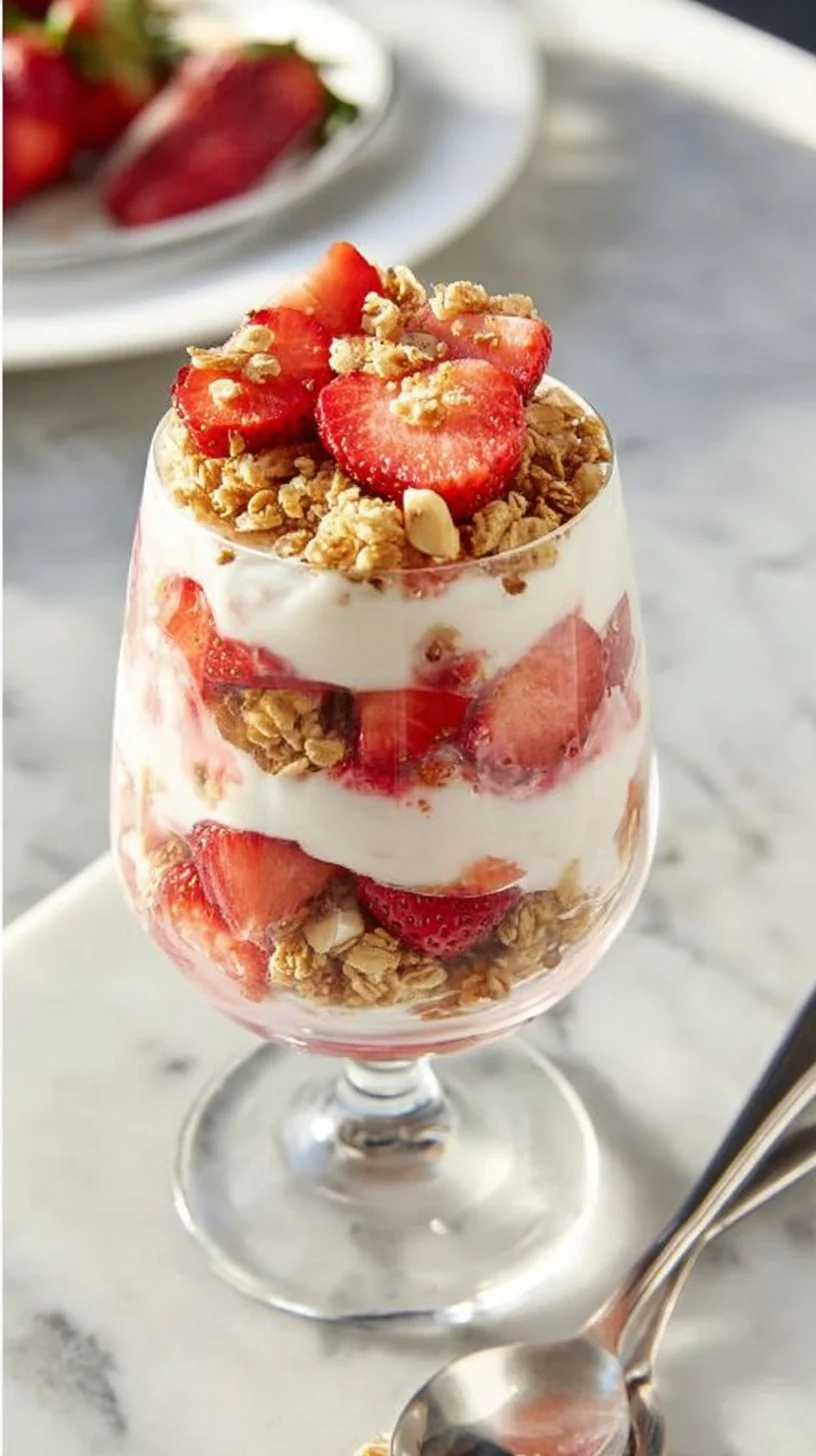
There are mornings when the world seems to pause and make room for small luxuries: the hush of light through curtains, the metallic click of a spoon, the bright, immediate sweetness of strawberries that taste like sunlight. The Strawberry Cheesecake Breakfast Parfait is one of those luxuries—an assembled, layered memory that travels well. It is both humble and indulgent, a dish that can be pulled together in a city apartment before a day of museums or ladled into picnic jars for a slow afternoon by the sea. As I write from a train window that smells faintly of warm bread and distant fields, I think of how such a simple combination—yogurt, berries, cream cheese, granola—can carry the weight of places and seasons. For those who like to experiment, there is a cousin of this parfait in the world of snacks: try imagining it in the compact form of a protein-packed strawberry cheesecake bite, and you can feel how portable the idea becomes.
This article will walk you through the parfait as if it were a brief travelogue: where its pieces come from, how different kitchens across the map fold them together, and why the act of layering can be as culturally revealing as any recipe handed down through generations.
The origin story & regional influence behind this dish
The word "parfait" carries a French air—parfait meaning "perfect"—but by the time you taste a strawberry cheesecake breakfast parfait, you are standing at a crossroads of food histories. Parfaits in France were originally frozen, cream-based desserts; in the United States and the broader Anglophone world, the concept migrated into layered presentations for breakfast and brunch. This transformation is telling. In the American context, the parfait became democratized: a glass became a canvas, and healthful ingredients like yogurt and granola answered a mid-century preoccupation with convenience and wellness.
Then there is cheesecake: dense, velvet, and undeniably American in its modern incarnation, but with ancestral ties to ancient Greece where cheese-based cakes were part of celebratory feasts. The introduction of cream cheese in the 19th century transformed those traditions into something American—spreadable, slightly tangy, and perfect as a bridge between rich dessert and breakfast tang.
Strawberries, too, are local storytellers. In temperate climates their season is brief and eagerly awaited; strawberry festivals, roadside stands, and the ritual of picking-your-own are cultural rites in many regions. Layer these ingredients together and you get a dish that sits at the intersection of European dessert refinement, American convenience, and agricultural seasonality—a continental conversation in a glass.
How to make Strawberry Cheesecake Breakfast Parfait
Ingredients :
1 cup Greek yogurt, 1 cup granola, 2 cups fresh strawberries, sliced, 2 tablespoons cream cheese, softened, 1 tablespoon honey, 1 teaspoon vanilla extract
Directions :
- In a bowl, mix the Greek yogurt with the cream cheese, honey, and vanilla extract until smooth., 2. In serving glasses, layer the yogurt mixture, granola, and sliced strawberries., 3. Repeat the layers until the glasses are full., 4. Top with additional strawberries and a sprinkle of granola., 5. Serve immediately and enjoy!
The ritual of assembling—slick cream cheese meeting cool yogurt, the honey pulling aromas together with vanilla—feels less like cooking and more like a small, attentive act of hospitality.
Ingredients through a cultural & historical lens
Each ingredient in this parfait is a condensed history. Greek yogurt carries Mediterranean traditions of strained, concentrated dairy—ancient shepherd practices that prized a thick, tangy yogurt for sustenance. In recent decades, it has traveled beyond its home region to become a global standard for creamy, protein-rich breakfasts.
Granola is an American invention that speaks to a turn-of-the-century fascination with wholesome, baked grains and nuts. It originated in health reform movements and vegetarian experiments, meant to be nourishing and long-lasting; served in a parfait, it adds the crunchy, textural counterpoint that modern palates crave.
The strawberries are seasonal emissaries. In colder northern latitudes, strawberries once heralded the first real taste of summer; in warmer climes, they can be harvested across longer stretches. Their sweetness versus acidity is a kind of regional fingerprint: a berry from a sun-bathed valley tastes different than one from a cooler, foggy shore.
Cream cheese is the velvet in the story—an Americanized, modernized dairy product that softened the idea of cheesecake into something you could spoon into a breakfast glass. Honey and vanilla are the small, guiding accents: honey as an ancient, local sweetener with varietal notes depending on the floral source; vanilla as a global spice whose complexity carries the legacy of trade routes and colonial economies.
Cooking the dish: sensory notes & traditional techniques
Making this parfait is a sensorial act. The first forkful offers a cool creaminess that spreads languidly across the tongue, punctuated by the jagged happy snap of granola. Strawberries introduce a clean, fragrant acidity that cuts the richness and lifts the palate; honey and vanilla leave a warm, lingering perfume. When you stir Greek yogurt with softened cream cheese, you feel a small alchemy—the two textures surrender to each other and form a silky, slightly tangy canvas.
Traditional techniques here are less about complicated methods and more about timing and respect for texture. Many cultures valorize the moment of assembly—painting a bowl, placing a final garnish, serving immediately. In Japan, for instance, parfaits have been adopted into cafés with an almost ceremonial precision: layers are exact, spoons long, and the experience is slow. In Mediterranean home kitchens, the emphasis might be on the quality of the yogurt or the ripeness of fruit, less on the glass than on the family table where bowls are passed and shared.
If you savor variations that take the parfait from fridge to oven, you might enjoy the warm comfort of a baked yogurt dish; there are whole traditions of baking yogurt with honey that transform structure and sweetness in ways that echo across cultures. For a related idea of warm, protein-rich morning dishes, consider a baked Greek yogurt breakfast that plays with similar textures and the same Mediterranean ingredients.
How different regions prepare their version
The strawberry cheesecake parfait as written is cosmopolitan, but every region nudges it with local habits. In coastal France, you might find a trifle-like parfait populated with macerated berries soaked in a splash of liqueur; in Italy, mascarpone sometimes substitutes for cream cheese, turning it silkier and deeper. In the Levant, yogurt might be thinner and drizzled with local molasses or orange blossom honey, and nuts like pistachios add an essential crunch.
In Japan, parfaits became confectionery showcases in department store cafés—layers that include jelly, custard, and a single decorative strawberry standing like a flag. In Nordic countries, the parfait could shift toward tart berries like lingonberry and incorporate toasted oats or barley instead of granola. In Latin America, a spoonful of dulce de leche alongside strawberries transforms the parfait into a bridge between breakfast and dessert, recalling the region’s love for caramelized notes.
These regional voices show how a simple framework—cream, grain, fruit, sweetener—can be reinterpreted endlessly, a recipe for belonging rather than for rigidity.
Traditional ways this dish is shared or served
Across cultures, the way a parfait is served often reveals what it means to the people who eat it. In urban cafés, parfaits are plated as individual, Instagram-friendly statements: layered in glass, tied to the ritual of a morning out. At home, the parfait becomes communal—glasses lined up on a kitchen counter, children allowed to sprinkle their own granola, elders judging the ripeness of berries. In farm-to-table communities, parfaits bridge the seasonal market and the family table; farmers’ market strawberries might be sliced on the spot and spooned into jars for cyclists and picnic-goers.
There are also celebratory moments: a mother preparing parfaits for children’s graduation breakfasts, a traveler assembling them in a guesthouse kitchen, or a street-side vendor stacking layers for a hurried commuter. These are small ceremonies of care—food as both sustenance and social glue.
Storing the dish without losing its cultural essence
The paradox of the parfait is that it wants to be fresh. Granola softens with time; strawberries release juice and risk becoming soggy. The cultural solution in many traditions is separation: store the yogurt-cream mixture in one container, granola in another, and sliced fruit in a third. Assemble the parfait at the point of serving. This preserves not just texture but the ritual of putting a meal together—a rehearsal of attention that keeps the dish rooted to its cultural practice of immediacy and hospitality.
If you must preassemble for travel, keep the granola separate and add it at the last minute. Use small, jarred containers as portable serving vessels; these are common in many European picnic cultures and echo a practical mindset found in many places where food is frequently taken outdoors.
Cultural questions people often ask
Is this breakfast or dessert? The question often sparks debate. In many cultures, the line between breakfast and dessert is porous—fruit, sweetened yogurt, and even pastries can appear at either meal. The parfait sits comfortably in that ambiguity.
Can I substitute ingredients? People often ask for substitutions, but the cultural essence lies in balance: creamy tang, crunchy grain, and fresh, bright fruit. Swapping Greek yogurt for a thicker strained yogurt preserves that rhythm; substituting local honey honors place; using seasonal fruit aligns the parfait with the land.
Is it healthy? For many, the parfait embodies a modern ideal of balanced indulgence: protein, grains, and fruit in one glass. Yet balance is cultural, too: in some regions sweetness is more pronounced, in others the emphasis is on tartness or texture.
Why layer and not mix? Layers are a visual and tactile language. They show respect for each component and allow for an evolving experience as you eat: the first scoop is different from the middle, different from the bottom. The act of layering is itself a kind of conversation between ingredients, a slow reveal that many cultures find pleasing.
A closing note on food, memory & travel
There is a particular kind of memory that comes from eating a strawberry cheesecake parfait in a place you are visiting for the first—and perhaps only—time. It is not the extravagant monument you travel to see; it is the small, perfect thing that anchors you to a morning or a person: the guesthouse host who hands you a jar with a wink, the market stall seller who insists you taste the sweetest berry, the café where light falls through old glass. Food is a ledger of travel, listing weather, language, and the hum of other people’s kitchens. To make this parfait is to make a map: of seasons, of cultural exchanges, of the slow migrations of ingredients and ideas. When you eat it, you are tasting not just a recipe but the layered palimpsest of places that produced its parts.
Conclusion
If you want to see another take on this layered breakfast from a home-cooking perspective, the Eat. Drink. Love. version of Strawberry Cheesecake Breakfast Parfait honors the same sweet simplicity with a slightly different voice. For a quick, five-minute spin on the idea that trims to essentials, the Jar Of Lemons recipe captures the instant pleasure of assembled layers. If you are looking for a no-bake, lighter interpretation, Dani’s Healthy Eats offers a healthy spin that still celebrates strawberries as focal point. For a modern blog-style take that explores presentation and garnish, the Alex Daynes parfait is a lovely companion.
Strawberry Cheesecake Breakfast Parfait
Ingredients
Method
- In a bowl, mix the Greek yogurt with the cream cheese, honey, and vanilla extract until smooth.
- In serving glasses, layer the yogurt mixture, granola, and sliced strawberries.
- Repeat the layers until the glasses are full.
- Top with additional strawberries and a sprinkle of granola.
- Serve immediately and enjoy!