Breakfast Fruit Tart
AARON Introduction
As a nutrition specialist, I approach recipes as tools for building sustainable eating patterns that support digestion, nutrient density, and long-term wellness. This Breakfast Fruit Tart is a simple, approachable dish that can be part of a balanced morning routine or a nourishing snack. It combines whole grains, dairy or dairy-alternative protein, natural sweeteners, and fresh fruit — a combination that offers a pleasing mix of textures and flavors while providing a variety of nutrients. In this article I’ll walk through how the tart supports health, explain the roles of each ingredient in practical, easy-to-understand terms, and offer evidence-informed suggestions for tweaking the recipe to better meet different nutrition goals without changing the recipe itself.
How this recipe supports overall wellness
This tart naturally emphasizes balance: it pairs carbohydrate-rich ingredients (granola and fruit) with protein and fat (yogurt and butter), which helps moderate blood sugar responses and keeps you feeling satisfied longer. The fresh fruit contributes fiber, water, vitamins, and antioxidants that support digestion and cellular health. Plain yogurt provides protein and, if live cultures are present, probiotics that may support gut microbial balance and digestion.
From a practical perspective, this recipe is nutrient-dense: you get multiple micronutrients (vitamin C from berries and kiwi; potassium from bananas; calcium from yogurt) in a single serving. The granola crust adds whole-grain texture and some healthy fats, especially if the granola contains nuts or seeds. The recipe’s sweetness comes from a small amount of honey or maple syrup, which enhances palatability without relying on processed refined sugar. Overall, this tart can be a satisfying, reasonably balanced option when portioned thoughtfully and paired with complementary foods if needed.
How to make Breakfast Fruit Tart
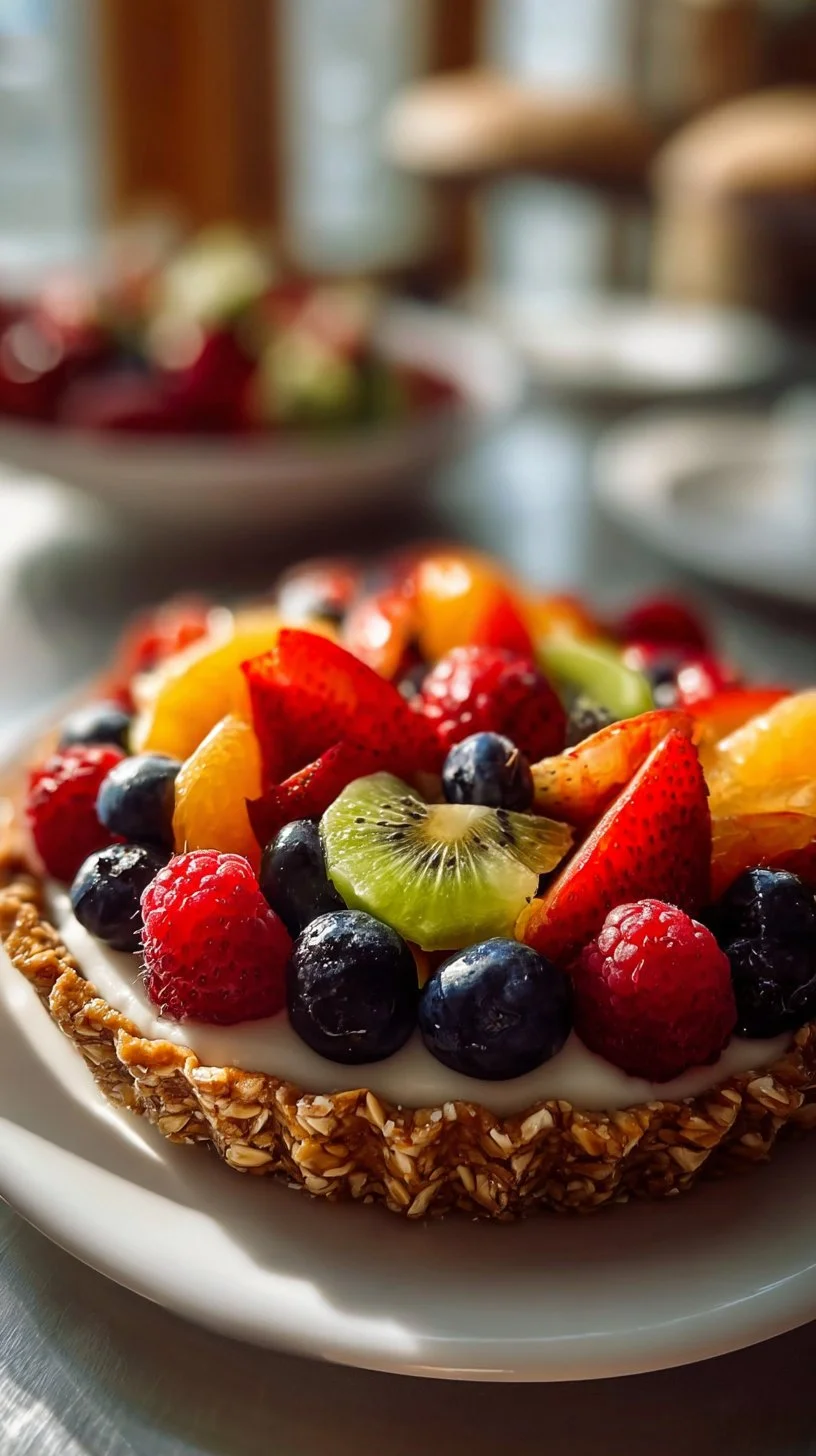
Making this Breakfast Fruit Tart is straightforward and approachable. The basic technique is to form a granola-based crust, bake it until golden so it holds together, and then top it with a lightly sweetened yogurt filling and fresh fruit. Pressing the granola into the tart pan creates a crunchy base that contrasts with the creamy yogurt and juicy fruit topping. Allowing the crust to cool before adding the yogurt layer prevents the filling from becoming soupy. The assembly is flexible: arrange fruit in patterns for visual appeal or chop fruit into bite-sized pieces for easier eating. Because the recipe uses plain yogurt, you can choose a lower-fat option for fewer calories or a full-fat version for more satiety and flavor, depending on your personal needs.
Ingredients :
1 cup granola, 4 tablespoons unsalted butter, melted, 1 cup plain yogurt, 2 tablespoons honey or maple syrup, 1 teaspoon vanilla extract, Assorted fresh fruit (such as strawberries, blueberries, kiwi, and bananas), Mint leaves for garnish (optional)
Directions :
- Preheat the oven to 350°F (175°C)., 2. In a bowl, combine the granola and melted butter. Press the mixture into the bottom and up the sides of a tart pan to form a crust., 3. Bake for 10-12 minutes until golden. Remove from the oven and let cool., 4. In another bowl, mix the yogurt, honey (or maple syrup), and vanilla extract until well combined., 5. Pour the yogurt mixture into the cooled crust and spread evenly., 6. Arrange the fresh fruit on top of the yogurt layer as desired., 7. Garnish with mint leaves if using., 8. Serve immediately, or refrigerate until ready to serve.
Nutrient roles of each main ingredient
Granola: Typically made from oats, nuts, and seeds, granola provides complex carbohydrates and fiber, which support steady energy release and digestive health. Nuts and seeds add unsaturated fats and plant-based protein, which contribute to satiety and heart health. The exact nutrient profile depends on the granola you choose—look for versions with minimal added sugar and visible nuts/seeds for more benefit.
Unsalted butter (melted): Butter provides fat that helps bind the granola crust and contributes to mouthfeel and satisfaction. Fats slow gastric emptying a little, which can blunt rapid rises in blood glucose after eating. If you’re watching saturated fat intake, moderate portion size or consider using a granola with oily nuts that help bind without excess butter (although the recipe’s measurements should not be changed).
Plain yogurt: This is the primary protein source in the tart. Protein supports muscle maintenance, contributes to fullness, and plays a key role in metabolic processes. Plain yogurt also provides calcium and, when labeled with live cultures, beneficial microbes that can support digestive comfort for many people.
Honey or maple syrup: These natural sweeteners add sweetness and flavor. In modest amounts they improve palatability without overpowering the dish. Choosing a small amount aligns with recommendations to limit added sugars while still enjoying foods you like.
Vanilla extract: Adds flavor with negligible calories; it can make the yogurt feel more indulgent without additional sugar.
Assorted fresh fruit: Fruit is rich in fiber, water, vitamins (e.g., vitamin C in berries and kiwi), minerals, and phytonutrients (antioxidants). Fiber supports regular bowel movements and a healthy gut environment. The natural sugars in fruit come packaged with fiber and nutrients, unlike isolated sugars.
Mint leaves: Optional, but mint can aid flavor perception and can be soothing for some people after a meal. It also adds a visual cue that can enhance enjoyment and mindful eating.
The preparation method & its health impact
The preparation is low in processing: baking the crust briefly creates structure while keeping ingredients intact. Baking the granola with butter stabilizes the crust so it holds the yogurt filling. Because this recipe uses fresh fruit and plain yogurt rather than processed fillings or frostings, it preserves whole-food qualities. Cooling the crust before adding yogurt prevents moisture migration that would make the crust soggy; this keeps textures distinct, which encourages slower, more mindful eating.
Moderate baking time avoids formation of excessive advanced glycation end products (AGEs) that can occur with heavy charring; the 10–12 minute bake to golden is gentle and appropriate. Overall, the method supports nutrient preservation and sensory appeal, both important for consistent healthy eating.
Ways to lighten, enrich or modify the dish nutritionally
Without changing the ingredient list or measurements, you can still make choices that shift nutrient emphasis:
Lighten: Choose a low-fat plain yogurt to lower saturated fat and calories. Select a granola that lists whole grains and nuts first and has lower added sugars. Use fruit with high water content like berries and kiwi to increase volume for fewer calories.
Enrich protein: Use Greek-style plain yogurt (if that is what you have available), which tends to be higher in protein and creamier, increasing satiation. (Note: this is a choice of yogurt type rather than altering the recipe’s written ingredient.)
Increase fiber and nutrient density: Pick a granola with added seeds (chia, flax) and whole nuts. Add a variety of fruits to increase the range of vitamins and antioxidants.
Make it more filling: Serve the tart alongside a small portion of eggs or a handful of nuts to add extra protein and healthy fats, or include a spoonful of nut butter as a side if desired.
These options allow the tart to fit different goals—weight management, muscle support, or simply greater satisfaction—without changing the recipe itself.
Pairing ideas for a balanced, complete meal
This tart can be a component of a balanced breakfast or snack. For a morning meal that supports stable energy:
Add a lean protein: Pair with a boiled egg, smoked salmon, or a small serving of cottage cheese for extra protein that supports muscle maintenance and longer satiety.
Include vegetables: A side salad, sliced tomatoes, or roasted vegetables can add more fiber, phytonutrients, and volume to the meal.
Mindful beverage choice: Choose water, unsweetened tea, or coffee without excess sugar. A small glass of milk or plant-based milk could supply additional calcium and protein if needed.
Portion strategy: Because the granola crust contains concentrated energy, serve a moderate slice accompanied by protein and vegetables for a filling, balanced plate. This approach helps prevent overeating and keeps blood sugar more stable.
Safe storage, food safety & optimal reheating
Refrigeration: Because the tart contains yogurt and fresh fruit, store covered in the refrigerator and consume within 48–72 hours for optimal freshness. Fruit can release juices over time, which will soften the crust slightly; for best texture, consume sooner rather than later.
Freezing: Freezing is not recommended for the assembled tart because the yogurt texture will change when thawed. You can freeze unbaked granola crust components separately, but the recipe’s directions should not be altered—so plan to prepare fresh when possible.
Food safety: Keep all perishable ingredients (yogurt, fruit) refrigerated below 40°F (4°C) until use. Avoid leaving the assembled tart at room temperature for more than two hours to reduce bacterial growth risk.
Reheating: This tart is best served chilled or at room temperature. If you prefer a warmer crust, gently warm a single slice for a few seconds in a microwave or briefly in a low oven, then add cold yogurt and fruit. Avoid reheating the whole tart with yogurt on it, as heat can alter the yogurt’s texture and bacterial cultures.
Common nutrition questions about this dish
“Is this high in sugar?” The tart contains natural sugars from fruit and a modest amount of added sweetener; total sugar will vary by granola brand and fruit choice. Choosing plain yogurt and a lower-sugar granola reduces added sugars while keeping overall sweetness from the fruit.
“Can people with lactose intolerance eat this?” Some people with lactose intolerance tolerate plain yogurts, especially those with live cultures, because the bacteria partially break down lactose. Lactose-free or plant-based yogurts can be used as alternatives if needed (choose unsweetened varieties).
“Is this suitable for weight management?” Portion control matters. The tart provides dense energy in the granola crust; pairing a smaller portion with protein and vegetables helps manage calorie intake while keeping the meal satisfying.
“How does this affect gut health?” Plain yogurt with live cultures can contribute beneficial microbes, and fruit and whole grains provide fiber that supports digestive regularity. Variety and consistency in fermented foods and fiber sources are key for long-term gut health.
Final wellness notes
This Breakfast Fruit Tart is an example of how simple recipes can support balanced eating without feeling restrictive. It combines textures and flavors in a way that encourages enjoyment — an important factor for dietary sustainability. Small, intentional choices—like opting for plain yogurt, choosing fruit-rich toppings, and pairing the tart with additional protein or vegetables—help align the dish with individual health goals. The overall approach focuses on nutrient density, digestive comfort, and long-term habits rather than quick fixes. Use this recipe as a flexible template for mindful meals that nourish both body and appetite.
Conclusion
For a tested variation that emphasizes a granola crust and yogurt filling, the recipe at Breakfast Fruit Tart with Granola Crust – Jessica Gavin offers a clear method and helpful photos. If you prefer individual tarts and creative fruit arrangements, see the step-by-step guide at Breakfast Fruit Tarts with Granola Crust – Flavor the Moments for inspiration. For a gluten-free approach using similar flavors and structure, check the gluten-free variation at Breakfast Fruit and Yogurt Tart (Gluten Free) • easy recipe!. If you’re interested in a no-bake take that focuses on Greek yogurt for extra protein, review the method at No-Bake Greek Yogurt Fruit Tart – Sally’s Baking Addiction.
Breakfast Fruit Tart
Ingredients
Method
- Preheat the oven to 350°F (175°C).
- In a bowl, combine the granola and melted butter. Press the mixture into the bottom and up the sides of a tart pan to form a crust.
- Bake for 10-12 minutes until golden. Remove from the oven and let cool.
- In another bowl, mix the yogurt, honey (or maple syrup), and vanilla extract until well combined.
- Pour the yogurt mixture into the cooled crust and spread evenly.
- Arrange the fresh fruit on top of the yogurt layer as desired.
- Garnish with mint leaves if using.
- Serve immediately, or refrigerate until ready to serve.