No Bake Chocolate Oatmeal Bars
Introduction
No-bake constructions like these chocolate oatmeal bars distill pastry technique to essentials: control of fat, sugar crystallization, and tempering of texture without heat ovens. The recipe provided is deliberately simple, yet its success depends on precise handling of temperature, timing and ingredient ratios. For those exploring the broader family of compressed, layered confectionery, compare how similar binding and layering strategies perform in a different format such as the no-bake rocky road bars, where marshmallow and nut inclusions demand alternate binding approaches. In this introduction I will state the technical goals for the dish: produce a cohesive bar with a stable crumb, a distinct chocolate layer that remains pliant but not oily, and an oat matrix that provides tooth and chew without greasiness.
The culinary logic behind this dish
This recipe relies on two interacting systems: a sugar-butter matrix that binds the rolled oats and the fat-suspended chocolate-peanut butter layer. The butter and brown sugar are heated to dissolve the sugar and distribute fat evenly through the oats; this step is not intended to caramelize, but to hydrate and coat. The chocolate-peanut butter filling provides emulsion and structure: melted chocolate contributes cocoa solids that set into a firm network, while peanut butter supplies additional fat and lecithin-like emulsifiers that stabilize the layer and slow migration of oil into the oat matrix.
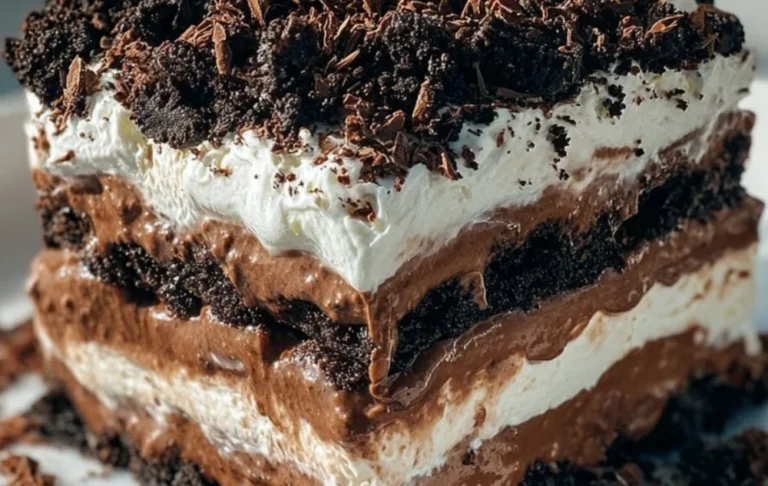
Layering is purposeful. A base of toasted-tasting oats coated with the butter-sugar syrup creates a stable platform; the chocolate layer isolates the top oat mass from the crust, preventing moisture migration that could otherwise soften the base. Pressing each oat layer compactly collapses air pockets and increases contact between coated oats, improving bar integrity when chilled. Understanding these interactions explains why timing and technique matter more than the apparent simplicity of the ingredient list. For reference on how layering changes texture in bar confections, see a contrasting example like the chocolate-covered cherry magic bars.
How to make No Bake Chocolate Oatmeal Bars
This section restates the exact ingredients and directions to preserve the recipe’s integrity. Follow them precisely for consistent results; after the recipe I will expand on each procedural decision and explain the why behind every step.
Ingredients :
1 cup butter, 1/2 cup brown sugar (packed), 1 teaspoon vanilla extract, 3 cups rolled oats, 1 cup semisweet or dark chocolate chips, 1/2 cup peanut butter
Directions :
Line an 8-inch or 9-inch square baking dish with parchment paper and set aside. Overhangs the edges of the foil to lift the bars easier from the baking dish. (You can use a 9×13-inch if you want thinner bars.), Melt butter and brown sugar in large saucepan over medium heat, until the butter has melted and the sugar has dissolved. Stir in vanilla. Mix in the oats., Cook over low heat 3 to 4 minutes, or until ingredients are well blended., Pour half of the oat mixture into the prepared baking dish. Spread out the mixture evenly, pressing down. Reserve the other half for second layer., To make the filling, melt the peanut butter and chocolate chips together in a small microwave-safe bowl and stir until it’s smooth., Pour the chocolate mixture over the crust in the pan, reserving about 1/4 cup for drizzling and spread evenly., Pour the remaining oat mixture over the chocolate layer, pressing in gently and drizzle with the remaining chocolate mixture., Refrigerate 2 to 3 hours or overnight. Bring to room temperature before cutting into bars., Note: Like any no-bake cookie, the final texture of these really depends on how long you boil the sugar mixture. If it doesn’t boil long enough, the cookie/bars mixture will be too soft, if you boil too long, they could turn out dry and crumbly.
Ingredient analysis through a chef’s lens
Each ingredient contributes functionally: butter is the solvent for the sugar and a plastic fat that sets at refrigeration; brown sugar adds moisture and a modest level of caramelized flavor from its molasses content and assists with hygroscopicity (retaining moisture in the crumb); oats provide bulk, texture and absorbent capacity; chocolate chips supply cocoa solids and cocoa butter that set to form a coherent sheet; peanut butter contributes emulsifying oils and nutty flavor.
Choice matters. Use rolled oats (old-fashioned) for their intact flakes that create cohesion without turning paste-like; quick oats or steel-cut oats would alter hydration dynamics and mouthfeel. Semisweet or dark chocolate chips alter sweetness and firmness: higher cocoa content gives a firmer set and less surface bloom; semisweet is more forgiving. Peanut butter should be smooth and stirred to reincorporate separated oil—this maintains emulsion when melted with chocolate. The ratio between butter and sugar is modest; its aim is to coat, not to create a hard candy. That balance is why the provided note on boiling time is crucial: sugar concentration shifts quickly and small changes in treated time produce markedly different textures.
Kitchen workflow & technique breakdown
Organization delivers consistency. Start by preparing the pan—parchment with an overhang is not aesthetic only; it facilitates an even lift without deforming bars. Measure all ingredients and have a heatproof bowl ready for the melted chocolate mixture. While melting butter and brown sugar on medium, adopt a high-contact stirring rhythm to ensure even dissolution of sugar into fat and to prevent localized scorching.
When you add the oats, fold them into the syrup with a spatula until every flake is coated; this ensures uniform binding and prevents dry pockets. Split the oat mass evenly into two portions: an accurate division yields balanced layers and consistent final thickness. When pressing into the pan, use a flat-bottomed measure (cup or tamper) covered by parchment to compress the base evenly—exerting too much force will squeeze out fat, creating greasy layers and an overly dense base; too little pressure will leave bars crumbly. For the chocolate-peanut filling, melt at medium-low power in the microwave in short bursts, stirring in between to avoid burning the chocolate and to allow the peanut butter to emulsify fully into the chocolate.
Texture control, heat management & timing
Texture is the variable most sensitive to heat and time. The recipe warns about simmer length—this is because sugar solution concentration and temperature are correlated. While this technique does not require hard-ball knowledge, you should be aware: a longer simmer increases sugar concentration and dry firmness; a shorter simmer leaves the matrix under-saturated and soft. Aim for a gentle simmer sufficient to fully dissolve the sugar into the melted butter—visual cues are a glossy syrup and the sugar crystals having fully integrated, not an aggressive boil.
Manage heat cautiously when melting chocolate and peanut butter together; chocolate can seize from overheating. Use 20–30 second microwave intervals at medium power, stirring thoroughly between bursts until smooth. Alternatively, use a bain-marie: gently melt chocolate and peanut butter over simmering water, keeping the bottom of the bowl above the water level to avoid steam contamination. Cooling management also matters: refrigerating 2–3 hours sets the cocoa butter and firms the butter in the oats; chilling too rapidly or cutting too cold can fracture the chocolate and create sticky surfaces. Letting bars come to room temperature slightly before cutting produces clean slices with minimal crumbling.
For precision cooks, a small candy thermometer will reveal differences: while not required, a reading near 115–120°C (239–248°F) would be high for this syrup; instead, observe the physical cues. Because ambient humidity affects sugar hygroscopy, times will vary by kitchen; adjust simmer length and chilling based on feel rather than clock alone.
Professional variations
Variations can be executed while preserving the recipe’s structural logic. To increase chew, substitute up to 1 cup of the rolled oats with quick oats; this increases absorption and cohesion but reduces flake identity. To modify sweetness and set point, use a 60–70% chocolate for a firmer chocolate layer; increase peanut butter to 2/3 cup only if you also reduce chocolate by 1–2 tablespoons to maintain layer viscosity. Add-in textures like toasted nuts or dried fruit must be dried and cooled before incorporation to avoid introducing moisture. For a dairy-free adaptation, replace butter with a neutral-flavored solid coconut oil; the resulting bars will be firmer at refrigeration temperatures and have a subtle coconut halo.
If you’re looking to present a dessert with different visual cues, thin the chocolate layer by using a larger pan (9×13) as the recipe notes—this reduces chocolate mass per unit area and creates a higher oat-to-chocolate ratio. For an alternative finish and controlled sweetness, finish with a fine sprinkle of flaked sea salt right after pouring the chocolate to accentuate flavor contrasts.
Finishing touches & plating philosophy
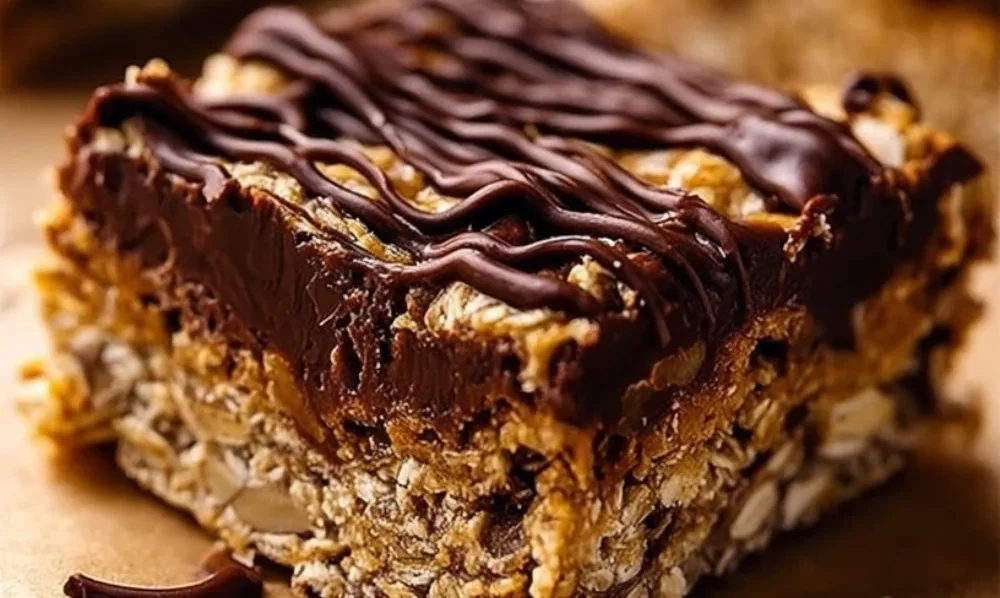
Finishing is about optical clarity and textural contrast. Reserve the 1/4 cup of chocolate mixture for a restrained drizzle; it not only adds a decorative element but creates an adhesive bond preventing top-layer flakes from shedding when plated. For professional plating, cut bars with a hot knife (dip in hot water and wipe dry between cuts) to create clean edges. Place bars on a neutral matte plate to emphasize color and texture; pair with a smear of toasted peanut purée for a refined echo of flavor. A final sprinkle of finely chopped toasted peanuts provides a textural foil and signals the core ingredient without dominating the palate.
Serve at slightly below room temperature so the chocolate remains firm but yielding; a cold-bar experience numbs flavor perception, while a warm bar loses structural integrity. Aim for service at roughly 18–20°C (64–68°F).
Maintaining quality after cooking
Storage and transport determine final quality. Refrigeration halts migration but increases firmness—wrap bars tightly in airtight containers with parchment separators to prevent condensation and flavor pickup. At room temperature for short-term service (4–6 hours), keep in an environment below 22°C to prevent the chocolate layer from softening. For longer storage, you may freeze the bars layered with parchment; thaw in the refrigerator overnight and then bring to room temperature before serving to avoid weeping of oils.
If bars appear oily on the surface, it indicates excess pressure during pressing or a ratio issue where fat has migrated out; trim the outer edges and refrigerate to re-stabilize. For travel, use rigid containers to prevent compression.
Questions from home cooks (chef answers)
Q: What if my bars are too soft after chilling? A: The likely cause is insufficient concentration in the butter-sugar coating stage. Return the oat mixture to a saucepan and gently reheat over low heat, stirring for an extra minute to allow additional evaporation and integration, then press and chill again. Alternatively, increase chilling time and allow the bars to come fully to the recommended serving temperature before assessing.
Q: My chocolate layer separated and became oily—why? A: Overheating the chocolate-peanut butter mixture can break emulsions; when cocoa butter separates, the surface appears oily. Re-melt gently with an added teaspoon of neutral oil or a small knob of butter to reincorporate, then cool slightly before applying. Maintain microwave intervals short, stirring often.
Q: Can I omit peanut butter? A: You can substitute with another nut butter, but peanut butter contributes both flavor and emulsification; removing it will change viscosity and mouthfeel and may require a slight increase in chocolate to maintain layer integrity.
Q: How can I ensure even layers? A: Use a scale to divide the oat mass precisely and a flat-ended tamper for consistent compression. Maintain thickness with a rimmed square pan for straight edges.
Final chef notes
This recipe exemplifies the discipline of restrained no-bake technique: minimal heat but maximal attention to physical cues—gloss, viscosity, and texture. Respecting ingredient function and layering logic transforms a handful of pantry staples into a composed, stable bar. Reproducibility arises from consistent heat management during the coating stage, precise emulsification of the chocolate filling, and controlled compression during assembly. Keep tools simple but precise: an accurate scale, a flat tamper, and a bowl for melting will yield professional results with domestic convenience.
Conclusion
For additional step-by-step perspectives and photos that complement the technical notes above, consult the original interpretations found on the Sugar Apron recipe page, which illustrates the layering visually, and a variation with practical tips on assembly at On My Kids Plate.
No-Bake Chocolate Oatmeal Bars
Ingredients
Method
- Line an 8-inch or 9-inch square baking dish with parchment paper and set aside.
- Melt butter and brown sugar in a large saucepan over medium heat, until the butter has melted and the sugar has dissolved. Stir in vanilla.
- Mix in the oats and cook over low heat for 3 to 4 minutes, or until well blended.
- Pour half of the oat mixture into the prepared baking dish, spreading it evenly and pressing down. Reserve the other half for the second layer.
- To make the filling, melt the peanut butter and chocolate chips together in a small microwave-safe bowl and stir until smooth.
- Pour the chocolate mixture over the crust in the pan, reserving about 1/4 cup for drizzling. Spread evenly.
- Pour the remaining oat mixture over the chocolate layer, pressing in gently and drizzle with the remaining chocolate mixture.
- Refrigerate for 2 to 3 hours or overnight. Bring to room temperature before cutting into bars.