3-Minute Fudge
Introduction
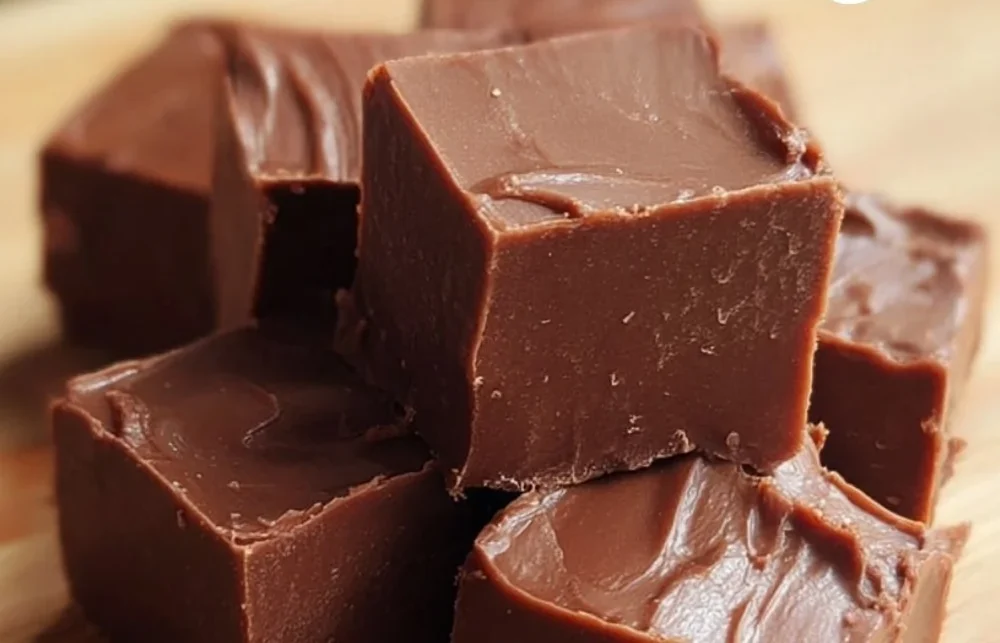
This 3-Minute Fudge is a study in precision and economy: a short sequence of melts and folds that converts a handful of pantry staples into a dense, glossy confection. Executed correctly, it delivers a chocolate matrix with a satin surface, a clean snap at room temperature, and a surface gloss that signals proper temper and stabilization without a formal tempering process. The method forgoes lengthy candy-making stages and relies instead on controlled heat, balancing fat and sugar, and the set properties of sweetened condensed milk to create body and structure quickly. As a professional, I value such recipes for their pedagogical clarity—every ingredient has a physical function, every movement alters the final texture—and the technique scales readily for both home cooks and small-batch production.
The culinary logic behind this dish
At its core, this fudge is an emulsion and a controlled crystallization problem. Chocolate chips provide cocoa solids, cocoa butter, emulsifiers and sugar; butter adds additional milk fat to soften the mouthfeel and stabilize the finished mass; sweetened condensed milk contributes dissolved sugars, milk solids, and water that act as both solvent and humectant; vanilla builds aromatic top notes; and nuts, when used, introduce textural contrast and roast-derived flavors.
The culinary logic prioritizes heat control to avoid seizing and grainy textures. Chocolate contains cocoa butter and sugar suspended in cocoa solids; cocoa butter melts cleanly but sugar can recrystallize if exposed to rapid cooling or agitation at high sugar concentrations. Sweetened condensed milk reduces the need for sugar cooking stages by providing a dense aqueous phase that, when combined with fat, produces a stable, glossy ganache-like mass that will set as it cools. The result is a fudge-like confection that depends on proper emulsification and gentle cooling rather than high-temperature sugar stages.
How to make 3-Minute Fudge
The execution emphasizes gentle heat and continuous integration. Begin with a clean, dry saucepan and a low, even flame. When melting chocolate and butter together, the goal is to achieve a smooth, homogenized mixture—no streaks of unmelted chocolate, no visible butter separation. Use a heavy-bottomed pan to distribute heat evenly and avoid hotspots that promote scorching. Stirring constantly with a heat-resistant spatula or wooden spoon maintains contact between unmelted solids and warm fat, facilitating uniform melt. Once the chocolate-butter blend is fully fluid, the condensed milk is added off-heat or at the very lowest heat setting; this minimizes thermal shock and reduces the risk of seizing. Vanilla is incorporated at this point to preserve its volatile aromatics. Nuts are folded in last to prevent them from over-softening and to maintain their textural contrast. Pouring into a greased pan while the mass is still fluid ensures an even surface; gentle tamping or an intentional swipe with an offset spatula can remove air pockets. Rapid chilling in a refrigerator sets the fudge, arresting cocoa butter crystal formation before large, irregular crystals can develop, which would otherwise create a crumbly or sandy texture.
Ingredients :
1 cup chocolate chips, 1 can sweetened condensed milk, 1/4 cup butter, 1 teaspoon vanilla extract, 1/2 cup chopped nuts (optional)
Directions :
- In a saucepan, melt the butter and chocolate chips over low heat, stirring constantly until smooth., 2. Stir in the sweetened condensed milk and vanilla extract., 3. Remove from heat and fold in the chopped nuts, if using., 4. Pour the mixture into a greased pan and spread evenly., 5. Refrigerate for about 2 hours or until firm., 6. Cut into squares and serve.
Ingredient analysis through a chef’s lens
- Chocolate chips: Market chocolate chips are formulated to retain shape under baking temperatures; they typically contain stabilizers and a specific ratio of cocoa butter to solids that influence melt behavior. For glossy, smooth fudge, choose chips with higher cocoa butter content if possible; lower cocoa butter solids can lead to a duller surface and a more brittle texture.
- Sweetened condensed milk: This ingredient is functionally indispensable in this formula. It supplies dissolved sucrose and lactose and a concentrated dairy matrix that increases viscosity and binds water, reducing free water that could promote crystallization. It also contributes to mouthfeel and shelf stability.
- Butter: Butter increases the fat phase, softens the final texture, and contributes subtle dairy flavors. It also helps gloss and reduces the firmness of the set compared with chocolate alone.
- Vanilla extract: Added for aromatic lift; incorporate it off-heat or at low heat so volatile flavor compounds are not driven off.
- Chopped nuts (optional): Nuts introduce contrasting texture and localized flavor via Maillard reaction products if roasted. Their fat content can slightly alter setting if added in large quantities, so keep them to a textural accent rather than bulk.
Kitchen workflow & technique breakdown
A streamlined workflow will keep the process efficient and consistent. Mise en place: measure the chocolate, condense the milk, cube the butter for even melting, and have your greased pan ready (a 9×9-inch or similar is common). Use a heavy-bottomed saucepan to minimize hot spots; a heat-diffusing insert or a double boiler can be useful if your stove runs hot. Stirring implements matter: a flexible silicone spatula conforms to the pan and scrapes as you stir, avoiding trapped chocolate that can overheat. Maintain an even low heat—if using an electric range, a low setting with frequent stirring is better than medium with intermittent stirring. Have a thermometer on hand if you prefer quantitative control: the chocolate-butter phase should reach a homogeneous state around 40–45°C (104–113°F) without needing higher temperatures. Transfer to the pan immediately once the mixture is uniform to avoid overcooking.
Texture control, heat management & timing
Control of temperature equates to control of texture. Excessive heat will scorch milk solids and evaporate moisture from the sweetened condensed milk, increasing sugar concentration and risking graininess. Conversely, insufficient heat may leave undissolved solids and a lumpy mouthfeel. Continuous stirring promotes an even temperature gradient and enhances emulsification between the aqueous condensed milk and the fat from butter and chocolate.
Timing also affects crystal size. Rapid chilling encourages the formation of small cocoa butter crystals, which yield a firmer set and a cleaner break. However, cooling that is too rapid—such as placing the pan directly on an ice slab—can shock the matrix and potentially cause bloom. Refrigeration for about two hours, as stated, is a balance: it expedites setting while allowing the structure to stabilize. Allowing the fudge to rest at room temperature for a few minutes prior to cutting will minimize knife drag and ensure clean edges.
Professional variations
Within the constraints of the recipe’s ingredient list, subtle professional adjustments can refine the product without altering quantities or steps. Swap chocolate chip types (semisweet, bittersweet, or milk) to adjust sweetness and cocoa intensity; each will produce distinct flavory profiles. Toast and cool nuts prior to chopping to amplify roasted aromatics and reduce available surface moisture. For a glossier surface, finish with a brief stationary period in the pan at room temperature before refrigerating—this enables a thin, stable cocoa butter bloom at the surface. For a firmer texture, select chocolate with a higher proportion of cocoa solids; for a creamier, softer bite, choose milk chocolate. All these modifications keep the measured recipe intact while letting you exert fine control over flavor and texture.
Finishing touches & plating philosophy
Presentation of fudge is restrained by its geometry. Clean, precise cuts communicate craft. Use a chef’s knife warmed under hot water and dried between passes for immaculate edges; a single decisive cut is preferable to multiple sawing motions that tear the surface. For service, align squares on a matte-finish plate to contrast the fudge’s subtle gloss, and allow 1–2 pieces per portion, garnished intentionally—perhaps a scatter of chopped roasted nuts or a single flake of coarse salt to heighten sweetness. For plated desserts, consider pairing a single square with a small quenelle of unsweetened whipped cream or a citrus gelée to cut richness and refresh the palate. Keep garnishes minimal and texturally complementary.
Maintaining quality after cooking
Storage affects both texture and flavor. Refrigeration slows lipid oxidation and microbial activity but can induce condensation when the fudge returns to warmer air; therefore, store in an airtight container with parchment layers to prevent surface marks. For best texture, hold refrigerated up to 10–14 days; beyond that, fat migration and flavor degradation become noticeable. For longer storage, freeze in a sealed container; thaw slowly in the refrigerator to mitigate oil separation. Avoid prolonged exposure to direct light or heat, which can promote bloom (a whitish film caused by fat recrystallization) and dull the finish. If bloom occurs, gently reheat the surface with a warm blowtorch or a brief, gentle immersion in a warm water bath (in sealed packaging) to re-dissolve surface crystals and restore sheen.
Questions from home cooks (chef answers)
Q: My chocolate seized when I added the condensed milk—why?
A: Seizing occurs when liquid contacts chocolate and causes sugar to clump if the mass isn’t properly emulsified. To avoid this, ensure the chocolate and butter are fully melted and smooth before adding condensed milk. Add the condensed milk gradually and stir steadily; gentle residual heat is enough—avoid high heat after combining.
Q: The fudge is grainy—what went wrong?
A: Graininess typically indicates sugar recrystallization or undissolved solids. Possible causes: overheating which intensified sugar concentration, crystallization during cooling due to agitation, or an initial uneven melt. Maintain low, even heat during melting and avoid over-stirring during the early stages of cooling. Using a heavy-bottomed pan and ensuring all solids are thoroughly melted before adding liquids reduces this risk.
Q: How can I slice the fudge cleanly?
A: Use a long, sharp knife warmed in hot water and wiped dry between cuts. Chill the fudge until fully set, then allow it to sit at room temperature 5–10 minutes for easier cutting. Apply steady pressure and avoid sawing motions.
Q: Can I omit nuts entirely?
A: Yes. Nuts are optional and primarily provide texture contrast. Omission will result in a uniformly smooth matrix that highlights the chocolate and dairy flavors.
Final chef notes
This 3-Minute Fudge succeeds when the operator understands it as a controlled emulsion rather than a simple melt-and-pour. Respect the thermal sensitivity of chocolate and milk solids, prioritize even heat distribution, and manage timing so that the mass moves from fluid to set without undue stress. Small procedural refinements—consistent stirring, a heavy-bottomed pan, pre-measured ingredients, and mindful chilling—transform a quick formula into a reliably excellent confection. The technique adapts well: it’s fast, robust, and forgiving when handled with attention to heat and texture.
Conclusion
For additional technique references and variations that align with this method, consult the detailed write-up at Chocolate, Chocolate and More’s 3 Minute Fudge for visual cues and small adjustments. For another perspective on ingredient ratios and community-tested notes, see the guide at Allrecipes’ 3-Minute Fudge Recipe.
3-Minute Fudge
Ingredients
Method
- In a clean, dry saucepan, melt the butter and chocolate chips over low heat, stirring constantly until smooth.
- Stir in the sweetened condensed milk and vanilla extract, mixing thoroughly.
- Remove from heat and fold in the chopped nuts, if using.
- Pour the mixture into a greased pan and spread evenly.
- Refrigerate for about 2 hours or until firm.
- Cut into squares and serve.