Blueberry Oatmeal Bars
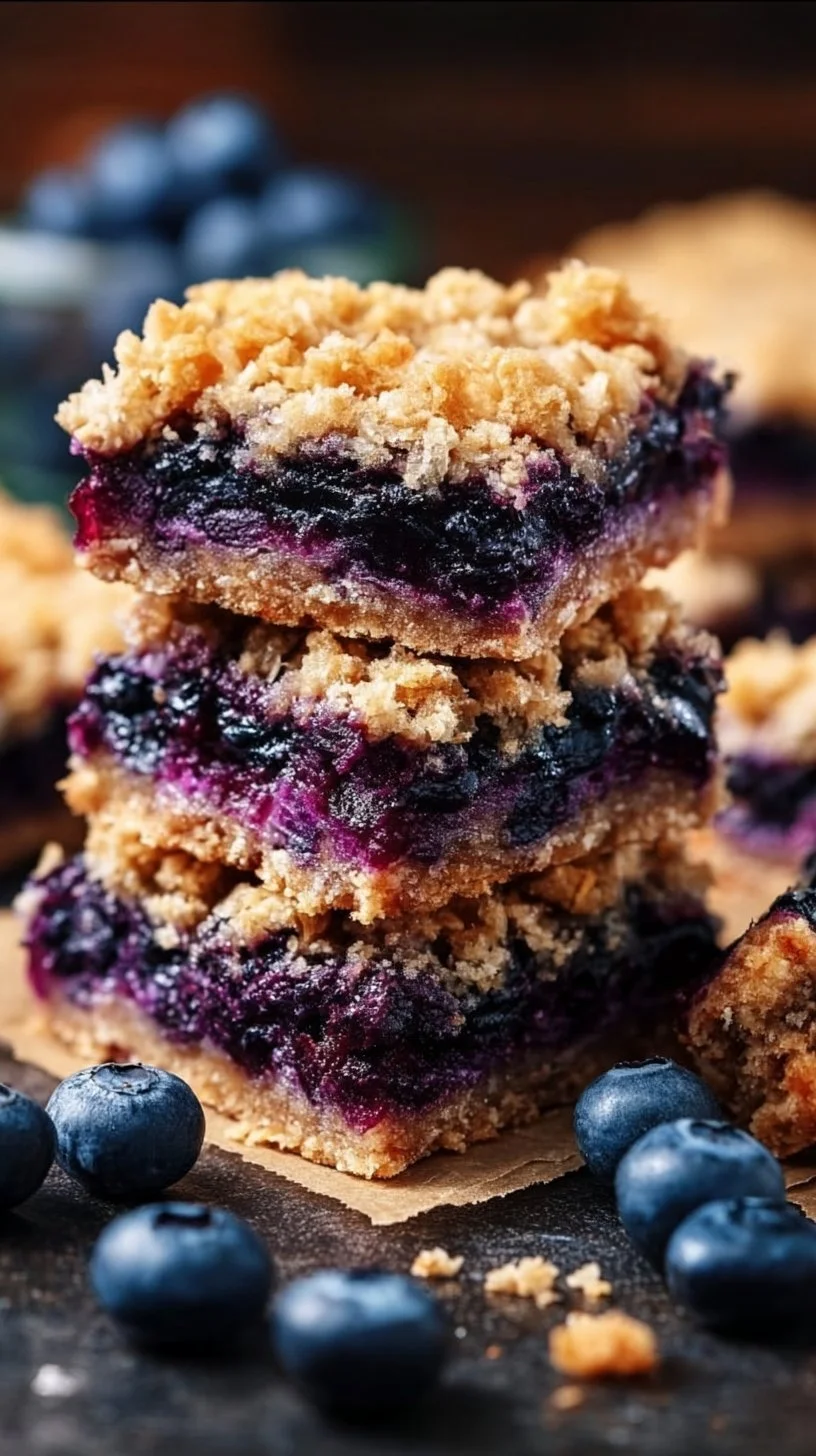
Blueberry Oatmeal Bars are a concise expression of grain, butter, and fruit working in strict culinary balance. The recipe that follows produces a structured bar with an oat-rich crust and topping, a glossy, jamlike blueberry layer, and a restrained sweetness designed to let the fruit and toasted oats remain prominent. For bakers seeking precedent in oat-bar technique and staging, review of similar preparations such as easy oatmeal-raisin cookie bars clarifies foundational textural goals and assembly order. This article examines the recipe through a professional lens: ingredient function, timing, thermal management, and finishing, so you can reproduce consistent, bakery-quality bars.
The culinary logic behind this dish
At its core this formula leverages three complementary functions: textural framework, fruit gelation, and flavor modulation. The oat-flour-butter matrix functions both as a structural base and as a toasted-flavor carrier. Old-fashioned oats contribute chew and fragmentation; the all-purpose flour provides glutenal cohesion to bind crumbs; and the melted butter, with its water content and milk solids, promotes browning and crispness in the baked crumb. The blueberry layer is stabilized by mechanical sugar and a small amount of cornstarch, which upon heating and cooling creates a glossy gel that prevents the topping from running, while the granulated sugar enhances maceration and sets the fruit’s pH for ideal color retention.
Baking at a relatively high temperature (375°F / 190°C) prioritizes rapid Maillard reactions on the oat surface while delivering enough oven spring to fuse layers without overcooking the fruit. The modest addition of baking soda subtly offsets acidity for a more open crumb, and the optional cinnamon adds aromatic lift without competing with the fruit’s primary notes. Each ingredient is present to perform a distinct technical role; the result is a harmonized bar where texture and flavor are precisely controlled.
How to make Blueberry Oatmeal Bars
(Recipe follows as provided; do not alter.)
Ingredients :
1 cup old-fashioned oats, 3/4 cup all-purpose flour (or gluten-free flour blend), 1/3 cup light brown sugar, 1/4 teaspoon baking soda, 1/4 teaspoon salt, 1/2 teaspoon cinnamon (optional), 6 tablespoons unsalted butter, melted (or coconut oil), 1 teaspoon vanilla extract, 1 cup blueberries (fresh or frozen), 1/4 cup granulated sugar, 2 teaspoons cornstarch
Directions :
Preheat your oven to 375°F (190°C) and line an 8-inch square baking pan with parchment paper. In a large bowl, combine the oats, flour, brown sugar, baking soda, salt, and cinnamon (if using). Mix well. Stir in the melted butter and vanilla extract until crumbly for the base of your bars. Press half of the oat mixture into the bottom of the prepared pan. In a separate bowl, toss the blueberries with granulated sugar and cornstarch. Spread this mixture over the oat base. Crumble the remaining oat mixture over the blueberries, gently pressing down. Bake for 35-40 minutes or until golden brown and bubbly. Allow to cool completely, then lift out and cut into squares.
Ingredient analysis through a chef’s lens
- Old-fashioned oats: They maintain discrete particle size and absorb fats and moisture without collapsing; they toast and brown to produce nutty aroma and textural chew. Rolled oats create an open, intentionally heterogeneous crumb—instant oats would produce pastiness.
- All-purpose flour (or gluten-free blend): Acts as the binder. With AP flour you gain slight elasticity and a firmer hold in the crumb; a gluten-free blend requires attention to hydration and may yield a more fragile bar.
- Light brown sugar: Contributes hygroscopicity and a depth of flavor from molasses, which promotes tenderness and deeper crust color.
- Baking soda: Small amount catalyzes browning and slightly neutralizes acidity, permitting a more even crumb and avoiding overly compact texture.
- Butter (melted) or coconut oil: Melted butter disperses quickly and encourages uniform browning; its water content steams during bake, helping to set the crumb without making it dry. Coconut oil will lend subtle coconut fragrance and a different melting profile; use only if that flavor is desired.
- Vanilla extract: Aromatic lift; elevates perceived sweetness without adding sugar.
- Blueberries + granulated sugar + cornstarch: Sugar draws juice from berries; cornstarch thickens during the bake to create a non-runny, glossy center. Use frozen berries without thawing to minimize dilution from frozen-water melt; however, toss with sugar to insulate and begin maceration.
Kitchen workflow & technique breakdown
Efficient staging reduces thermal shock to the batter and maintains consistent texture. Begin by preheating the oven to the specified 375°F (190°C) and lining the pan—this ensures the first heat meeting is predictable. Combine dry ingredients thoroughly prior to the butter addition: that distribution of sugar and raising agent ensures consistent browning and even lift. When incorporating the melted butter and vanilla, stir just until the mixture becomes crumbly; overworking will create an overly dense start and can compress the oats.
Pressing the base: use the flat bottom of a measuring cup or a small offset spatula for an even, compact layer. A uniform base thickness prevents thin zones from burning and thick zones from underbaking. Spread the blueberry mixture to the edges; gaps allow steam to escape irregularly. Crumbling the remaining oat mixture over the fruit should be done by hand to preserve textural irregularity—avoid packing it down too firmly in order to allow the top to toast and create contrasting crunch.
For timing, place the pan on the middle rack. Rotate the pan once at the halfway point of the bake if your oven has hot spots. Allow the bars to cool completely in the pan; slicing warm will smear the blueberry gel and compromise bar integrity.
For process comparison and efficiency in retrofitting this recipe into other bar frameworks, study similar one-bowl or layered bar techniques such as the structure used in cake-mix cookie bars to understand tradeoffs between mix-and-press speed and finished texture.
Texture control, heat management & timing
Texture is manipulated through particle size, fat state, and bake duration. The oats’ intact flakes resist collapse and yield chew; the melted butter creates even hydration and promotes crisp edges. Bake at 375°F to develop a caramelized exterior before the blueberry layer becomes overly soft; if the fruit begins to bubble excessively and the top is browning too quickly, tent the pan loosely with foil to slow surface coloration while allowing internal temperature to continue rising.
Target endpoint: a golden-brown top and visible bubbling of the blueberry layer where fruit juices meet crust—this demonstrates adequate gelatinization of cornstarch and concentration of sugars. Overbaking will dry the crumb and darken the molasses notes excessively; underbaking yields a weak, soggy structure. Allow at least one full hour of cooling in the pan at room temperature; this time facilitates starch retrogradation in the cornstarch-thickened filling, producing clean cuts and a tactile slice.
Professional variations
Variations should preserve the recipe’s functional relationships. Consider:
- Nut additions: Add 1/3 cup chopped toasted almonds or walnuts to the oat mixture for contrast; toast separately to avoid accelerating moisture uptake.
- Citrus lift: Add 1 teaspoon finely grated lemon zest to the blueberry mixture to brighten flavor and enhance pectin action variably.
- Spice modulation: Replace the cinnamon with 1/4 teaspoon ground cardamom for floral complexity.
- Salt-finish: A light sprinkle of flaky salt after baking accentuates the fruit’s sweetness and the butter’s richness.
If you pursue more substantial departures while keeping assembly order and proportions, review complementary bar constructions such as fruit-and-oat pairing bars to understand ingredient compatibility and balancing techniques.
Finishing touches & plating philosophy
Presentation should emphasize the contrast of glossy fruit against a golden, textured oat crust. After cooling and cutting, wipe the knife between slices to maintain visual clarity. For individual plating: place a single bar on a narrow rectangular plate to emphasize linear grain structure; a small spoonful of lightly whipped cream or a quenelle of crème fraîche can add a creamy counterpoint, but keep additions minimal so the bar remains the focal point. A restrained dusting of powdered sugar can accentuate edges, but avoid excess—textural clarity is the objective.
Maintaining quality after cooking
Storage control prevents moisture migration, which softens texture. For the first 24 hours store the bars at room temperature in a single layer in an airtight container with paper interleaves to absorb excess moisture. For longer storage, freeze flat in an airtight container between layers of parchment; thaw at room temperature—do not microwave—which preserves the crust’s crispness. If refrigerated, allow the bars to warm to room temperature before serving to reestablish flavor volatility in the strawberries and butter aromatics.
Questions from home cooks (chef answers)
Q: Can I use frozen blueberries? A: Yes. Keep them frozen until tossing with sugar to limit juice release; frozen berries will release more water during bake, but the cornstarch will compensate. Consider increasing bake time by 3–5 minutes if frozen berries reduce the pan’s internal temperature at placement.
Q: Will substituting oil for butter change the outcome? A: Yes. Butter contributes water and milk solids that promote steam and Maillard reactions; oil will yield a denser, less browned crust and a different flavor profile. Use coconut oil only if the coconut note is acceptable.
Q: How do I prevent a soggy bottom? A: Press the base firmly and bake in the center of the oven; if the bottom remains soft, extending bake time by short intervals while monitoring top color will help. An 8-inch square pan concentrates heat; avoid larger pans unless you proportionally adjust bake time and depth.
Q: Can I halve or double the recipe? A: Halving is straightforward; doubling requires two pans or a larger pan with adjusted bake time—thicker layers will need more time but watch for overbrowning on the top.
Final chef notes
Precision in measuring and disciplined timing are the determinants of consistent results with this straightforward formula. Respect the grain size of the oats, the state of the fat, and the cooling interval—each yields control over chew, browning, and sliceability. Tweak spices and finishing salts judiciously; the blueberry’s freshness should remain central. This bar is an exercise in restraint: modest sweetness, structural clarity, and a focus on ingredient-driven flavor.
Conclusion
For further visual technique references and alternate interpretations of the blueberry oat-bar concept, consult these curated resources: the stepwise breakdown found at Blueberry Oatmeal Bars – Pastry & Beyond offers photographic staging; a home-cook–oriented version with clear timing notes appears at Blueberry Oatmeal Bars {One Bowl Recipe!} – WellPlated.com; and a concise, tested variant is available at Blueberry Oatmeal Bars | Stress Baking.
Blueberry Oatmeal Bars
Ingredients
Method
- Preheat your oven to 375°F (190°C) and line an 8-inch square baking pan with parchment paper.
- In a large bowl, combine the oats, flour, brown sugar, baking soda, salt, and cinnamon (if using). Mix well.
- Stir in the melted butter and vanilla extract until crumbly for the base of your bars.
- Press half of the oat mixture into the bottom of the prepared pan.
- In a separate bowl, toss the blueberries with granulated sugar and cornstarch.
- Spread this mixture over the oat base.
- Crumble the remaining oat mixture over the blueberries, gently pressing down.
- Bake for 35-40 minutes or until golden brown and bubbly.
- Allow to cool completely, then lift out and cut into squares.