White Chocolate Raspberry Scones
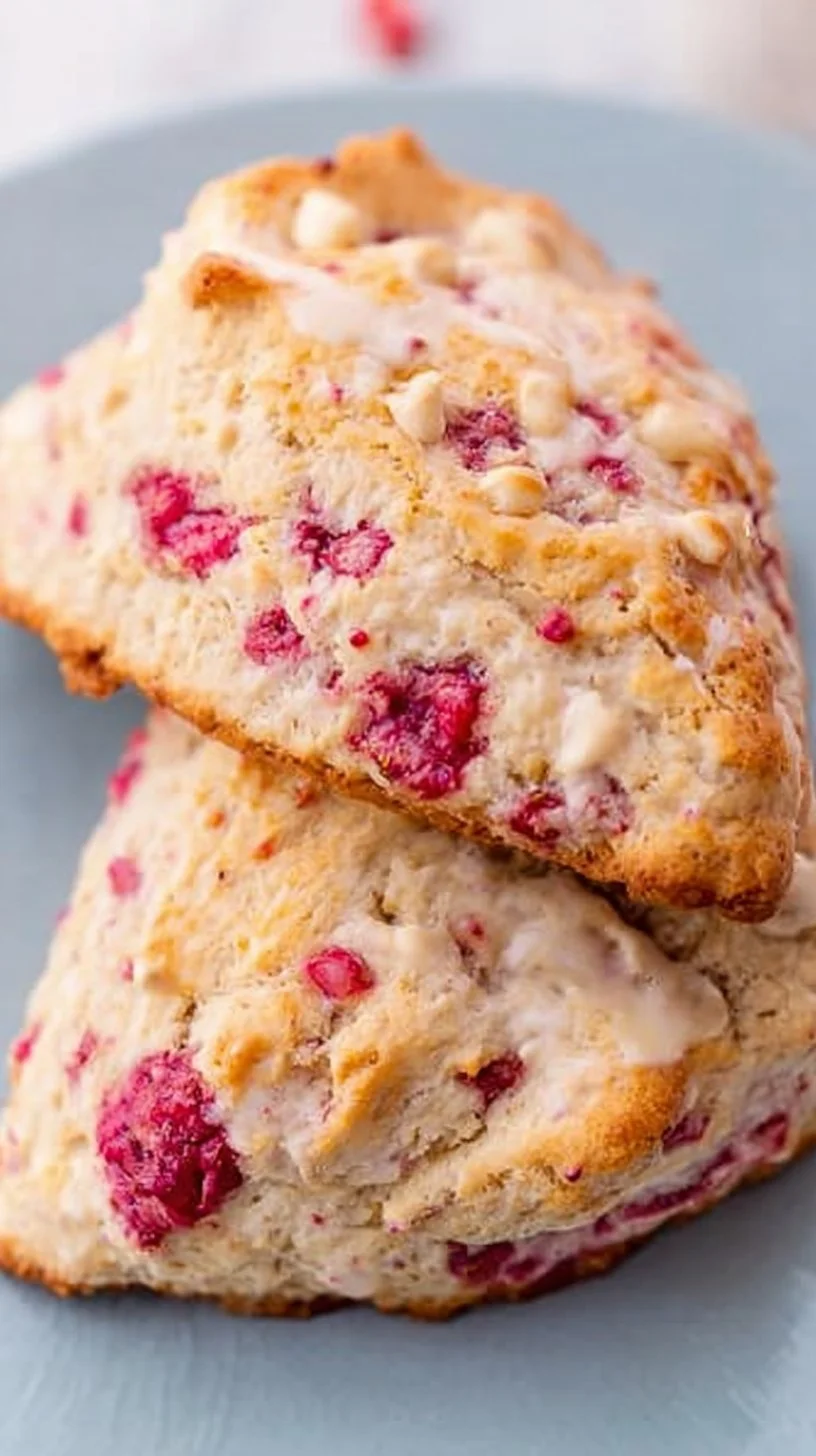
White Chocolate Raspberry Scones are a classic example of how a restrained formula can yield maximum sensory contrast: the dense, tender crumb of a well-made scone against the burst of fresh raspberry acidity and the creaminess of white chocolate. In this examination I will deconstruct the recipe, articulate the technical rationale behind each choice, and provide a professional workflow to reproduce consistent results. For those exploring related white chocolate–raspberry combinations in other formats, consult this recipe for white chocolate raspberry cheesecake balls for complementary textural and flavor comparisons.
The culinary logic behind this dish
Scones are a laminated-free quick pastry that relies on cold fat to create lift and flake. The ingredients here—flour, sugar, baking powder, salt, cold butter, cream, egg, and vanilla—are deliberately minimal to highlight two primary inclusions: white chocolate chips and fresh raspberries. White chocolate contributes sweetness, fat, and a soft, creamy mouthfeel; raspberries provide acidity, bright aromatics, and a textural counterpoint. The balance between these elements determines whether the scone reads as cloying or well-proportioned.
Baking powder is the leavening agent; its role is to produce gas quickly in an oven environment to create internal structure while the cold fat renders thin layers. Sugar is present at a moderate level—enough to round flavors and aid crust color but not so much as to inhibit gluten formation excessively. The cream and egg provide hydration and tenderizing proteins: cream brings fat and lactose which brown and fortify mouthfeel, while egg contributes strength and emulsification. Salt sharpens flavor and controls sweetness perception.
How to make White Chocolate Raspberry Scones
This section presents the precise recipe as provided. The methodological commentary that follows assumes fidelity to the ingredient list and directions below.
Ingredients :
2 cups all-purpose flour, 1/2 cup sugar, 1 tbsp baking powder, 1/2 tsp salt, 1/2 cup cold unsalted butter, cubed, 1/2 cup white chocolate chips, 1/2 cup fresh raspberries, 1/2 cup heavy cream, 1 large egg, 1 tsp vanilla extract
Directions :
- Preheat your oven to 400°F (200°C) and line a baking sheet with parchment paper., 2. In a large bowl, whisk together the flour, sugar, baking powder, and salt., 3. Cut in the cold butter using a fork or pastry cutter until the mixture resembles coarse crumbs., 4. Stir in the white chocolate chips and raspberries., 5. In a separate bowl, whisk together the cream, egg, and vanilla extract., 6. Pour the wet ingredients into the dry ingredients and mix until just combined., 7. Turn the dough onto a floured surface and gently knead it a few times until it comes together., 8. Pat the dough into a circle about 1 inch thick and cut into wedges or rounds., 9. Place the scones on the prepared baking sheet and bake for 15-20 minutes or until golden., 10. Let cool slightly before serving.
Ingredient analysis through a chef’s lens
Each component serves a specific structural or sensory function. All-purpose flour provides a predictable gluten yield; its protein content supports the tender but stable crumb required for scones. Sugar at 1/2 cup is a relatively high proportion for an unglazed scone; this level supports caramelization at the crust and buffers raspberry acidity. Baking powder at 1 tablespoon is a forward leavening allocation, chosen to create immediate oven spring without relying on lamination. Salt at 1/2 teaspoon is a corrective agent to enhance both sweetness and fruit clarity.
Cold unsalted butter, cubed, is the critical technical ingredient. The butter is not merely fat for flavor; its size and temperature control the formation of discrete fat pockets that steam in the oven, creating flake and an open crumb. White chocolate chips are stable inclusions; their sugar and cocoa butter will soften but not fully melt at scone baking temperatures, providing pockets of sweet creaminess. Fresh raspberries contribute water; their placement and gentle handling determine whether they burst and stain the dough or maintain distinct pockets of juice. Heavy cream is the principal liquid; its fat content smooths flour hydration and promotes browning. Egg adds binding proteins and a touch of richness, while vanilla ties aroma across components.
For variations in related formats and techniques that utilize white chocolate in dessert construction, review this guide to white chocolate mousse tartlets to compare emulsification strategies and texture control.
Kitchen workflow & technique breakdown
A disciplined workflow reduces handling and preserves the temperature of the dough. Begin by measuring all dry ingredients and sifting or whisking together flour, sugar, baking powder, and salt to ensure even distribution of leavening and salt. Keep the butter very cold—straight from the refrigerator—and cube it small to facilitate rapid incorporation into dry ingredients. Use a pastry cutter, two knives, or a fork to cut the butter into the flour until the mixture resembles coarse crumbs; if using a food processor, pulse briefly in 1–2 second bursts to avoid warming.
When adding inclusions, fold in white chocolate chips and raspberries gently. If the raspberries are wet or juiced, pat them dry; too much surface moisture will over-hydrate the dough and cause color bleeding. Whisk the wet ingredients (cream, egg, vanilla) thoroughly to emulsify the fat and liquid into a uniform mixture; this reduces localized over-wetting when combined with the dry mix.
Combine wet into dry minimally—only until just combined. Over-mixing develops gluten and produces a tough scone. Turn the dough onto a lightly floured surface and fold a handful of times; the goal is cohesion, not homogenization. Pat to 1 inch thickness and cut quickly with a serrated knife or a floured biscuit cutter to avoid compressing layers. Arrange the scones on parchment-lined trays with a small gap between pieces to allow hot air circulation.
Texture control, heat management & timing
Temperature control governs texture. The oven at 400°F (200°C) is intentionally high: it produces rapid steam generation from butter and cream, delivering oven spring and a crisp exterior before the interior overcooks. Fifteen to twenty minutes is the indicated bake time; check at the low end for color and a skewer inserted into the center should register as set but not dry. If scones brown too quickly, reduce oven temperature by 15–25°F and extend time; a pale scone indicates insufficient Maillard reaction and potentially a dense interior.
The particle size of butter matters: coarser pieces yield more open, layered crumb as they create larger steam pockets. Overly warm dough causes butter to smear rather than remain discrete, producing a shorter, denser texture. Chilling the dough briefly (10–15 minutes) after forming can mitigate heat transfer from hands and cutter friction, but avoid long rests that relax leavening action. The raspberries will release some juice; to prevent excessive moisture pockets, press larger berries into the dough rather than slicing them, and use the freshest fruit available.
For comparative multi-layered desserts that emphasize controlled textural contrasts of cream, fruit, and chocolate, examine structural notes in this raspberry chocolate lasagna recipe.
Professional variations
Without altering the original formula, consider technique-driven variations to refine results while preserving ingredient proportions. For more pronounced flakiness, cut the butter slightly larger and work more quickly to retain chilled butter pockets. To reduce white chocolate leaching into surrounding dough, freeze the chips for 10 minutes before folding in. If raspberry moisture is a concern, toss berries very lightly in a tablespoon of flour to absorb surface juice before incorporation.
For a more complex crust, brush scones with a light cream wash or an egg wash (using a portion of the egg from the wet mix) to intensify browning and gloss. To modulate sweetness without changing ingredient amounts, serve with a lightly acidic accompaniment—unsweetened crème fraîche or a lemon curd—to introduce counterpoint on the plate.
If you are investigating further uses of white chocolate as a textured garnish, the technique notes in this white chocolate Easter bark guide describe tempering and cooling strategies for crisp snap and bloom control.
Finishing touches & plating philosophy
Finishing is an opportunity to accentuate the scone’s contrasts cleanly and simply. A light dusting of fine sugar at room temperature pre-bake will produce a subtle sparkle and a delicate crust; apply immediately before baking so the sugar adheres. Post-bake, allow scones to cool 5–10 minutes on the sheet to set the crumb and allow chocolate to firm slightly; serving too hot risks tearing the crumb and causing white chocolate to smear.
Plating should emphasize geometry and textural contrast: present scones in threes or fours with a small quenelle of lightly sweetened cream or a smear of raspberry compote. Avoid over-garnishing; the scone’s internal interplay between white chocolate and raspberry is the focal point. Use warm plates to prevent rapid chilling of the fat, which can harden the white chocolate and dull flavor perception.
Maintaining quality after cooking
Scones are best consumed the day of baking for optimal texture: a crisp exterior and tender interior. To preserve freshness, cool completely on a wire rack, then store in a loosely covered container at room temperature for up to 24 hours. For longer storage, tightly wrap and freeze for up to one month; reheat from frozen at 350°F (175°C) for 8–10 minutes, which restores surface crispness while gently melting internal chocolate.
Reheating in a microwave will soften the crumb but can make the white chocolate oily; if using a microwave, apply brief 10–12 second bursts at medium power and finish with a short oven or toaster oven blast for crust restoration.
Questions from home cooks (chef answers)
Q: How do I prevent raspberries from bleeding into the dough?
A: Use firm, evenly sized berries and fold them in with a light touch. If surface moisture is excessive, briefly toss the berries in a small amount of flour to absorb free juice. Minimize handling once berries are incorporated.
Q: Can I use frozen raspberries?
A: Frozen raspberries can be used but will introduce excess moisture when thawed. Keep them frozen until the point of mixing and fold them in immediately; expect color diffusion and adjust baking time marginally if the dough is wetter.
Q: Why does my scone turn out dense?
A: Dense scones result from over-mixing, warm butter, or insufficient leavening action. Mix only until the dough holds together, keep butter cold, and ensure your baking powder is fresh.
Q: My white chocolate melts into the dough—how to prevent that?
A: Use chilled or briefly frozen white chocolate chips and fold them in quickly. Avoid excessive pressure when shaping, which can force fat into the matrix and cause chip collapse.
Final chef notes
This recipe is an exercise in balance: control of temperature, minimal handling, and precise timing are the levers that determine success. Respecting the cold-fat method and controlling moisture from the fruit are the primary technical imperatives. Small procedural adjustments—chilling chips, limiting kneading, and maintaining oven temperature—deliver consistent, elevated results without altering the ingredient list.
Conclusion
For comparative recipe structure and presentation ideas, this White Chocolate Raspberry Scones – Peanut Butter and Julie entry is instructive for visual and ingredient handling differences. If you seek alternative proportions and glazing treatments, review the White Chocolate Raspberry Scones – Garnish & Glaze version for inspiration. For a home-cook friendly take and troubleshooting notes, consult the White Chocolate Raspberry Scones – Pinch me, I’m eating resource.
White Chocolate Raspberry Scones
Ingredients
Method
- Preheat your oven to 400°F (200°C) and line a baking sheet with parchment paper.
- In a large bowl, whisk together the flour, sugar, baking powder, and salt.
- Cut in the cold butter using a fork or pastry cutter until the mixture resembles coarse crumbs.
- Stir in the white chocolate chips and raspberries.
- In a separate bowl, whisk together the cream, egg, and vanilla extract.
- Pour the wet ingredients into the dry ingredients and mix until just combined.
- Turn the dough onto a floured surface and gently knead it a few times until it comes together.
- Pat the dough into a circle about 1 inch thick and cut into wedges or rounds.
- Place the scones on the prepared baking sheet and bake for 15-20 minutes or until golden.
- Let cool slightly before serving.