Smashburger Quesadillas
Introduction
There are recipes that announce themselves loudly, with lineage traced through centuries and borders drawn in spice. And then there are the quieter, playful dishes—the ones born not from tradition, but from curiosity. Smashburger Quesadillas belong to this second family: a modern crossroads where American diner culture collides gently, deliciously, with the comforting fold of a tortilla.
I first encountered a version of this dish not in a restaurant, but in a borrowed kitchen in the outskirts of Tucson. The air was dry, the sun relentless, and the refrigerator held very little—ground beef, shredded cheese, tortillas meant for tomorrow’s breakfast tacos. What emerged from that scarcity was something unexpectedly profound: the sizzle of beef pressed thin, the crackle of tortilla against hot steel, the smell of nostalgia and invention mingling in the air.
This is not fusion for spectacle’s sake. This is fusion the way people actually cook—using what they have, borrowing flavors they love, honoring comfort over purity. Smashburger Quesadillas are casual, yes. But within their crisped edges and molten centers is a story of migration, adaptation, and the universal desire to make something satisfying from simple things.
The Origin Story & Regional Influence Behind This Dish
To understand Smashburger Quesadillas, we must understand the smashburger itself—a distinctly American phenomenon. Unlike thick pub burgers, the smashburger is about surface area and speed. Beef is pressed hard against a hot griddle, creating a deeply caramelized crust through the Maillard reaction. It is working-class food, diner food, roadside food. Efficient. Flavor-forward. Honest.
The quesadilla, on the other hand, carries centuries of Mexican culinary history. Long before flour tortillas became common in northern Mexico and the American Southwest, corn tortillas were folded around simple fillings—cheese, squash blossoms, mushrooms—cooked on comales blackened by time.
The marriage of these two ideas likely didn’t happen in a single moment or place. It happened gradually, across kitchens where cultures overlap: border towns, college apartments, late-night food trucks, family homes where traditions blur naturally. In the Southwest, especially, tortillas are not exotic—they are everyday tools. So are burgers. Pressing beef onto a tortilla feels inevitable once you see it done.
This dish is less about invention and more about permission—the permission to let cuisines speak to one another without apology.
Ingredients Through a Cultural & Historical Lens
The ingredients list for Smashburger Quesadillas is refreshingly short, but each item carries weight.
Ground beef, particularly in the United States, symbolizes abundance and convenience. Its rise parallels industrialization, refrigeration, and the birth of fast food. Yet when smashed thin and seasoned simply with salt, pepper, and garlic powder, it echoes older techniques—maximizing flavor with minimal embellishment.
Flour tortillas tell a more regional story. While corn remains central to Mexican identity, flour tortillas emerged strongly in northern Mexico and the borderlands, influenced by wheat agriculture and Spanish colonization. Their flexibility and tenderness make them ideal for folding around juicy fillings without tearing.
Cheese—cheddar or American in this recipe—anchors the dish firmly in American comfort food culture. Meltability matters here more than terroir. The cheese becomes glue, sauce, and indulgence all at once.
The optional accompaniments—pickles, diced onions, burger sauce—are the final nod to diner counters and backyard grills. Sharp, acidic, creamy elements designed to cut richness and add contrast. None are required, but all are familiar, comforting, deeply nostalgic.
Cooking the Dish: Sensory Notes & Traditional Techniques
Cooking Smashburger Quesadillas is an experience of sound and smell as much as taste. The skillet or griddle must be hot—confidently hot. When the beef hits the surface, pressed directly onto the tortilla, it should hiss immediately. That sound is promise.
As the beef cooks, fat renders and seeps into the tortilla itself. This is important. The tortilla is no longer just a wrapper; it becomes part of the cooking process, absorbing flavor, crisping where it touches metal.
Seasoning is simple and should be generous. Salt wakes everything up. Garlic powder adds warmth without overpowering. Pepper offers a gentle bite. There is restraint here, and wisdom in it.
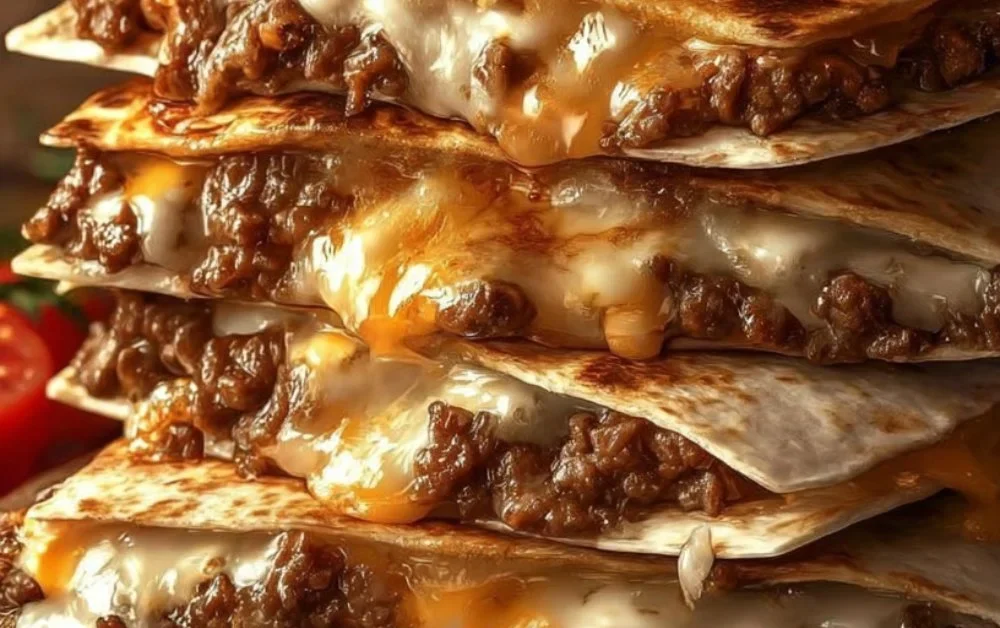
When you flip the tortilla, the transformation becomes visible: browned beef, edges crisped, tortilla blistered just enough. Cheese is added, then the fold—a gesture familiar to anyone who has ever made a quesadilla, taco, or sandwich. Grill both sides until the exterior shatters slightly under pressure and the inside melts into cohesion.
This is fast cooking, intuitive cooking. There is no garnish fuss, no plating ceremony. The reward is immediate.
How Different Regions Prepare Their Version
While Smashburger Quesadillas as written are unmistakably American-Southwestern, similar ideas exist elsewhere.
In northern Mexico, cooks might lean toward asadero or Oaxaca cheese, lending a stretchier, milkier profile. In Texas, the beef might be more heavily seasoned, perhaps with chili powder or cumin, echoing Tex-Mex traditions.
On the West Coast, I’ve tasted versions finished with grilled onions pressed directly into the beef, or served with avocado-based sauces that recall California’s love affair with green richness.
In the Midwest, where casseroles and comfort reign supreme, these quesadillas sometimes grow thicker, heavier, more indulgent—extra cheese, bacon bits folded inside, served alongside fries without irony.
Each variation reflects local taste and availability. None are wrong. All are valid expressions of the same core idea: meat, bread, heat, and pleasure.
Traditional Ways This Dish Is Shared or Served
This is not a dish meant to be eaten alone at a white tablecloth table. Smashburger Quesadillas shine in communal settings—cut into wedges, stacked on a platter, passed from hand to hand.
They belong at casual gatherings: game nights, family dinners where everyone eats at different times, outdoor cookouts where someone inevitably asks, “What is that, and can I have one?”
Serving them hot is essential. The cheese must still pull, the tortilla still crackle. Toppings on the side allow for customization—some people crave pickles’ sharp snap, others the sweetness of diced onions or the indulgence of burger sauce.
Pair them with fries, a simple salad, or even just cold drinks and conversation. The food does not demand ceremony; it invites participation.
Storing the Dish Without Losing Its Cultural Essence
Leftovers, while never ideal for something so textural, can still be treated with respect. Let the quesadillas cool before wrapping them—this preserves their structure and prevents sogginess.
Stored in the refrigerator for up to three days, they carry with them the memory of the original cook. When reheating, return them to a skillet rather than a microwave. Heat restores crispness; it reawakens the dish’s original intention.
Freezing is possible, though it slightly softens the tortilla upon reheating. Still, even then, the soul of the dish remains intact—proof that comfort food is resilient.
Cultural Questions People Often Ask
Can leftover hamburger meat be used?
Yes, and doing so aligns perfectly with the dish’s spirit. This is food that welcomes resourcefulness.
How can spice be added?
Jalapeños or hot sauce introduce heat without disrupting balance. Spice should enhance, not dominate.
Can the protein or tortilla be changed?
Ground turkey or chicken offers a lighter version. Corn tortillas provide a gluten-free alternative, though they bring a different texture and cultural emphasis.
Each question reflects a desire not just to cook, but to adapt—to make the dish one’s own while honoring its essence.
A Closing Note on Food, Memory & Travel
Smashburger Quesadillas may never appear in history books or culinary museums. But that does not make them insignificant. Some of the most meaningful foods are born quietly, in moments of hunger and creativity, shaped by the places we live and the cultures we move through.
When I travel, I chase these moments as much as I do grand meals. Because food like this tells the truest stories—not of perfection, but of people making do, making joy, making something warm to share.
In the end, Smashburger Quesadillas are not just a recipe. They are a reminder that culture is alive, evolving, and often most delicious when it refuses to stay in one place.
Smashburger Quesadillas
Ingredients
Method
- Heat a skillet or griddle over medium-high heat.
- Press a small handful of ground beef directly onto one half of each tortilla. Season well with salt, pepper, and garlic powder.
- Cook the beef side down for 2–3 minutes until browned.
- Flip the tortilla, sprinkle with cheese, then fold it in half.
- Grill both sides until crispy and cheese is melted.
- Slice and serve with your favorite burger toppings or dipping sauce.