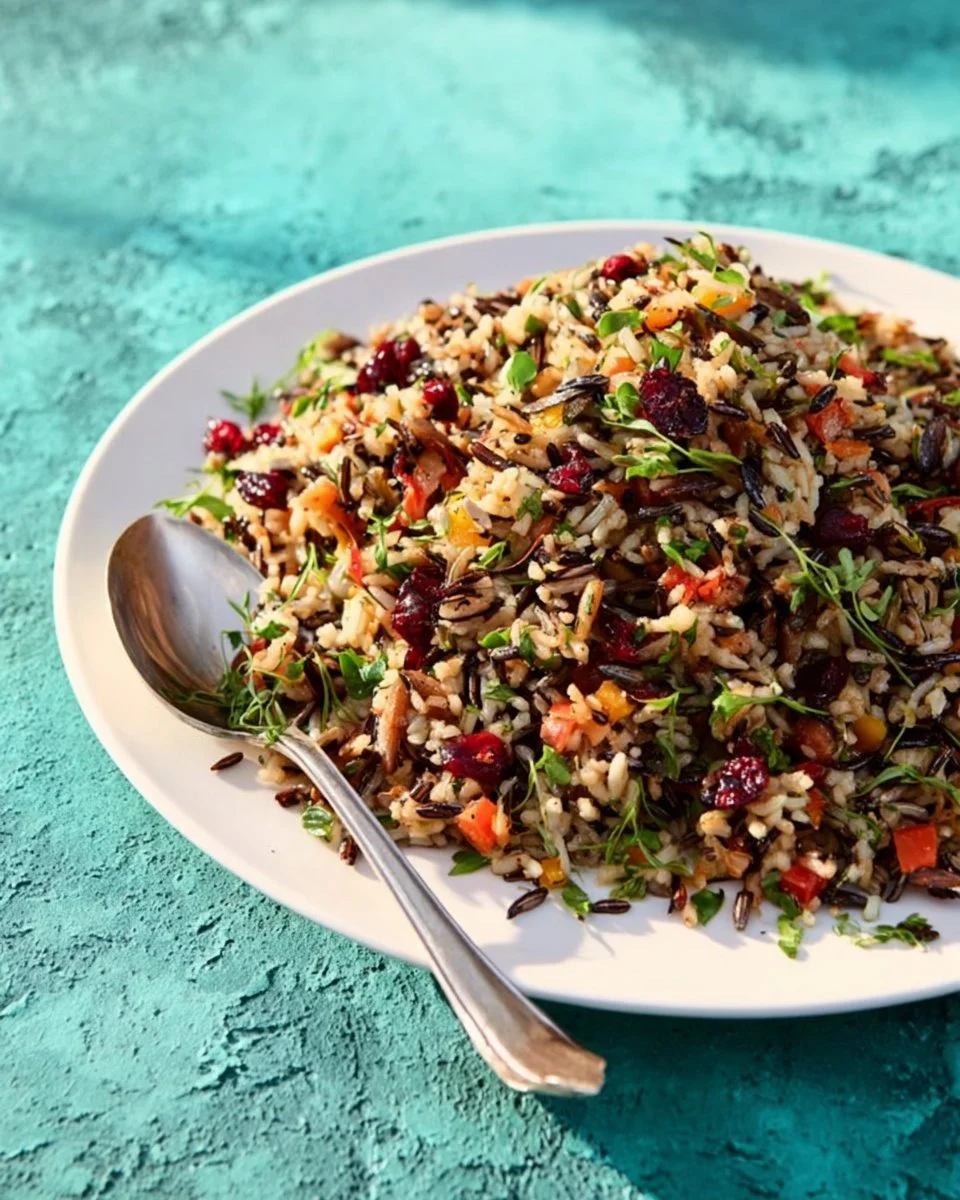
Cranberry Wild Rice Pilaf
Introduction
There’s something about a pot of Wild Rice Pilaf simmering away on the stove that feels like coming home after a long, chilly day. Maybe it’s the gentle hiss of steam under the lid or the earthy aroma of herbs drifting through the kitchen—either way, this dish has a way of softening the edges of even the busiest moments. I’ve made this recipe on holidays, yes, but more often on ordinary weeknights when I’m craving something grounding, colorful, and quietly joyful.
This Cranberry Wild Rice Pilaf is one of those recipes you can count on: dependable in its flavors, forgiving in its methods, and always a little magical in its final form. The nutty wild rice, the sweet pop of cranberries, the garden-fresh herbs—it all comes together in a pot that asks almost nothing from you except to be stirred once in a while and trusted. I love that.
So, pull up a chair at my kitchen counter. I’ll pour you something warm, you grab your coziest wooden spoon, and we’ll make this comforting dish together.
What Makes This Recipe Feel Comforting
Comfort, to me, is all about layers—warmth layered over fragrance layered over familiarity. This pilaf checks each of those boxes.
First, wild rice has this deep, nutty aroma that fills the kitchen slowly, like someone lighting a candle one room over. Then there’s the parade of vegetables—onion, carrot, bell pepper—each softening into sweetness. And just when the dish feels steady and savory, along come the cranberries with their festive little bursts of color and brightness.
There’s also something deeply reassuring about recipes that grow better with patience. This one needs time to simmer, to rest, to fluff. It feels like a reminder that not everything in our day needs to be hurried. When the rice settles under the lid after cooking, almost steaming in its own tiny spa moment, I always think: well, if rice can take a breath, so can I.
And perhaps most comforting of all: this dish is versatile. Serve it warm after a long day, or tuck it into the fridge for tomorrow’s lunch—it’s delicious either way. A recipe that adapts to real life? That’s comfort in its own right.
Let’s Talk About the Ingredients (In Simple Terms)
One thing I love about this dish is that it uses humble ingredients that work together as if they’ve secretly been best friends for years.
- Wild rice mix — This is the star. A combination of brown and black rice brings that chewy, nutty texture we adore. Rinse it well, and you’re halfway to success.
- Yellow onion — Our classic flavor base. Once it turns translucent, you know you’re building something good.
- Bell pepper — Choose your favorite color! It adds gentle sweetness and a little crunch.
- Carrot — Grated carrot melts into the pilaf, adding color and a hint of natural sweetness.
- Dried cranberries — Half go in to plump and infuse their flavor into the rice, the other half stay jewel-like for garnish.
- White wine — Just a splash to brighten everything. (If you prefer, veggie stock works wonderfully as a substitute.)
- Vegetable stock or water — Stock adds flavor; water keeps things simple. Either will get you to a delicious result.
- Herbs: bay, rosemary, sage, thyme, oregano — These aren’t just ingredients; they’re aroma and comfort personified. Some sprigs you’ll pull out later, some stay right in the pot.
- Red pepper flakes + sea salt — A little warmth, a little seasoning—just enough.
- Olive oil — Helps the onions soften and brings everything together.
- Fresh herbs for garnish — The finishing touch that makes the dish sing.
When you see this all laid out, it feels like a modest list. But once these ingredients take a slow dance in the pot, the flavors become so much richer than the sum of their parts.
Step-By-Step: What You’ll See, Smell & Expect
This is where the magic happens—and where your kitchen starts smelling like a cozy holiday gathering on even the most ordinary Tuesday.
1. Start with the onions.
Heat a big, deep skillet or pot over medium-low, add a little olive oil (or water if you prefer), and in goes the onion with a pinch of sea salt. You’ll notice the onion turns glossy first, then slowly becomes translucent. That’s your gentle cue that it’s ready for company.
2. Bring in the aromatics.
Now stir in the grated carrot, thyme, oregano, sage, rosemary, bay leaves, and just a whisper of red pepper flakes. Adding the wild rice here is a beautiful moment—the grains toast slightly, taking on some of the herbs’ aromas. It will smell earthy, comforting, and unexpectedly fancy.
3. Add bell pepper and cranberries.
The bell pepper adds freshness while the cranberries begin to soften and release their sweetness. Pour in the white wine (listen for that tiny sizzle!), then the stock or water. Give everything a good stir and taste for seasoning.
4. Simmer, simmer, simmer.
Bring the mixture to a soft simmer, cover with the tightest lid you own, and let it cook on medium-low for 50 minutes. The rice will slowly drink in all that flavorful liquid.
5. Let it rest.
Once the timer dings, turn off the heat but resist—truly resist—the urge to peek. Let it sit for 10–15 minutes, covered, so it finishes steaming.
6. Fluff and finish.
Remove the bay leaves and any woody herb stems. Use a fork to fluff the rice gently; this step always feels like loosening curls after a long day. Then sprinkle with the remaining dried cranberries and fresh herbs.
Serve it warm or cold. Either way, it will feel like a hug.
Small Tweaks That Make Big Differences
Even though this recipe is beautifully simple, little adjustments can help personalize the dish to your taste or mood:
- Rinse the rice thoroughly.
It’s a tiny step with big payoff—clean, separate grains instead of sticky ones. - Use the vegetables you actually have.
No bell pepper? Toss in celery. Out of carrot? Try grated zucchini or parsnip. Pilaf is flexible. - Adjust the herbs to your liking.
If you prefer gentler flavors, reduce the rosemary or sage. If you love herbal brightness, go wild with thyme or oregano. - Swap the wine for more stock.
This keeps the recipe fully vegan and still wonderfully flavorful. - Add crunch or protein.
Pecans or walnuts add lovely texture. Chickpeas or lentils turn the pilaf into a hearty main dish.
Small things, big difference—just like putting on a cozy sweater or lighting a candle on a gray day.
Turning This Into a Meal Your Family Will Love
This pilaf can be anything you want it to be: a side dish, a centerpiece, or even part of a big Sunday spread.
Here are a few comforting ways to serve it:
- With roasted meats — Chicken, turkey, or pork tenderloin all pair beautifully with the cranberry and herb flavors.
- Vegetarian-style — Serve alongside grilled vegetables, roasted squash, or a big leafy salad.
- Lunch bowls — Pile the pilaf into a bowl and top with chickpeas, leftover veggies, and a drizzle of lemony vinaigrette.
- Holiday table star — It adds color, texture, and just the right touch of festive sweetness.
One of my favorite ways to enjoy the leftovers is tucked into a warm tortilla with a handful of greens—unexpected, yes, but incredibly delicious.
Leftovers & Make-Ahead Tips for Busy Days
Busy days call for recipes that treat you kindly, and this one does exactly that.
- Refrigerate: Cool completely, then store in an airtight container for up to 4 days.
- Freeze: This pilaf freezes surprisingly well. Pack it tightly, freeze up to 3 months, and thaw overnight in the fridge.
- Reheat: A splash of water and a quick warm-up on the stove or in the microwave brings it right back to life.
- Make-ahead: You can make the entire dish a day before serving—helpful for holidays or hosting. Just reheat gently.
If you’re ever tempted to double the batch, I support you wholeheartedly. Future-you will thank present-you.
Little Problems You Might Hit (And How to Fix Them)
Every cook—new or seasoned—hits tiny bumps in the road. Here’s how to smooth them out:
- Rice is still firm after cooking.
Wild rice is like that sometimes. Add ¼ cup more water, cover, and cook another 10–15 minutes. - Rice turned mushy.
Too much heat or too much liquid may be the culprit. Next time, keep the simmer low and resist the urge to lift the lid early. - Flavor feels too mild.
Add a pinch more salt or another sprinkle of fresh herbs right before serving. Sometimes brightness is all it needs. - Cranberries clumped together.
Shake them lightly into the pot next time to distribute evenly. - Pilaf dried out in the fridge.
Add a splash of water before reheating—it will fluff right back up.
These aren’t failures—they’re simply little conversations between you and your pot.
Your Questions, Answered
1. Can I use brown rice instead of wild rice?
Yes! Just remember that brown rice may need a little more time, so keep an eye on the liquid and tenderness.
2. Is this recipe gluten-free?
Absolutely. Just double-check your stock to make sure no sneaky gluten is hiding there.
3. Can I make this dish ahead?
You can—and it’s wonderful for make-ahead meals. Prepare it the day before and gently reheat on the stove or in the oven.
4. Can I serve this cold?
Yes! It becomes a delicious, hearty grain salad when chilled.
5. Is it okay to skip the wine?
Of course. Replace it with extra stock and carry on.
A Cozy Final Thought from My Kitchen
Every time I make this Wild Rice Pilaf, I’m reminded that the simplest ingredients, when treated with a little love and patience, can transform into something special. This dish feels like a quiet celebration—colorful, nurturing, and deeply satisfying. I hope it brings that same warmth to your table, whether you’re cooking for a holiday crowd or just yourself on a gentle Monday night.
May your kitchen be cozy, your spoon be ready, and your pot of pilaf always fluff beautifully. Until next time, happy cooking, dear friend.
Cranberry Wild Rice Pilaf
Ingredients
Method
- Heat a large deep skillet or pot over medium-low heat. Add the olive oil or a splash of water along with the chopped onion. Sauté with a pinch of sea salt until the onion is translucent.
- Stir in the grated carrot, thyme, oregano, sage, rosemary, bay leaves, and red pepper flakes. Add the wild rice mix and combine well. Allow it to toast for a couple of minutes with the aromatics.
- Add in the chopped bell pepper and half of the dried cranberries. Pour in the white wine, then add the vegetable stock or water. Stir and taste for seasonings, adding more sea salt if needed.
- Bring the pilaf to a simmer. Cover with a tight lid and cook on medium-low heat for 50 minutes.
- Once cooking time is up, turn off the heat but do not remove the lid. Let the rice sit covered for an additional 10 to 15 minutes to finish cooking in its own steam.
- Discard the bay leaves and woody sprigs from the herbs. Use a fork to gently fluff up the rice.
- Serve warm or cold, garnished with the remaining cranberries and fresh herbs.