Coconut Cream Dream Bars
Introduction
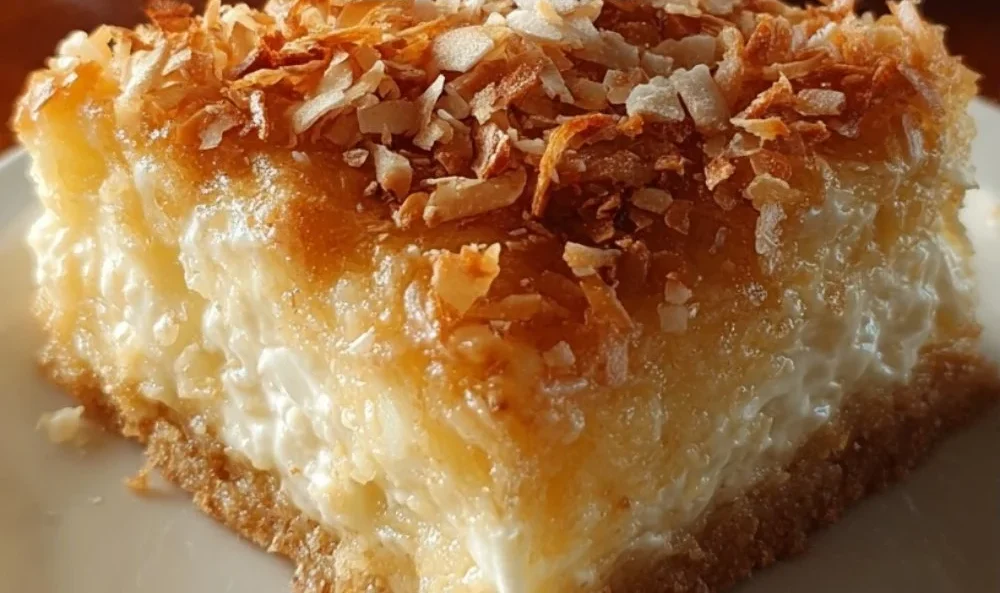
Coconut Cream Dream Bars are a study in contrast: a compact, toasted graham foundation supporting a dense, sweet coconut custard, finished with a light cloud of whipped cream and a scattered lace of toasted coconut. The dish demands attention to layering, thermal transitions and moisture control to maintain clarity between the crunchy base, the set coconut layer and the aerated topping. In this article I break down the recipe with the operative techniques and sensory benchmarks required to execute the bars with precision and consistency. The objective is not novelty but clarity: to teach how each step controls texture, flavor concentration and service quality.
The culinary logic behind this dish
At its core this recipe is an exercise in emulsion and structural hierarchy. The crust is a fat-bound biscuit matrix: graham crumbs plus melted butter cohere into a rigid, crisp platform once baked and cooled. The filling is a high-sugar, high-fat, low-water mass—sweetened condensed milk and shredded sweetened coconut with powdered sugar—which, under thermal application, coagulates and consolidates into a sliceable mass rather than a custard. The whipped cream crown is a low-temperature, airy counterpoint that keeps the palate from becoming cloying.
Each layer has a purpose: the crust provides textural contrast and channels heat during baking; the dense coconut layer concentrates sweetness and coconut oil, and must be thermally managed to set without over-browning; the whipped cream restores lightness, introduces milk-fat aromatics and moderates the perceived sweetness. Maintaining separation between layers requires precise cooling and staging so moisture migration is minimized and mouthfeel remains distinct.
How to make Coconut Cream Dream Bars
This section presents the exact recipe steps and then clarifies the reasoning, timing and technique for each phase. Follow the Directions below exactly, then consult the subsequent technique notes for best results.
Ingredients :
1 ½ cups graham cracker crumbs, ½ cup unsalted butter, melted, 1 cup sweetened condensed milk, 1 ½ cups shredded coconut (sweetened), 1 cup powdered sugar, 1 cup heavy whipping cream, 1 teaspoon vanilla extract, Toasted coconut flakes (for garnish)
Directions :
Preheat your oven to 350°F (175°C)., Combine graham cracker crumbs and melted butter in a mixing bowl, then press into a greased 9×9-inch baking dish. Bake for 8-10 minutes until golden brown and let cool., Mix sweetened condensed milk, shredded coconut, and powdered sugar in another bowl, then pour over the cooled crust., Bake for an additional 15-20 minutes until the filling is set and lightly golden. Allow to cool completely., Whip heavy cream and vanilla extract until soft peaks form., Spread the whipped cream over the cooled coconut filling., Garnish with toasted coconut flakes and refrigerate for at least 2 hours., Cut into squares and serve chilled.
Note: the Directions are reproduced verbatim to preserve the recipe’s proportions and sequence. The following sections expand on technique and execution without changing measurements or adding steps.
Ingredient analysis through a chef’s lens
Graham cracker crumbs serve as a neutral, slightly sweet particulate matrix; particle size will influence compaction and mouthfeel. Finer crumbs yield a denser crust; coarser crumbs give more audible crunch. Melted unsalted butter hydrates and coats the crumbs, then solidifies to create a continuous fat phase that binds the solids. Unsalted butter allows control over final salt balance; consider finishing salt sparingly if desired.
Sweetened condensed milk is both sweetener and binder. Its high sugar and low water content make it effective at creating a set, sliceable filling when combined with shredded coconut and powdered sugar. Shredded sweetened coconut contributes both chew and coconut oil; because it is sweetened, the overall sugar load is significant—be aware when balancing accompaniments. Powdered sugar adds sucrose and a small quantity of anti-caking cornstarch, which contributes to the filling’s texture and helps absorb minute amounts of moisture.
Heavy whipping cream and vanilla extract provide aromatic and textural contrast. Whipping introduces air and a light fat foam that refreshes the palate. Toasted coconut flakes placed on top are both aromatic and functional: they announce the primary flavor and provide an immediate toasted note to offset the predominantly sweet, coconut-forward profile.
Kitchen workflow & technique breakdown
Staging is the simplest route to consistent results. Prepare your baking dish and ingredients before you begin. Heat the oven to 350°F at the outset; an oven fully preheated ensures predictable browning times for both the crust and filling.
Crust: combine crumbs and melted butter while the butter is warm so it coats evenly; press firmly and evenly across the pan, using the base of a measuring cup or a flat-bottomed glass for consistent compaction. The 8–10 minute initial bake dehydrates the crust and re-solidifies the butter, preventing a soggy interface when the filling is added. Allowing the crust to cool before adding the filling is critical: a hot crust will accelerate the filling’s bake unevenly and encourage oil migration, which can compromise the set.
Filling: mix the sweetened condensed milk, shredded coconut and powdered sugar thoroughly so the powder hydrates and no dry pockets remain. Pour over the cooled crust and spread to an even thickness to ensure uniform baking. The 15–20 minute baking window is short but sufficient because the filling is dense and high in sugar; look for a uniform pale golden color and a soft set—there should be minimal jiggle at the center.
Whipped cream: wait until the coconut layer has cooled completely before whipping and applying the cream. Cold surfaces increase stability in whipped cream and reduce melting. Whip to soft peaks as instructed; soft peaks allow for a smearable, light layer that will hold shape but not collapse the underlying filling.
Chilling: refrigerate for at least 2 hours to firm the structure and allow flavors to harmonize. Chilling improves sliceability and reduces moisture migration between layers.
Texture control, heat management & timing
Texture is controlled through particle size, fat solidification and thermal sequencing. The crust’s crispness depends on adequate initial bake time and proper compaction; underbaked crusts are oily and fragile, overbaked ones become brittle and difficult to cut cleanly. For the filling, the critical control is internal temperature and color: aim for a pale, lightly golden surface rather than deep browning. Excessive color indicates overcooking, which will dry the filling and make it crumbly.
Heat management: use the center rack for both baking stages to ensure even air circulation. If your oven runs hot or shows variability, rotate the pan 180° halfway through the bake. Cooling intervals are timing points: immediate cooling of the crust and complete cooling of the baked filling are non-negotiable to preserve layering. The two-hour refrigeration is the minimum—longer chilling further improves texture for neat slicing.
Professional variations
In professional pastry settings, modifications are made with specific intents while preserving the original structure. For a more resilient whipped topping, fold 1–2 tablespoons of stabilizer (gelatin or mascarpone) into the whipped cream; this improves holding power for service in warm environments without changing flavor dramatically. To increase aromatic depth, toast half the shredded coconut before mixing into the filling—do this briefly to avoid drying out the coconut; be aware this shifts the color and intensifies toasted notes. For textural contrast, scatter a thin layer of finely chopped macadamia nuts between crust and filling—this introduces a buttery crunch, but will alter the original ingredient list and should be considered an optional professional variation for those willing to depart from the specified ingredients.
Note: per instructions, do not alter the primary ingredients or measurements when preparing the recipe as given.
Finishing touches & plating philosophy
Finishing is where function meets perception. Toasted coconut flakes should be golden but not burnt: a light amber indicates Maillard development and nutty aromatics. Scatter them evenly to provide visual rhythm and a crunchy top note. Cut bars with a hot, dry knife for clean edges—dip the blade in hot water and wipe between cuts to prevent dragging the whipped cream and filling. Serve chilled; temperature influences perception of sweetness and fat—cooling mutes sugar perception and consolidates fats.
On plating, keep portions consistent; the bars are rich, so modest squares (approximately 2×2 inches) are more balanced. For composed service, a small quenelle of unsweetened coconut cream or a single shard of toasted coconut can accentuate the main ingredient without competing.
Maintaining quality after cooking
Stored correctly, the bars retain quality for several days. Refrigeration in an airtight container prevents odor uptake and crust softening from ambient humidity. If you anticipate holding beyond 24 hours, under-whip the cream slightly and apply a thin film of neutral fat (very light butter or clarified butter) on the crust edge to retard moisture migration—this is a professional trick but changes mouthfeel minimally. For service beyond 48–72 hours, expect gradual softening of the crust and increased moisture dispersion into the coconut layer; plan production accordingly to serve at peak texture.
Questions from home cooks (chef answers)
Q: What if my crust is soggy after the filling bakes?
A: Sogginess can result from adding the filling while the crust is still warm or from underbaking the crust initially. Always bake and cool the crust fully before adding the filling. If the oven temperature is inconsistent, increase initial bake time in 1–2 minute increments until the crust is firm and lightly golden.
Q: My filling is too wet or doesn’t set firmly—why?
A: Check ingredient accuracy: sweetened condensed milk and powdered sugar supply the soluble solids that help the filling set. If measurement was off or the shredded coconut contains excess moisture (some brands are higher-moisture), the balance shifts. Ensure coconut is the sweetened, dried type specified and that powdered sugar is incorporated fully. Bake until the surface is lightly golden and the center shows minimal jiggle.
Q: How do I prevent the whipped cream from weeping?
A: Work with cold cream and chilled bowls. Don’t over-whip—soft peaks are requested in the recipe because they are stable enough for short-term service yet delicate. If you need extended holding, use a stabilizer as mentioned in the professional variations.
Q: Can I freeze these bars?
A: Freezing will alter texture: the whipped topping will collapse and the crust may change mouthfeel. If freezing is essential, omit the whipped cream, wrap tightly and freeze; add freshly whipped cream after thawing and chilling.
Final chef notes
Precision in execution will yield bars that present a clean delineation of layers: a compact, slightly crunchy base; a dense, coconut-saturated middle; and a light top that balances richness. Temperature control, accurate measurement and attention to staging—particularly cooling intervals—are what distinguish an imprecise home bake from a consistent, professional result. Keep sensory benchmarks in mind: crust should be golden and not oily, filling should be set with a pale gold surface and the whipped cream should read as an aerated, unbroken layer. With disciplined technique, this modest set of ingredients produces a composed dessert that reads as refined rather than merely sweet.
Conclusion
For comparative inspiration and alternate takes on the concept, review regional and stylistic variations such as those documented by Rock Recipes: Coconut Dream Bars, which emphasizes accessibility in method. For a version that stresses natural ingredients and simple technique, consult Art of Natural Living’s Coconut Dream Bars. If you are exploring variations that include chocolate or different textural counterpoints, see Ally’s Sweet & Savory Eats: Coconut Dream Bars for ideas. For a take that uses cream of coconut and discusses related technique, reference Cookie Madness: Cream of Coconut Dream Bars.
Coconut Cream Dream Bars
Ingredients
Method
- Preheat your oven to 350°F (175°C).
- Combine graham cracker crumbs and melted butter in a mixing bowl, then press into a greased 9×9-inch baking dish.
- Bake for 8-10 minutes until golden brown and let cool.
- Mix sweetened condensed milk, shredded coconut, and powdered sugar in another bowl, then pour over the cooled crust.
- Bake for an additional 15-20 minutes until the filling is set and lightly golden. Allow to cool completely.
- Whip heavy cream and vanilla extract until soft peaks form.
- Spread the whipped cream over the cooled coconut filling.
- Garnish with toasted coconut flakes and refrigerate for at least 2 hours.
- Cut into squares and serve chilled.