Chocolate Mousse Brownies
Introduction
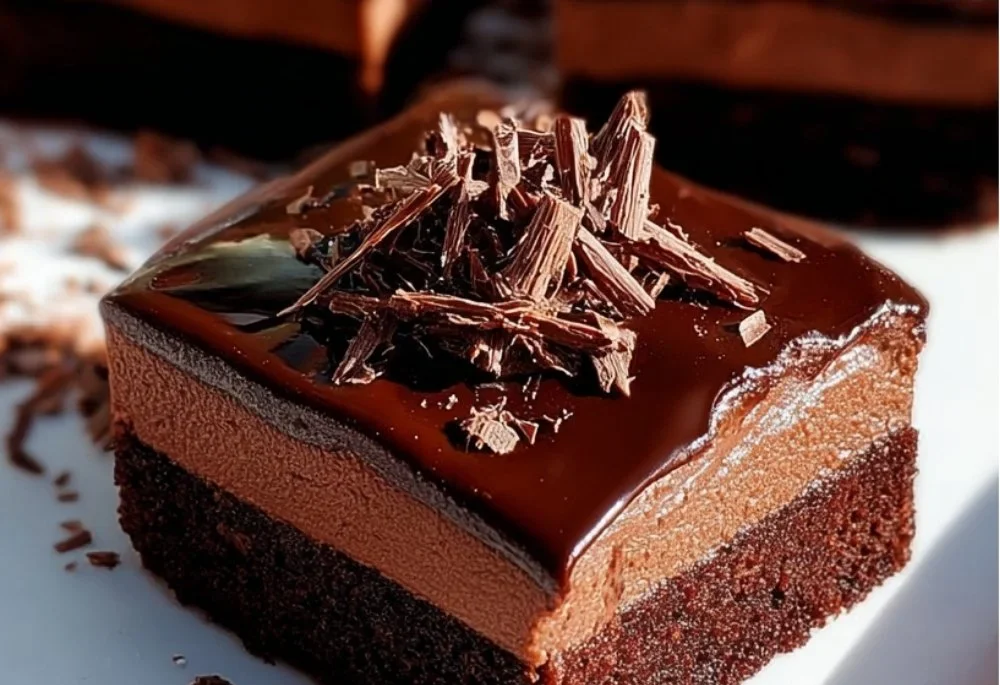
Chocolate Mousse Brownies combine two contrasting chocolate textures: a dense, baked brownie base and an airy, stabilized chocolate mousse layered above, finished with a glossy ganache. This composition exploits temperature differentials and structural contrasts to produce a multi-dimensional chocolate experience. The goal is to manage heat and emulsification so the brownie remains fudgy without collapsing the mousse, and the mousse retains its lightness while providing enough structure for a clean slice. The work of this recipe is not improvisational; it is a sequence of controlled transformations — emulsification, protein coagulation, aeration, and fat tempering — that must be respected to achieve the ideal mouthfeel and flavor intensity.
The culinary logic behind this dish
At its core, the dish is an exercise in layering complementary textures and concentrating chocolate flavor. The brownie base offers Maillard-driven cocoa intensity and a tender crumb, while the mousse provides contrast through whipped cream aeration and the sheen of melted chocolate. The ganache seal does three things: it adds a final layer of chocolate saturation, it protects the mousse from drying, and it gives a clean, professional finish. Understanding why each component exists clarifies technique: the brownie must be slightly underbaked so it stays moist under weight; the mousse must be made and folded carefully to keep air; the ganache should be fluid enough to level but viscous enough to set quickly without melting the mousse.
How to make Chocolate Mousse Brownies
Ingredients : 1 cup unsweetened cocoa powder, 1 cup sugar, 1/2 cup butter, softened, 2 large eggs, 1 teaspoon vanilla extract, 1/2 cup all-purpose flour, 1/4 teaspoon salt, 1 cup heavy cream, 1/2 cup semi-sweet chocolate chips
Directions :
- Preheat oven to 350°F (175°C). Grease a 9×9 inch baking pan.
- In a bowl, combine cocoa powder, sugar, and softened butter. Beat until smooth.
- Add eggs one at a time, mixing well after each addition, then stir in vanilla.
- Slowly mix in flour and salt until just combined.
- Pour the batter into the prepared pan and spread evenly. Bake for 20-25 minutes.
- While the brownies cool, whip heavy cream until soft peaks form. Melt chocolate chips and let cool slightly, then fold into the whipped cream.
- Once brownies are cooled, spread the mousse layer on top and refrigerate for at least 1 hour.
- For the ganache topping, melt more chocolate with a bit of cream and pour it over the mousse layer. Chill until set, then cut into squares and serve.
Ingredient analysis through a chef’s lens
- Unsweetened cocoa powder: Provides concentrated cocoa flavor and dry structure. The powder contributes to the brownie’s depth, absorbs some fat, and influences perceived bitterness. A Dutch-processed cocoa will yield deeper color and less acidity; natural cocoa will be brighter.
- Sugar: Beyond sweetness, sugar controls tenderness and color development. In brownies it also helps retain moisture; the amount here aims for a balance between sweetness and cocoa intensity.
- Butter, softened: Butter supplies fat and flavor; its temperature matters. Softened butter incorporates more easily with sugar for a smoother batter but avoid melting entirely to prevent greasing out the crumb.
- Eggs: Bind, hydrate, and leaven slightly. Eggs coagulate during baking to provide structure; adding them one at a time ensures a homogenous emulsion and prevents curdling.
- Vanilla extract: Amplifies perception of sweetness and rounds bitter notes.
- Flour and salt: Flour gives minimal gluten structure for a tender yet sliceable brownie; salt enhances chocolate’s complexity.
- Heavy cream: The foundation of the mousse; its fat content enables stable whipped peaks and glossy mouthfeel.
- Semi-sweet chocolate chips: Provide the cocoa mass for the mousse and ganache. Quality matters: higher cacao and balanced sugar produce a clearer chocolate note.
Kitchen workflow & technique breakdown
Efficiency and sequence will determine success. Start by preheating the oven and preparing the pan. While the oven comes to temperature, assemble dry and wet components to reduce idle time. The brownie batter should go straight from mixing to oven; residual mixing after adding flour will develop gluten, so mix until just combined. While the brownies bake, clean the mixer bowl and chilling tools for the mousse — cold metal bowls help cream whip faster.
After baking, cooling is critical: the mousse must sit on brownies that are cool to the touch to avoid collapsing. While brownies cool, whip the cream to soft peaks, melt the chocolate, and temper the temperature of the chocolate so it is warm but not hot when folded into cream. Finally, chill between layers to set structure — this refrigerator time is not optional if you want distinct layers and clean slices.
Texture control, heat management & timing
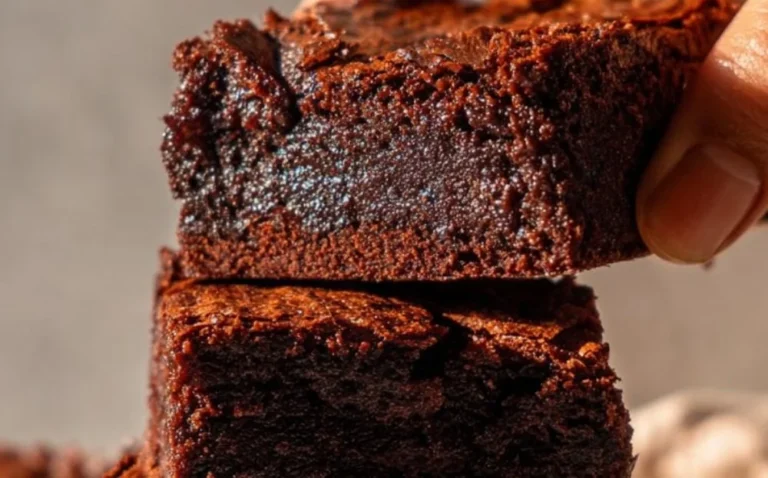
Brownie texture is governed by baking time and batter hydration. For a fudgy center, err toward the shorter bake time (20 minutes), removing when a thin, moist crust has formed and a toothpick shows moist crumbs. Residual heat will continue to cook the interior; overbaking dries the base and will undermine the melding with mousse.
For mousse, temperature equilibrium is critical. Melted chocolate should be cooled to roughly room temperature (but still pourable), ideally near the whipped cream’s temperature, to prevent collapse or fat separation. Folding technique matters: use a rubber spatula and cut through the center, then lift and fold, preserving as much air as possible. Overfolding deflates volume; underfolding creates streaks of chocolate. Chill the mousse on the brownies for at least one hour — this allows partial setting via chocolate-fat crystallization and cream cooling, reducing the risk of the ganache melting the mousse.
Ganache heat management: use a measured ratio of cream-to-chocolate to control viscosity. Heat the cream to just under boiling, remove from heat, and pour over chocolate to melt it gently. Allow the ganache to cool to a pourable but not hot consistency before topping the mousse; this prevents sinking or liquefying the mousse layer. Working cold-to-warm transitions deliberately controls final textures.
Professional variations
- Intensified cocoa: Substitute a portion of cocoa in the batter with melted dark chocolate to increase fat and deepen flavor, but that would alter the ingredient list — note this as a professional option for staged experimentation.
- Salted ganache ribbon: After pouring ganache, scatter flaked salt to create a contrast that elevates perceived chocolateity.
- Textural inclusions: Folded toasted hazelnuts or cocoa nibs into the mousse provide a controlled crunch, applied at the end of folding.
- Alcohol infusion: A teaspoon of high-proof coffee liqueur added to melted chocolate enhances bitter-sweet notes without altering structure dramatically. Add at melting stage to integrate. Keep in mind the original ingredient constraints when executing the classic version; variations are technique-forward adjustments.
Finishing touches & plating philosophy
A professional finish prioritizes clean edges and visual contrast. Chill the assembled pan until fully set, then use a hot, dry knife to slice: heat the blade under hot water, wipe dry, and cut in a single pull to get glossy ganache edges. Garnishes should be minimal and purposeful: a light dusting of unsweetened cocoa powder to echo the base, or parallel lines of tempered chocolate for restraint. Serve slightly chilled — the mousse firm but yielding — so textural contrasts are immediate upon biting.
Maintaining quality after cooking
Storage influences texture. Refrigerate in an airtight container to preserve the mousse’s structure and prevent ganache bloom. Short-term: 2–3 days in the refrigerator maintains optimal texture. For longer storage, freeze cut squares on a tray until solid, wrap tightly, and freeze up to one month; thaw in refrigeration to avoid condensation on ganache. Note that refrigeration intensifies perceived sweetness and firms fats; allow slices to rest 10–15 minutes at room temperature before serving to restore creaminess and aroma.
Questions from home cooks (chef answers)
Q: How do I know when brownies are done without overbaking? A: Watch the surface: a thin, slightly cracked crust with a set edge and a center that still jiggles slightly predicts a fudgy interior. Use a toothpick for verification — remove at the first appearance of moist crumbs, not fully dry crumbs.
Q: My whipped cream broke when I added melted chocolate. Why? A: Temperature mismatch is the most common cause. Ensure melted chocolate has cooled to near the whipped cream’s temperature (room temperature is safe). Also fold gently to preserve emulsion; if chocolate is too warm it will melt air pockets and liquefy the cream.
Q: Ganache sank into the mousse. What did I do wrong? A: Ganache was likely too hot or applied too soon. Let ganache cool until it reaches a viscosity that spreads without penetrating. Also ensure mousse has firmed in refrigeration for at least an hour to accept the ganache.
Q: The mousse deflated after folding. How can I keep more lift? A: Use a chilled bowl and cold cream to get maximum aeration. Fold only until streaks disappear; stop before full homogenization. Consider stabilizing agents (a minimal amount of gelatin) in professional settings, but note this would change ingredient list.
Final chef notes
Precision in timing and temperature is the professional secret to repeatable results. Respect the sequence: bake, cool, aerate, fold, chill, and finish. Small adjustments in bake time or ganache temperature have outsized effects on mouthfeel. Use high-quality chocolate for the best flavor payoff; the mousse and ganache are concentrated chocolate carriers that will reveal ingredient quality. Practice the folding motion separately if necessary; tactile familiarity accelerates execution and yields consistent volume retention.
Conclusion
For additional reference recipes and visual guides that align with the technique outlined here, consult this rendition of Chocolate Mousse Brownies on Sweet and Savory Meals: Chocolate Mousse Brownies or Best Brownies EVER! – S&SM. Another practical, step-by-step presentation can be found at The Domestic Rebel: Chocolate Mousse Brownies | The Domestic Rebel. For a variation with detailed photography and plating notes, see Love and Olive Oil’s take: Chocolate Mousse Brownies | Love and Olive Oil.
Chocolate Mousse Brownies
Ingredients
Method
- Preheat oven to 350°F (175°C) and grease a 9×9 inch baking pan.
- In a bowl, combine cocoa powder, sugar, and softened butter. Beat until smooth.
- Add eggs one at a time, mixing well after each addition, then stir in vanilla.
- Slowly mix in flour and salt until just combined.
- Pour the batter into the prepared pan and spread evenly. Bake for 20-25 minutes.
- While the brownies cool, whip heavy cream until soft peaks form.
- Melt chocolate chips and let cool slightly, then fold into the whipped cream.
- Once brownies are cooled, spread the mousse layer on top and refrigerate for at least 1 hour.
- For the ganache topping, melt more chocolate with a bit of cream and pour it over the mousse layer.
- Chill until set, then cut into squares and serve.