Five Layer Oreo Lasagna Dessert
Introduction
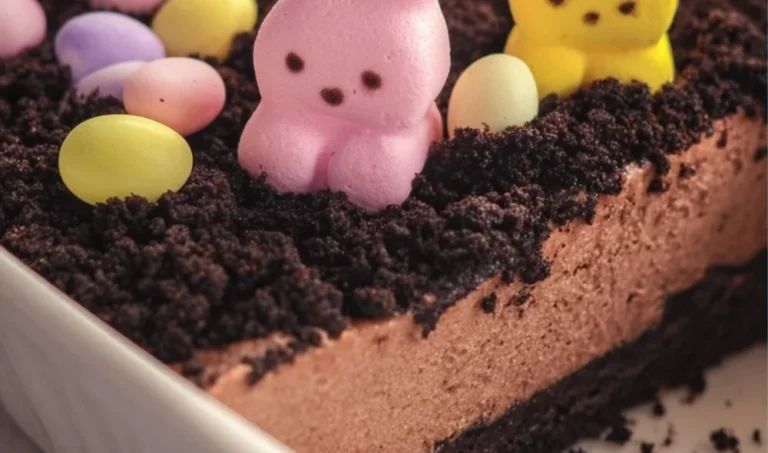
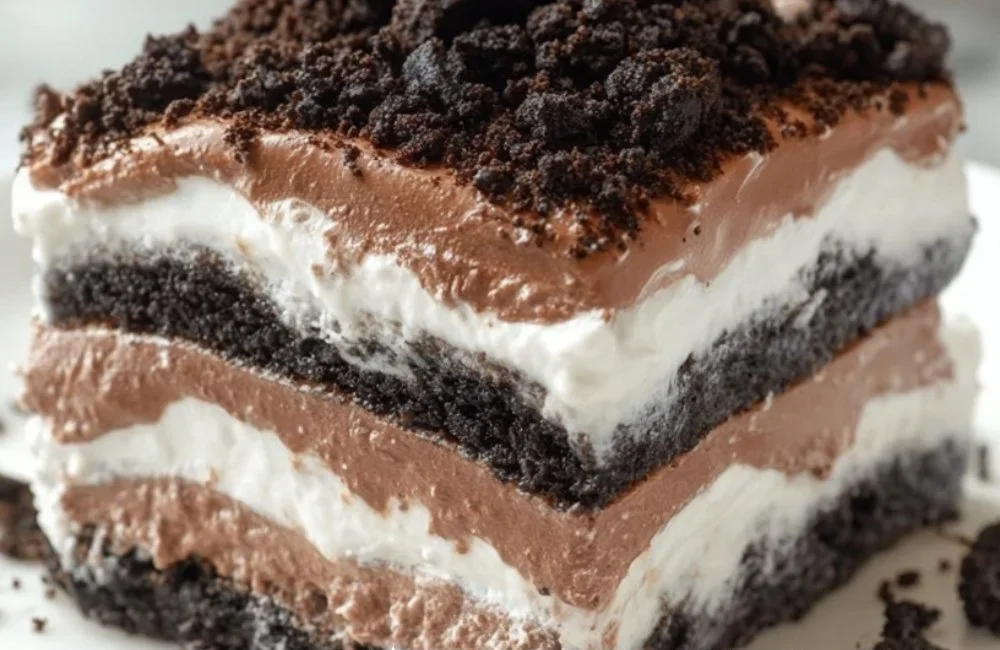
Five Layer Oreo Lasagna Dessert is a composed, multi-textured cold dessert that relies on contrast — crisp chocolate crumbs, a dense tang of cream cheese, airy stabilized whipped topping, and a set chocolate pudding layer — arranged in defined strata. As a professional chef, I approach this dish as an exercise in controlled layering and temperature management: every component must have the correct fat content, viscosity, and temperature to assemble clean layers that hold under refrigeration. The outcome is less a rustic “lasagna” and more a structured parfait rendered in sheet-pan form, where technique determines the clarity of layers, the mouthfeel on the palate, and the rate of flavor release.
The construction principle is straightforward, yet execution requires attention to particle size, emulsion stability, and chilling kinetics. When those elements are managed, the dessert rewards with sharp contrasts — the brittle, cocoa-rich crust, the silky, slightly tangy cream-cheese layer, the glossy pudding, and the light whipped topping — that register distinctly in each forkful. For practitioners interested in similar composed trays, see related resources on dessert technique and other sweet preparations at related dessert techniques.
The culinary logic behind this dish
At its core, this recipe is assembled to exploit complementary textures and to balance sweetness with fat and acidity. The Oreo crust is a dry matrix bound with melted butter and a small amount of sugar; butter provides cohesion and mouth-coating richness while the fine crumb size gives structure without becoming cakey. The cream cheese component brings lactic acidity and protein-stabilized body; when folded with a stabilized whipped topping it becomes aerated but retains enough strength to support the pudding.
Chocolate pudding, cooked or instant depending on the packet, functions as the dense, chocolate-saturated mid-layer. Its starch-thickened gel provides heft and a glossy surface that contrasts texturally with both the crust and whipped topping. Layering order is deliberate: a firm base prevents displacement, a semi-firm cream-cheese layer isolates the crust from moisture migration, and the pudding layer seals flavor transition before the final lighter layer. This logic is why the dish holds clean slices and why the sensory sequence — crisp, tangy, chocolate, airy — feels resolved.
For comparative structures and inspiration on layered chocolate desserts, consult a technical reference such as layered dessert techniques.
How to make Five Layer Oreo Lasagna Dessert
Ingredients : Oreos (crushed), cream cheese, Cool Whip, chocolate pudding mix, milk, butter, sugar
Directions :
- In a bowl, mix crushed Oreos with melted butter and sugar to form the crust. Press into the bottom of a 9×13 inch dish.
- In another bowl, beat cream cheese until smooth. Fold in Cool Whip and spread over the Oreo crust.
- Prepare the chocolate pudding according to package instructions using milk. Once thickened, spread over the cream cheese layer.
- Repeat layers as desired with remaining ingredients.
- Top with more Oreos or Cool Whip as desired.
- Chill in the refrigerator for at least 4 hours before serving.
This procedure is intentionally minimalist; adherence to sequence and technique is where refinement occurs. For example, press the crust with the bottom of a measuring cup for uniform density — inconsistent compaction yields differential moisture migration and a sagging base. When beating the cream cheese, work at room temperature but not warm: 15–20 minutes at ambient is ideal to soften without liquefying. If the cream cheese is too cold, folding with Cool Whip will produce lumps; too warm, and the layer will slump under the pudding’s weight. For cross-reference on finished compositions, consider resources like composed dessert guides.
Ingredient analysis through a chef’s lens
Oreos: Finely crushed Oreos supply cocoa solids and sugar; the cookie’s fat and sugar also contribute to mouthfeel. Particle size control is essential — aim for sand-like crumbs with occasional larger bits for textural interest. Excessively fine pulverization creates a paste when combined with butter.
Cream cheese: Offers concentrated milk proteins and lactic tang. Its emulsifying properties help stabilize air when folded with Cool Whip. Avoid overworking to prevent heat buildup that would produce a greasy mouthfeel.
Cool Whip: A stabilized whipped topping incorporating emulsifiers and stabilizers; it provides volume and lightness without the instability of fresh whipped cream. It also reduces the risk of weeping, which is important for a make-ahead dessert.
Chocolate pudding mix and milk: The starches in instant pudding gels set quickly and give the distinct chocolate layer. Use the milk proportion specified on the packet; deviations affect gel strength and mouthfeel. If a creamier set is desired, whole milk always yields better richness than low-fat alternatives.
Butter and sugar for the crust: Butter binds crumbs and contributes to richness and set. Sugar added to the crust enhances sheen and balances bitterness from the cocoa; however, excessive sugar can accelerate moisture migration.
Kitchen workflow & technique breakdown
Organization and timing prevent texture degradation. Start by chilling the 9×13 dish so the crust sets quickly on contact. While the butter melts, pulse the Oreos to target particle size — a brief pulsing prevents over-processing. Prepare the crust, press it evenly, and chill it in the refrigerator or briefly in the freezer (5–10 minutes) to solidify the fat before proceeding.
Soften the cream cheese on the counter while the crust chills. Use a paddle attachment or hand mixer at low speed; high speed generates heat. Once smooth, fold in Cool Whip using a rubber spatula with broad, sweeping motions to retain air. The goal is an even, spreadable mass that still has body.
Prepare the pudding last but allow it to cool slightly until it holds a gloss and is spreadable, roughly room temperature but not set. Directly layering hot pudding will destabilize the cream-cheese emulsion and melt the Cool Whip; conversely, too-cold pudding will form an uneven surface. The sequence of parallel tasks — crust chilling, cream-cheese assembly, and pudding preparation — is designed to minimize waiting time while preserving component integrity.
To see other structured dessert workflows, review general dessert planning materials at dessert planning resources.
Texture control, heat management & timing
Texture control is paramount in a refrigerated, multi-layer dessert. The crust must be firm but not rock-hard — a brittle cushion that fractures cleanly. Use the quick chill to firm the butter; avoid long-term freezing, which microfractures fats and can create a dry mouthfeel.
Temperature gradients drive migration and texture change. Allowing components to equilibrate to refrigeration temperature together reduces condensation and sweating. The recommended minimum chill of four hours is the bare legal time for setting; overnight refrigeration yields a more cohesive slice because starch gels can retrograde slightly and flavors meld.
Manage heat during assembly: keep cream cheese at a cool room temperature (≈18–20°C / 64–68°F) and pudding slightly warmer but not hot. Working with tools that have residual warmth, such as a warmed metal spatula, is acceptable for smoothing but avoid contact that transfers heat to the layers. Cover the lasagna loosely with plastic wrap during chilling to prevent a skin on the top Cool Whip and to avoid fridge odors penetrating the dessert.
Professional variations
Within the constraints of the ingredient list, subtle professional variations enhance technique without altering composition. For a firmer crust, increase the ratio of crushed Oreos to butter slightly, or pulse in a small amount of melted dark chocolate for added binding and a glossy finish. For the cream layer, whisk the cream cheese with a small amount of confectioners’ sugar and a splash of vanilla if permissible; sugar acts as a stabilizer and rounds acidity.
Modulate the pudding layer by preparing it with slightly less milk for a denser set or by cooking a cook-and-serve chocolate pudding to control starch gelatinization precisely. If you need more structural integrity for slicing, place a thin acetate strip along the dish perimeter before pressing the crust; this yields near-perfect edges when removed after chilling.
These variations maintain the original ingredients and directions while offering professional-level refinements.
Finishing touches & plating philosophy
Plating a sheet-tray dessert requires attention to slice integrity and surface finish. Use a hot, dry chef’s knife (dip in hot water, wipe dry) and make single, decisive cuts to preserve layer definition. For service, present individual slices with a small smear of extra Cool Whip or a dusting of finely crushed Oreo for visual continuity. Textural contrast is the goal: juxtapose the slice with a complementary crunchy element — for example, a shard of tempered chocolate — to echo the cookie and add a vertical element.
When portioning for service, score the top before cutting to mitigate displacement. Allow each slice to rest 2–3 minutes after cutting so the pudding gel recovers from shear.
Maintaining quality after cooking
Refrigerated holding is the primary maintenance method. Store the assembled lasagna covered and refrigerated; avoid freezing as ice crystals will disrupt the delicate layered textures. Shelf life in optimal conditions is 3–4 days: after that, the crust will gradually soften due to moisture migration and the whipped topping may lose its aeration.
If you must prepare in advance beyond 24 hours, consider storing components separately: press the crust and keep covered in the pan, hold the cream-cheese mixture chilled in an airtight container, and store the pudding in a shallow container. Assemble within 2–4 hours of service to retain the freshest textures. Always inspect for moisture pooling and address by blotting excess condensation with a paper towel before service.
Questions from home cooks (chef answers)
Q: My crust was too crumbly and fell apart when scooped. A: You likely used insufficient melted butter or did not compress the crumbs firmly enough. Warm the butter to fully wet the crumbs — you want a sheen but not a soupy mix — and press evenly with a flat-bottomed tool. Chill briefly to set the fat before topping.
Q: The cream-cheese layer has lumps after folding in Cool Whip. A: The cream cheese was too cold. Return it to a cool room temperature and re-whip gently until smooth, then fold. Alternatively, pass through a fine sieve into the whipped topping to remove small lumps.
Q: The pudding layer wept after refrigeration. A: Instant pudding can sometimes weep if stored too long. Ensure the pudding is prepared to package specifications and allowed to cool partially before spreading. Keep the topping barrier (cream-cheese layer) intact to slow moisture migration.
Q: How do I get cleaner slices? A: Use a wide, hot knife and wipe between cuts. Score before cutting and let the slice rest before serving to allow gels to reharden.
Final chef notes
This Five Layer Oreo Lasagna Dessert is an instructive study in controlled composition: simple ingredients, precise temperatures, and deliberate texture contrasts produce a refined result. Respect particle size in the crust, temper component temperatures during assembly, and use chilling as a structural tool. Small adjustments in compaction, folding technique, and chill time materially affect final mouthfeel and presentation. When executed with attention to these principles, the dessert transcends its humble components and performs with clarity and restraint.
Conclusion
For technical variations and comparable chocolate-layered constructions, consult a tested recipe such as Chocolate Lasagna – CenterCutCook and a long-standing popular version at The Best Chocolate Lasagna – I Heart Naptime. For the original inspiration and a home-style take on this exact composition, see 5 Layer Oreo Lasagna Dessert – Crafty Morning.
Five Layer Oreo Lasagna Dessert
Ingredients
Method
- In a bowl, mix crushed Oreos with melted butter and sugar to form the crust.
- Press the mixture into the bottom of a 9×13 inch dish.
- In another bowl, beat the cream cheese until smooth.
- Fold in the Cool Whip and spread over the Oreo crust.
- Prepare the chocolate pudding according to package instructions using milk.
- Once thickened, spread over the cream cheese layer.
- Repeat layers as desired with remaining ingredients.
- Top with additional crushed Oreos or Cool Whip as desired.
- Chill in the refrigerator for at least 4 hours before serving.