Chicken Alfredo Spaghetti Squash
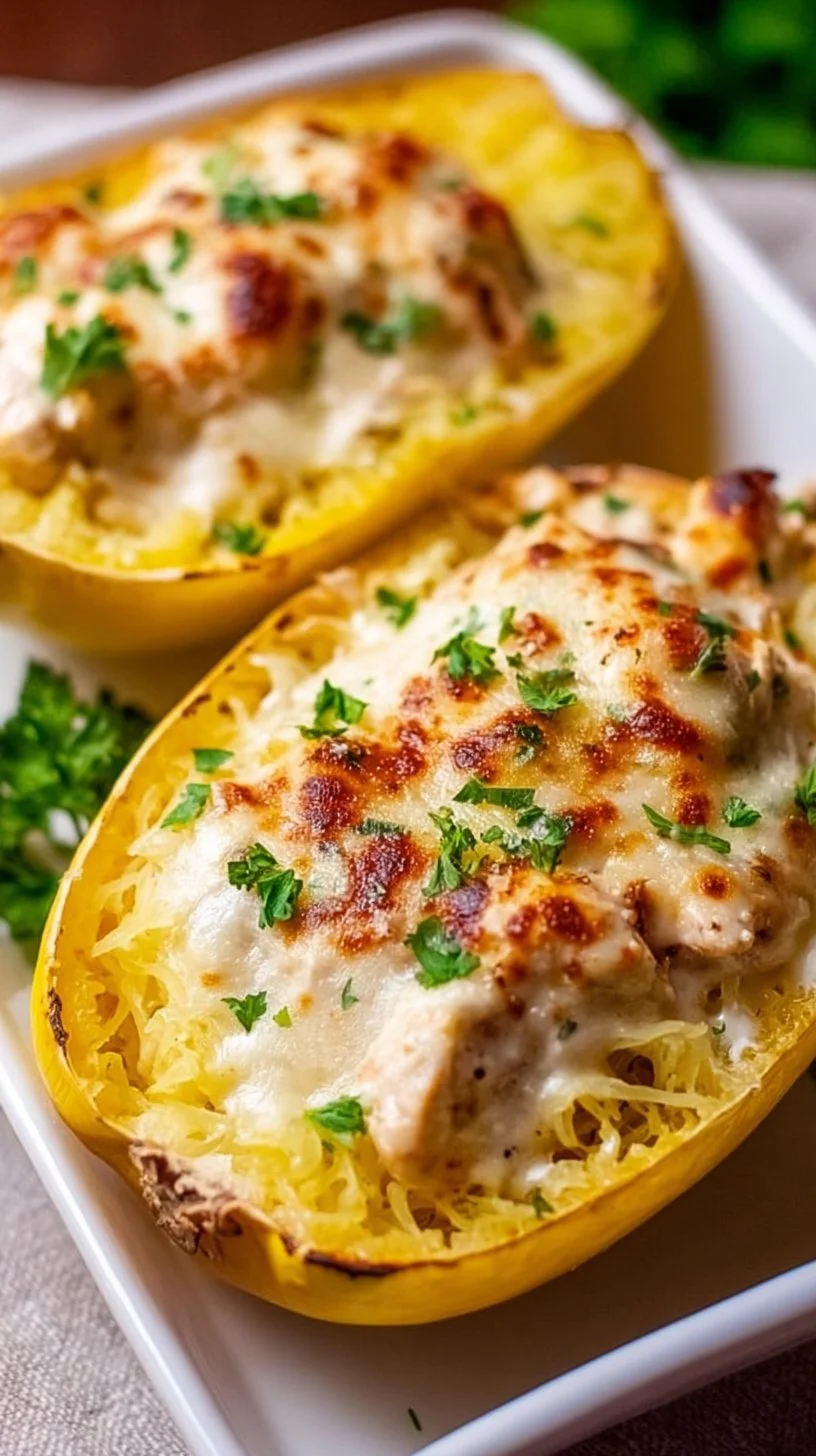
Chicken Alfredo Spaghetti Squash is a composed dish that substitutes roasted squash strands for traditional pasta while preserving the rich, emulsified character of a classic Alfredo. The recipe supplied is compact — a single spaghetti squash, pre-cooked shredded chicken, and an emulsified cream-Parmesan sauce built on butter and garlic — yet each element requires deliberate technique to achieve the correct balance of texture, mouthfeel, and seasoning. For cooks seeking reliable oven-roasting strategies and timing, consider cross-referencing tried methods used in similar roasted-protein preparations like the baked chicken cordon bleu technique, which emphasizes even heat distribution and carryover cooking. This article will deconstruct the preparation into professional steps, explain why each action matters, and provide practical adaptations for quality, consistency, and presentation.
The culinary logic behind this dish
At its core, Chicken Alfredo Spaghetti Squash is an exercise in textural substitution and sauce management. Spaghetti squash provides long, translucent strands with moderate water content; it is not a starch-rich carrier like durum pasta, so the sauce must be adjusted to coat without overwhelming the squash’s fragile structure. The culinary logic rests on three pillars: concentrating flavor in the squash through dry-heat roasting, producing a stable cream-Parmesan emulsion, and maintaining the chicken as a neutral protein that contributes body and bite without destabilizing the sauce.
Roasting the squash cut-side down allows steam to escape slowly, concentrating sugars and producing a slight caramelized note on the flesh adjacent to the rind. That contrast — subtle sweetness and roasted color — improves aroma and mouthfeel when combined with the savory, nutty Parmesan. The Alfredo component must be built to cling: heating butter and garlic releases fat-soluble aroma compounds, then the cream is reduced gently to increase viscosity before the cheese is folded in off-heat to prevent graininess. Salt and pepper are not incidental; they tune the dairy and accentuate the Maillard-derived notes from the roasted squash.
For structural reference in composing plates with protein and creamy sauce, study variations where creamy sauces are applied to breads or baked bases; for instance, the approach to balancing sauce coverage and crispness in a composed flatbread can be instructive, as shown by the BBQ chicken flatbread method.
How to make Chicken Alfredo Spaghetti Squash
The recipe’s directions are concise; translating them into precise execution requires attention to heat control, sequencing, and resting. Follow the provided Directions verbatim for procedural order, but use the technique notes below to refine each action and avoid common pitfalls.
Directions :
- Preheat the oven to 400°F (200°C). Cut the spaghetti squash in half lengthwise and remove the seeds. Place cut-side down on a baking sheet and bake for 30-40 minutes, or until tender., 2. In a skillet, melt the butter over medium heat and add the minced garlic. Cook for about 1 minute., 3. Stir in the heavy cream and bring to a simmer. Add the Parmesan cheese and stir until melted and smooth. Season with salt and pepper., 4. Once the spaghetti squash is done, scrape the flesh with a fork to create ‘spaghetti.’, 5. Combine the spaghetti squash with the shredded chicken and Alfredo sauce. Mix well., 6. Serve immediately, garnished with parsley.
Step-by-step technique notes:
- Oven and squash preparation: Preheating to 400°F is a practical balance between speed and caramelization. Place the squash cut-side down on a rimmed sheet; the rim collects any escaping moisture and prevents the flesh from steaming excessively. Use a sheet pan lined with foil for ease of cleaning and to reflect heat. Bake until a paring knife meets little resistance near the center — this is a more reliable indicator than strict time because squash size and oven calibration vary.
- Sauce construction: Melt the butter over medium heat to dissolve water-soluble proteins and release butterfat flavor without browning. Add garlic and cook just until aromatic — roughly one minute as stated — to avoid bitterness. Incorporate the cream and reduce to a gentle simmer; this concentrates fats and increases viscosity, helping the sauce cling to the squash strands. Remove from direct heat before adding Parmesan to reduce the risk of the cheese seizing into lumps; then stir until fully emulsified.
- Combining components: Scraping the squash with a fork produces delicate strands that will absorb sauce quickly. Work deliberately; combine just until everything is evenly coated. Overmixing can damage the strands and produce a mushier texture.
Ingredients :
1 medium spaghetti squash, 2 cups cooked chicken, shredded, 1 cup heavy cream, 1 cup grated Parmesan cheese, 2 tablespoons butter, 2 cloves garlic, minced, Salt and pepper to taste, Parsley for garnish
Ingredient analysis through a chef’s lens
Each ingredient occupies a distinct technical role. The spaghetti squash provides a low-starch matrix: it contributes structure and vegetal brightness but lacks the glutenous bite of pasta. Because of its moisture, the squash benefits from a slightly thicker sauce and restrained liquid addition during cooking. The cooked shredded chicken is a textural and protein element; using pre-cooked chicken avoids introducing excess moisture that could dilute the sauce during reheating. If the chicken is cold from refrigeration, bring it closer to room temperature or warm it briefly in the sauce to prevent temperature shock in the finished dish.
Heavy cream is the emulsifying medium; its fat content allows for a stable, glossy sauce when reduced properly. Parmesan supplies both salt and umami through its glutamate profile, but because aged cheeses can seize when exposed to sustained high heat, add it off the direct flame and stir to combine. Butter and garlic build the aromatic and fat foundation; the garlic must be cooked gently to develop its sweetness without producing sulfurous or bitter notes. Parsley is a final green note that cleans the palate; mince and add just before service to preserve freshness and color.
Kitchen workflow & technique breakdown
An efficient workflow follows mise en place and parallel processing. While the oven reaches 400°F, halve and seed the squash, prepare the garlic, measure the cream and cheese, and shred or portion the cooked chicken. Place the squash in the oven first — it requires the longest single block of time. Use that interval to construct the sauce: melt butter, sweat garlic, and bring cream to a simmer so the cheese can be added immediately after the squash is scraped.
Sequence matters: if the sauce is finished too early, it will thicken and potentially separate as it cools. Keep it warm over the lowest heat or in a bain-marie if a waiting period is expected. Similarly, timing the scraping of the squash so it remains warm will help the strands accept the sauce and prevent pooling. If working in a small kitchen, keep the oven rack arranged so the sheet pan can be removed quickly to avoid oven heat loss that alters cooking time.
For cooks producing multiple portions or making this recipe part of a larger menu, pre-roast multiple squashes and store them wrapped at cool room temperature for short periods, then finish by warming gently in a 300°F oven before combining.
Texture control, heat management & timing
Texture control is primarily about temperature and agitation. The squash strands are tender but fragile — aggressive mixing will break them into mush. Use a wide shallow bowl for tossing to distribute sauce with minimal shear. Heat management of the sauce is critical: bring cream to a bare simmer (small bubbles at the perimeter), then reduce to low before cheese addition. High heat risks curdling and grainy texture due to protein denaturation and fat separation.
Timing guidelines:
- Roast squash: 30–40 minutes at 400°F, but test for doneness at 30 minutes and then in five-minute intervals.
- Garlic: 30–60 seconds in warm butter; remove from heat promptly to prevent bitterness.
- Cream reduction: 3–5 minutes to increase viscosity, but watch for scalding around the pan edge.
- Cheese incorporation: off-heat folding until smooth.
These intervals produce an emulsion with a glossy sheen that will coat squash threads without puddling. If the sauce seems too thin after cooling slightly, return it to low heat and whisk in a small additional amount of grated Parmesan to tighten the emulsion — add sparingly to avoid salt overload.
Professional variations
Without altering the given ingredients, variations can be conceptual rather than ingredient-based. Technique variation: roast the squash cut-side up for the final 5–10 minutes to promote a slightly browned surface for contrast, though this will introduce a drier texture at the top. Protein treatment: briefly pan-sear pre-cooked chicken in butter to add Maillard color before shredding and combining; this deepens flavor without changing the listed components. Sauce behavior: for a silkier mouthfeel, finish the sauce with a small knob of cold butter off-heat (monte au beurre) to intensify gloss and richness.
For menu scaling, assemble the components separately and warm to order: place warm squash strands in serving vessels, ladle hot Alfredo over, then add chicken and finish with parsley. This preserves texture and prevents overcooking the squash when keeping multiple portions warm.
Finishing touches & plating philosophy
Plating for this dish should emphasize layered contrast. Use a shallow bowl or wide plate to spread the squash strands, creating a bed that allows sauce to collect without looking greasy. Place the shredded chicken on top in a loose mound to show texture; then ladle additional sauce sparingly to create sheen. A small scattering of chopped parsley provides visual lift and a hint of green freshness against the cream color palette.
Temperature at service is essential. Serve immediately so the sauce retains its emulsion and the squash maintains structural separation. If garnishing with freshly cracked black pepper or an additional dusting of Parmesan, do so at the point of service to preserve the visual contrast and aromatic punch.
Maintaining quality after cooking
This composition does not travel well if left to sit for extended periods because cream-based emulsions can separate and the squash strands will continue to hydrate and soften. If you must hold the dish:
- Keep components separate: refrigerate squash and sauce in shallow containers and reheat gently.
- Reheating: warm the sauce slowly over low heat or in a double boiler, stirring to re-emulsify. Warm squash in a 300°F oven for short intervals, then combine briefly just prior to service.
- Avoid microwaving the combined dish; rapid, uneven heating promotes separation and textural breakdown.
Leftovers should be cooled quickly, stored airtight, and consumed within 48 hours for best texture.
Questions from home cooks (chef answers)
Q: Can I replace heavy cream with milk or a lighter option?
A: Heavy cream’s fat is fundamental to the emulsion and mouthfeel. Substituting milk will produce a thinner sauce prone to separation. If you must lighten, use a mixture of half-and-half with a small cornstarch slurry added during reduction to increase viscosity, but this alters mouthfeel and is outside the ingredient list.
Q: My Parmesan seized and became grainy — how can I prevent that?
A: Add finely grated Parmesan off-heat and stir gently. Avoid high simmer while the cheese is melting. The graininess is a product of overheating aged cheese proteins and fat separation.
Q: The squash waterlogged my sauce; how to avoid dilution?
A: Roast squash cut-side down to evaporate surface moisture and scrape while still hot so strands absorb sauce rather than release water. If strands are very wet, drain briefly on paper or a towel.
Q: Can I prepare components ahead of time?
A: Yes, but keep sauce and squash separate. Recombine just prior to service and warm gently.
Final chef notes
Precision in temperature and timing, coupled with gentle handling of the squash strands, will yield a composed plate that showcases contrast between roasted vegetal sweetness and a glossy, savory sauce. Maintain small margins of control — remove the sauce from heat before adding cheese, scrape the squash carefully, and combine only until coated. Those small procedural choices determine whether the final dish reads as composed and elegant or merely creamy and heavy.
Conclusion
For inspiration on alternate presentations that combine roasted squash and creamy fillings, review a lighter assembled variant like Skinny Chicken Alfredo Stuffed Spaghetti Squash, which applies similar flavor principles with different technique. If you are exploring baked casseroles that layer chicken and Alfredo-styled sauce for family service, see this composed bake approach in Chicken Alfredo Spaghetti Squash Bake. For further variations and serving ideas that combine chicken, cream, and vegetal bases, consult the approachable assemblies in Chicken Alfredo Spaghetti Squash.
Chicken Alfredo Spaghetti Squash
Ingredients
Method
- Preheat the oven to 400°F (200°C). Cut the spaghetti squash in half lengthwise and remove the seeds.
- Place the squash cut-side down on a baking sheet and bake for 30-40 minutes, or until tender.
- In a skillet, melt the butter over medium heat and add the minced garlic. Cook for about 1 minute.
- Stir in the heavy cream and bring to a simmer. Add the Parmesan cheese and stir until melted and smooth. Season with salt and pepper.
- Once the spaghetti squash is done, scrape the flesh with a fork to create ‘spaghetti.’
- Combine the spaghetti squash with the shredded chicken and Alfredo sauce. Mix well.
- Serve immediately, garnished with parsley.