Hard Boiled Egg and Avocado Bowl
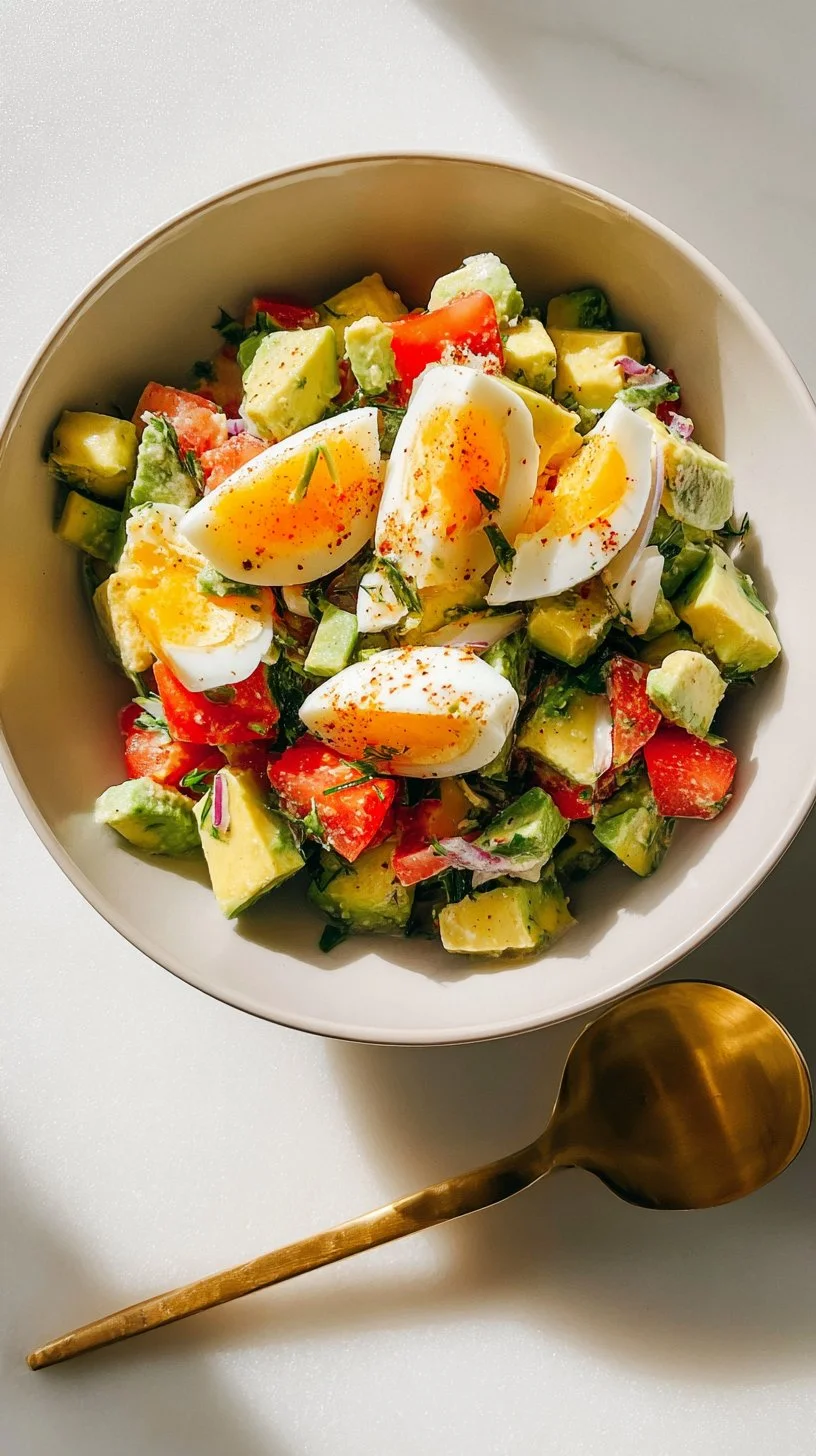
This Hard Boiled Egg and Avocado Bowl is a concise composition that relies on restrained technique and deliberate ingredient interplay to deliver satisfying contrasts of cream, saline, and aromatic bite. The dish is constructed to highlight precise textural relationships — the velvet of ripe avocado against the firm, granular whites and buttery yolk of a properly cooked hard boiled egg — and to be finished with simple acid and oil to bind flavors. For an example of how composed bowls balance proteins and starches in a compact format, consider how a richer preparation is handled in dreamy garlic butter chicken and bowtie pasta, which also prioritizes textural contrast and seasoning calibration.
The culinary logic behind this dish
At its core the bowl is a study in balancing fat, acid, salt, and aromatics. Avocado provides a high-fat, creamy base with subtle vegetal notes and a smooth mouthfeel that rounds the sharper edges of white balsamic vinegar and red onion. Hard boiled eggs offer layered texture: the firm, slightly elastic albumen and the crumbly, richer yolk that, when combined with oil and acid, becomes silkier and more sauce-like. Red bell pepper adds crispness and a sweet, bright counterpoint; red onion supplies sulfurous bite for depth. The drizzle of extra virgin olive oil adds flavor compounds (fruitiness, peppery phenolics) and improves flavor diffusion across surfaces, while white balsamic contributes a clean acidity that cuts through fat without introducing the deep molasses tone of darker vinegars. Flaky sea salt accentuates texture as much as flavor — larger crystals deliver intermittent crunch and rapid bursts of salinity.
Culinary logic also dictates restraint: minimal ingredients mean each element must be treated and seasoned carefully. The technique emphasizes gentle handling to preserve textural contrasts and proper seasoning so that the sensory highs — bright acid, saline peaks, soft-fat richness, and crunchy aromatics — are perceptible in each bite.
How to make Hard Boiled Egg and Avocado Bowl
Execution focuses on timing and gentle manipulation. Hard boiling eggs requires precise control to achieve a fully cooked yet tender yolk and a smooth white; overcooking yields a dry, chalky yolk and rubbery white. Avocado must be ripe enough to mash slightly under a fork but still hold some structure when chopped, ensuring textural variability. Finely chop the aromatics to distribute their flavor without dominating any single bite; larger pieces will create uneven flavor pockets.
When tossing, use a light hand: avocado oxidizes and will brown if over-manipulated or if left exposed to air. Emulsify the oil and vinegar briefly with the base components so the dressing clings to the egg surfaces and avocado pieces, rather than pooling at the bottom. Season incrementally: flaky sea salt can be applied at the end to preserve its tactile effect; ground pepper and crushed red pepper can be added to taste to control heat intensity.
Ingredients :
2 hard boiled eggs (quartered), ½ large avocado (chopped), 1 heaping Tablespoon red onion (finely chopped), 1 heaping Tablespoon red bell pepper (finely chopped), Drizzle of white balsamic vinegar, Drizzle of extra virgin olive oil, Flaky sea salt (to taste), Fresh cracked pepper (to taste), Crushed red pepper (to taste)
Directions :
- Gently toss together eggs, avocado, onion, and bell pepper in a bowl., 2. Add a drizzle of white balsamic vinegar and olive oil, and sprinkle on sea salt and ground pepper., 3. Serve and enjoy with a fork!
Ingredient analysis through a chef’s lens
- Eggs: Properly cooked hard boiled eggs present a mild sulfur aroma when intact but should not display the green-gray ring that indicates overcooking. The yolk’s lipid content carries and amplifies fat-soluble flavors; breaking the yolk and letting it mingle with avocado creates a cohesive mouthfeel. Quartering the eggs increases surface area so salt and acid adhere more readily.
- Avocado: The fruit’s cell structure breaks down into a lubricious matrix when slightly mashed, but intact chunks preserve bite. Ripeness window is critical: underripe yields gritty texture and subdued flavor; overripe becomes mushy and oxidizes rapidly.
- Red onion and bell pepper: Finely chopping these ensures even distribution of pungency and sweetness; larger cuts would result in inconsistent flavor exposure across bites.
- White balsamic: Chosen for its clean, mild acidity that brightens flavors without adding heavy caramel notes, which could compete with the delicate egg and avocado.
- Extra virgin olive oil: Adds vegetal fruitiness and a sheen that enhances perceived richness.
- Flaky sea salt and cracked pepper: These finishing seasonings are about tactile interaction as much as taste. Flaky salt provides sharp bursts; fresh-cracked pepper releases volatile aromatics not present in pre-ground products.
- Crushed red pepper: Optional for heat; its flakes integrate visually and add intermittent spice.
Kitchen workflow & technique breakdown
Begin by ensuring your hard boiled eggs are cooked perfectly and chilled. Rapid chilling (an ice bath) after boiling halts carryover cooking, preventing yolk over-firming and halogenization. Prepare the vegetables while eggs rest: finely dice the red onion and red bell pepper to consistent small dice (approximately 2–3 mm) to provide even textural contrast. Halve and pit the avocado last to minimize oxidation time.
Quarter the eggs rather than slicing them thin; quartering keeps yolks mostly intact but exposes enough surface area to absorb the vinegar and oil. Tossing should occur in a bowl large enough to fold components gently without crushing. Use a flexible spatula to fold components — slide the spatula beneath pieces and bring them over rather than stirring with high shear. Finish with oil and vinegar in two small drizzles, folding between additions until a light emulsion forms that coats, but does not drown, the ingredients.
If preparing multiple portions, keep the avocado and dressed components separate until service to prevent color loss and textural softening. For single-serve, assemble immediately before eating.
Texture control, heat management & timing
Texture control is achieved primarily through component readiness and handling. Eggs: cook them so yolks are fully set but not dry — typically boiling for 9–11 minutes depending on egg size and starting temperature, then immediately chilling. Avocado: assess ripeness by gentle pressure near the stem; aim for a fruit that yields slightly but resists excessive deformation.
There is no heat management for this cold bowl beyond the initial egg cook-and-chill cycle, but thermal considerations remain important: chilled eggs contrast pleasantly with room-temperature avocado and a room-temperature dressing. Serving everything at a consistent, slightly cool temperature highlights the oils and acid. If eggs are too cold straight from refrigeration, allow 5–10 minutes at room temperature to open their aroma profile before assembly.
Timing sequence: boil eggs first, plunge them into an ice bath, and peel while cooling completes to reduce handling time. While eggs chill, prepare vegetables and avocado. Assemble immediately prior to serving to preserve color and textural integrity.
Professional variations
Variation in technique, not ingredient substitution, can refine the bowl for different applications while preserving its identity. For a silkier binding, gently mash a portion of the avocado with a fork and fold in the quartered eggs so the mashed avocado acts as a light dressing that carries seasoning more uniformly. To introduce an umami element without new ingredients, briefly pan-toast the bell pepper dice in a neutral skillet to develop a slight caramelization and deepen their flavor; allow them to cool before combining so they do not cook the avocado.
For a more assertive aromatic profile, macerate the red onion in a splash of the white balsamic for 5–10 minutes to soften sharpness and add a milder, perfumed acidity. When scaling for a composed plate or open-faced toast application, control moisture by gently patting the avocado pieces on paper to remove excess juice, ensuring a dry interface that allows the oil to adhere and the egg to remain distinct.
Discussing related composed dishes is instructive; for instance, simple egg-and-avocado arrangements can be adapted into snacks like the seasonal treats found in dessert-focused profiles such as Easter egg Oreo cookie balls when reimagining texture and sweetness contrasts, or into handheld formats akin to Easter egg Rice Krispies treats for structural thinking across time in the kitchen.
Finishing touches & plating philosophy
Plating a small bowl requires attention to contrast and negative space. Place the avocado and aromatics as the foundation and nestle the quartered eggs atop so the yolk color is visible; this arrangement emphasizes both texture and color contrast. Apply the oil and vinegar in a measured drizzle rather than pouring to maintain an even sheen; use a fine hand for flaky sea salt to scatter crystals where they will be tasted — across egg and avocado surfaces rather than solely on the rim.
Consider the visual rhythm: a sprinkling of crushed red pepper provides color contrast and signals heat, while cracked black pepper adds top-note aromatics. Serve with a small fork that allows diners to sample the intended composition in each bite rather than mixing everything into a homogeneous mash.
Maintaining quality after cooking
This bowl is best served immediately. Avocado oxidizes and will brown; preparation more than 10–15 minutes ahead of service risks a loss of visual and flavor integrity. If you must prepare components in advance, store quartered eggs chilled in an airtight container for up to 2 days, and refrigerate diced aromatics separately. Hold avocado uncut with its pit and skin intact and coat exposed flesh lightly with acid if you must delay assembly; however, this will change the flavor balance. Dress only at the point of service.
If leftovers occur, keep them refrigerated and consume within 24 hours; the avocado will progressively soften and lose color, and eggs may absorb onion flavor. Re-season lightly before serving, as chilled preparations often mute salt and acid.
Questions from home cooks (chef answers)
Q: How can I prevent the yolk from turning green?
A: Control the cook time and immediately cool the eggs. The green ring results from iron-sulfur reactions accelerated by extended heat exposure. Boil eggs for the appropriate time (9–11 minutes depending on size), then immediately stop cooking with an ice bath.
Q: My avocado brown quickly — any professional tips?
A: Minimize exposure to air and delay cutting until just before assembly. If you must prepare in advance, coat the exposed flesh with a light film of acid (white balsamic or citrus) and press plastic wrap directly onto the surface to reduce oxygen contact.
Q: Should I mash the egg yolk or keep it intact?
A: Both approaches are valid. Keeping yolks mostly intact preserves textural contrast; mashing a portion creates a natural dressing that promotes cohesion. Choose based on the balance you prefer between distinct textures and integrated creaminess.
Q: How much salt is appropriate?
A: Use flaky sea salt as a finishing seasoning to create intermittent bursts; start with a light sprinkle and adjust. Remember that salt perception increases with temperature, so taste after the components have rested a few minutes at serving temperature.
Final chef notes
Precision in a simple dish yields a superior result. There are no complex sauces to hide flaws here; each ingredient’s condition and the order of operations determine the outcome. Prioritize egg cook consistency, avocado ripeness, knife work on aromatics, and incremental seasoning. The restrained dressing strategy — light white balsamic and EVOO — allows the structural components to remain primary while providing the necessary acidity and lubrication to elevate mouthfeel. When executed with attention to these elements, the Hard Boiled Egg and Avocado Bowl performs as an elegant, texturally compelling composition suited to quick service or refined casual dining.
Conclusion
For a creative take on this composition and similar recipes that combine egg and avocado elements, this Hard Boiled Egg and Avocado Bowl reference provides a complementary home-style perspective. If you are exploring egg-and-avocado integrations for salads or spreads, the detailed method in Easy Avocado Egg Salad Recipe offers useful technique notes. For a quick, plated application on toast that emphasizes assembly and texture, see Super Quick Avocado Toast with Hard Boiled Egg.
Hard Boiled Egg and Avocado Bowl
Ingredients
Method
- Gently toss together eggs, avocado, onion, and bell pepper in a bowl.
- Add a drizzle of white balsamic vinegar and olive oil, and sprinkle on sea salt and ground pepper.
- Serve and enjoy with a fork!